
ITL-4a2d831b0e90
Watch the video

Figure 1. Conceptual illustration of alternative ventilation strategies; not an anatomical diagram.
Key points
- One-lung ventilation is often useful for surgical exposure, but it is not mandatory for every minimally invasive cardiac procedure.[1]
- In one randomized trial of totally endoscopic valve surgery, single-lumen intubation with two-lung ventilation produced better oxygenation, alongside higher arterial carbon dioxide and more episodes of poor exposure.[2]
- The trial compared complete ventilation strategies, including different tidal volumes and respiratory rates; it did not isolate the effect of tube design.[2]
- Twenty patients were excluded after randomization, including five who died. The analyzed results cannot establish that one strategy is safer overall.[2]
- Choose the ventilation strategy with the surgeon, then select a device that fits the required lung isolation, airway anatomy and postoperative plan.[1]
A minimally invasive valve operation is scheduled, and the airway plan defaults to a double-lumen tube. Before accepting that default, two questions deserve separate answers: does this operation require sustained lung collapse, and can this patient tolerate the resulting gas-exchange and hemodynamic changes?
A 2026 review describes one-lung ventilation as frequently useful, particularly for reoperations and complex mitral procedures. It also notes that some shorter operative steps can be performed with intermittent pauses in ventilation. Those alternatives have physiological costs of their own; avoiding one-lung ventilation does not eliminate hypoxemia or hypercapnia.[1]
What the randomized comparison tested
Wang and colleagues studied adults undergoing elective totally endoscopic cardiac valve surgery at one center, with operations performed by one surgeon. Patients with previous open cardiac or thoracic surgery, airway stenosis or marked preoperative hypoxemia were among those excluded.[2]
The comparison was a double-lumen tube with one-lung ventilation versus a single-lumen tube with low-volume two-lung ventilation around cardiopulmonary bypass. Tidal volume and respiratory rate differed between groups. Both received an inspired oxygen fraction of 1.0 and no PEEP during the comparison periods. These details matter when applying the findings to a different ventilation protocol.[2]
The planned pre-bypass measurement was after 10 minutes of the assigned ventilation. Median PaO₂/FiO₂ was 419 mmHg with single-lumen/two-lung ventilation versus 91 mmHg with double-lumen/one-lung ventilation. Median PaCO₂ moved in the opposite direction: 47 versus 41 mmHg. After bypass, oxygenation remained better and PaCO₂ remained higher in the single-lumen group.[2]
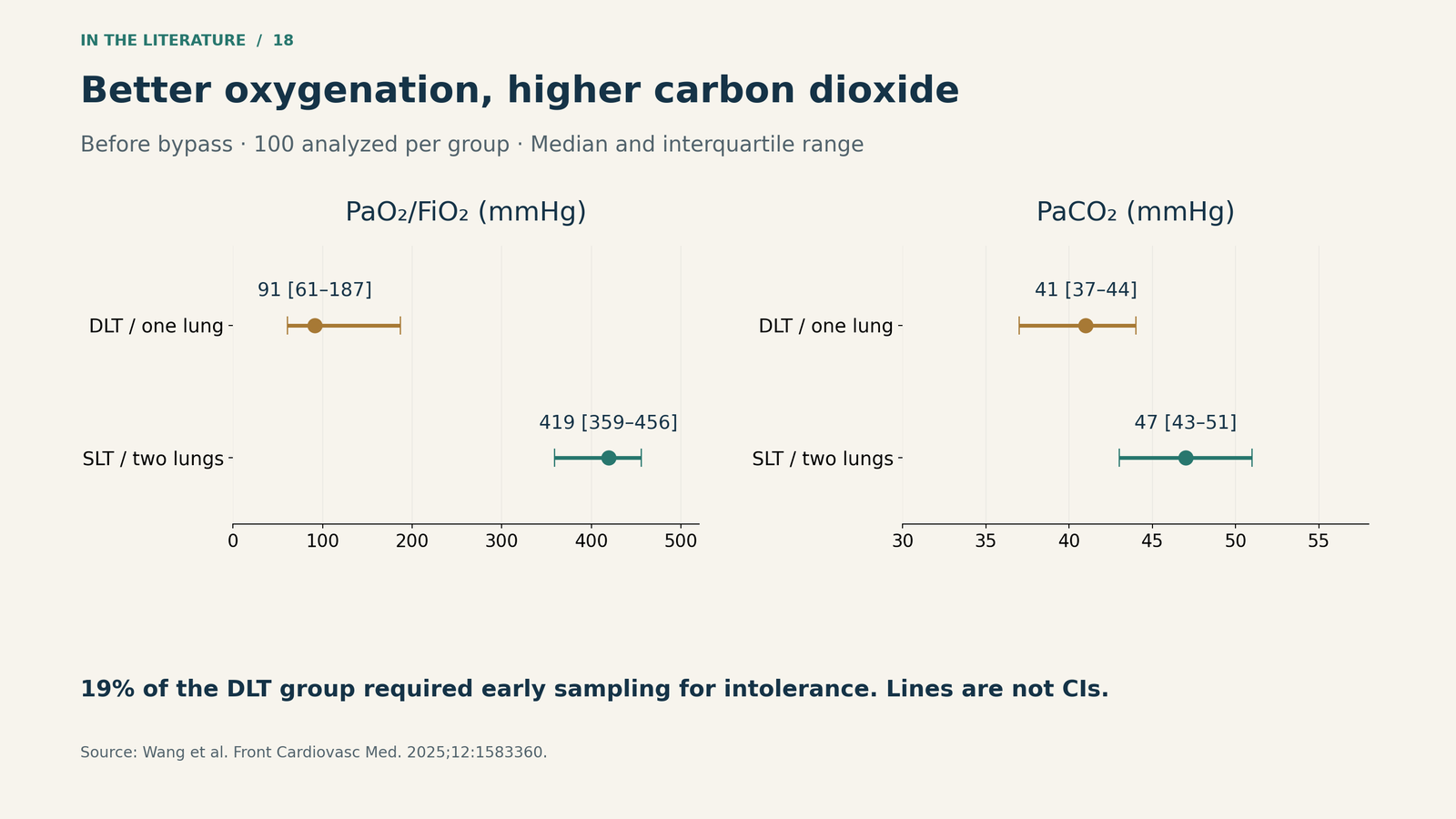
Figure 2. Pre-bypass gas exchange in the 100 analyzed patients per group. Points are medians; lines show interquartile ranges, not confidence intervals. In the trial, 19% of the double-lumen group could not tolerate the full intervention, prompting sampling before the planned 10-minute time point and rescue ventilation.[2]

This is persuasive evidence that the strategies produced different immediate physiology in this setting. It is not evidence that a single-lumen tube itself improves oxygenation regardless of how the lungs are ventilated.
Better oxygenation came with a less favorable surgical field
Poor visual-field exposure occurred in 10/100 single-lumen patients versus 2/100 double-lumen patients. Conversely, hoarseness within one week occurred in 22/100 versus 36/100, respectively. Atelectasis was reported in 0 versus 6 patients, but the other reported pulmonary complications did not show statistically significant differences.[2]
These findings point toward a practical tradeoff: two-lung ventilation may preserve oxygenation while creating more difficulty with exposure. Higher PaCO₂ is also relevant when pulmonary hypertension or right ventricular dysfunction makes increases in pulmonary vascular resistance poorly tolerated; the physiological concern should not be dismissed because average values were tolerated in a study cohort.[1, 2]
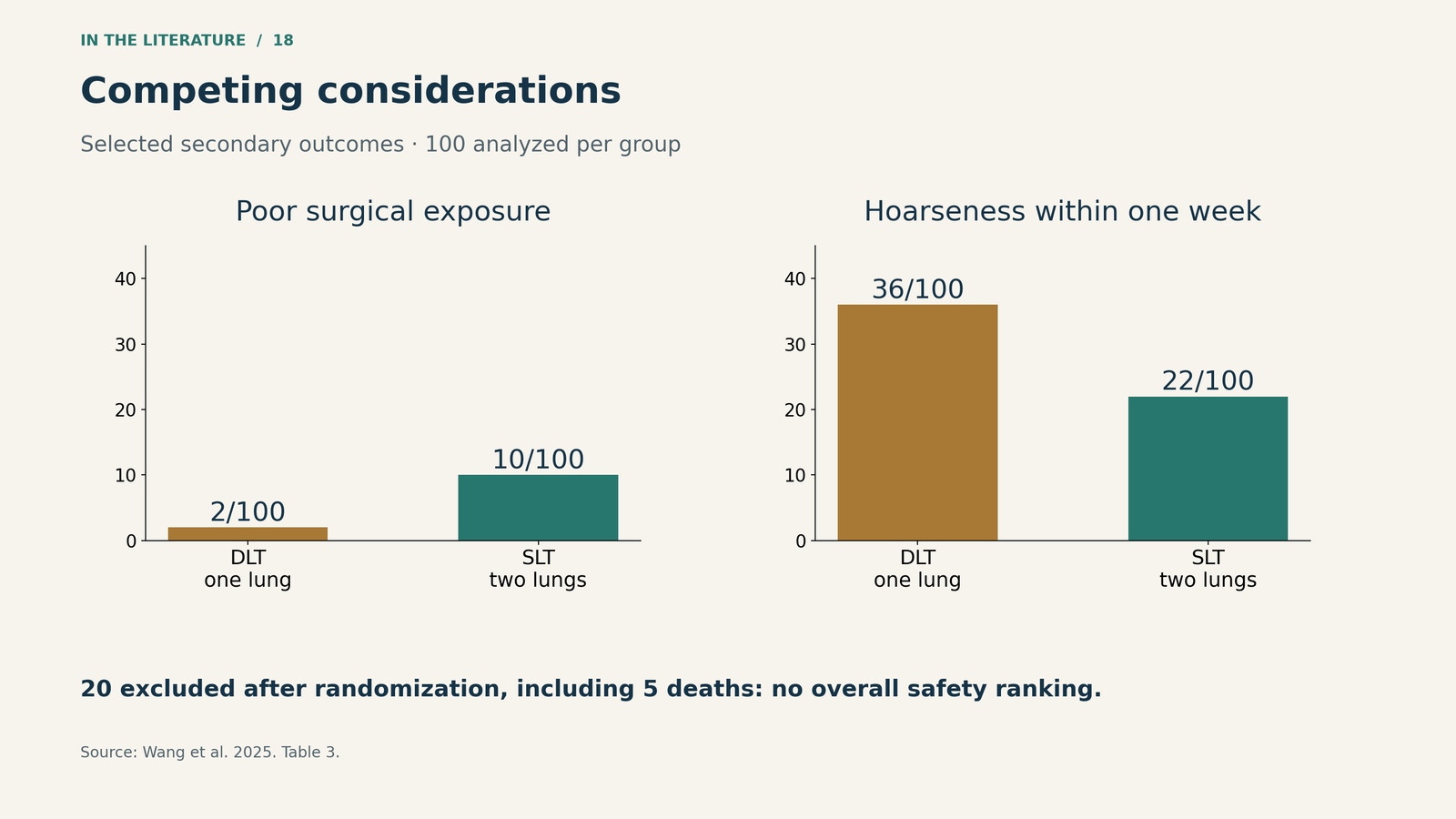
Figure 3. Selected secondary outcomes, with 100 analyzed patients per group. These outcomes show competing considerations; they do not constitute an overall safety ranking. Data: Table 3.[2]

Keep the exclusions attached to the result
The trial randomized 220 patients but analyzed 200. The excluded patients included 10 conversions to sternotomy, five losses to follow-up and five deaths. Removing patients after randomization, particularly those with major adverse outcomes, weakens any inference about comparative safety.[2]
Likewise, the absence of a statistically significant difference in ventilation duration or hospital stay does not demonstrate equivalence. The study supports considering a two-lung strategy in selected circumstances; it does not establish a universal replacement for lung isolation or prove a mortality benefit.[2]
Decide on lung isolation before deciding on the tube
The 2026 review recommends matching lung separation to anatomy, the procedure and the anesthesiologist’s experience. A double-lumen tube provides independent access to the lungs, including suction and options for selective ventilation or CPAP. Its placement can be more demanding, and postoperative ventilation may require tube exchange.[1]
A bronchial blocker through a single-lumen tube is a different option from two-lung ventilation. It can provide lung isolation while retaining the single-lumen airway, which may be useful with a difficult airway or anticipated postoperative ventilation. Blocker displacement, slower lung deflation and limited suction access remain relevant considerations.[1]
The clinical synthesis is therefore to agree on the exposure requirement first, assess pulmonary and right ventricular reserve, and plan how the team will respond if oxygenation, carbon dioxide or exposure becomes unacceptable. That is a decision framework drawn from the review and trial, not a validated selection score.[1, 2]
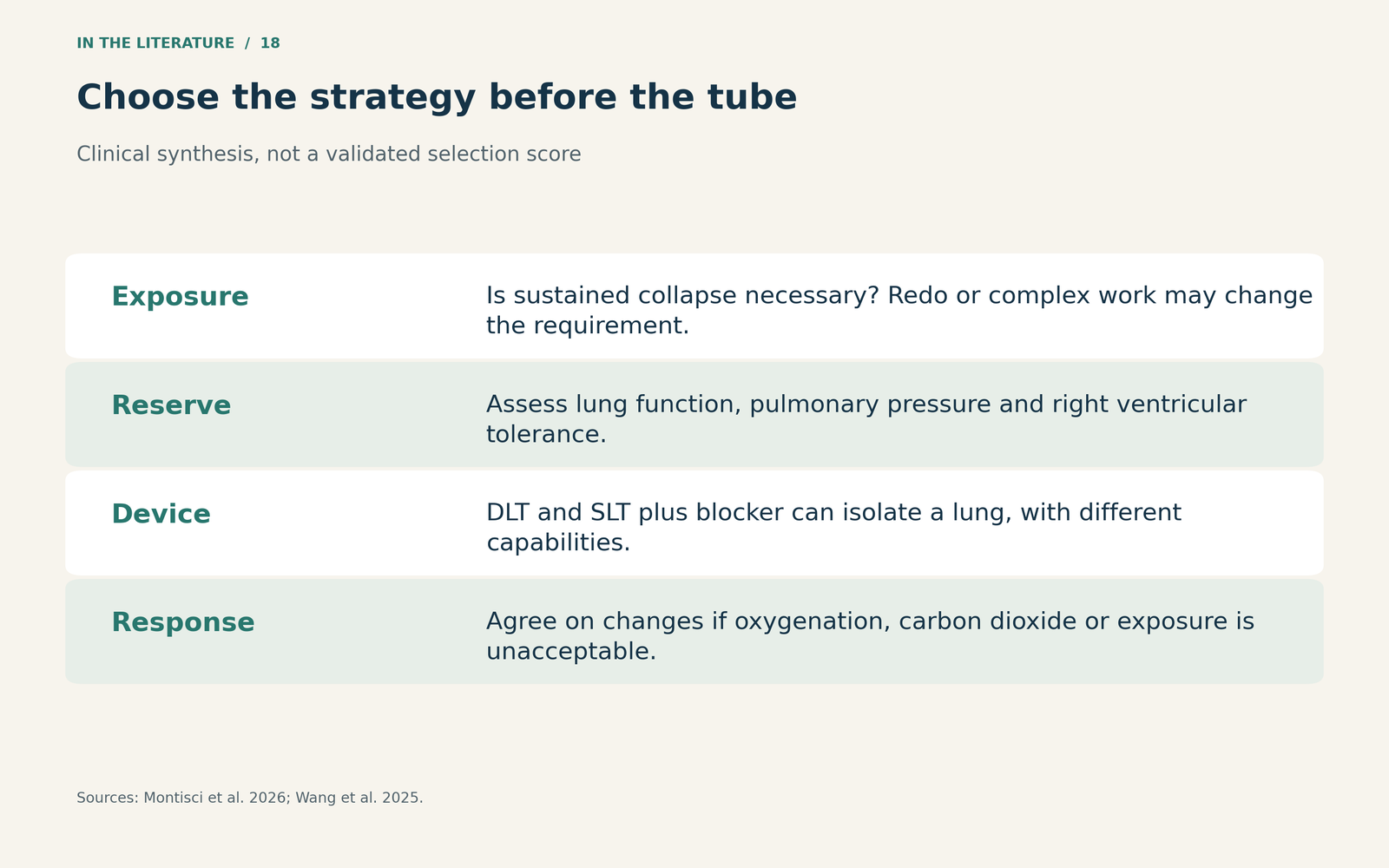
Figure 4. Planning questions that connect surgical requirements to airway and ventilation choices. A single-lumen tube with a bronchial blocker provides lung isolation; a single-lumen tube alone does not.[1, 2]

Three takeaways
- Start with the operation’s exposure needs. “Minimally invasive” alone does not specify whether sustained lung collapse is required.
- Read the trial as a strategy comparison. Better oxygenation occurred alongside higher PaCO₂ and more poor-exposure events under a specific protocol.
- Keep a coordinated alternative ready. Device choice should support the planned response to inadequate exposure or physiological intolerance, without turning incomplete safety evidence into a universal rule.
References
- Montisci A, Maj G, La Via L, Sorbello M, Cuttone G, Roberti E, et al. One-lung ventilation in minimally invasive cardiac surgery: challenges, techniques and complications. J Anesth Analg Crit Care. 2026;6:81. doi:10.1186/s44158-026-00387-7.
- Wang Z, Zhao J, Ke Y, Wang Q, Li Y, Ye Y, et al. Double-lumen tubes verus single-lumen tube in patients undergoing minimally invasive cardiac surgery: a randomised, controlled clinical trial. Front Cardiovasc Med. 2025;12:1583360. doi:10.3389/fcvm.2025.1583360.