
ITL-52536214a704
Watch the video

Figure 1. Airway security depends on insertion, fixation, surveillance, and the team caring for the tube. Conceptual illustration.
Key points
- A nasal tube may offer advantages in selected settings, but the evidence does not establish a universally safer route for neonatal cardiac surgery.
- A neonatal cardiac cohort found only seven unplanned extubations: the nonsignificant route comparison does not prove equivalence.
- In that cohort, tube-related skin breakdown was more frequent with nasal intubation.
- A randomized cardiac trial favored the nasal route for inadvertent intraoperative extubation, but most participants were older infants and nasal placement took longer.
- Choose the route within a plan that addresses operator experience, tube fixation, pressure injury, and ongoing surveillance.
For a neonate undergoing cardiac surgery, a secure endotracheal tube is essential during transesophageal echocardiography, positioning, transfer, and postoperative care. The nasal route seems attractive because it may be harder to dislodge. But is changing the route enough to improve airway safety?
A 2025 study of 179 neonates is useful precisely because it examines the whole clinical course rather than assuming that nasal placement guarantees a better result.[1]
What did the neonatal cardiac cohort show?
Vogt and colleagues studied neonates younger than 30 days who arrived in the operating room without an endotracheal tube and underwent cardiac surgery with cardiopulmonary bypass. Ninety were intubated nasally and 89 orally. Route selection was at the anesthesiologist's discretion within a period of changing institutional practice.[1]
Unplanned extubation occurred in 2 of 90 nasal patients and 5 of 89 oral patients. The difference was not statistically significant. With only seven events, this result cannot establish that the routes are equivalent or rule out a meaningful advantage for either route.
Tube-related skin breakdown occurred in 8 of 90 nasal patients versus 1 of 89 oral patients. The route association was significant in the reported unadjusted analysis; the small event count precluded an adjusted comparison. It is a clinically relevant pressure-injury signal, not proof that every nasal tube causes injury. The study also found no clear reduction in ventilation duration or opioid and benzodiazepine administration with nasal intubation.[1]
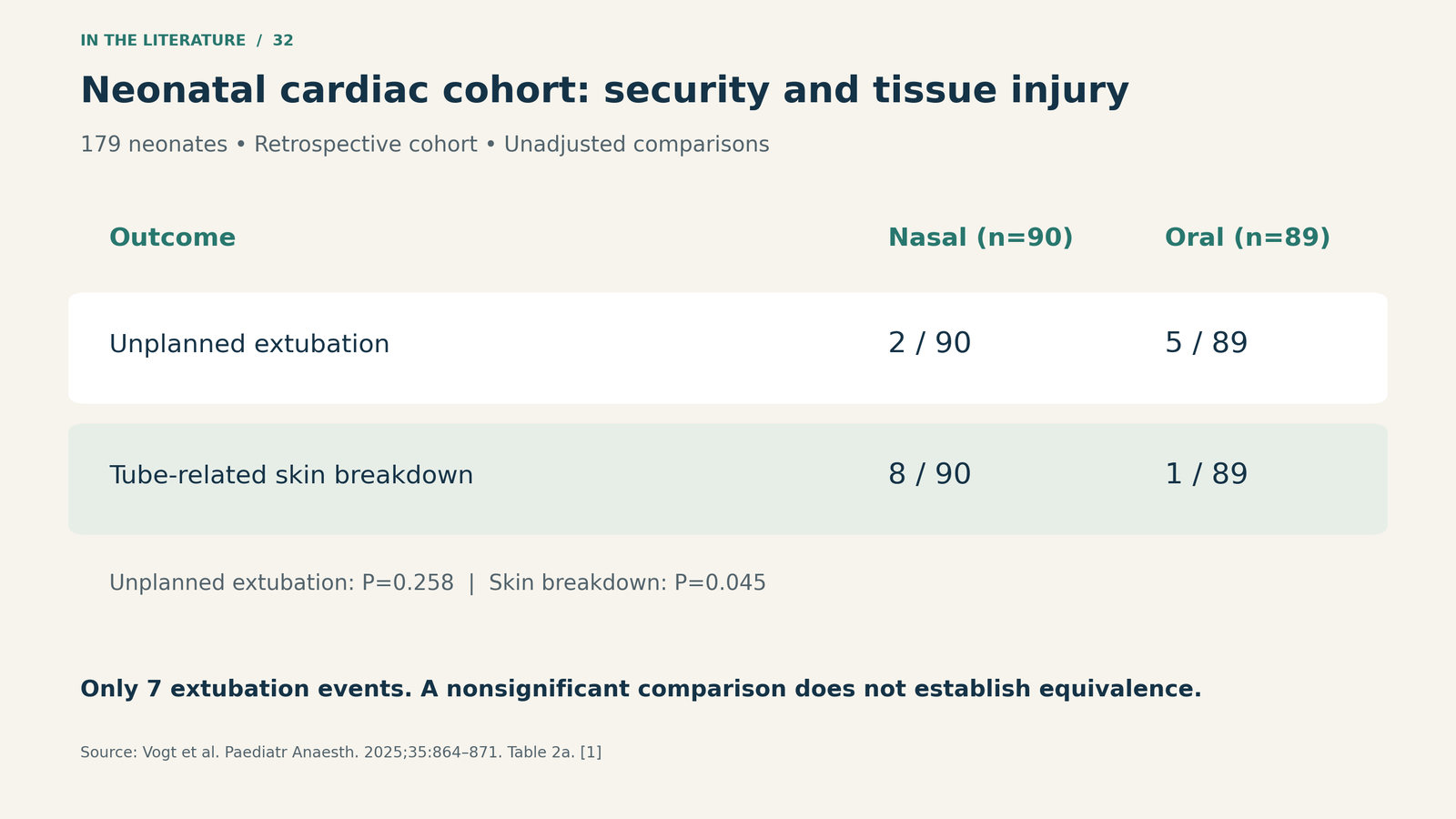
Figure 2. Observed counts from Vogt et al. Unplanned extubation: P=0.258; skin breakdown: P=0.045. These were unadjusted comparisons. A small nonsignificant difference is not evidence of equivalence.[1]

Why did the randomized trial look more favorable?
A 2023 open-label trial by Abdelbaser and colleagues randomized 204 cardiac surgical patients after screening 220. Seven patients died and were excluded from the final analysis, leaving 98 nasal and 99 oral patients. Median ages were six months in the nasal group and three months in the oral group, so this was not a neonatal-only trial.[2]
The primary outcome was postoperative fentanyl requirement while intubated, which favored nasal intubation. Inadvertent intraoperative extubation, a secondary outcome, occurred in 0 of 98 nasal patients versus 6 of 99 oral patients. However, median intubation time was 31.5 seconds nasally versus 16 seconds orally, and three nasal patients developed mild, self-limited epistaxis. Senior attending anesthesiologists performed the intubations.[2]
These findings support a potential benefit in that setting. They do not erase the differences between a planned intubation by experienced clinicians, intraoperative tube displacement, and the subsequent days of neonatal intensive care. Nor can a trial with older infants settle the best route for all neonates, particularly those with different anatomy, physiological reserve, or care protocols.
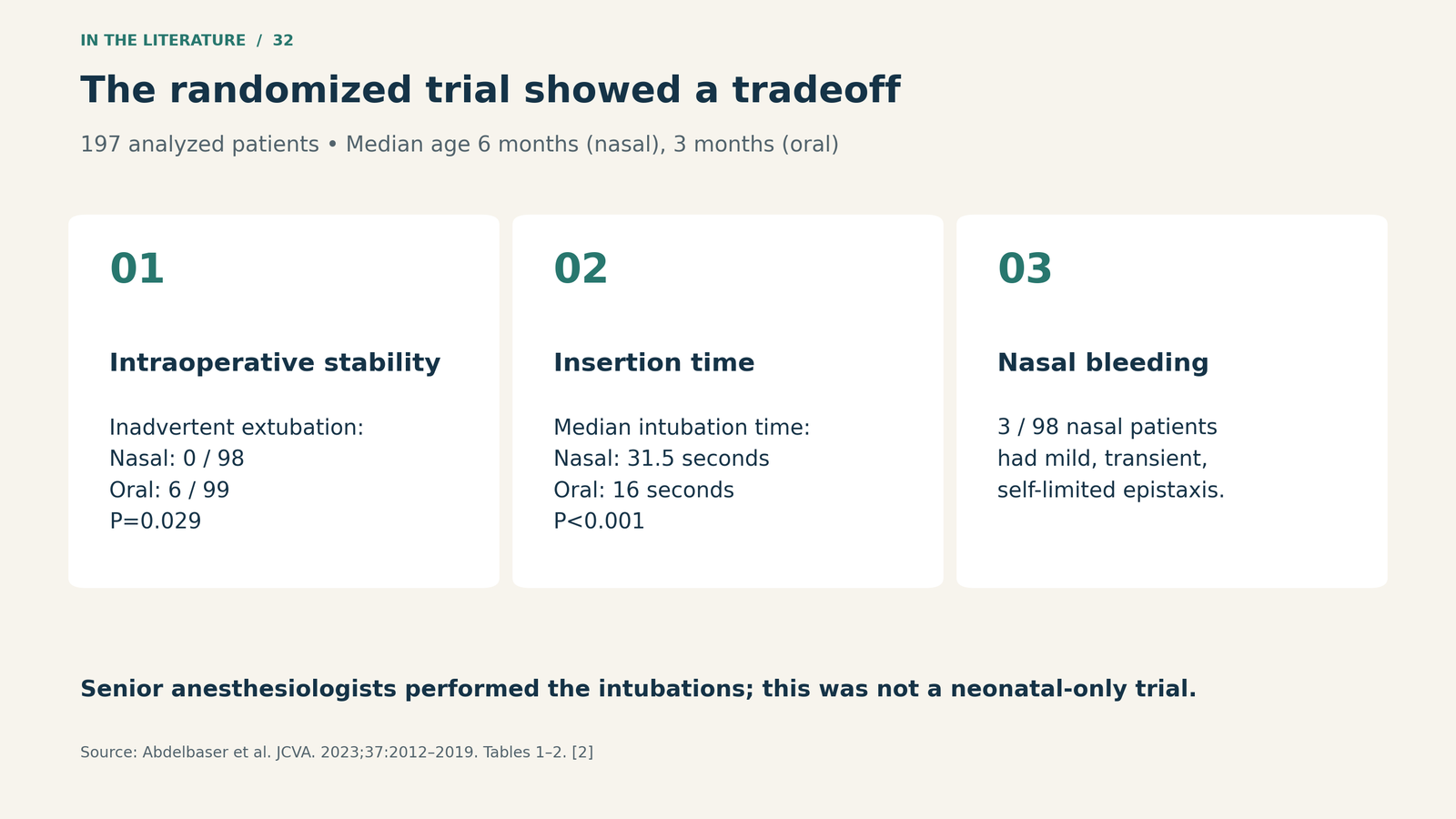
Figure 3. Selected findings in the 197 analyzed patients from the cardiac trial. The extubation outcome was intraoperative; the intubation times are medians. This was an open-label, single-center study.[2]

Newer NICU evidence makes local experience relevant
Two 2026 reports add context, although the findings below are based on their abstracts only.
Chitamanni and colleagues reported 1160 intubation events and 23 unplanned extubations in a single NICU that predominantly used nasal intubation. Nasal intubation was associated with lower unplanned-extubation risk. This is supportive observational evidence from an experienced unit, rather than a neonatal cardiac randomized comparison.[3]
In contrast, the NEAR4NEOS study examined the procedure itself across 29 centers: 20,350 intubation courses, including 1057 nasal courses. After adjustment, nasal intubation was associated with lower course success and greater risk of severe desaturation. A post-hoc analysis did not find these associations in predominantly nasal-intubating centers. A “course” could include several attempts without changing equipment, premedication, or route; it was not the same as a single attempt.[4]
Together, these reports suggest that a route's performance is entangled with local practice and expertise. They do not prove that adopting nasal intubation will reproduce another center's outcomes, or that experience alone explains every difference.
Turn route selection into a complete airway plan
Before placement, consider which route the team can perform reliably for this patient and what the rescue plan will be. A theoretical reduction in later displacement must be weighed against the immediate insertion challenge.
After placement, the route does not replace secure fixation, deliberate reassessment around manipulation and transfer, or surveillance of the tube's contact points. For nasal tubes, attention to the nare and surrounding tissue is particularly relevant; the neonatal cohort observed pressure injury despite standardized taping and regular site checks.[1]
For a unit changing its default route, evaluate both sides of the decision: insertion success and desaturation, then unplanned extubation and pressure injury. Tracking only accidental extubation could miss a different harm introduced by the new practice.
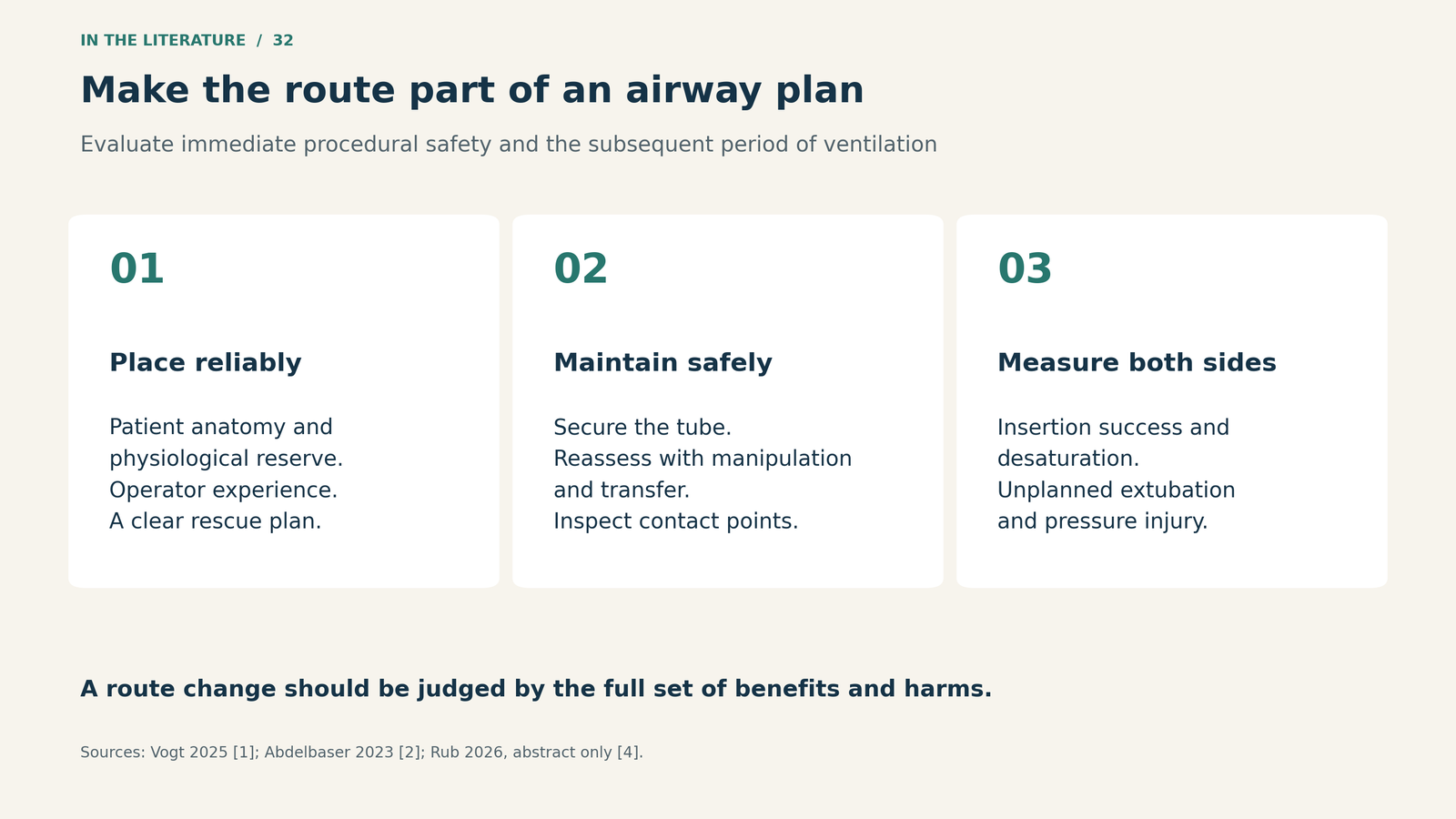
Figure 4. A clinical framework drawn from the differing study settings and outcomes. The route is one component of the airway safety plan.[1, 2, 4]

Three takeaways
- A nasal tube is not a guarantee against displacement. Benefit varies by study population, timing, and care setting.
- Count the tradeoffs. Insertion difficulty, desaturation, epistaxis, and pressure injury matter alongside unplanned extubation.
- Build and measure the whole process. Match the route to patient needs and team expertise, then assess fixation, surveillance, and clinical outcomes.
References
- Vogt P, Downey L, Gleason ME, Dresner LD, Clark S, Shashidharan S, et al. Outcomes of nasotracheal versus orotracheal intubation in neonates after cardiopulmonary bypass surgery: a retrospective cross-sectional analysis. Paediatr Anaesth. 2025;35(10):864–871. doi:10.1111/pan.70010.
- Abdelbaser I, Abourezk AR, Magdy M, Elnegerey N, Sabry R, Tharwat M, et al. Comparison of the outcomes of oral versus nasal endotracheal intubation in neonates and infants undergoing cardiac surgery: a randomized controlled study. J Cardiothorac Vasc Anesth. 2023;37(10):2012–2019. doi:10.1053/j.jvca.2023.07.006.
- Chitamanni P, Hays T, Vargas D, Patterson T, Lush G, Lyford A, et al. Comparison of unplanned extubations associated with orotracheal versus nasotracheal intubation in infants. J Perinatol. 2026;46(8):1528–1534. doi:10.1038/s41372-026-02615-y. Abstract only; full text not reviewed.
- Rub DM, Nelin TD, Abou Mehrem A, Bibl K, Brajkovic I, DeMartino C, et al. Nasal versus oral intubation in the neonatal intensive care unit: associations with procedural success and safety in a retrospective cohort study from the National Emergency Airway Registry for Neonates (NEAR4NEOS). Arch Dis Child Fetal Neonatal Ed. Published online September 30, 2026. doi:10.1136/archdischild-2026-331137. Abstract only; full text not reviewed.