ITL-bb4f59064cc2
Juan Li, MD · Updated November 17, 2026
Watch the video
Key points
- In a 2024 meta-analysis of 28 randomized trials with 16,090 patients, off-pump surgery reduced short-term stroke (1.27% vs 1.78%; odds ratio 0.74) but increased mid-term coronary reintervention (relative risk 1.49), and may increase long-term mortality (relative risk 1.09, moderate certainty).[1]
- Early mortality is similar, but long-term data are discordant. In ROOBY, 5-year mortality was higher off-pump (15.2% vs 11.9%), and overall graft patency was lower (82.6% vs 87.8%).[2]
- Results depend heavily on experience. ROOBY surgeons averaged only 8 off-pump cases a year, with a 12% conversion rate and residents operating in 60% of cases; GOPCABE surgeons averaged 514 off-pump procedures and found no significant difference.[2], [3]
- Off-pump surgery is an anesthetic challenge. Positioning the heart lowers perfusion and raises vasopressor needs; proposed targets are a mean arterial pressure above 70 mmHg, mixed venous saturation (SvO2) above 60% and central venous pressure below pulmonary artery diastolic pressure. A fall in SvO2 below 60% during circumflex grafting was linked to a 2.7-fold higher risk of complications.[4], [5], [6], [7]
- Conversion to bypass occurs in 1.1% to 16.3% of cases. Emergency conversion raises the odds of death (odds ratio 6.99), elective conversion is usually well tolerated, and limited anesthesiologist experience was linked to more conversions.[4], [2], [8]
A patient with three-vessel disease and a calcified ascending aorta is scheduled for CABG, and the surgeon plans to operate off-pump. What do the trials say about off-pump surgery, which patients and teams benefit, and how should the anesthesiologist prepare for the beating-heart operation and a possible conversion?[1], [2]
The randomized evidence
He and colleagues pooled 28 randomized trials with 16,090 patients. Off-pump surgery reduced short-term stroke (odds ratio 0.74; 95% CI 0.57–0.97) but increased mid-term coronary reintervention (relative risk 1.49; 95% CI 1.16–1.92). Long-term mortality was 21.8% versus 20.0% (relative risk 1.09; 95% CI 1.01–1.17), but the authors rate this finding as moderate certainty, and their trial sequential analysis did not confirm it. Short-term mortality and dialysis-requiring renal failure did not differ significantly. In trials with a crossover rate below 5%, off-pump surgery reduced short-term mortality.[1]
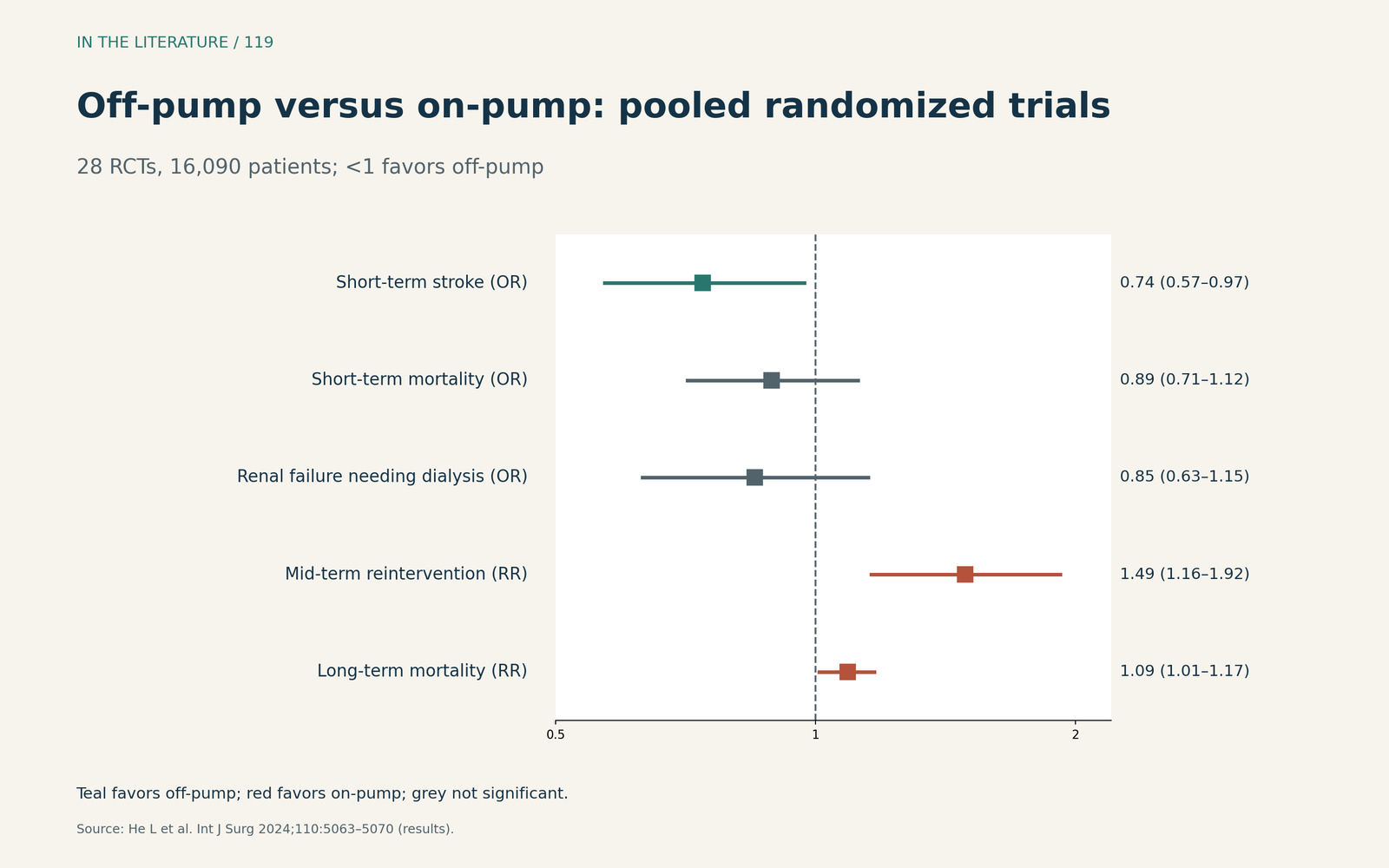
Figure 1. Off-pump versus on-pump CABG in pooled randomized trials. Redrawn from the results of He et al.[1] View larger.

What the large trials and registries add
In their 2018 review, Gaudino and colleagues note that the large trials found similar early outcomes: in CORONARY the 30-day composite was 9.8% versus 10.3%. In ROOBY, however, 5-year mortality was higher with off-pump surgery (15.2% vs 11.9%), and overall graft patency was 82.6% versus 87.8%. The authors consider incomplete revascularization a probable explanation for worse long-term outcomes, and conclude that the available evidence suggests better outcomes with off-pump surgery in high-risk patients, such as those at high risk of stroke.[2]
Experience matters
The same review contrasts the trials: ROOBY's 53 surgeons enrolled an average of only 8 patients per year, had a 12% conversion rate to on-pump surgery, and a resident was the primary surgeon in 60% of cases; in GOPCABE, surgeons averaged 514 off-pump procedures.[2] Tempe and Gandhi note that off-pump surgery is used in only about 20% to 25% of patients in the US and Europe, and that its benefits appear only when an expert team performs it.[3]
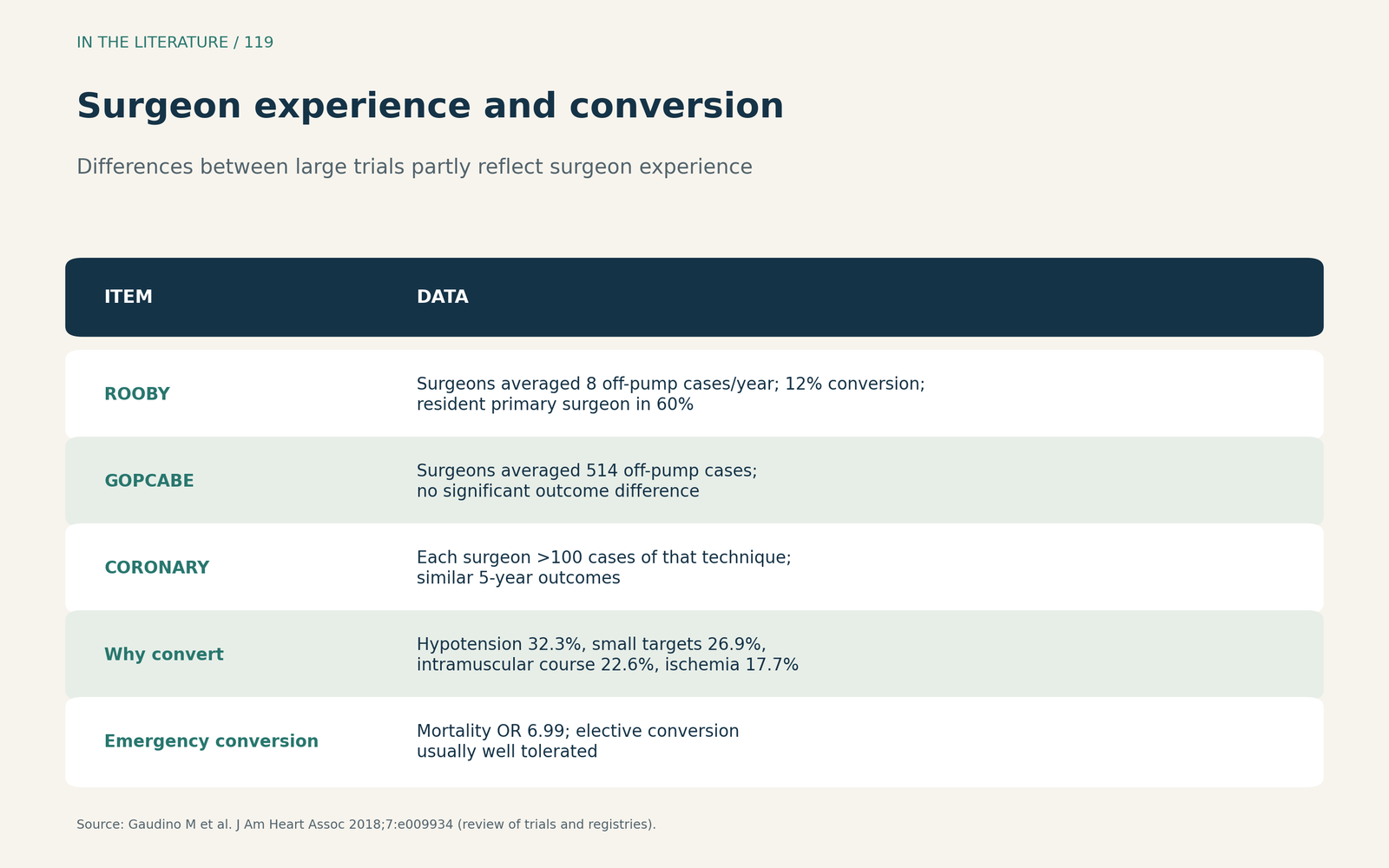
Figure 2. Surgeon experience and conversion. Synthesized from Gaudino et al.[2] View larger.

The anesthesiologist's role
Bianco and colleagues describe flawless communication between anesthesiologist and surgeons, with frequent intraoperative adjustments, as paramount. They routinely use atrial pacing, and use TEE to distinguish instability caused by myocardial ischemia from other causes such as cardiac compression.[4] In an observational study, Flick and colleagues found that the urethral perfusion index fell during off-pump surgery, particularly when the heart was positioned, and that higher vasopressor doses were needed to maintain blood pressure.[5]
Shim and colleagues propose targets before each arteriotomy: a mean arterial pressure above 70 mmHg, SvO2 above 60% and a central venous pressure below the pulmonary artery diastolic pressure. They suggest elective conversion when SvO2 falls below 50%, which indicates a shock state.[6] In a retrospective cohort of 1,071 patients, Lee and colleagues found that SvO2 fell below 60% most often during circumflex grafting, and that this was associated with a 2.7-fold higher risk of postoperative complications.[7]
Conversion
Bianco and colleagues report conversion rates of 1.1% to 16.3%, note that emergency conversion is associated with worse outcomes, and advise a low threshold to convert safely to on-pump surgery.[4] Gaudino and colleagues add that hypotension is the most common reason for conversion (32.3%), that emergency conversion raised the odds of death to 6.99 (95% CI 5.18–9.45), and that elective conversion is usually well tolerated without increased mortality. They recommend identifying patients at high risk of conversion beforehand.[2] In a Swiss center where almost all CABG is performed off-pump, Ntinopoulos and colleagues found non-elective conversion in 3.4% of patients, mortality of 11.7% versus 1.3% in those not converted, and more conversions with less experienced anesthesiologists.[8]
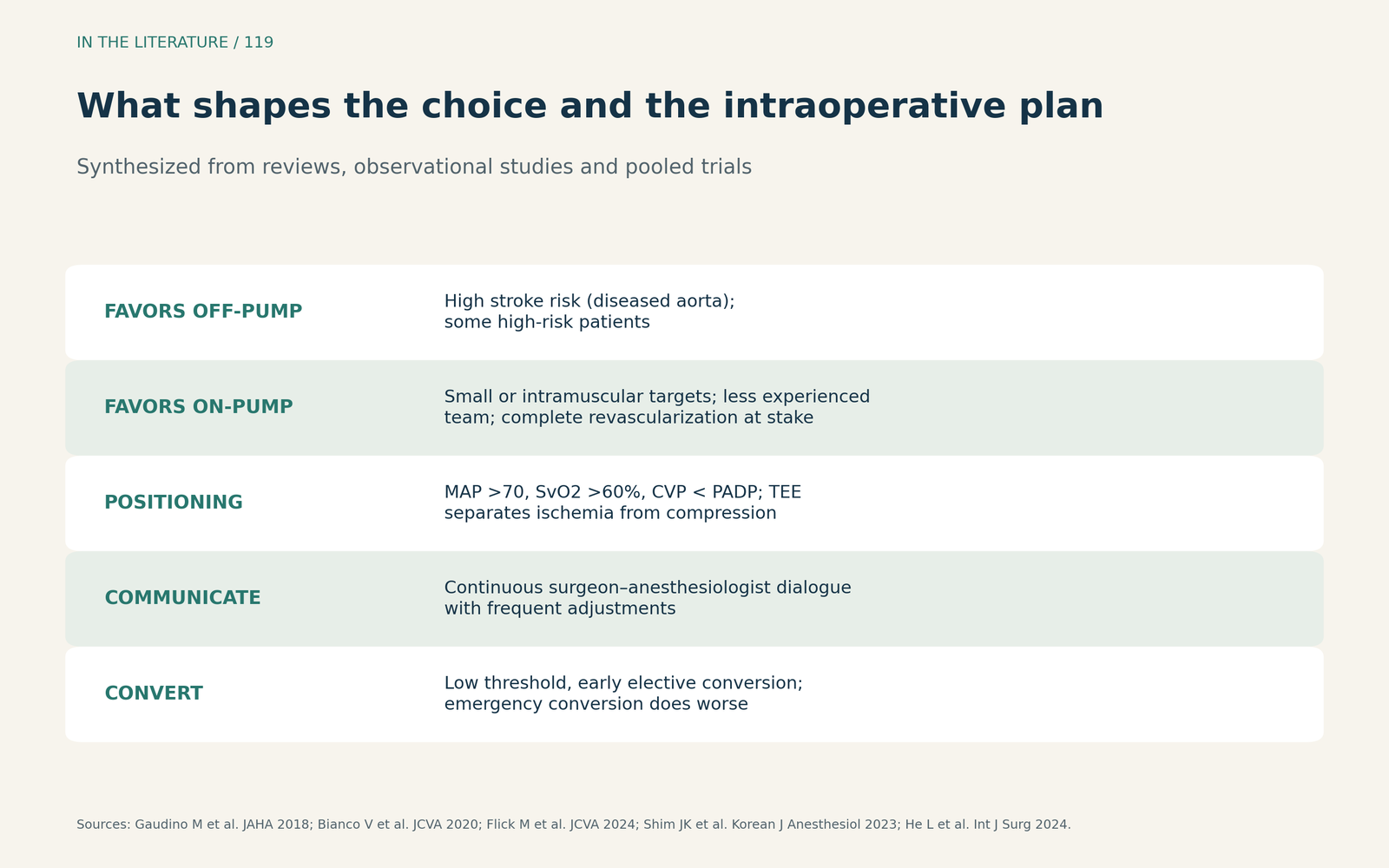
Figure 3. What shapes the choice and the intraoperative plan. Synthesized from Gaudino et al., Bianco et al., Flick et al., Shim et al. and He et al.[2], [4], [5], [6], [1] View larger.

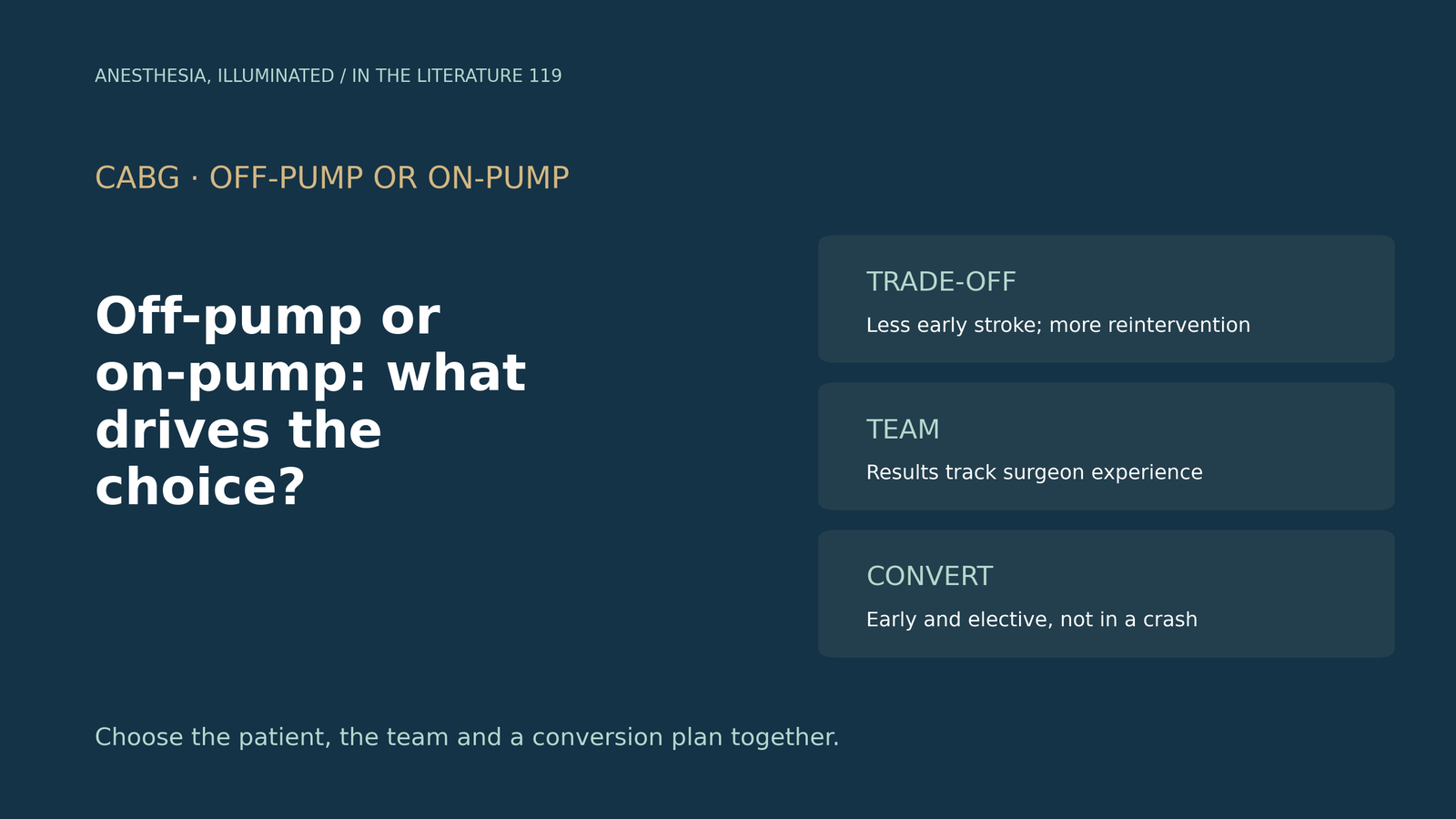
Three takeaways
- Know the trade-off. Off-pump surgery lowers early stroke but brings more reintervention and possibly higher long-term mortality.[1], [2]
- Match the operation to the team and the patient. Benefit depends on an experienced team; patients at high stroke risk are the strongest candidates.[2], [3]
- Plan the conversion before it is needed. Communicate continuously, watch pressure, SvO2 and TEE during positioning, and convert early and electively rather than in a crisis.[4], [6], [2], [8]
References
- He L, Tiemuerniyazi X, Chen L, et al. Clinical outcomes of on-pump versus off-pump coronary-artery bypass surgery: a meta-analysis. Int J Surg. 2024;110(8):5063–5070. doi:10.1097/JS9.0000000000001481
- Gaudino M, Angelini GD, Antoniades C, et al. Off-pump coronary artery bypass grafting: 30 years of debate. J Am Heart Assoc. 2018;7(16):e009934. doi:10.1161/JAHA.118.009934
- Tempe DK, Gandhi DA. Time for judicious application of off-pump CABG. J Cardiothorac Vasc Anesth. 2023;37(1):6–7. doi:10.1053/j.jvca.2022.10.004
- Bianco V, Kilic A, Gelzinis T, et al. Off-pump coronary artery bypass grafting: closing the communication gap across the ether screen. J Cardiothorac Vasc Anesth. 2020;34(1):258–266. doi:10.1053/j.jvca.2019.05.005
- Flick M, Rosenau L, Sadtler H, et al. The urethral perfusion index during off-pump coronary artery bypass surgery: an observational study. J Cardiothorac Vasc Anesth. 2024;38(2):417–422. doi:10.1053/j.jvca.2023.09.015
- Shim JK, Kim KS, Couture P, et al. Hemodynamic management during off-pump coronary artery bypass surgery: a narrative review of proper targets for safe execution and troubleshooting. Korean J Anesthesiol. 2023;76(4):267–279. doi:10.4097/kja.23103
- Lee K, Kim KS, Park JK, et al. Impact of transient decrease in mixed venous oxygen saturation on prognosis in off-pump coronary artery bypass surgery: a retrospective cohort study. Korean J Anesthesiol. 2023;76(2):107–115. doi:10.4097/kja.22277
- Ntinopoulos V, Haeussler A, Odavic D, et al. Conversion from off-pump to on-pump coronary artery bypass grafting: impact of surgeon and anaesthetist experience. Interdiscip Cardiovasc Thorac Surg. 2023;37(6):ivad205. doi:10.1093/icvts/ivad205