
ITL-2973b3099d4a
Watch the video

Figure 1. A magnet and a programmer can accomplish different tasks. Conceptual illustration; it does not depict a device-specific technique.
Key points
- Separate the two objectives: prevent inappropriate antitachycardia therapy and protect pacing from inhibition by EMI.
- An ICD magnet usually addresses the first objective. It generally leaves the programmed pacing mode unchanged; confirm the actual device response.
- Pacing dependence plus anticipated significant EMI calls for a programming plan: appropriate asynchronous pacing and suspension of tachyarrhythmia therapies.
- A taped magnet is not proof of an effective magnet response. Model, programming, positioning, accessibility and sustained recognition all matter.
- Finish by restoring function. Removing a magnet does not reverse settings changed with a programmer; confirm reactivation before the patient leaves a monitored setting. [1, 2]
An ICD can deliver both bradycardia pacing and treatment for ventricular tachyarrhythmias. During surgery, those functions need separate plans. If the patient depends on pacing and clinically important electromagnetic interference (EMI) is anticipated, placing a magnet over the ICD does not, by itself, establish reliable asynchronous pacing. The usual plan requires device programming, with external pacing and defibrillation available. This discussion concerns transvenous ICDs, including cardiac resynchronization defibrillators (CRT-D). [1, 2]
Start with what the patient needs from the device
“The patient has an ICD” does not tell us whether loss of pacing would be tolerated. Review the indication, device model, recent interrogation and underlying rhythm with the cardiac implantable electronic device (CIED) team. A high pacing percentage can reflect programming and is not, alone, proof of dependence. Conversely, a patient with an intrinsic rhythm while awake may require more pacing under anesthesia, and that rhythm may be too slow for the procedure even without absolute dependence. [1, 2]
The next question is whether the planned procedure is likely to produce relevant EMI. Monopolar electrosurgery near the generator or leads creates a different problem from an operation below the umbilicus with the return electrode also below it. The entire current path matters. A low-risk location should not be treated as protective when the return electrode arrangement brings current near the device. Discuss the operative site, electrosurgical method, return electrode and patient position before choosing a magnet or reprogramming. [1, 2]
Turning off shocks does not protect pacing
Electrosurgical signals may be interpreted as cardiac activity. An ICD may falsely detect a tachyarrhythmia and deliver therapy; its pacing function may also withhold a needed pacing stimulus because it senses apparent intrinsic activity. Suppressing antitachycardia therapy addresses the former, but does not necessarily prevent the latter. [1, 2]
For most transvenous ICDs, a magnet suspends tachyarrhythmia therapy without converting pacing to an asynchronous mode. Device-specific exceptions and programmable magnet responses exist, so the safe question is not “Do ICDs respond to magnets?” but “What will this device, with its current settings, do?” [1, 2]
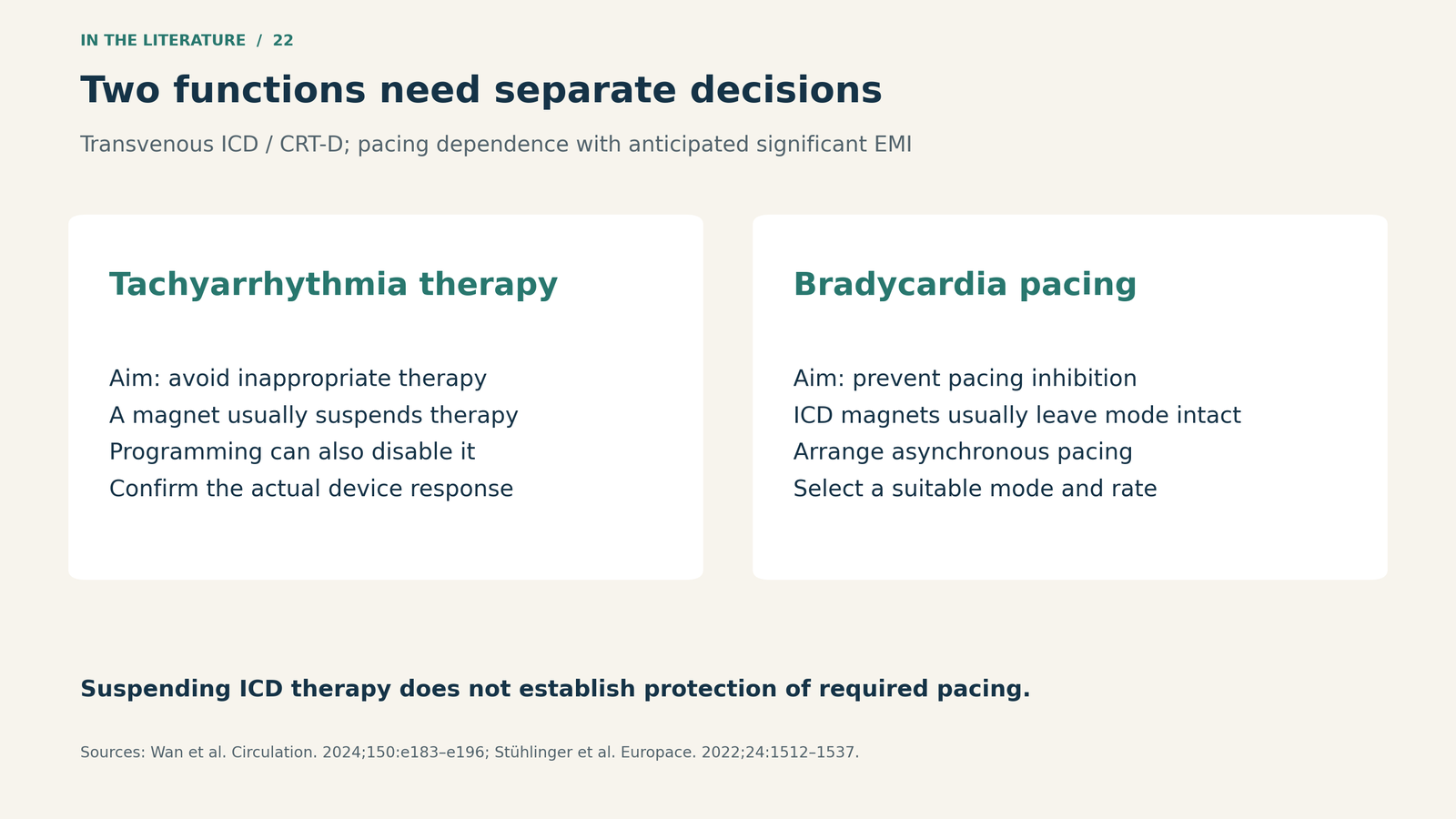
Figure 2. Two functions, two decisions. In a pacing-dependent patient exposed to significant EMI, suspending ICD therapy alone leaves the pacing problem unresolved. Based on the AHA statement and EHRA consensus. [1, 2] Enlarge figure.

For a pacing-dependent patient with anticipated significant EMI, arrange appropriate asynchronous pacing and suspension of tachyarrhythmia detection/therapy with the CIED team. The mode and rate must suit the patient. Asynchronous pacing is not a universal setting for every ICD recipient, and it still requires monitoring. External defibrillation and transcutaneous pacing must be immediately available while device functions are altered. [1, 2]
When a magnet is useful—and what “confirmed” means
When only tachyarrhythmia therapy needs to be suspended, a magnet may be a practical option if the response has been verified and the generator remains accessible. Prone positioning, the sterile field or proximity to the surgical site may make dependable magnet placement impractical; reprogramming is then the more reliable way to implement the intended plan. Not every ICD provides an audible confirmation, and some responses are programmable or time limited. Confirm the model-specific behavior rather than expecting a universal tone or duration. [1, 2]
A 2021 case report illustrates the distinction between securing a magnet and confirming continuous recognition. A patient undergoing ileostomy reversal had a magnet taped over his ICD. Before incision, he developed true ventricular fibrillation with hemodynamic instability; the ICD delivered an appropriate shock despite the magnet. Interrogation demonstrated intermittent magnet detection, and the authors identified the placement relative to that model's sensor as the problem. This was not an inappropriate shock caused by electrosurgery, and the patient was not pacing dependent. The lesson is about verification of the intended magnet effect, not an estimate of failure frequency. [3]
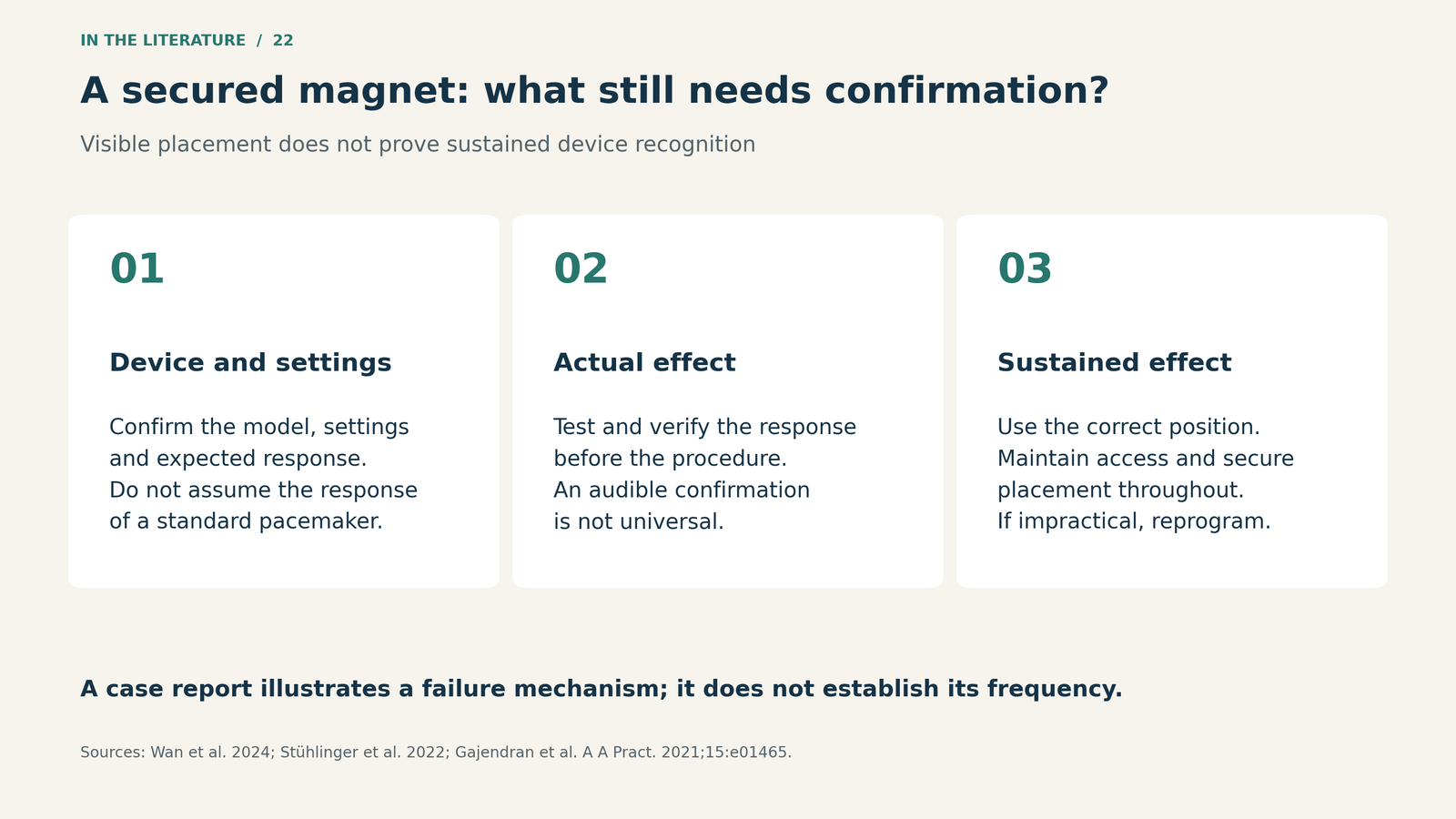
Figure 3. Three questions before relying on a magnet. A secured magnet can still be inadequately recognized; testing and placement must follow the actual device's requirements. [1–3] Enlarge figure.

Monitor the patient, then close the loop
During electrosurgery, ECG artifact can obscure the rhythm, and a displayed pacing marker does not establish mechanical capture. Follow a pulse waveform—pulse oximetry or an arterial waveform as appropriate—alongside ECG. Prefer bipolar electrosurgery when feasible; when monopolar electrosurgery is needed, use short bursts and arrange the return path away from the device. These measures reduce interference but do not replace the device plan. [1, 2]
At the end, account for both functions again. If pacing was reprogrammed, restore the intended ongoing pacing settings. If tachyarrhythmia therapies were disabled, confirm they are active again before leaving the monitored setting. Magnet removal normally reverses a transient magnet effect; it does not undo programmer-mediated deactivation. A significant arrhythmic event, external defibrillation or suspected reset/device malfunction warrants postprocedure interrogation. Document what was changed, what was restored and who confirmed it. [1, 2]
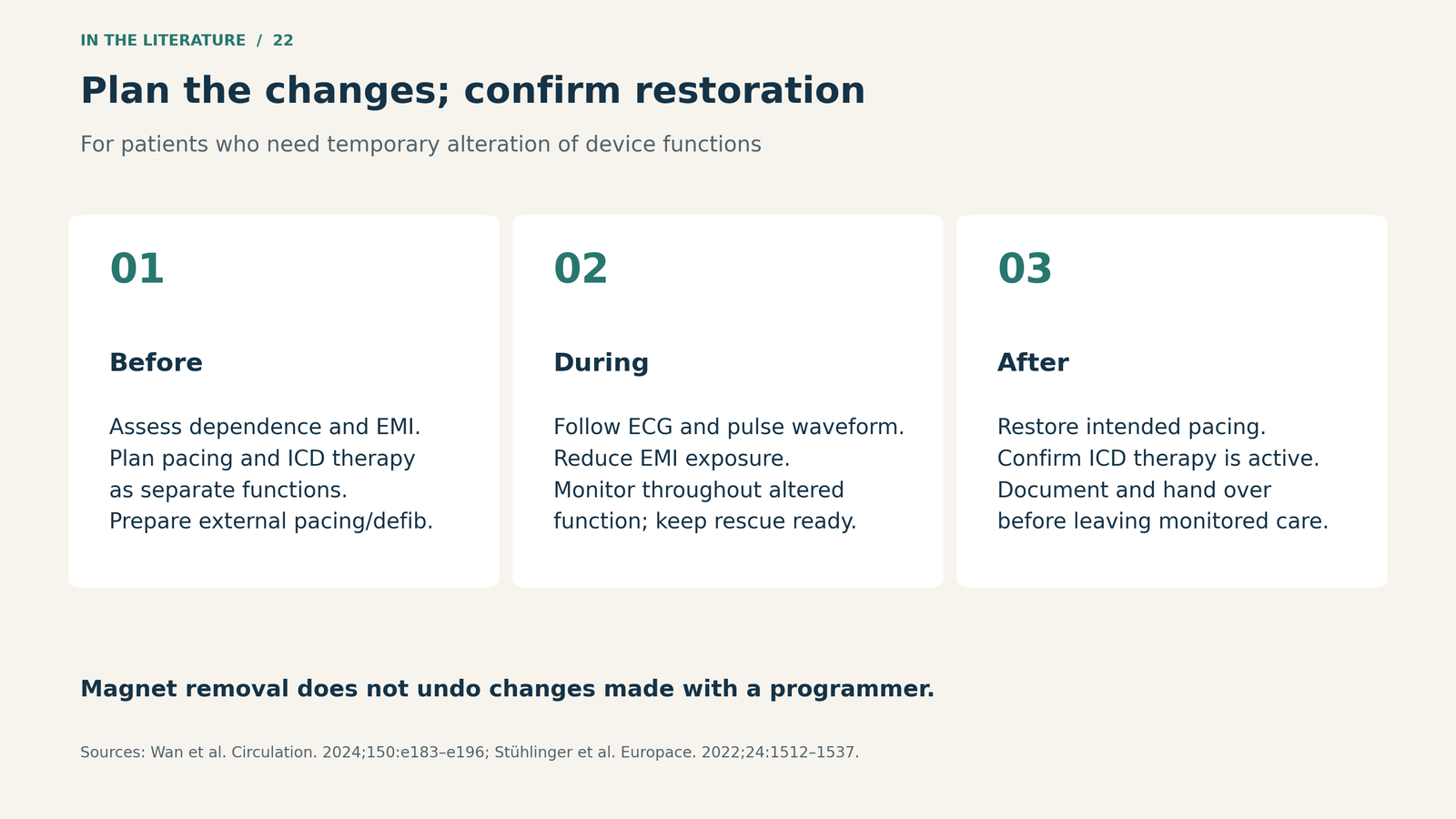
Figure 4. The plan is complete when intended device function has been restored and confirmed. These steps concern patients whose device functions need temporary alteration, not a requirement to reprogram every ICD. [1, 2] Enlarge figure.

Three takeaways
- Ask two questions: does tachyarrhythmia therapy need to be suspended, and does pacing need protection from EMI?
- For pacing dependence with anticipated significant EMI, arrange programming. A magnet over an ICD usually does not supply asynchronous pacing.
- Verify both ends of the process: the intended effect before the procedure and restored device function afterward. [1, 2]
References
- Wan EY, Rogers AJ, Lavelle M, Marcus M, Stone SA, Ottoboni L, et al. Periprocedural management and multidisciplinary care pathways for patients with cardiac implantable electronic devices: a scientific statement from the American Heart Association. Circulation. 2024;150(8):e183–e196. doi:10.1161/CIR.0000000000001264.
- Stühlinger M, Burri H, Vernooy K, Garcia R, Lenarczyk R, Sultan A, et al. EHRA consensus on prevention and management of interference due to medical procedures in patients with cardiac implantable electronic devices. Europace. 2022;24(9):1512–1537. doi:10.1093/europace/euac040.
- Gajendran VK, Contractor T, Tone RC, Mascetti CR, McCabe MD. Appropriate delivery of antitachyarrhythmia therapy despite magnet placement over implanted cardioverter-defibrillator: a case report. A A Pract. 2021;15(5):e01465. doi:10.1213/XAA.0000000000001465.