ITL-7ef41356088d
Juan Li, MD · Updated November 17, 2026
Watch the video
Key points
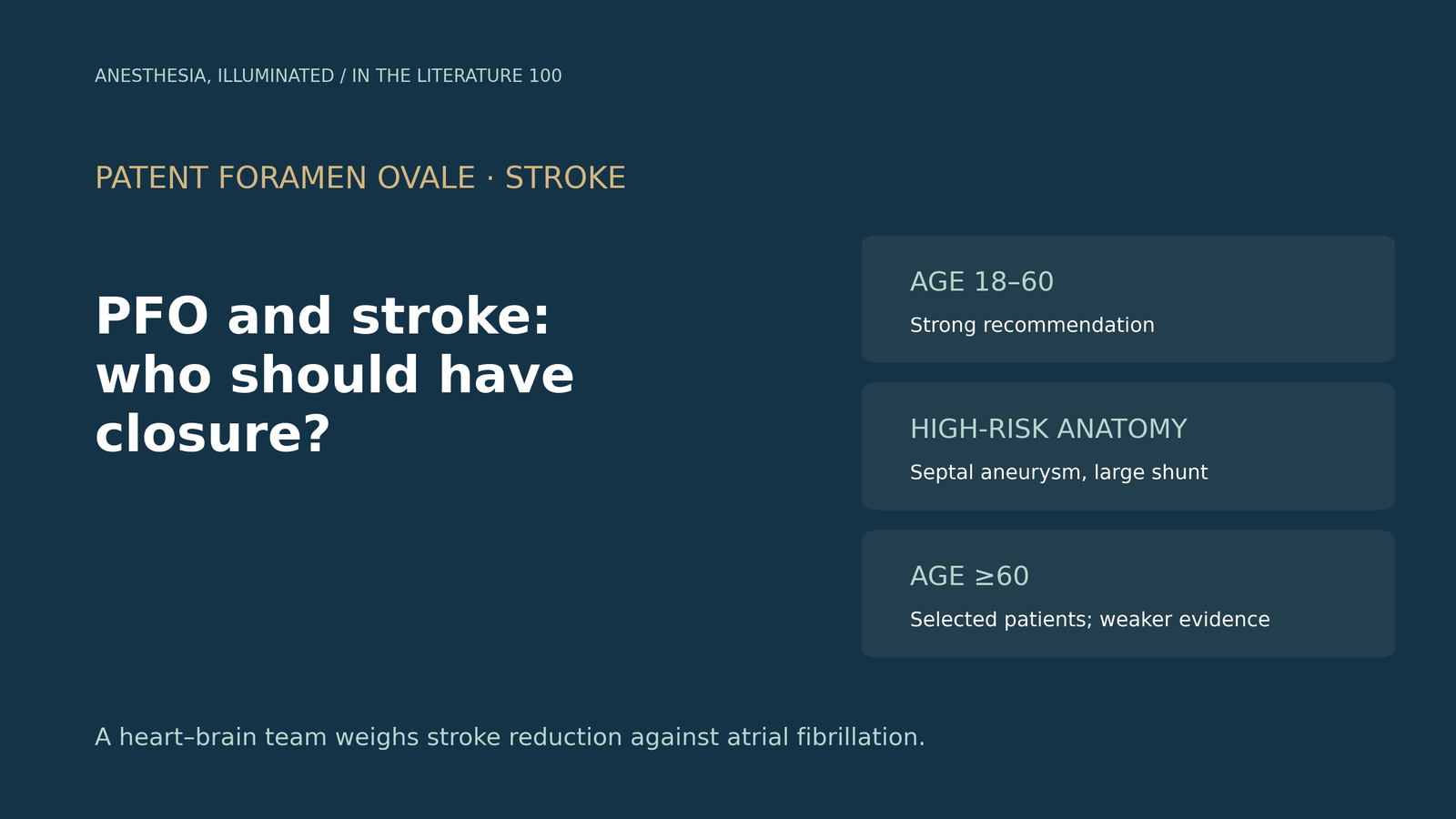
- For adults aged 18 to 60 with a prior stroke attributed to a patent foramen ovale (PFO), the 2022 SCAI guideline recommends closure rather than antiplatelet therapy alone (strong recommendation, moderate certainty). Recurrent stroke was about a quarter as frequent with closure.[1]
- Anatomy and clinical profile predict who benefits. The PASCAL classification combines the RoPE score with high-risk features (atrial septal aneurysm, large shunt); a high RoPE score alone does not predict benefit.[2], [3]
- After 60, evidence is weaker. SCAI makes only a conditional recommendation, and a 2026 meta-analysis that favored closure was mostly observational. RoPE cannot reach the high range at this age.[1], [4]
- Echocardiography decides more than presence. Transesophageal echocardiography (TEE) defines the septal aneurysm and shunt size that drive the decision, and its sensitivity is nearly double that of transthoracic imaging.[2], [3]
- Closure brings early atrial fibrillation: 5.1% versus 1.6% in controlled trials, mostly within weeks and usually transient. Closure is not suggested for patients with a history of atrial fibrillation, and a heart–brain team should decide.[1], [5], [2]
A 48-year-old had an embolic stroke with no cause found after full investigation. A bubble study shows a PFO, and TEE is requested before a decision. Should the PFO be closed, which findings make closure more worthwhile, and would the answer change if the patient were 68?[1], [2]
The evidence in younger adults
The 2022 Society for Cardiovascular Angiography & Interventions (SCAI) guideline is the most direct recommendation. For patients aged 18 to 60 with a prior PFO-associated stroke, the panel recommends closure rather than antiplatelet therapy alone, independent of anatomy. Pooled across 4 randomized trials, recurrent stroke was reduced compared with antiplatelet therapy (relative risk 0.26; 95% CI 0.12–0.58).[1]
The 2026 Australian and New Zealand consensus statement summarizes the 6 randomized trials in patients aged 18 to 60 as a 60% relative reduction in recurrent ischemic stroke, an absolute reduction of 1.7% at 2 years. It recommends screening for PFO in patients aged 60 or younger with cryptogenic stroke and asks that decisions be made by a multidisciplinary heart–brain team.[2]
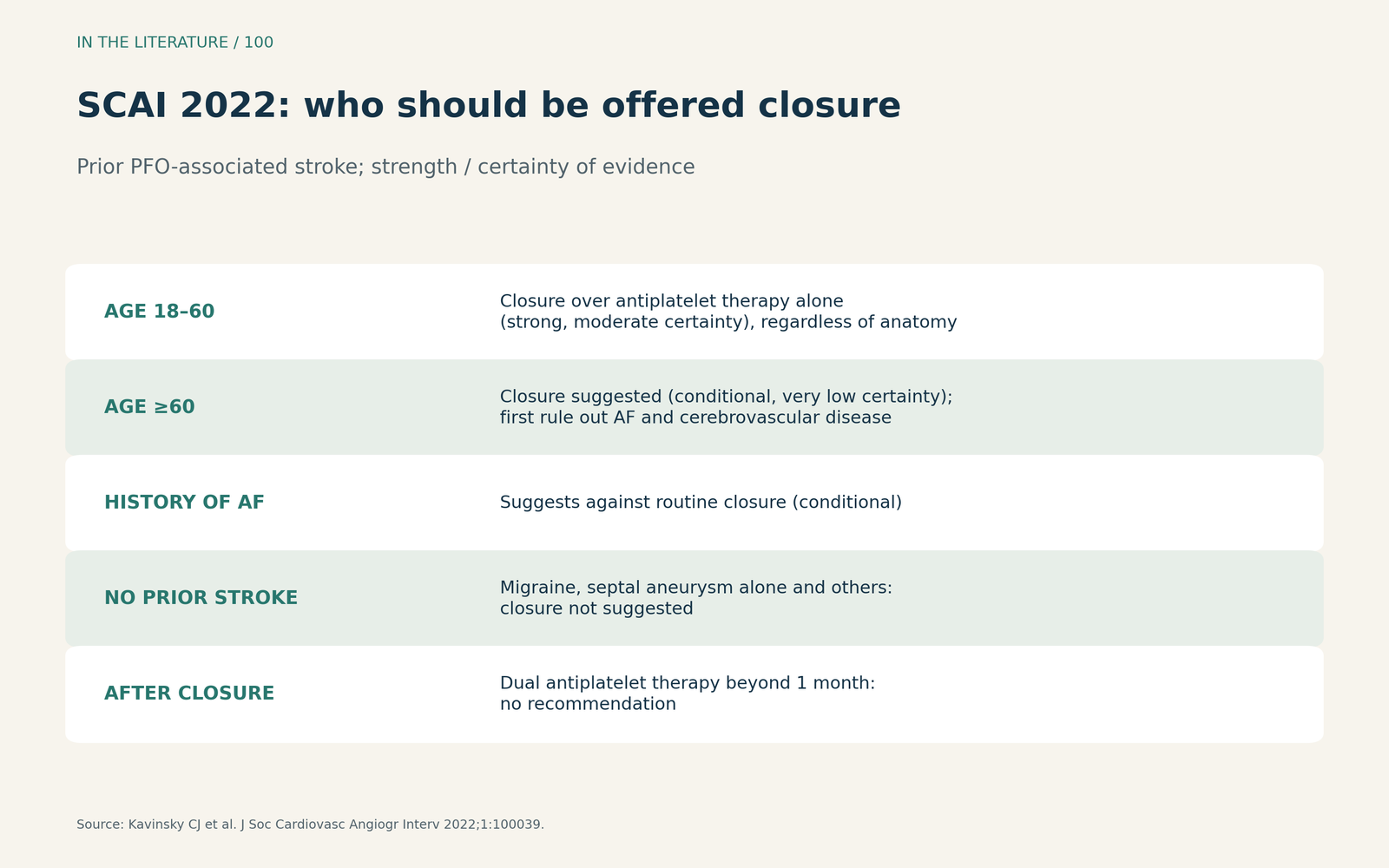
Figure 1. Who should be offered closure. Summarized from the 2022 SCAI guideline; strength and certainty as graded by the panel.[1] View larger.

Who benefits most
Benefit is not uniform. The Risk of Paradoxical Embolism (RoPE) score estimates how likely a PFO is to be the cause, but the Australian and New Zealand statement notes that a high RoPE score alone does not predict benefit. The PASCAL classification combines RoPE (high when 7 or more) with high-risk anatomy, defined as an atrial septal aneurysm with more than 10 mm of septal mobility or a large PFO.[2]
In the individual-patient analysis summarized in that statement, the hazard ratio for recurrent stroke with closure was 0.10 in the probable category, 0.38 in the possible category and 1.14 in the unlikely category, where the confidence interval crossed 1.[2] Song notes that this analysis included 3,740 patients, classified 37.0% as probable, 48.4% as possible and 14.6% as unlikely.[3] SCAI adds that a RoPE score of 7 or more may identify patients likely to receive greater benefit.[1]
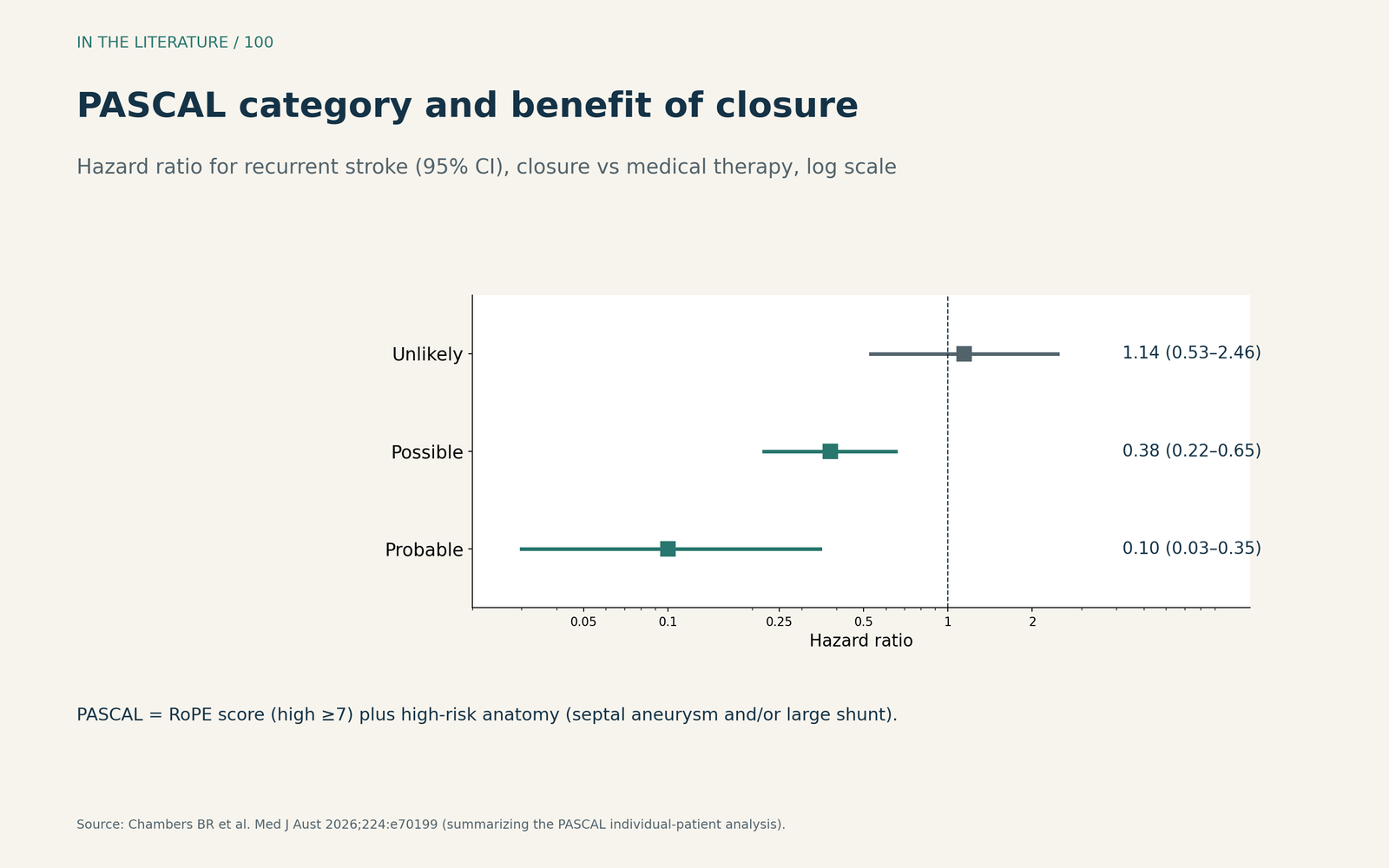
Figure 2. Benefit depends on the PASCAL category. Redrawn from the hazard ratios reported in the Australian and New Zealand consensus statement (log scale).[2] View larger.

What echocardiography must show
Because anatomy drives the decision, imaging quality matters. Song's review regards passage of more than 20 bubbles as marked shunting, and in one series TTE missed an atrial septal aneurysm in 47% of patients in whom TEE found one. The review concludes that the diagnostic sensitivity of TEE is nearly double that of TTE, while warning that an adequate Valsalva maneuver is hard to perform during TEE.[3] The Australian and New Zealand statement adds that high-grade and spontaneous right-to-left shunting predict a higher risk of recurrence.[2]
Patients over 60
Most randomized trials excluded older patients. SCAI suggests closure for patients aged 60 or older only as a conditional recommendation with very low certainty, after atrial fibrillation and cerebrovascular disease have been ruled out.[1]
A 2026 meta-analysis by Jazayeri and colleagues found less recurrent stroke with closure than with antithrombotic therapy alone in this age group (hazard ratio 0.56; 95% CI 0.43–0.74), but only one study was a randomized subgroup, and one administrative registry carried 62.5% of the weight. In older patients, benefit was significant only with high-risk PFO features. Among patients who had closure, those aged 60 or older had more recurrent stroke than younger patients (hazard ratio 3.47). The authors note that PASCAL is not suitable after 60 because the maximum possible RoPE score is too low, and conclude that closure may reduce risk.[4]
The trade-off: atrial fibrillation
New atrial fibrillation is the main cost. In a meta-analysis of controlled trials, Jurczyk and colleagues found atrial fibrillation in 5.1% after closure versus 1.6% with conservative treatment, and attributed the early peak to temporary inflammation.[5] SCAI reports that 86% of atrial fibrillation events occurred within 45 days and that they generally resolve with endothelialization of the occluder. It suggests against routine closure for patients with a history of atrial fibrillation who have had a stroke, and makes no recommendation on dual antiplatelet therapy beyond 1 month.[1] Atrial fibrillation was also more common after closure in patients aged 60 or older (4.86% vs 1.01%).[4]
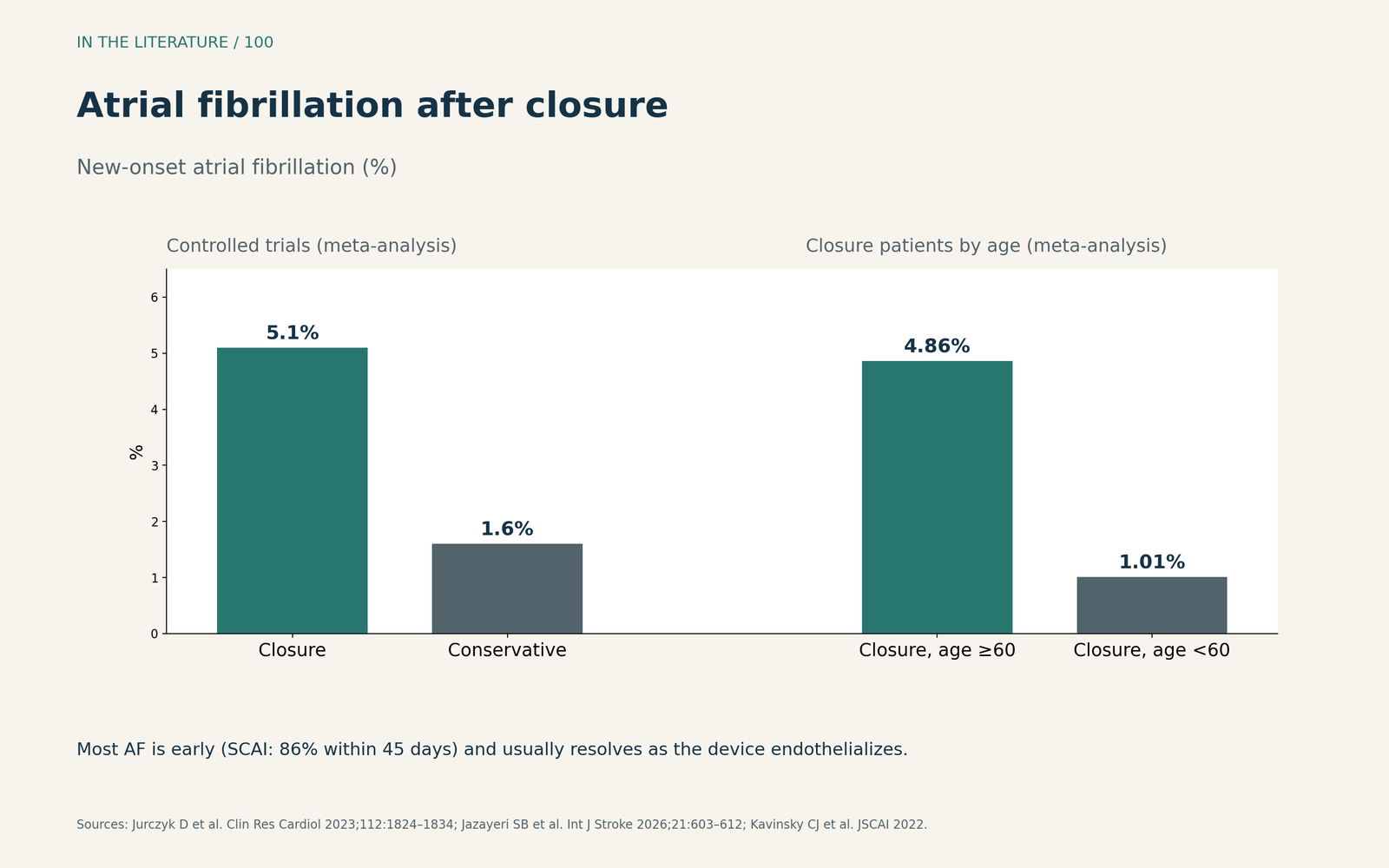
Figure 3. Atrial fibrillation after closure. Redrawn from the results of Jurczyk et al. (controlled trials) and Jazayeri et al. (closure patients by age); timing from the SCAI guideline.[1], [4], [5] View larger.

Three takeaways
- Closure is best supported for adults aged 18 to 60 with a PFO-associated stroke. The recommendation is strong and does not depend on anatomy.[1], [2]
- Anatomy refines the benefit. A septal aneurysm or large shunt, combined with a high RoPE score, identifies patients most likely to gain; TEE defines these features.[2], [3]
- Weigh age and atrial fibrillation. After 60 the evidence is weaker and mostly observational; early atrial fibrillation is common after closure, and a heart–brain team should decide.[1], [4], [5]
References
- Kavinsky CJ, Szerlip M, Goldsweig AM, et al. SCAI guidelines for the management of patent foramen ovale. J Soc Cardiovasc Angiogr Interv. 2022;1(4):100039. doi:10.1016/j.jscai.2022.100039
- Chambers BR, Sanders LM, Gilligan A, et al. Diagnosis and management of patent foramen ovale for stroke prevention: an Australian and New Zealand consensus statement developed by a modified nominal group approach. Med J Aust. 2026;224(5):e70199. doi:10.5694/mja2.70199
- Song JK. Pearls and pitfalls in the transesophageal echocardiographic diagnosis of patent foramen ovale. J Am Soc Echocardiogr. 2023;36(9):895–905.e3. doi:10.1016/j.echo.2023.05.004
- Jazayeri SB, Phan C, Ghozy S, et al. Outcomes of patent foramen ovale closure in patients over 60 years with cryptogenic stroke: a systematic review and meta-analysis. Int J Stroke. 2026;21(5):603–612. doi:10.1177/17474930251392333
- Jurczyk D, Macherey-Meyer S, Rawish E, et al. New-onset atrial fibrillation after percutaneous patent foramen ovale closure: a meta-analysis. Clin Res Cardiol. 2023;112(12):1824–1834. doi:10.1007/s00392-023-02263-8