ITL-5433f2ba1374
Juan Li, MD · Updated November 17, 2026
Watch the video
Key points
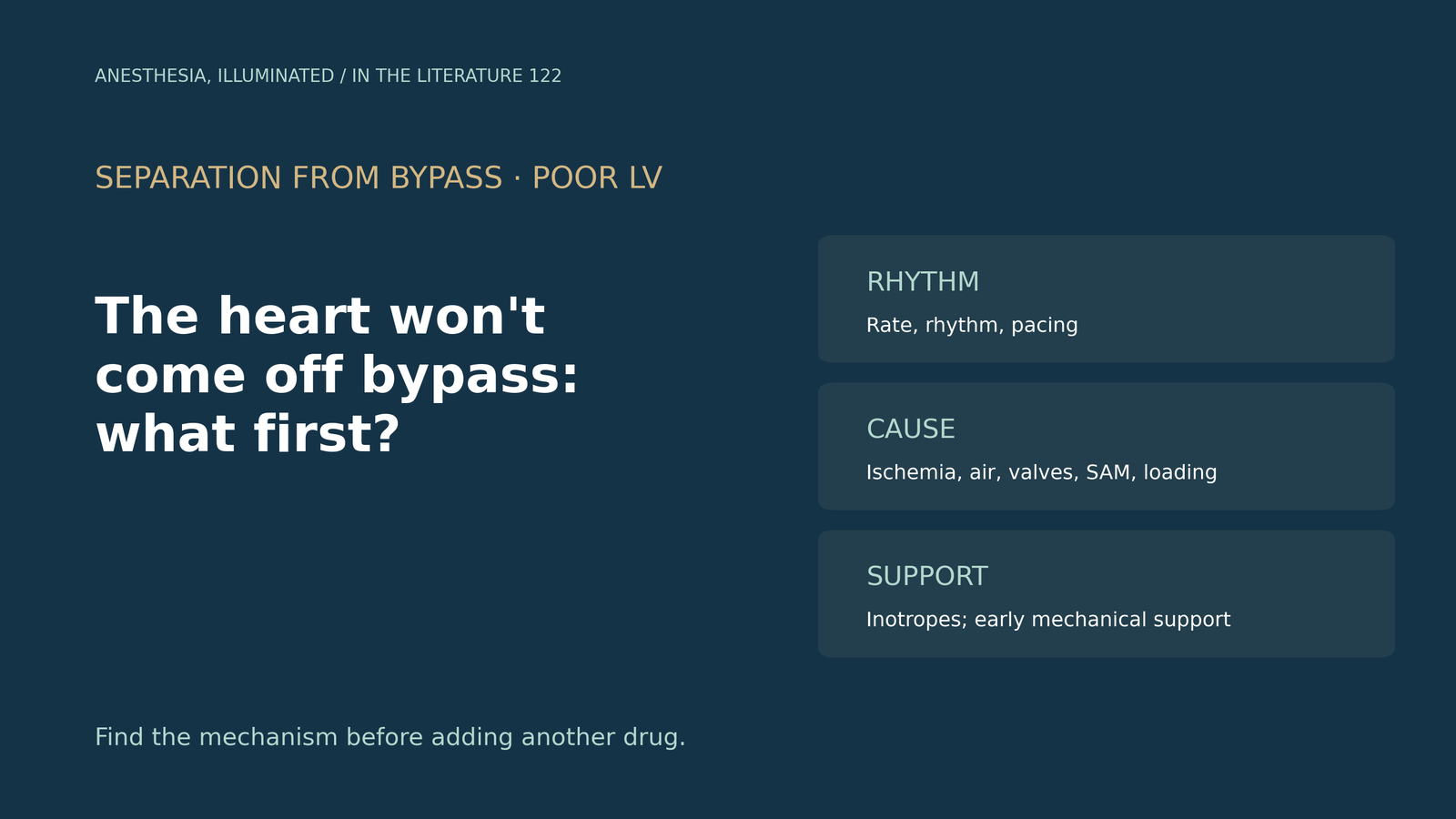
- The 2024 EACTS/EACTAIC/EBCP guideline calls for a standardized approach to difficult weaning under transesophageal echocardiography (TOE). Most problems are hemodynamic, and a pre-weaning checklist (Class I C) and TOE in cardiac surgery (Class I B) are recommended.[1]
- Look for a mechanism before adding drugs. Monaco and colleagues work through rhythm, ischemia (new ST changes or wall motion loss pointing to graft problems or coronary air), structural problems and loading before attributing failure to contractility.[2]
- Inotropes can make some problems worse. After mitral repair, systolic anterior motion (SAM) occurred in 8% of patients and is managed partly by avoiding inotropes, and a low preload can provoke SAM.[3], [2]
- Difficult separation can be anticipated. In one series, difficult separation occurred in 65.5% of patients with moderate or severe LV diastolic dysfunction versus 40.9% with normal function, and global longitudinal strain was the only independent predictor in a small 2026 study.[4], [5]
- Escalate deliberately. Inotropes and vasopressors are first-line for low output (Class I A), forcing weaning with high-dose drugs is not recommended (Class III B), and short-term mechanical support should be considered (Class IIa B). Prophylactic levosimendan did not help in LEVO-CTS.[1], [6], [7]
At the end of an aortic valve replacement with bypass grafting, the first attempt to come off bypass fails: the blood pressure falls and the ventricle looks sluggish on TOE. Before adding another inotrope, what should the team look for, in what order, and when should mechanical support come in?[1], [2]
A standardized approach
The 2024 EACTS/EACTAIC/EBCP guideline on cardiopulmonary bypass states that weaning may be difficult and requires a standardized approach under TOE guidance, including optimizing preload and evaluating dynamic and structural heart abnormalities. Most problems with weaning are related to hemodynamic instability. A checklist before weaning is recommended (Class I C), TOE is recommended in cardiac surgery unless contraindicated (Class I B), and assessment of residual air and adequacy of de-airing before weaning is part of TOE monitoring. The guideline also notes that LV and RV failure are the most obvious signs of suboptimal myocardial protection.[1]
What to check first
Monaco and colleagues define difficult separation as needing at least 2 inotropes or vasopressors to come off bypass. Their review works through the causes: new regional wall motion abnormalities suggest coronary occlusion, and in CABG, graft problems such as stenosis, kinking, anastomotic narrowing, incomplete revascularization or poor distal run-off. TOE shows whether hypotension comes from depressed contractility or from another cause, and a low preload may lead to SAM. Only then do they turn to contractility, which they call the most important determinant of successful separation.[2]
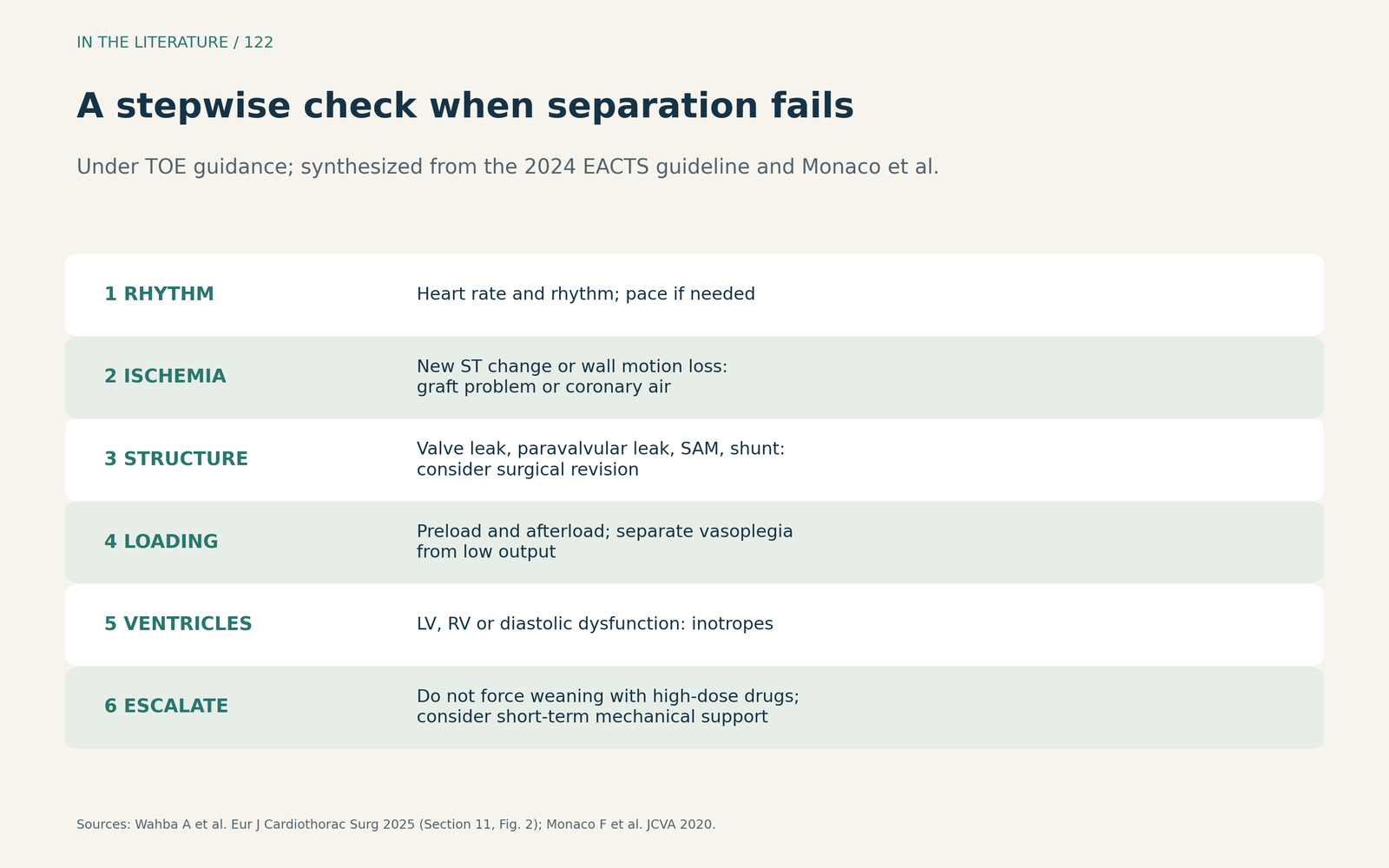
Figure 1. A stepwise check when separation fails. Synthesized from the 2024 EACTS guideline (Section 11, Fig. 2) and Monaco et al.[1], [2] View larger.

When inotropes are the wrong answer
In 375 mitral repairs, Varghese and colleagues found SAM in 8%, and note that avoiding inotropes when weaning helps manage it.[3] Recognizing SAM, a valve leak or ischemia on TOE therefore changes treatment from more drugs to a surgical or loading correction.[1], [2]
Who is at risk
Denault and colleagues observed difficult separation in 51.4% of their patients, in 65.5% of those with moderate or severe LV diastolic dysfunction and 40.9% of those with normal diastolic function; moderate to severe LV and RV diastolic dysfunction were associated with greater risk.[4] In 52 patients, Franceschini and colleagues found global longitudinal strain to be the only independent predictor of challenging separation, noting that LVEF is highly dependent on loading conditions and that larger cohorts are needed before routine use.[5]
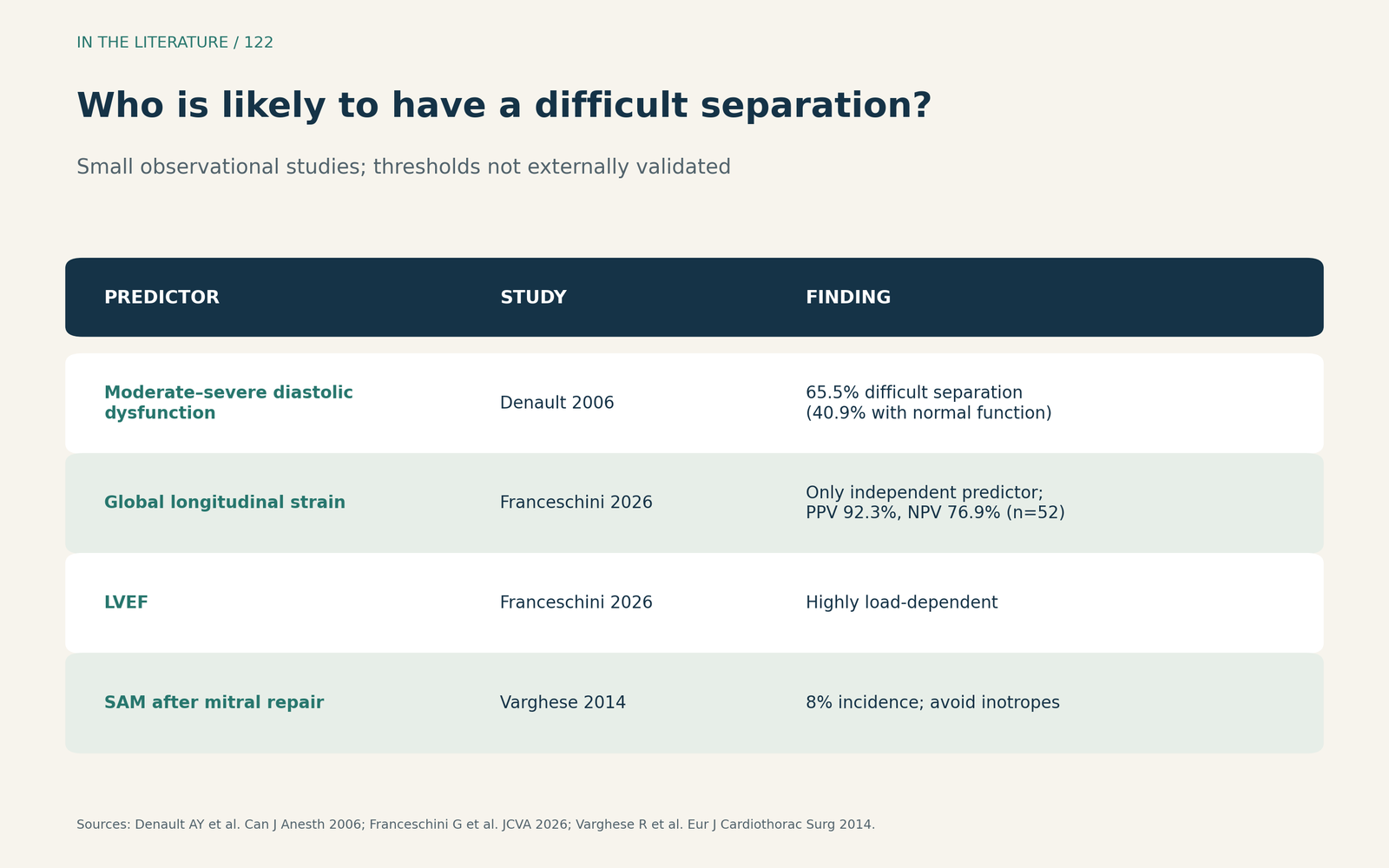
Figure 2. Who is likely to have a difficult separation. Synthesized from Denault et al., Franceschini et al. and Varghese et al.; small observational studies.[4], [5], [3] View larger.

Escalation
The EACTS guideline recommends inotropes and/or vasopressors as first-line treatment for low cardiac output (Class I A), a multidisciplinary approach in difficult weaning (Class I B), and consideration of short-term mechanical circulatory support (Class IIa B); forcing weaning with high-dose inotropes and vasoconstrictors is not recommended (Class III B).[1] In LEVO-CTS, prophylactic levosimendan in patients with reduced LVEF did not lower the composite end point, which occurred in 105 of 428 patients in the levosimendan group (24.5% in both groups).[6] The 2020 EACTS/ELSO/STS/AATS consensus notes that post-cardiotomy failure occurs in fewer than 4% of adults, lists extracorporeal life support as a primary option when weaning from bypass is impossible, and names uncontrollable bleeding as the only absolute contraindication.[7]
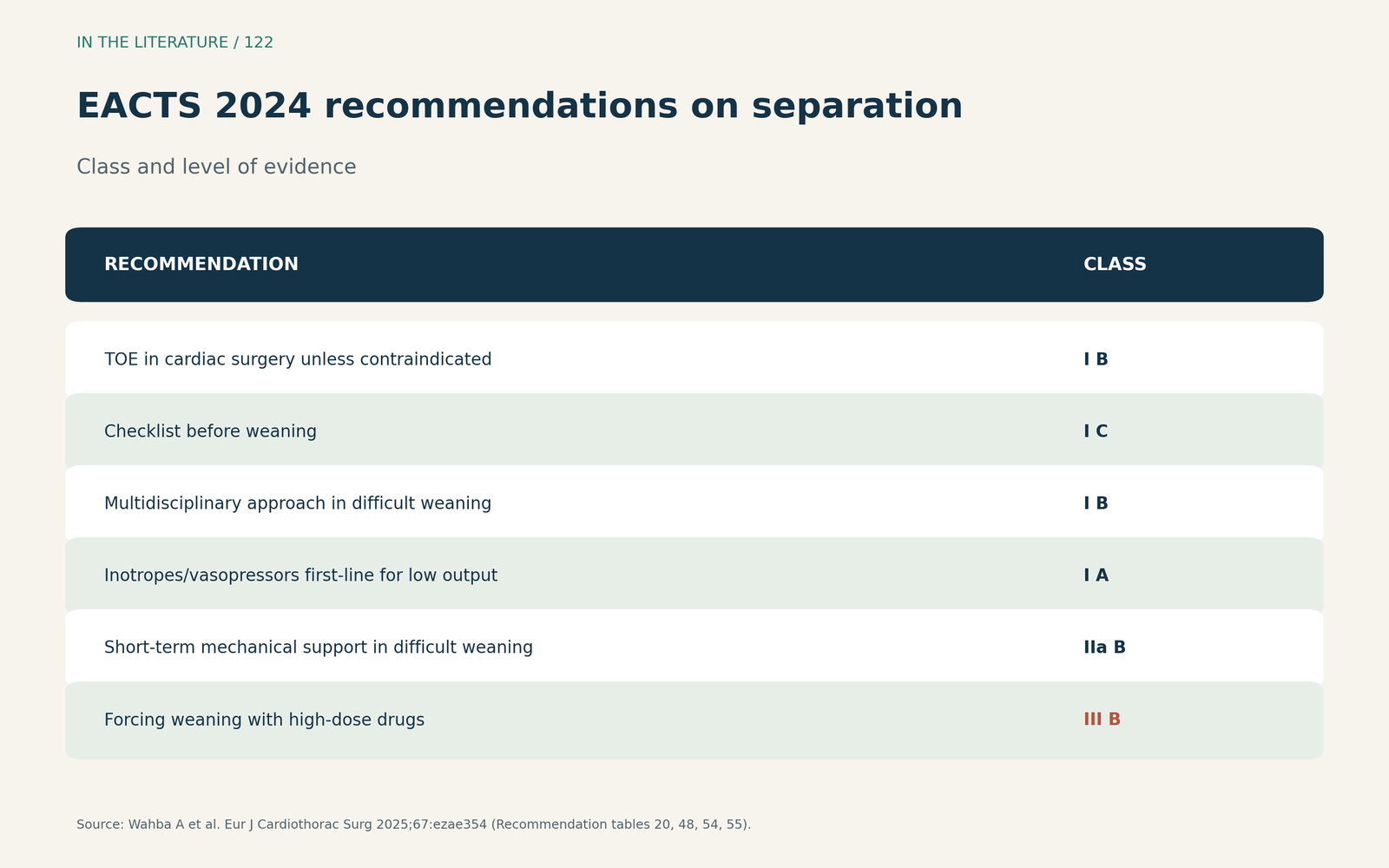
Figure 3. EACTS 2024 recommendations on separation. Redrawn from the recommendation tables of Wahba et al.[1] View larger.

Three takeaways
- Use TOE and a checklist. Rhythm, ischemia, structure and loading come before contractility.[1], [2]
- Do not reach for inotropes by reflex. SAM, valve problems or ischemia need a different fix.[2], [3]
- Anticipate and escalate early. Diastolic dysfunction and abnormal strain flag risk; do not force weaning with high-dose drugs, and consider mechanical support.[4], [5], [1], [7]
References
- Wahba A, Kunst G, De Somer F, et al. 2024 EACTS/EACTAIC/EBCP guidelines on cardiopulmonary bypass in adult cardiac surgery. Eur J Cardiothorac Surg. 2025;67(2):ezae354. doi:10.1093/ejcts/ezae354
- Monaco F, Di Prima AL, Kim JH, et al. Management of challenging cardiopulmonary bypass separation. J Cardiothorac Vasc Anesth. 2020;34(6):1622–1635. doi:10.1053/j.jvca.2020.02.038
- Varghese R, Itagaki S, Anyanwu AC, et al. Predicting systolic anterior motion after mitral valve reconstruction: using intraoperative transoesophageal echocardiography to identify those at greatest risk. Eur J Cardiothorac Surg. 2014;45(1):132–138. doi:10.1093/ejcts/ezt234
- Denault AY, Couture P, Buithieu J, et al. Left and right ventricular diastolic dysfunction as predictors of difficult separation from cardiopulmonary bypass. Can J Anaesth. 2006;53(10):1020–1029. doi:10.1007/BF03022532
- Franceschini G, Farinaccio A, Zingaro A, et al. Global longitudinal strain as a predictor of challenging separation from cardiopulmonary bypass. J Cardiothorac Vasc Anesth. 2026. Published online ahead of print. doi:10.1053/j.jvca.2026.09.036
- Mehta RH, Leimberger JD, van Diepen S, et al. Levosimendan in patients with left ventricular dysfunction undergoing cardiac surgery. N Engl J Med. 2017;376(21):2032–2042. doi:10.1056/NEJMoa1616218
- Lorusso R, Whitman G, Milojevic M, et al. 2020 EACTS/ELSO/STS/AATS expert consensus on post-cardiotomy extracorporeal life support in adult patients. J Thorac Cardiovasc Surg. 2021;161(4):1287–1331. doi:10.1016/j.jtcvs.2020.09.045