
ITL-cfbaa2e59736
Juan Li, MD · Updated November 18, 2026

Key points
- The idea is simple. Proportionate MR matches the degree of LV dilatation, and the framework explains the discordant trial results.[1]
- The trials enrolled different ventricles. Mean LVEDV was 252 mL in MITRA-FR and 192 mL in COAPT.[1]
- Patient-level data are less clear. In a registry, early MR reduction was greater with disproportionate MR, but there was no difference in mortality or HF hospitalization.[2]
- Pooled cohorts agree. Proportionality by EROA:LVEDV was not associated with mortality, and there is no agreed way to measure it.[3]
- Atrial MR is different. In atrial functional MR, disproportionate MR was linked to 1.35-fold higher mortality.[4]
Before TEER, the echo report states an EROA of 0.25 cm² and an LVEDV of 230 mL, and the team labels the MR "proportionate." Should that label lower expectations of TEER benefit, or exclude the patient?[1], [2]
The framework
Grayburn and colleagues describe proportionate MR as regurgitation that matches the degree of LV dilatation, and argue that the framework explains the discordant trial results. In MITRA-FR, mean LVEDV was 252 mL and 52% of patients had an EROA below 0.3 cm²; in COAPT, mean LVEDV was 192 mL. They propose the EROA-to-LVEDV ratio as the key measure.[1]
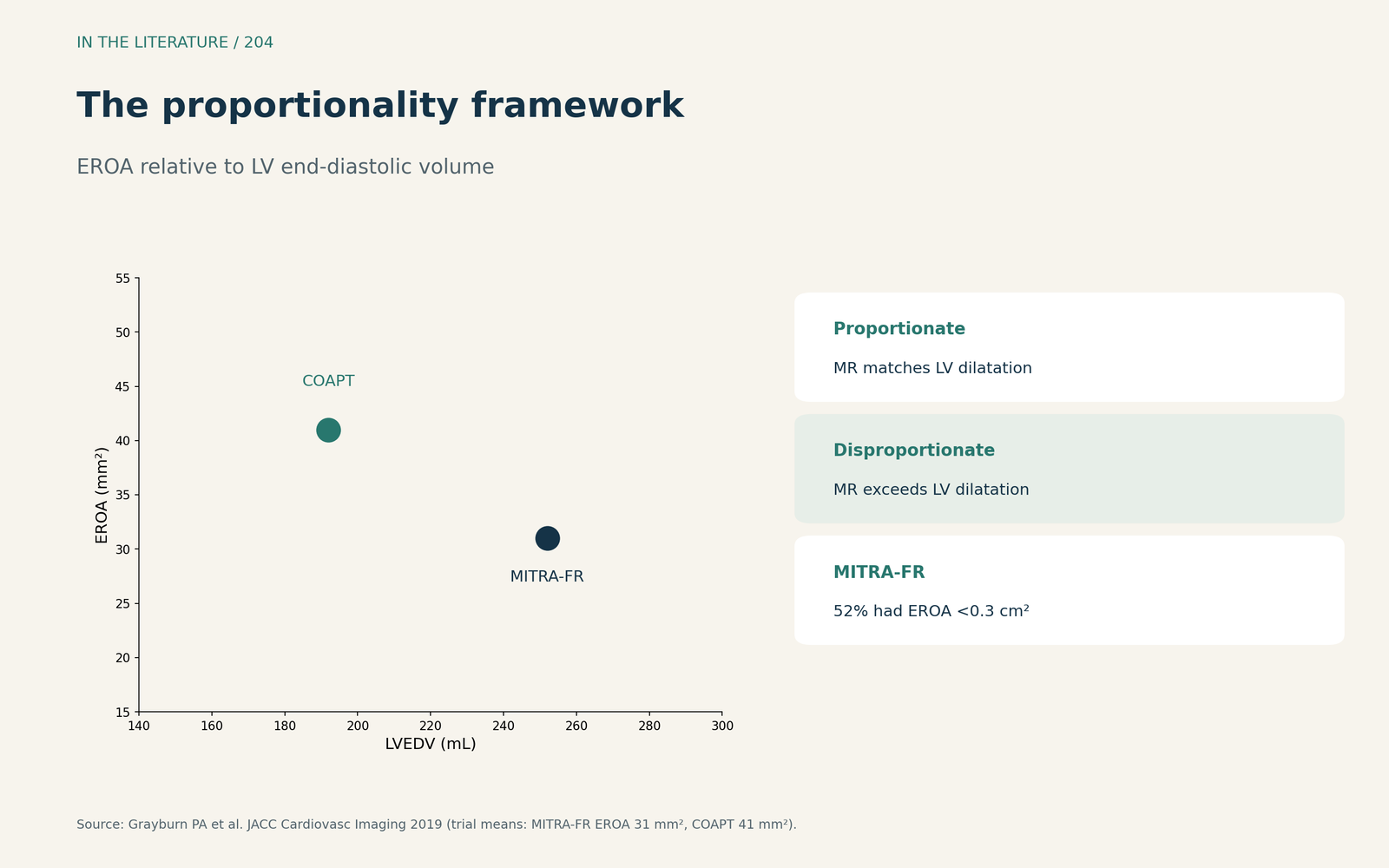
Figure 1. Same EROA, different ventricle, different meaning. Redrawn from Grayburn et al.[1] View larger.

What patient-level data show
In Ooms and colleagues' 241-patient registry, the cohort median ratio was close to the Gorlin-derived cutoff of 0.14. Early MR reduction was greater in disproportionate MR, but in 35% of patients with initial reduction, MR deteriorated by 1 year; deterioration did not differ between groups, and there was no difference in mortality or HF hospitalization. TEER may underperform in very dilated ventricles with poor LVEF.[2] Moonen and colleagues pooled six cohorts with 1594 patients: proportionality by EROA:LVEDV was not associated with mortality, disproportionate MR was associated with more residual MR above 2+, there is no agreed approach to assessing proportionality, and whether it identifies durable TEER responders is unsubstantiated.[3] Resor and Brovman add that the concept lacks patient-level data for selection, that the proportionate-like COAPT subgroup was only 10%, and that patient-level analysis is needed before excluding patients.[5]

Figure 2. Better early MR reduction, not better survival. Synthesized from Ooms et al., Moonen et al. and Resor and Brovman.[2], [3], [5] View larger.

Atrial functional MR
Doldi and colleagues studied atrial functional MR, with a mean EROA of 0.27 cm² and LVEDV of 95.6 mL. Disproportionate MR was linked to 1.35-fold higher mortality, suggesting the concept may not apply when LV function is preserved.[4]
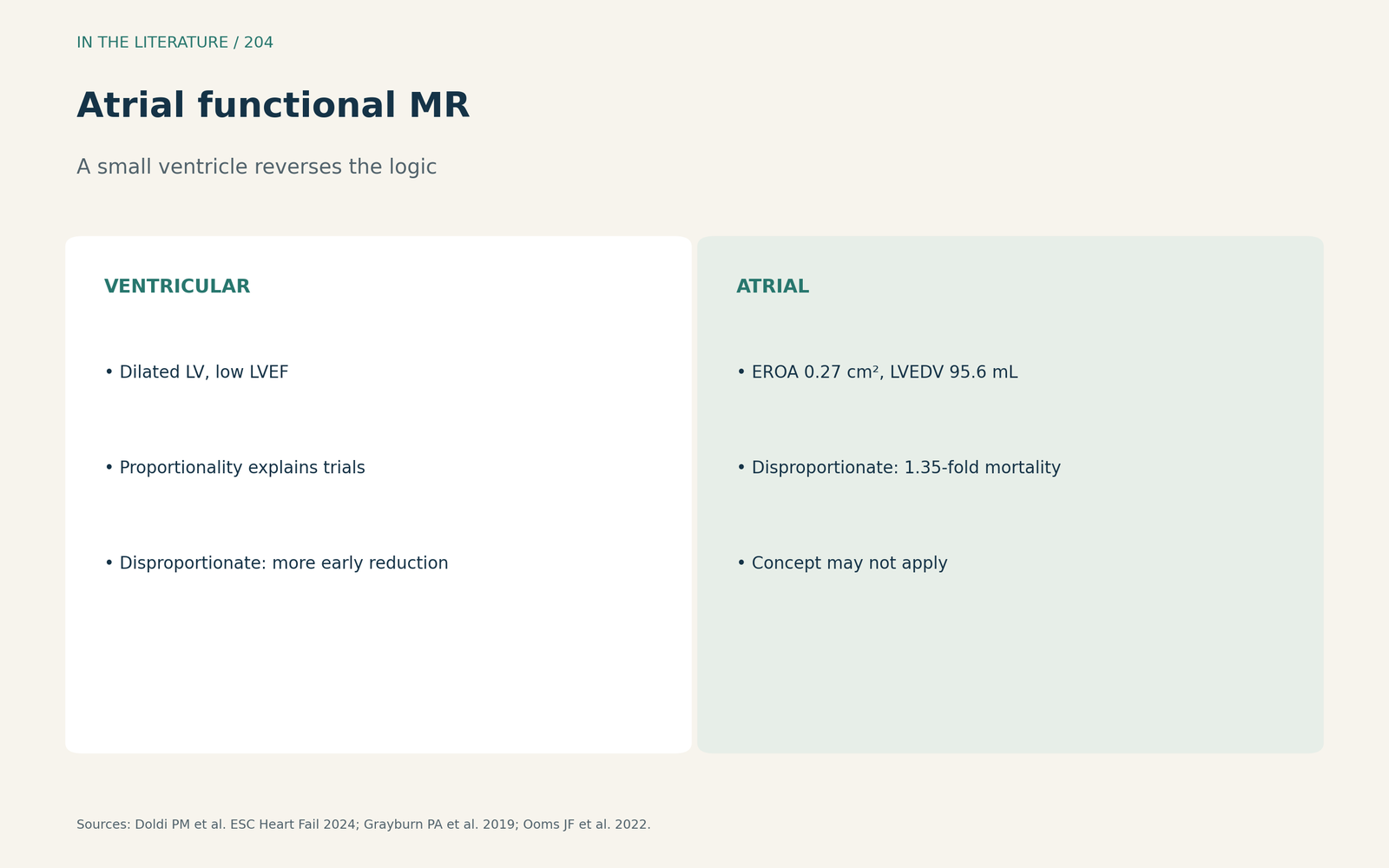
Figure 3. A small ventricle reverses the logic. Synthesized from Doldi et al. and Grayburn et al.[4], [1] View larger.

Three takeaways
- Proportionality explains why COAPT and MITRA-FR differed.[1]
- In individual patients it predicts early MR reduction, not survival; do not use it alone to exclude TEER.[2], [3], [5]
- In atrial functional MR with a normal-sized ventricle, the concept does not transfer.[4]
References
- Grayburn PA, Sannino A, Packer M. Proportionate and disproportionate functional mitral regurgitation: a new conceptual framework that reconciles the results of the MITRA-FR and COAPT trials. JACC Cardiovasc Imaging. 2019;12(2):353–362. doi:10.1016/j.jcmg.2018.11.006
- Ooms JF, Bouwmeester S, Debonnaire P, et al. Transcatheter edge-to-edge repair in proportionate versus disproportionate functional mitral regurgitation. J Am Soc Echocardiogr. 2022;35(1):105–115.e8. doi:10.1016/j.echo.2021.08.002
- Moonen A, Cao J, Celermajer DS, Ng MKC. Mitral regurgitation “proportionality” in functional mitral regurgitation and outcomes after mitral valve transcatheter edge-to-edge repair: a systematic review and meta-analysis. Struct Heart. 2024;8(3):100284. doi:10.1016/j.shj.2024.100284
- Doldi PM, Stolz L, Kassar M, et al. Paradox of disproportionate atrial functional mitral regurgitation and survival after transcatheter edge-to-edge repair. ESC Heart Fail. 2024;11(4):2447–2450. doi:10.1002/ehf2.14789
- Resor CD, Brovman EY. Is MitraClip patient selection based on proportionate or disproportionate mitral regurgitation: a proportional response to existing data? J Cardiothorac Vasc Anesth. 2020;34(6):1688–1689. doi:10.1053/j.jvca.2019.12.041