
ITL-06e118b8362f
Juan Li, MD · Updated November 18, 2026
Key points
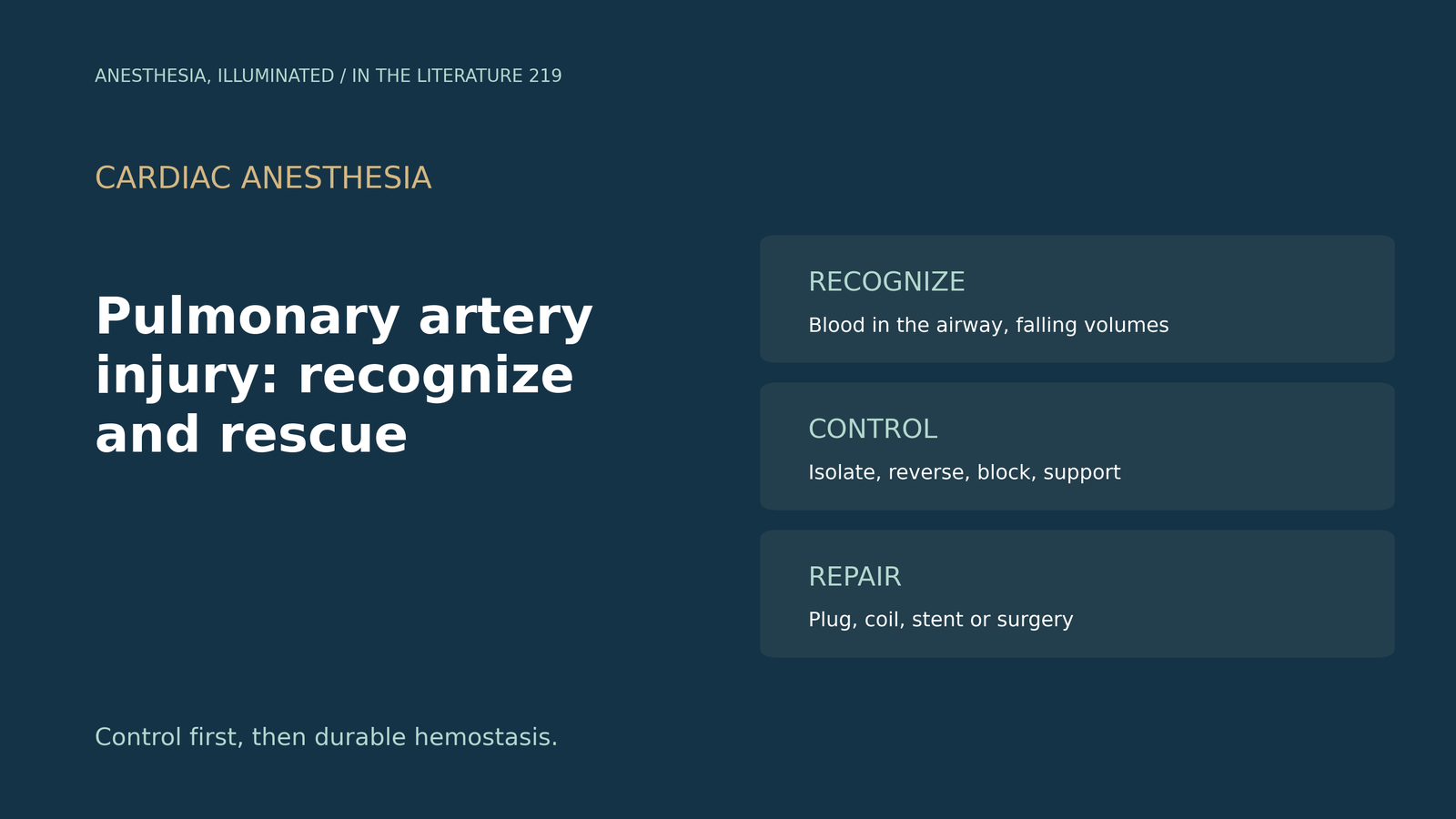
- Think PA first. Airway bleeding during or after right heart catheterization should immediately raise suspicion of PA injury, and hemoptysis should not be dismissed as routine.[1]
- Rare but deadly. Swan-Ganz catheterization causes PA rupture in less than 0.2% of cases, but mortality can approach 50%.[2]
- Watch the ventilator. After bypass, falling ventilation volumes are the earliest sign of bleeding into the airways, which usually begins during weaning.[3]
- Act in parallel. Isolate the bleeding lung, reverse anticoagulation and stabilize hemodynamics while the diagnosis is being confirmed.[1]
- Control, then repair. Obtain temporary control first, then secure durable hemostasis with a plug, coil, covered stent or surgery.[1], [2]
During weaning from bypass, blood suddenly appears in the endotracheal tube and tidal volumes fall. What do you do in the next few minutes?[1], [3]
Recognize it early
Horita and Hachinohe (JACC Case Rep 2026) stress that airway bleeding during or after right heart catheterization should immediately raise suspicion of PA injury and that hemoptysis should not be dismissed as a routine airway event.[1] Rudziński et al. (Postepy Kardiol Interwencyjnej 2016) report rupture in less than 0.2% of Swan-Ganz catheterizations, mortality approaching 50%, the right lung affected in 90% of cases, and symptoms ranging from slight cough to massive hemorrhage.[2] In Guth et al. (J Thorac Cardiovasc Surg 2018), severe endobronchial bleeding occurred in eight of 396 pulmonary endarterectomy patients (2.0%); most began during weaning from bypass, and falling ventilation volumes were the earliest sign.[3] Major cardiac or vascular injury should also be suspected when resuscitation fails to respond.[4]
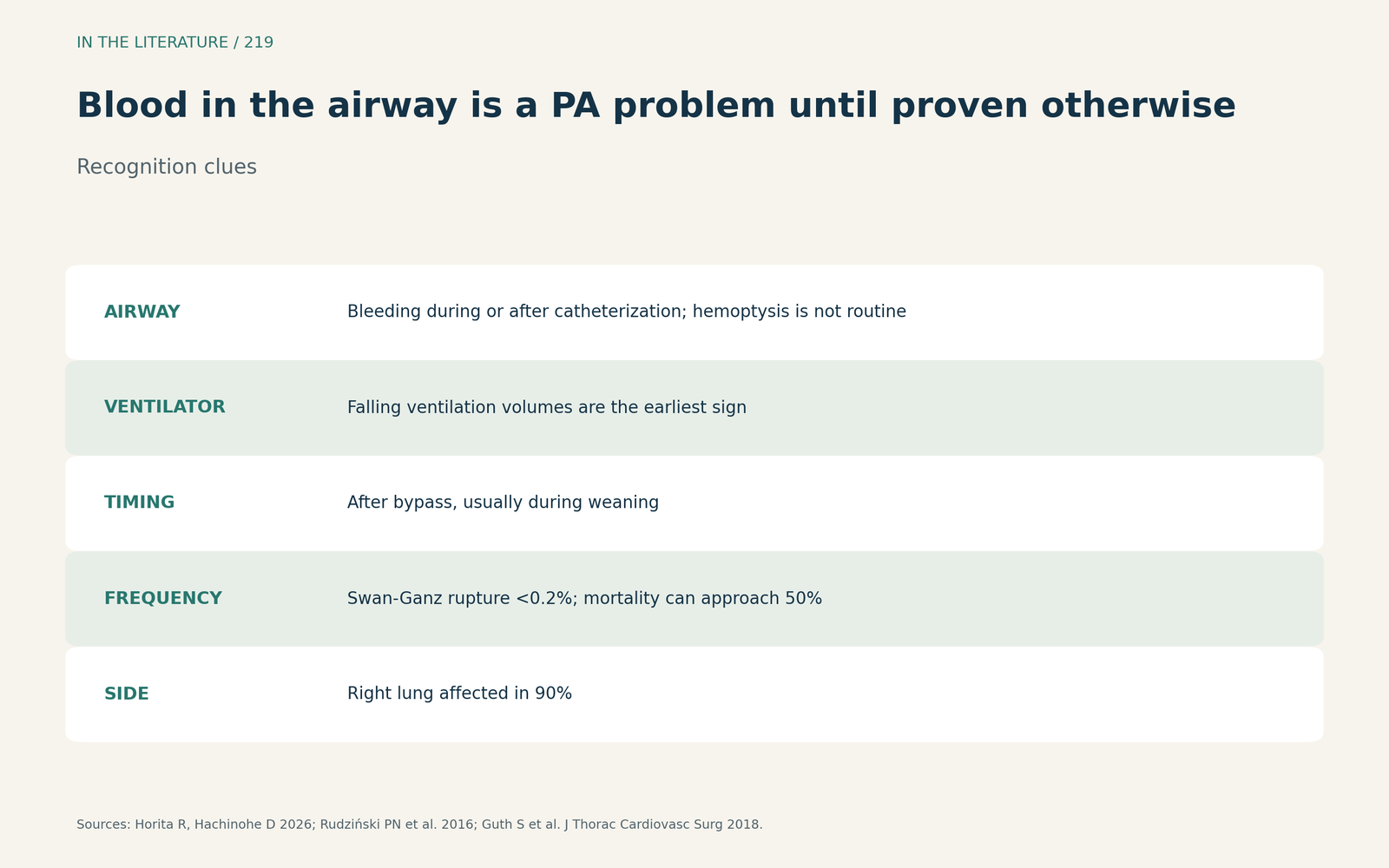
Figure 1. Blood in the airway is a PA problem until proven otherwise. Synthesized from Horita and Hachinohe, Rudziński et al., Guth et al. and Kiran et al.[1], [2], [3], [4] View larger.

Temporary control
Diagnosis and treatment should proceed in parallel: isolate the bleeding lung, reverse anticoagulation and stabilize hemodynamics; a balloon catheter can temporarily control flow to the injured segment.[1] In Guth et al., the affected bronchus was blocked under bronchoscopy when bleeding was localized, and the team switched from bypass to VA ECMO with full-dose protamine reversal; clotting risk in the heparin-coated oxygenator was minimal.[3] In thoracoscopic surgery, Mei et al. (Surg Endosc 2013) used immediate suction side compression of the injury and managed 15 of 17 vascular injuries without conversion; hemostatic material or compression alone was not enough.[5] In a case report of massive haemorrhage from a distal left PA branch after bypass (Shaver et al., J Cardiothorac Vasc Anesth 2023), 1.5 L of blood was suctioned from the endotracheal tube within minutes; the team returned to bypass, and later chose VA ECMO partly because it allows a lower activated clotting time than bypass.[6] For the accompanying shock, damage-control resuscitation uses a plasma to platelet to red cell ratio close to 1:1:1 (Cannon, N Engl J Med 2018).[7]
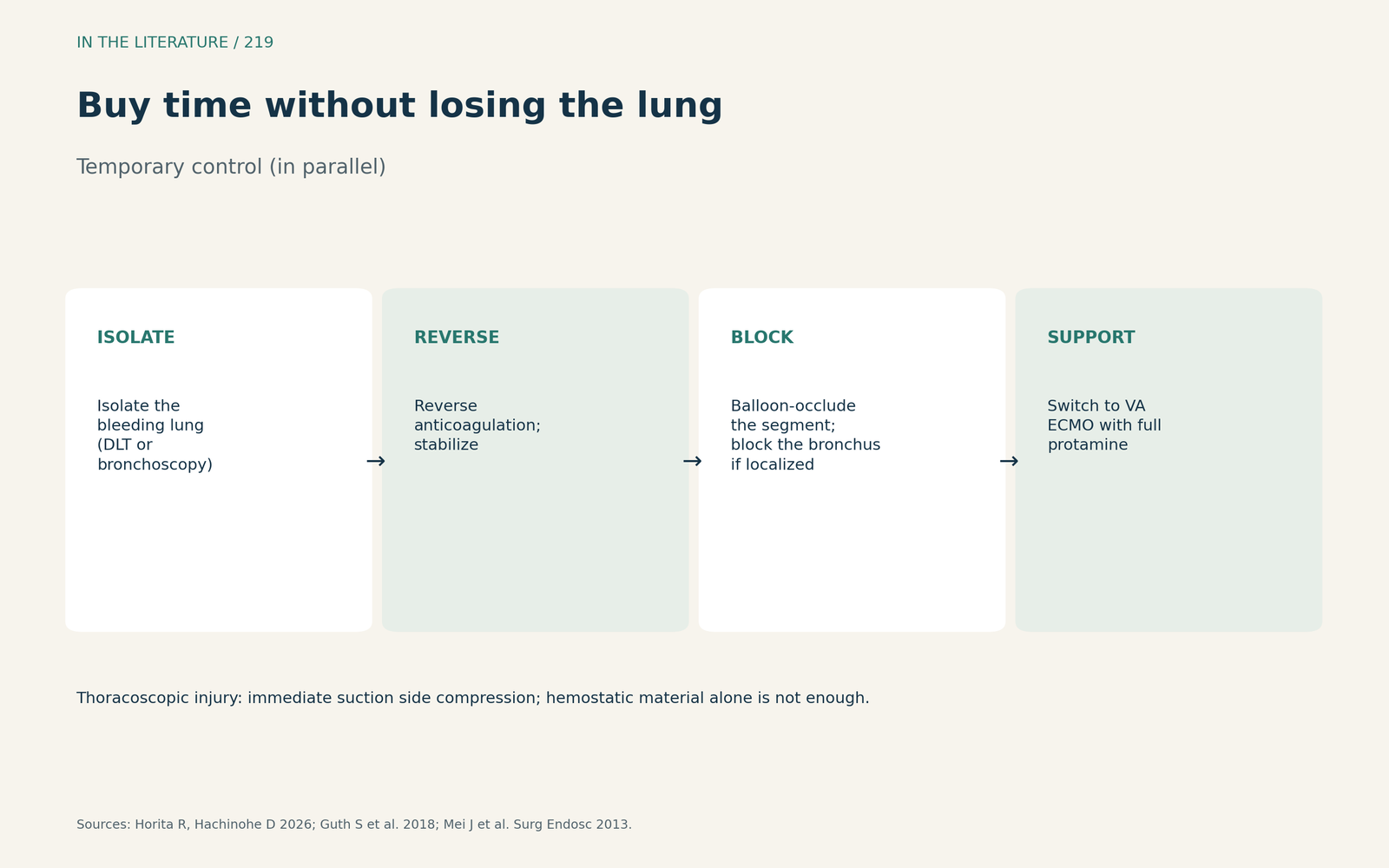
Figure 2. Buy time without losing the lung. Synthesized from Horita and Hachinohe, Guth et al. and Mei et al.[1], [3], [5] View larger.

Definitive repair
Horita and Hachinohe advise to first obtain temporary control, then secure durable hemostasis with vascular plugs, covered stents or, in selected cases, surgery.[1] Rudziński et al. consider transcatheter closure of the injured artery the usual first-choice procedure,[2] and Liu et al. (BMC Pulm Med 2024) note that coiling and stenting are preferred because they are less invasive; ruptured pseudoaneurysms more often presented with massive hemoptysis (57.1% vs 6.9%).[8] In pulmonary artery dissection, rupture is more likely than re-entry, CT is the preferred imaging, and pulmonary artery catheters have been reported as a potential source (Savsani et al., J Cardiothorac Vasc Anesth 2022).[9] The evidence is case series, retrospective cohorts and expert comment.
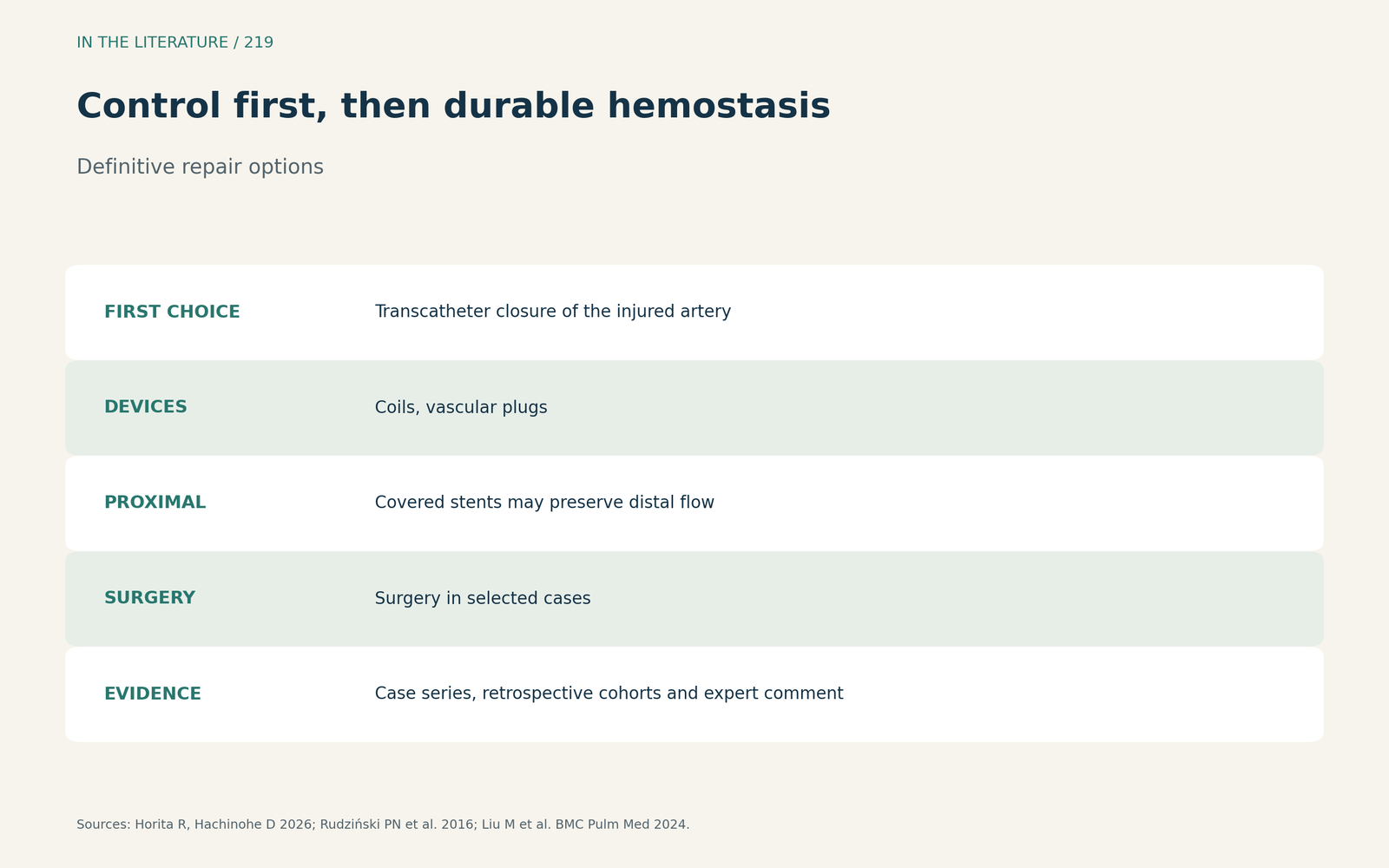
Figure 3. Control first, then durable hemostasis. Synthesized from Horita and Hachinohe, Rudziński et al. and Liu et al.[1], [2], [8] View larger.

Three takeaways
- Treat blood in the airway or falling ventilation volumes after PA instrumentation or bypass as PA injury.[1], [3]
- Isolate the lung, reverse anticoagulation and stabilize while you confirm the site.[1]
- Gain temporary control, then plan definitive endovascular or surgical repair.[1], [2], [3]
References
- Horita R, Hachinohe D. Pulmonary artery perforation during right heart catheterization. JACC Case Rep. 2026;31(31):109019. doi:10.1016/j.jaccas.2026.109019
- Rudziński PN, Henzel J, Dzielińska Z, et al. Pulmonary artery rupture as a complication of Swan-Ganz catheter application. Diagnosis and endovascular treatment: a single centre’s experience. Postepy Kardiol Interwencyjnej. 2016;12(2):135–139. doi:10.5114/aic.2016.59364
- Guth S, Wiedenroth CB, Wollenschläger M, et al. Short-term venoarterial extracorporeal membrane oxygenation for massive endobronchial hemorrhage after pulmonary endarterectomy. J Thorac Cardiovasc Surg. 2018;155(2):643–649. doi:10.1016/j.jtcvs.2017.09.045
- Kiran M, Murukendiran GJ, Ballal P, et al. Pulmonary artery rupture during cardiopulmonary resuscitation in a postcardiac surgical infant. J Cardiothorac Vasc Anesth. 2020;34(12):3487–3488. doi:10.1053/j.jvca.2020.04.048
- Mei J, Pu Q, Liao H, et al. A novel method for troubleshooting vascular injury during anatomic thoracoscopic pulmonary resection without conversion to thoracotomy. Surg Endosc. 2013;27(2):530–537. doi:10.1007/s00464-012-2475-1
- Shaver S, Bailey C, Jain A. Spontaneous hemorrhage of the distal segment of the left pulmonary artery after cardiopulmonary bypass. J Cardiothorac Vasc Anesth. 2023;37(3):457–460. doi:10.1053/j.jvca.2022.11.023
- Cannon JW. Hemorrhagic shock. N Engl J Med. 2018;378(4):370–379. doi:10.1056/NEJMra1705649
- Liu M, Liu J, Yu W, et al. Clinical and radiological features associated with rupture of pulmonary artery pseudoaneurysm: a retrospective study. BMC Pulm Med. 2024;24(1):417. doi:10.1186/s12890-024-03225-0
- Savsani P, Chapa J, Saleem K, et al. Pulmonary artery dissection in a patient with right-sided mechanical circulatory support and an LVAD. J Cardiothorac Vasc Anesth. 2022;36(12):4410–4412. doi:10.1053/j.jvca.2022.06.037