ITL-ca74896a1f15
Juan Li, MD · Updated November 18, 2026
Watch the video
Key points
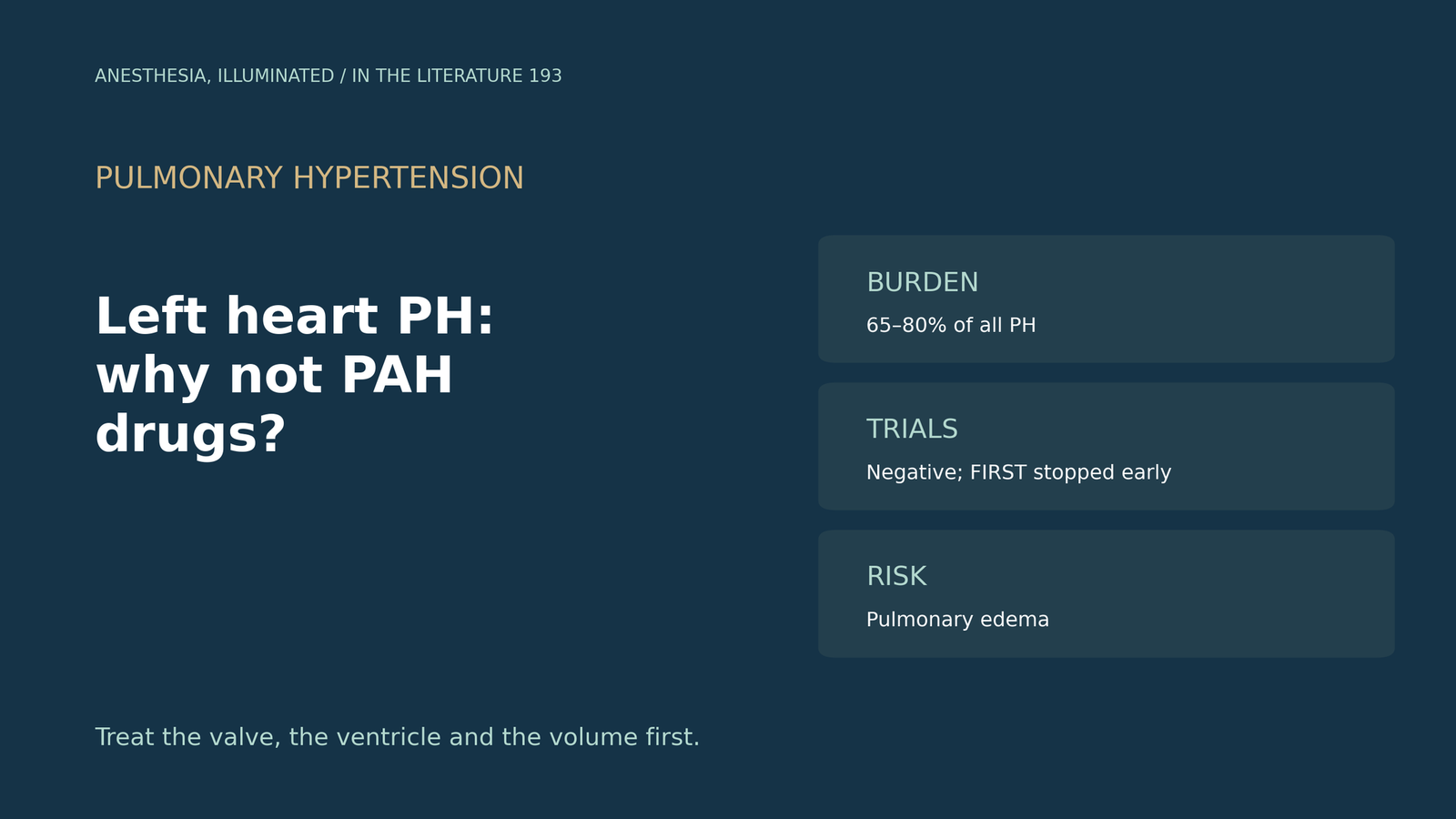
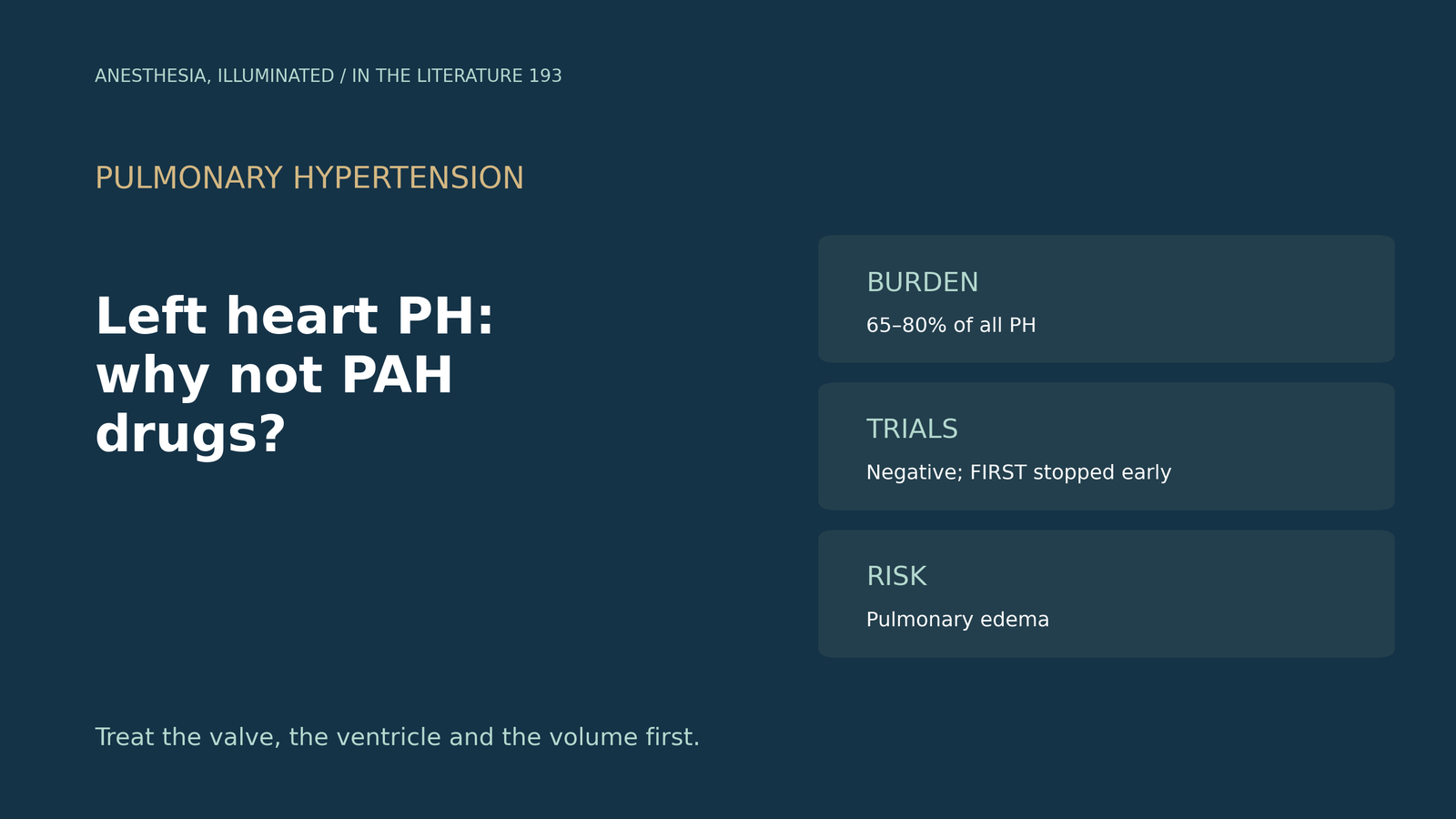
- This is the common form of PH. Left heart diseases account for 65 to 80% of PH cases, and PAH therapies may even be harmful in this group.[1]
- The trials were negative. Trials of PAH-type drugs in heart failure were all negative, and the FIRST epoprostenol trial stopped early for a mortality trend.[1], [2]
- Vasodilating the lungs can flood them. Selective pulmonary vasodilators risk raising wedge pressure and causing pulmonary edema.[2]
- Treat the left heart first. The primary goal is to optimize the underlying condition, and aggressive diuresis should precede any pulmonary vasodilator.[2], [3]
- The burden is large. Pooled PH prevalence in heart failure is 46.6%, yet there are no specific treatments for this group.[4], [5]
A patient with severe mitral regurgitation and reduced ejection fraction has a high pulmonary artery pressure, and someone suggests starting sildenafil before surgery. Why are drugs for pulmonary arterial hypertension not the answer here?[1], [2]
A different disease, not just a higher pressure
Rosenkranz and colleagues note that left heart diseases account for 65 to 80% of PH cases and that PAH therapies may even be harmful in this setting; combined pre- and post-capillary PH affects 12 to 38% of heart failure patients with PH.[1] Guha and colleagues report PH in about 60 to 70% of patients with HFrEF, warn that echo can underestimate pulmonary pressure in up to 80% of patients, and note that isolated post-capillary PH improved immediately when filling pressure fell.[4] Khan and colleagues' meta-analysis puts pooled PH prevalence in heart failure at 46.6% and notes the lack of specific treatments for this group.[5] The ESC/ERS guidelines (Humbert et al., Eur Respir J 2023) define post-capillary PH as mPAP above 20 mmHg with PAWP above 15 mmHg, and in left heart disease a PVR above 5 WU may indicate a severe pre-capillary component.[6]
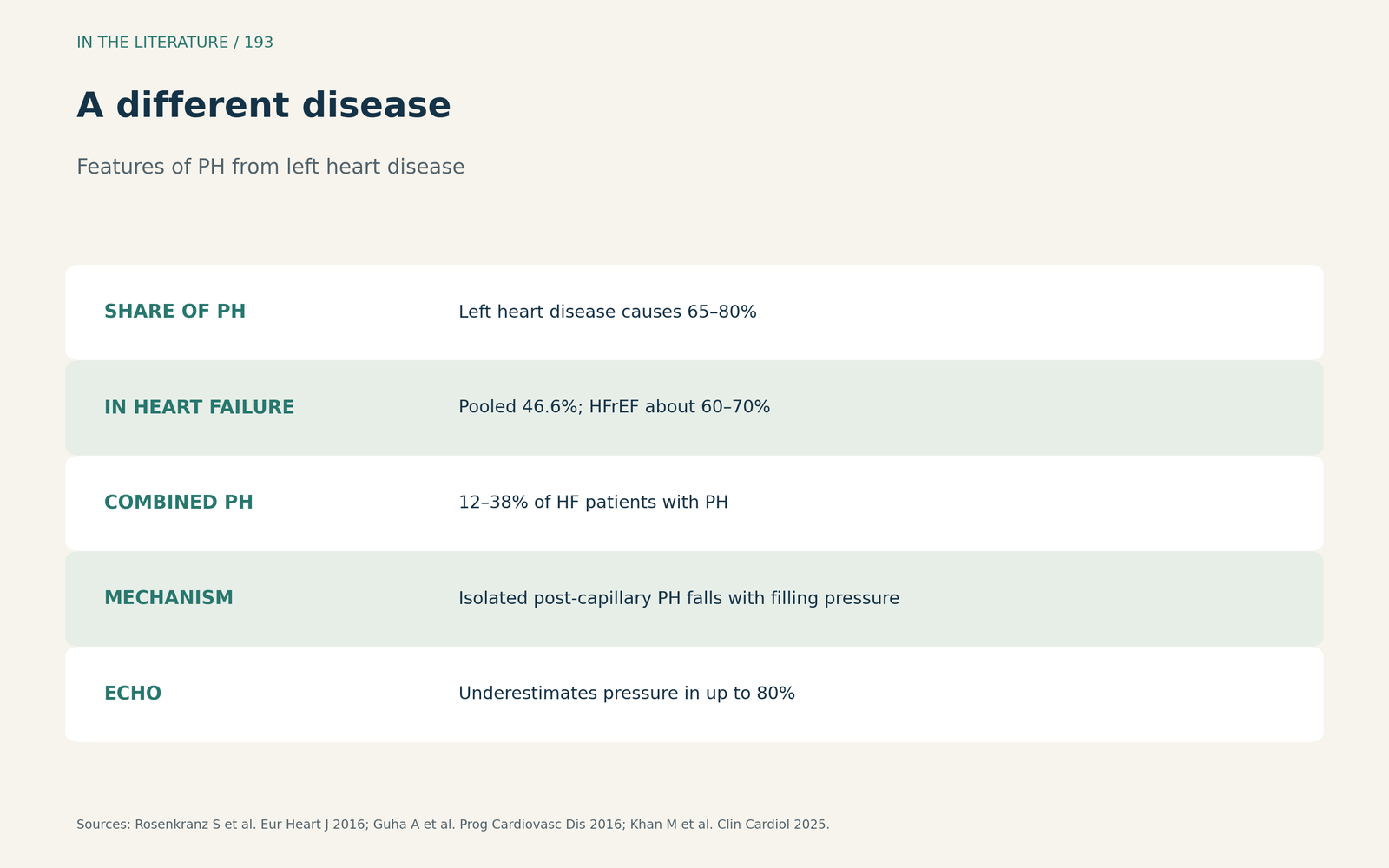
Figure 1. Pressure from behind, not disease of the vessels alone. Synthesized from Rosenkranz et al., Guha et al. and Khan et al.[1], [4], [5] View larger.

What happened when PAH drugs were tried
Vachiéry and colleagues warned that the vague "out-of-proportion" label may encourage PAH drug use in left heart disease and lead to inappropriate therapy. Trials of PAH-type drugs in heart failure were all negative; selective pulmonary vasodilators risk raising wedge pressure and causing pulmonary edema; and there is no approved therapy for PH due to left heart disease. They suggested that only combined pre- and post-capillary PH should be the target population for future trials.[2] Rosenkranz and colleagues add that the FIRST epoprostenol trial stopped early for a mortality trend and that no PAH compound is approved for this indication.[1] Mehra and colleagues note that sildenafil in HFpEF did not improve exercise capacity and that guidelines do not recommend Group 1 drugs here.[3]
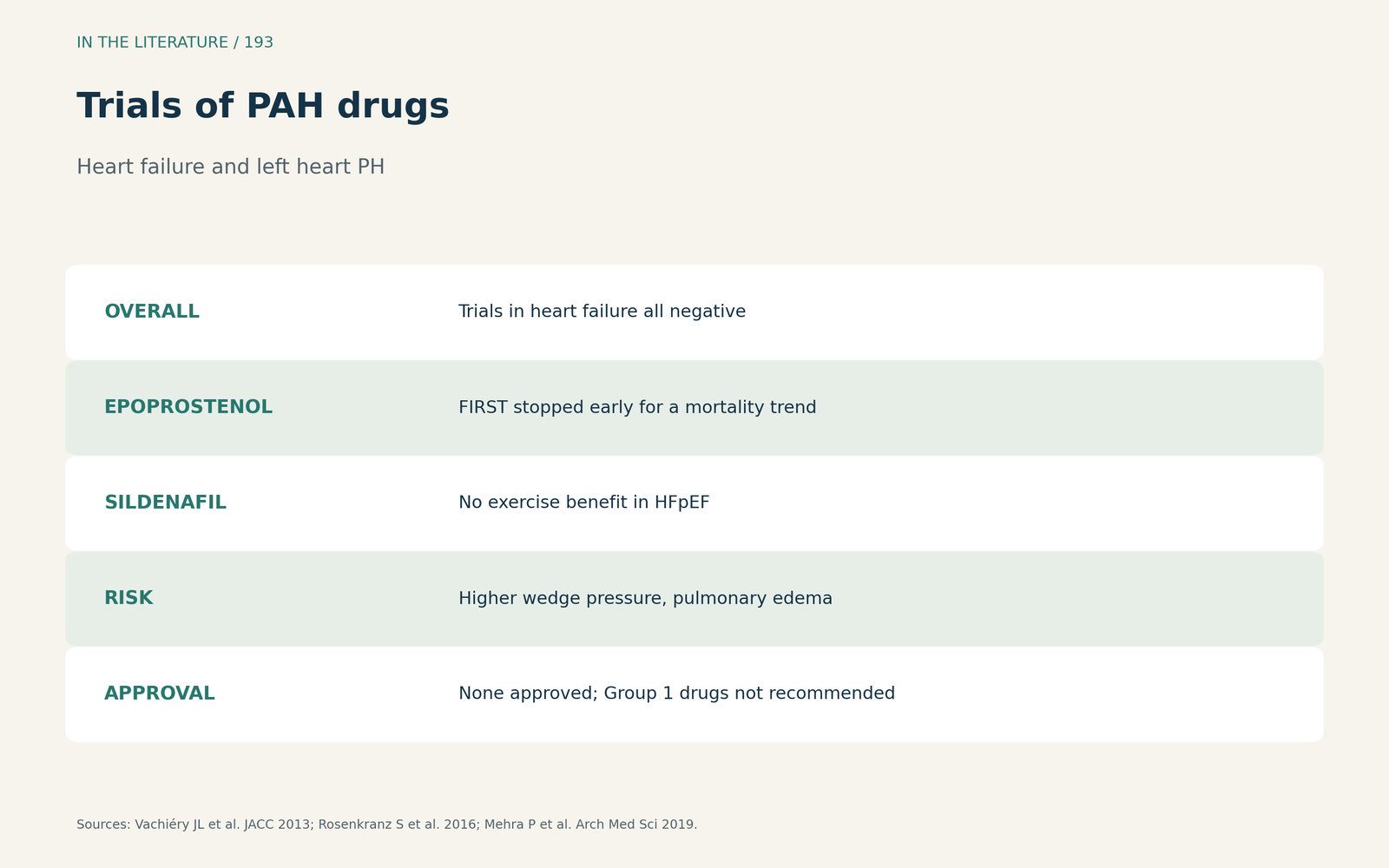
Figure 2. Negative trials, possible harm. Synthesized from Vachiéry et al., Rosenkranz et al. and Mehra et al.[2], [1], [3] View larger.

What to do instead
The primary goal is to optimize management of the underlying condition before considering specific PH measures.[2] Aggressive diuresis should precede any pulmonary vasodilator, and precise classification should prevent inappropriate off-label PAH drug use.[3], [1] A practical review (Hansdottir et al., Chest 2013) adds that there is no consensus on what level of pulmonary pressure or PVR is out of proportion, and that therapies indicated for WHO group 1 PAH may be harmful in group 2 PH.[7] In degenerative mitral regurgitation, an editorial (Cremer and Guduguntla, JACC Cardiovasc Imaging 2024) notes that postoperative prognosis was similar with PASP below 35 and 35–50 mm Hg but worse above 50 mm Hg, so surgery should be pursued before significant pulmonary hypertension develops.[8]
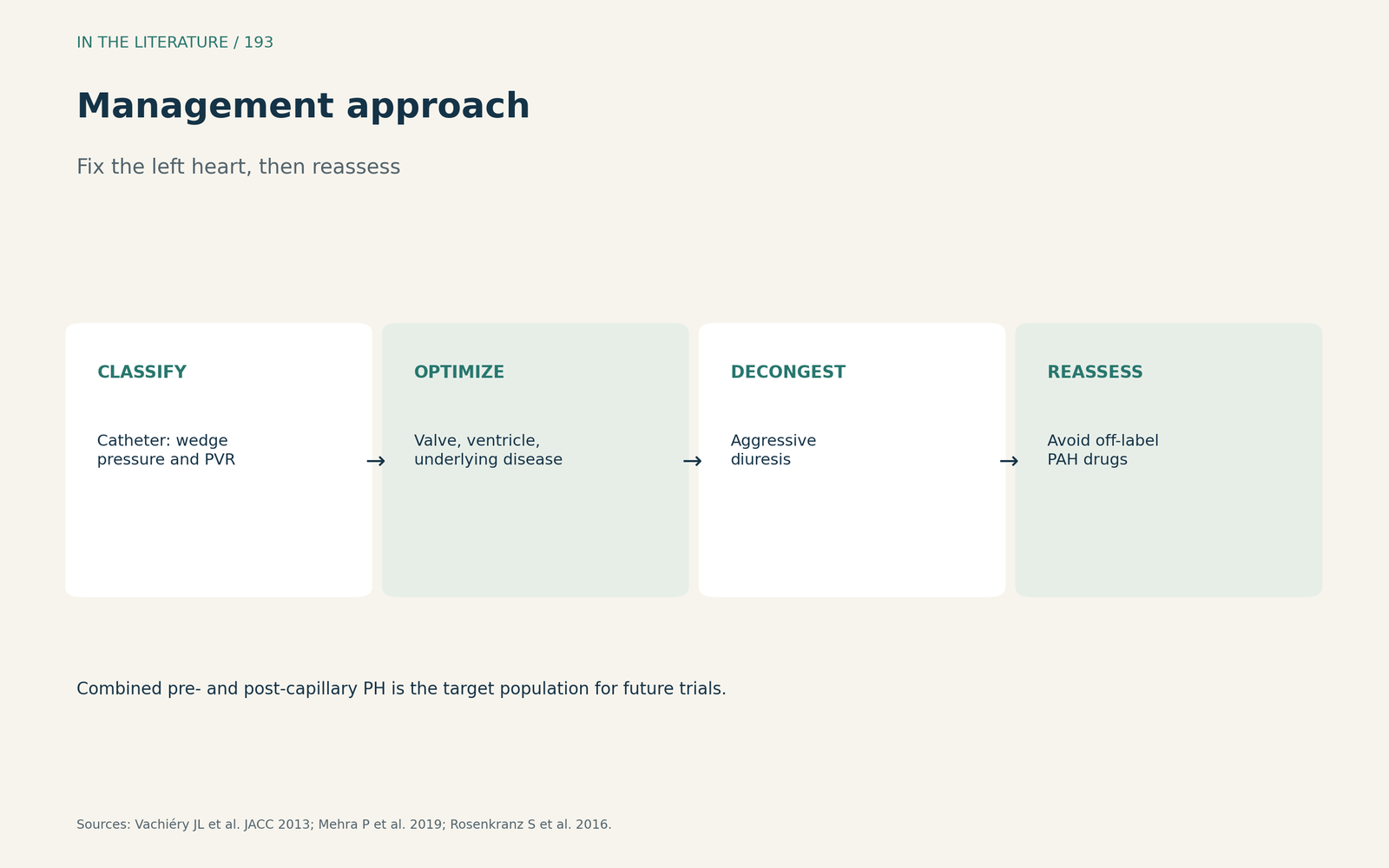
Figure 3. Fix the left heart, then reassess. Synthesized from Vachiéry et al., Mehra et al. and Rosenkranz et al.[2], [3], [1] View larger.

Three takeaways
- PH from left heart disease is driven by left-sided filling pressure.[1], [4]
- PAH drugs failed or caused harm in heart failure and can precipitate pulmonary edema.[1], [2]
- Treat the valve, the ventricle and the volume first.[2], [3]
References
- Rosenkranz S, Gibbs JSR, Wachter R, De Marco T, Vonk-Noordegraaf A, Vachiéry JL. Left ventricular heart failure and pulmonary hypertension. Eur Heart J. 2016;37(12):942–954. doi:10.1093/eurheartj/ehv512
- Vachiéry JL, Adir Y, Barberà JA, et al. Pulmonary hypertension due to left heart diseases. J Am Coll Cardiol. 2013;62(25 Suppl):D100–D108. doi:10.1016/j.jacc.2013.10.033
- Mehra P, Mehta V, Sukhija R, et al. Pulmonary hypertension in left heart disease. Arch Med Sci. 2019;15(1):262–273. doi:10.5114/aoms.2017.68938
- Guha A, Amione-Guerra J, Park MH. Epidemiology of pulmonary hypertension in left heart disease. Prog Cardiovasc Dis. 2016;59(1):3–10. doi:10.1016/j.pcad.2016.07.001
- Khan M, Suribhatla R, Spencer J, et al. Prevalence of pulmonary hypertension in individuals with heart failure: a systematic review and meta-analysis. Clin Cardiol. 2025;48(9):e70197. doi:10.1002/clc.70197
- Humbert M, Kovacs G, Hoeper MM, et al. 2022 ESC/ERS Guidelines for the diagnosis and treatment of pulmonary hypertension. Eur Respir J. 2023;61(1):2200879. doi:10.1183/13993003.00879-2022
- Hansdottir S, Groskreutz DJ, Gehlbach BK. WHO’s in second? A practical review of World Health Organization group 2 pulmonary hypertension. Chest. 2013;144(2):638–650. doi:10.1378/chest.12-2114
- Cremer PC, Guduguntla V. Pulmonary hypertension in mitral regurgitation: silent, but deadly. JACC Cardiovasc Imaging. 2024;17(10):1164–1167. doi:10.1016/j.jcmg.2024.07.010