ITL-f0c6f1656b58
Juan Li, MD · Updated November 17, 2026
Watch the video
Key points
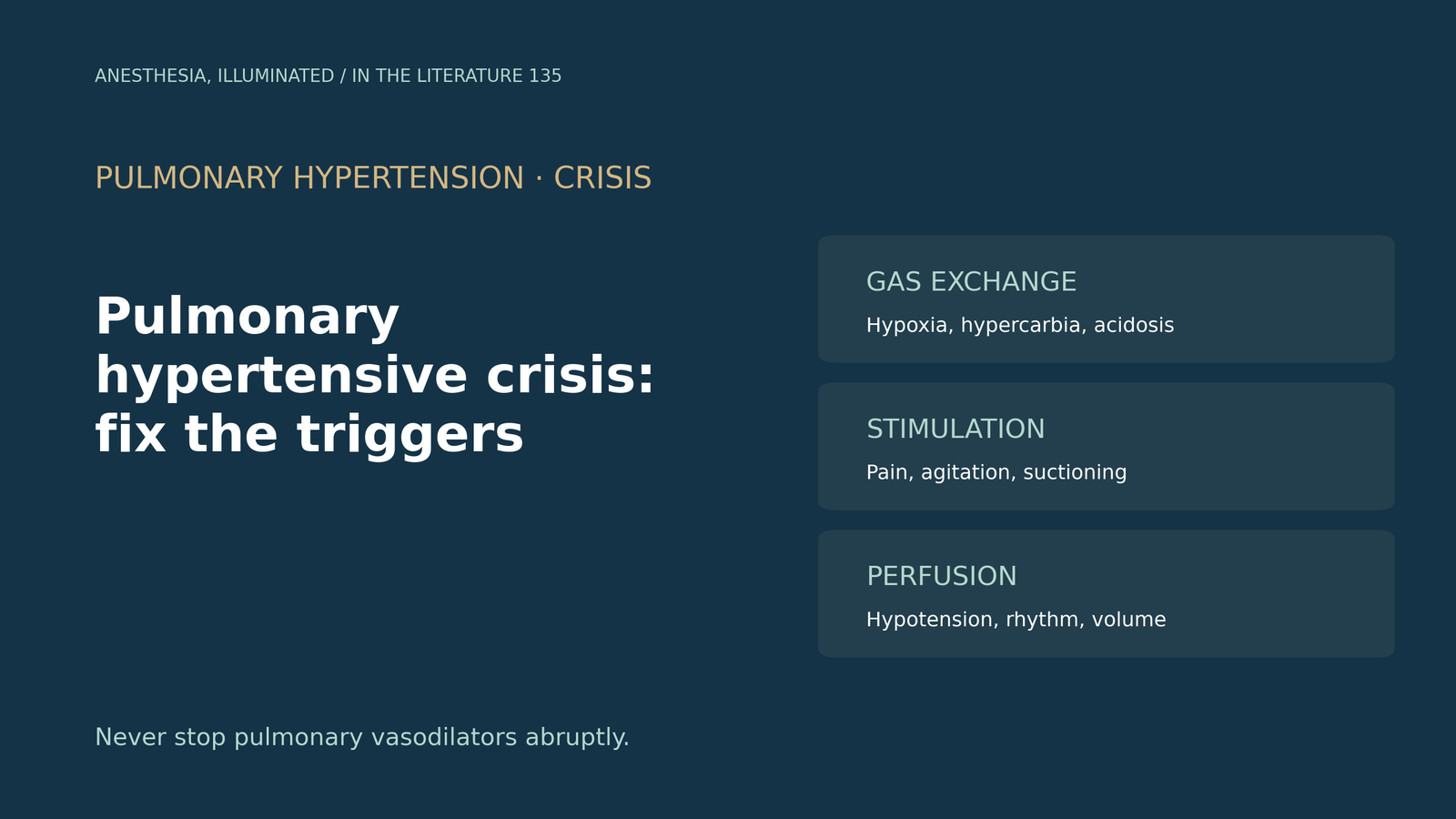
- A pulmonary hypertensive crisis is a sudden, potentially lethal rise in pulmonary pressure and resistance that causes acute right heart failure with systemic hypotension and myocardial ischemia. Pain, anxiety, tracheal suctioning, hypoxia, acidosis and rapid withdrawal of pulmonary hypertension therapy can trigger it.[1]
- Fix gas exchange first. Guidelines recommend avoiding hypoxia, acidosis and agitation in high-risk patients (Class I, Level B) and list hypercarbia, hypothermia and pain among factors that raise pulmonary vascular resistance.[1], [2]
- Ventilate gently. Permissive hypercapnia can raise pulmonary pressure, and both low and high lung volumes raise resistance; use the lowest tidal volume, plateau pressure and PEEP needed.[3], [2]
- Protect right ventricular perfusion. Systemic hypotension starts an ischemic spiral; pressors and inotropes should be used to prevent it (Class I, Level B), while phenylephrine should generally be avoided, and new arrhythmias should be cardioverted promptly.[1], [2], [3]
- Do not stop pulmonary vasodilators abruptly. Rapid withdrawal of inhaled nitric oxide or epoprostenol can cause rebound crisis and death; wean slowly, and sildenafil can blunt rebound.[1], [3]
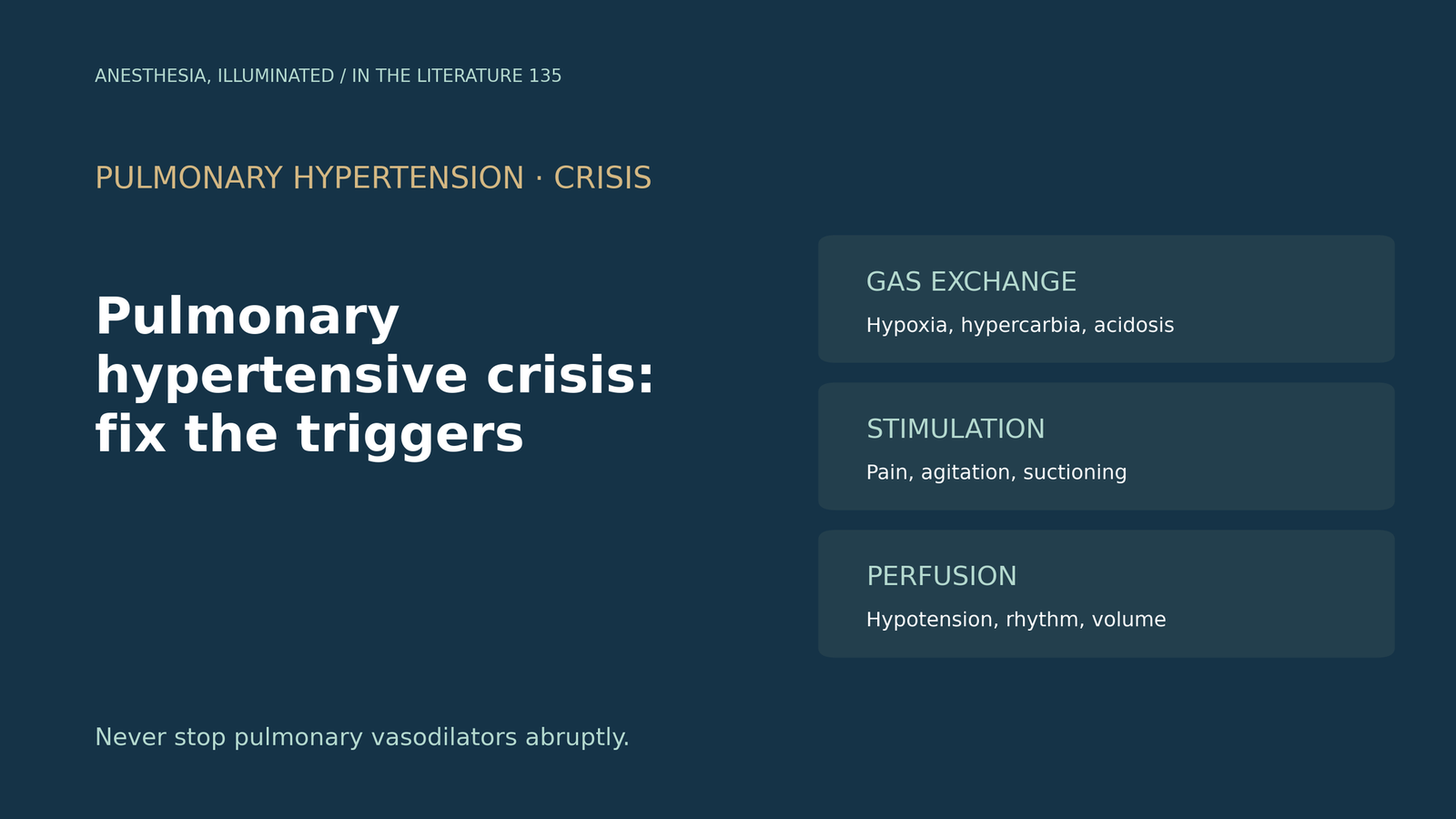
During tracheal suctioning after mitral surgery in a patient with severe pulmonary hypertension, pulmonary artery pressure rises to near systemic, blood pressure falls and saturation drops. Which triggers need to be corrected right now, before the right ventricle fails?[1], [2]
What a crisis is
The AHA/ATS pediatric pulmonary hypertension guideline describes crises as sudden and potentially lethal increases in pulmonary artery pressure and resistance that cause acute right heart failure with systemic hypotension, myocardial ischemia and sometimes bronchoconstriction. A major crisis has been defined as a pulmonary-to-systemic pressure ratio above 0.75, often with a rise in central venous pressure and falls in blood pressure and saturation. Crises can be triggered by pain, anxiety, tracheal suctioning, hypoxia and acidosis, and can also follow rapid withdrawal of pulmonary hypertension therapy; mortality has ranged from 20% to 50% in older studies.[1] In adults, Lahm and colleagues explain why the spiral accelerates: a dilating right ventricle has heightened oxygen demands from higher heart rate, afterload and wall tension just as hypotension reduces its coronary perfusion.[3]
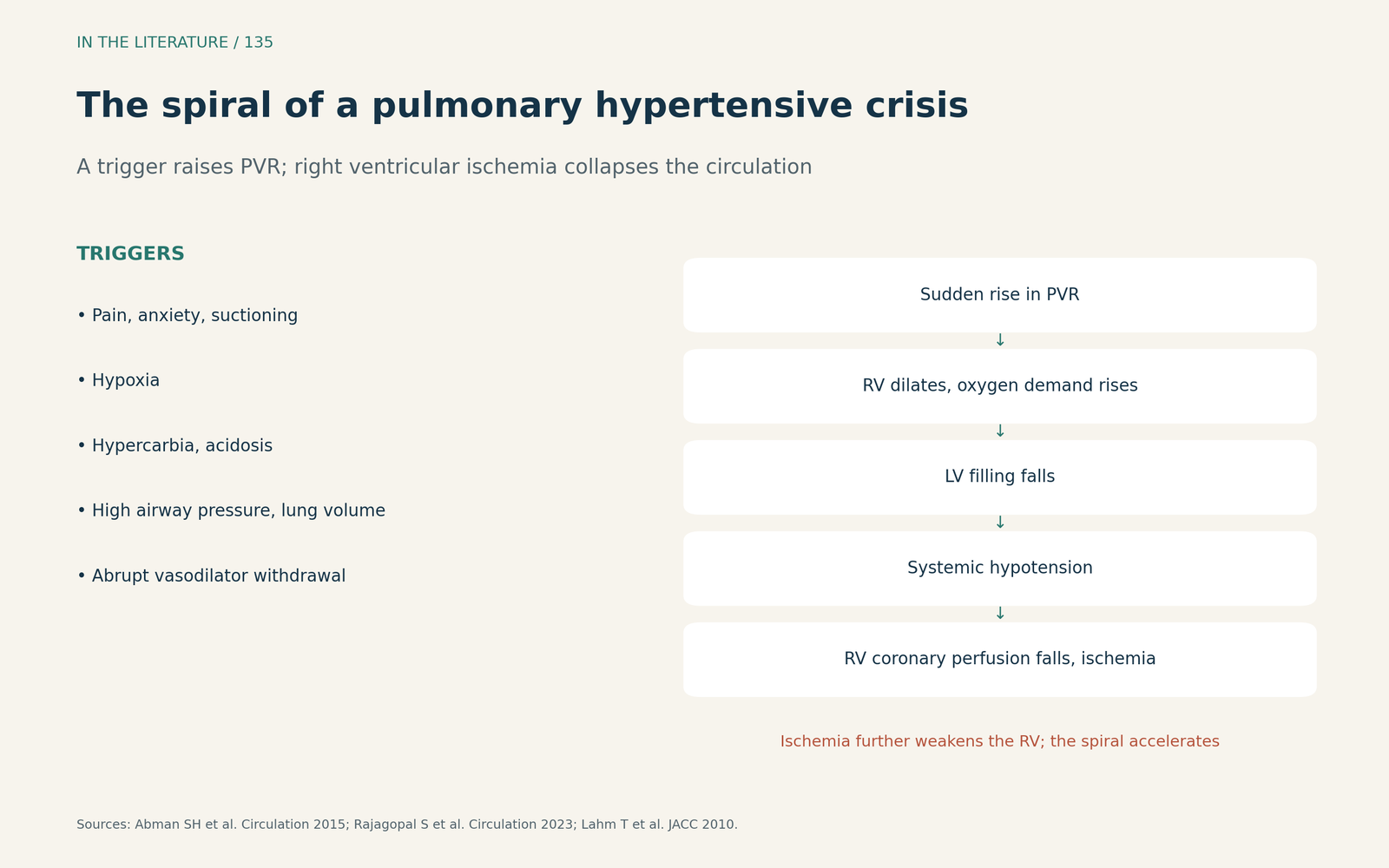
Figure 1. Triggers and the crisis spiral. Synthesized from the AHA/ATS pediatric guideline, the AHA statement on noncardiac surgery and Lahm et al.[1], [2], [3] View larger.

Triggers to correct immediately
Hypoxia, hypercarbia and acidosis. The pediatric guideline recommends avoiding hypoxia, acidosis and agitation in children at high risk (Class I, Level B) and states that inducing alkalosis can be useful for treating a crisis (Class IIa, Level C).[1] The 2023 AHA statement lists hypoxia, hypercarbia, acidosis, hypothermia and pain as factors to avoid or mitigate.[2] Lahm and colleagues warn that permissive hypercapnia can increase pulmonary pressure and worsen right ventricular failure, whereas hyperventilation attenuates acidosis-induced vasoconstriction.[3]
Pain, agitation and stimulation. Opiates, sedatives and muscle relaxants are recommended to reduce the postoperative stress response and the risk or severity of crises (Class I, Level B).[1]
Lung volume and airway pressure. Pulmonary vascular resistance is lowest at functional residual capacity and rises at both low and high lung volumes. The AHA statement suggests starting with a tidal volume of 6 to 8 mL/kg ideal body weight, a PaCO2 of 30 to 35 mmHg and saturation above 92%, and avoiding high airway pressure and PEEP.[2] Lahm and colleagues advise the lowest tidal volume, plateau pressure and PEEP needed.[3]
Hypotension, volume and rhythm. The AHA statement advises avoiding systemic hypotension to ensure coronary perfusion and prevent right ventricular ischemia, avoiding drugs such as phenylephrine that constrict the pulmonary circulation without supporting the ventricle, and strongly considering electric cardioversion for new hemodynamically significant arrhythmias. Both hypovolemia and hypervolemia are harmful.[2] Lahm and colleagues note that vasopressors increase right ventricular perfusion pressure.[3] The pediatric guideline recommends inotropic or pressor therapy to avoid right ventricular ischemia caused by systemic hypotension (Class I, Level B).[1]
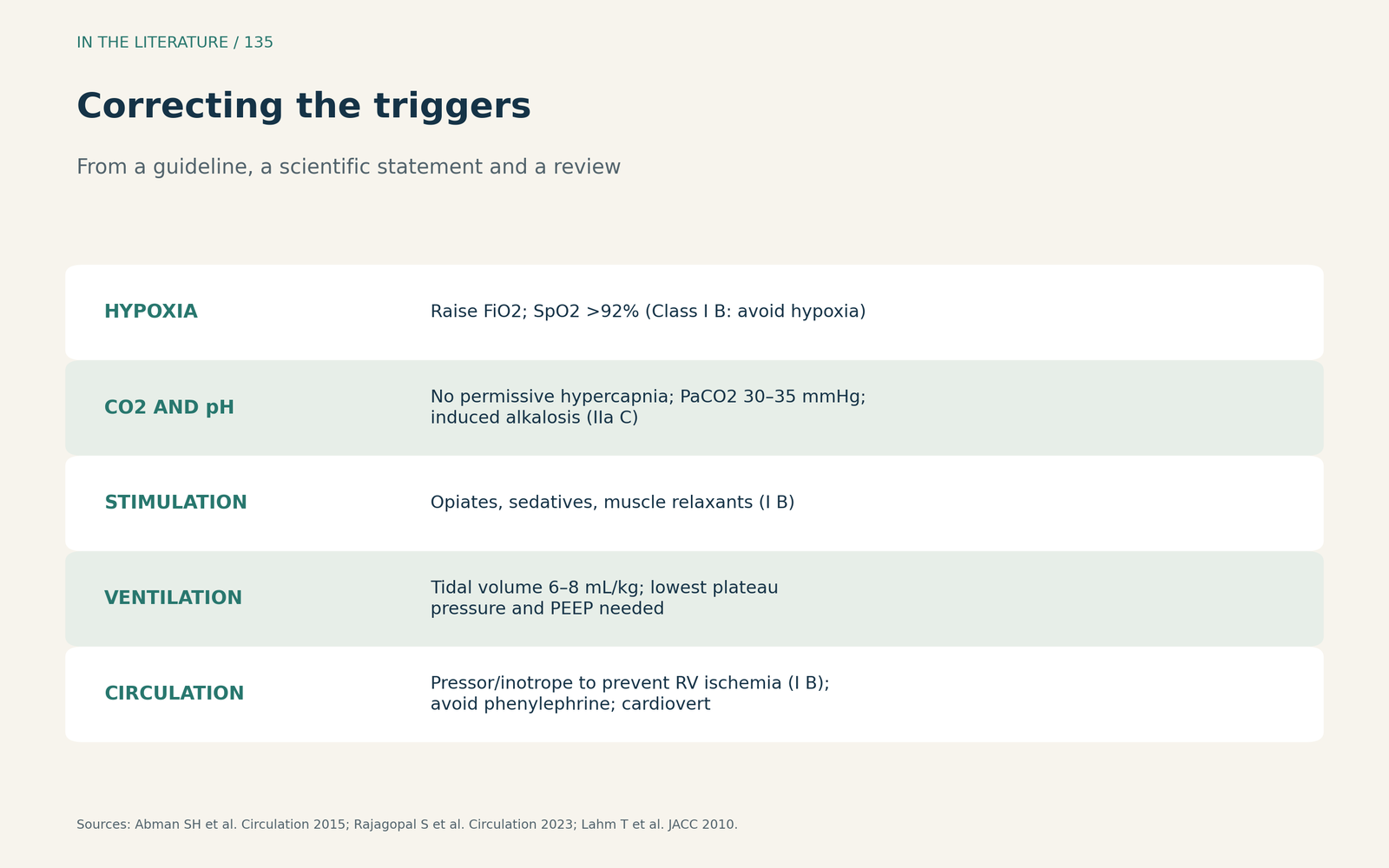
Figure 2. Correcting the triggers. Synthesized from the AHA/ATS pediatric guideline, the AHA statement and Lahm et al.[1], [2], [3] View larger.

The iatrogenic trigger: stopping vasodilators
Inhaled nitric oxide or inhaled prostacyclin is recommended as initial therapy for a crisis (Class I, Level B). Doses of nitric oxide above 20 ppm rarely add benefit, rapid withdrawal can cause rebound pulmonary hypertension, and rebound can be minimized by slowly reducing the dose; sildenafil attenuates rebound after withdrawal.[1] Lahm and colleagues warn that abrupt discontinuation of intravenous epoprostenol may lead to rebound pulmonary hypertension and even death.[3]
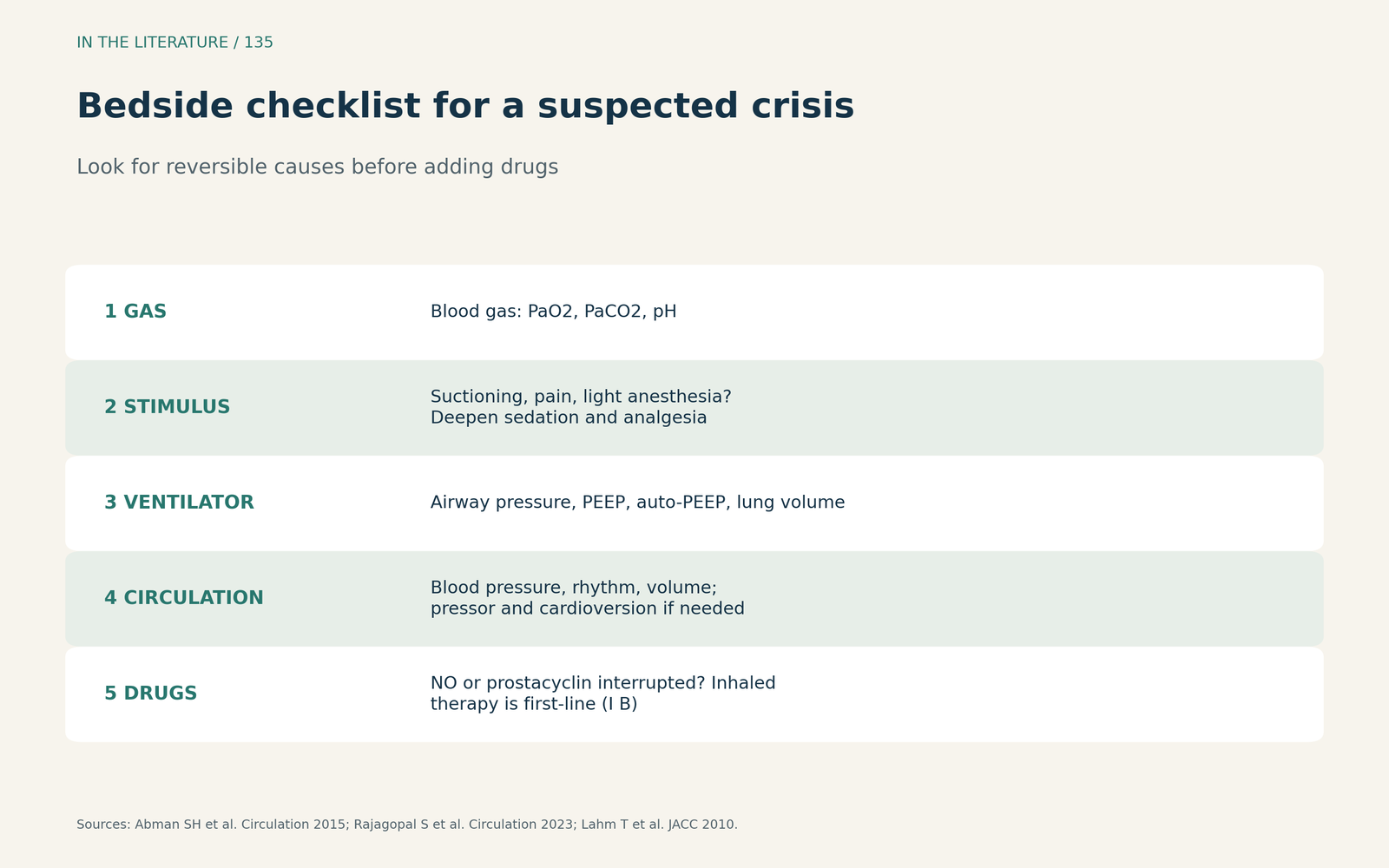
Figure 3. A bedside checklist. Synthesized from the AHA/ATS pediatric guideline, the AHA statement and Lahm et al.[1], [2], [3] View larger.

Three takeaways
- Oxygen, carbon dioxide and pH first. Hypoxia, hypercarbia and acidosis are the fastest triggers to reverse.[1], [2], [3]
- Calm, ventilate gently and keep the pressure up. Treat pain and agitation, avoid high airway pressure and protect right ventricular perfusion.[1], [2]
- Never stop vasodilators abruptly. Check lines and delivery systems, and wean slowly.[1], [3]
References
- Abman SH, Hansmann G, Archer SL, et al. Pediatric pulmonary hypertension: guidelines from the American Heart Association and American Thoracic Society. Circulation. 2015;132(21):2037–2099. doi:10.1161/CIR.0000000000000329
- Rajagopal S, Ruetzler K, Ghadimi K, et al. Evaluation and management of pulmonary hypertension in noncardiac surgery: a scientific statement from the American Heart Association. Circulation. 2023;147(17):1317–1343. doi:10.1161/CIR.0000000000001136
- Lahm T, McCaslin CA, Wozniak TC, et al. Medical and surgical treatment of acute right ventricular failure. J Am Coll Cardiol. 2010;56(18):1435–1446. doi:10.1016/j.jacc.2010.05.046