
ITL-1537243ebeda
Juan Li, MD · Updated November 18, 2026
Key points
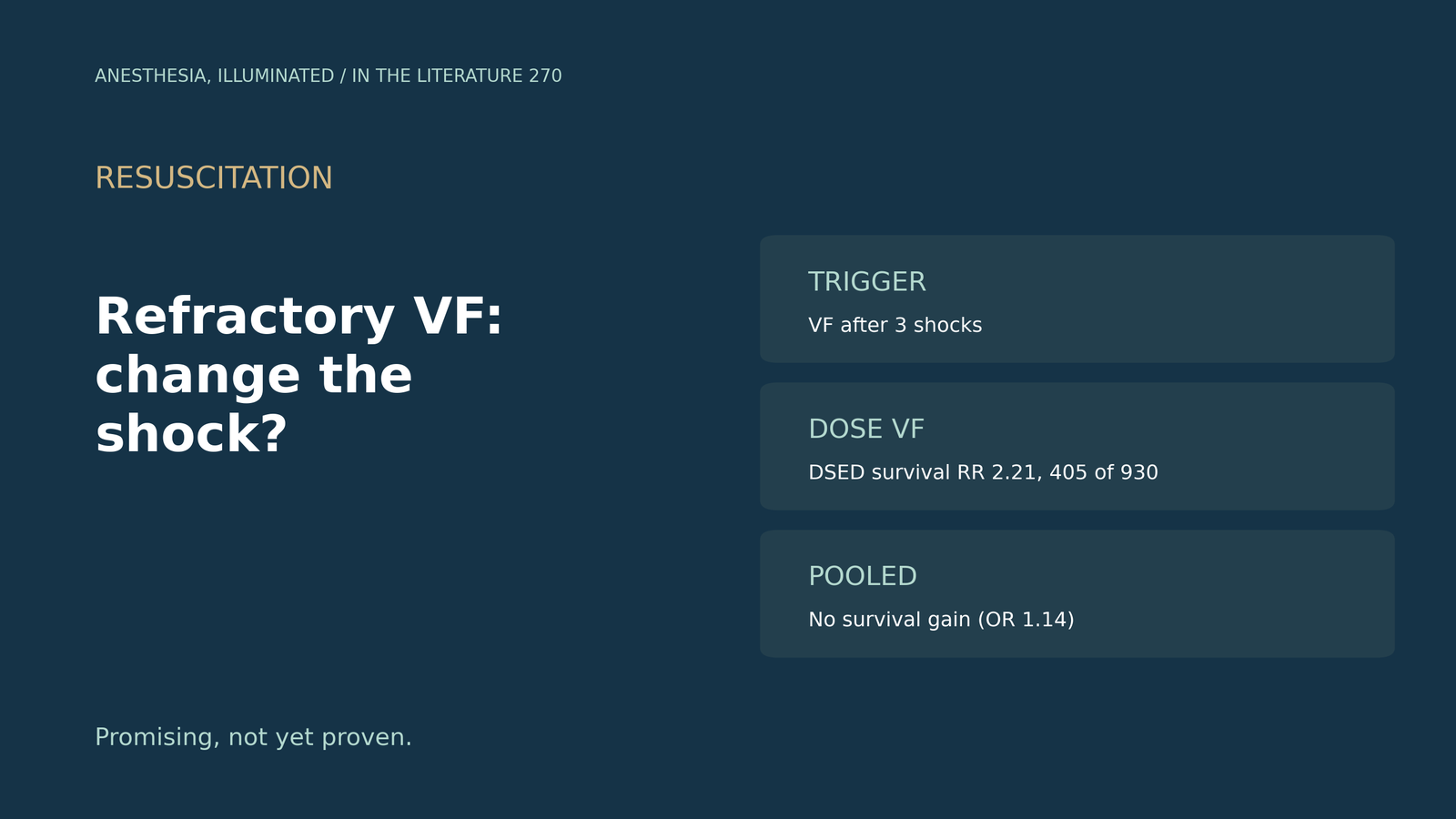
- Three shocks is the usual trigger. About 25% of patients with VF are still fibrillating after 3 attempts.[1]
- One trial, one large signal. In DOSE VF, double sequential defibrillation improved survival to discharge (adjusted RR 2.21).[2]
- But fragile. DOSE VF enrolled only 405 of 930 planned patients.[2]
- Pooled data are neutral. Neither double sequential (OR 1.14) nor vector change (OR 1.12) improved survival across seven studies.[3]
- Not yet routine. Guidance allows these techniques with trained staff, and calls them promising yet unproven.[4], [5]
A patient in out-of-hospital VF has received three shocks, epinephrine and amiodarone, and remains in VF. Should the team change how it shocks, and how?
What counts as refractory VF
About 25% of patients with VF are still fibrillating after 3 defibrillation attempts, but truly refractory VF, not terminated by any of 3 initial shocks, affects about 1.25% of EMS-treated out-of-hospital arrests. No manual or automated defibrillator is approved for double sequential defibrillation (Nichol et al., J Am Heart Assoc 2025).[1]
DOSE VF and the pooled evidence
In DOSE VF, as summarised in an editorial (Byrne et al., J Cardiothorac Vasc Anesth 2024), double sequential defibrillation improved survival to discharge versus standard shocks (adjusted RR 2.21, 1.33–3.67), and for vector change the adjusted relative risk was 1.72 (1.01–2.88); however, the trial enrolled only 405 of 930 planned patients.[2] By treatment actually received, double sequential versus standard shocks gave RR 1.38, 83% of patients had recurrent rather than refractory VF, only a shock interval of less than 75 ms was associated with greater VF termination, and a survey reported a 0.4% rate of defibrillator damage.[1] A network meta-analysis of seven studies with 1632 participants (Abuelazm et al., Ann Noninvasive Electrocardiol 2023) found that in the only RCT survival was 30.4%, 21.7% and 13.3% with double sequential, vector change and standard shocks, but pooled, neither double sequential (OR 1.14) nor vector change (OR 1.12) improved survival; the observational studies were mainly at serious to critical risk of confounding, and success was time-dependent.[3] A systematic review (Alexandrou et al., Healthcare 2025) found that setup delayed the shock by about 13.7 s in one study, that agencies start after three or after five or more shocks, and called both techniques promising yet unproven.[4]
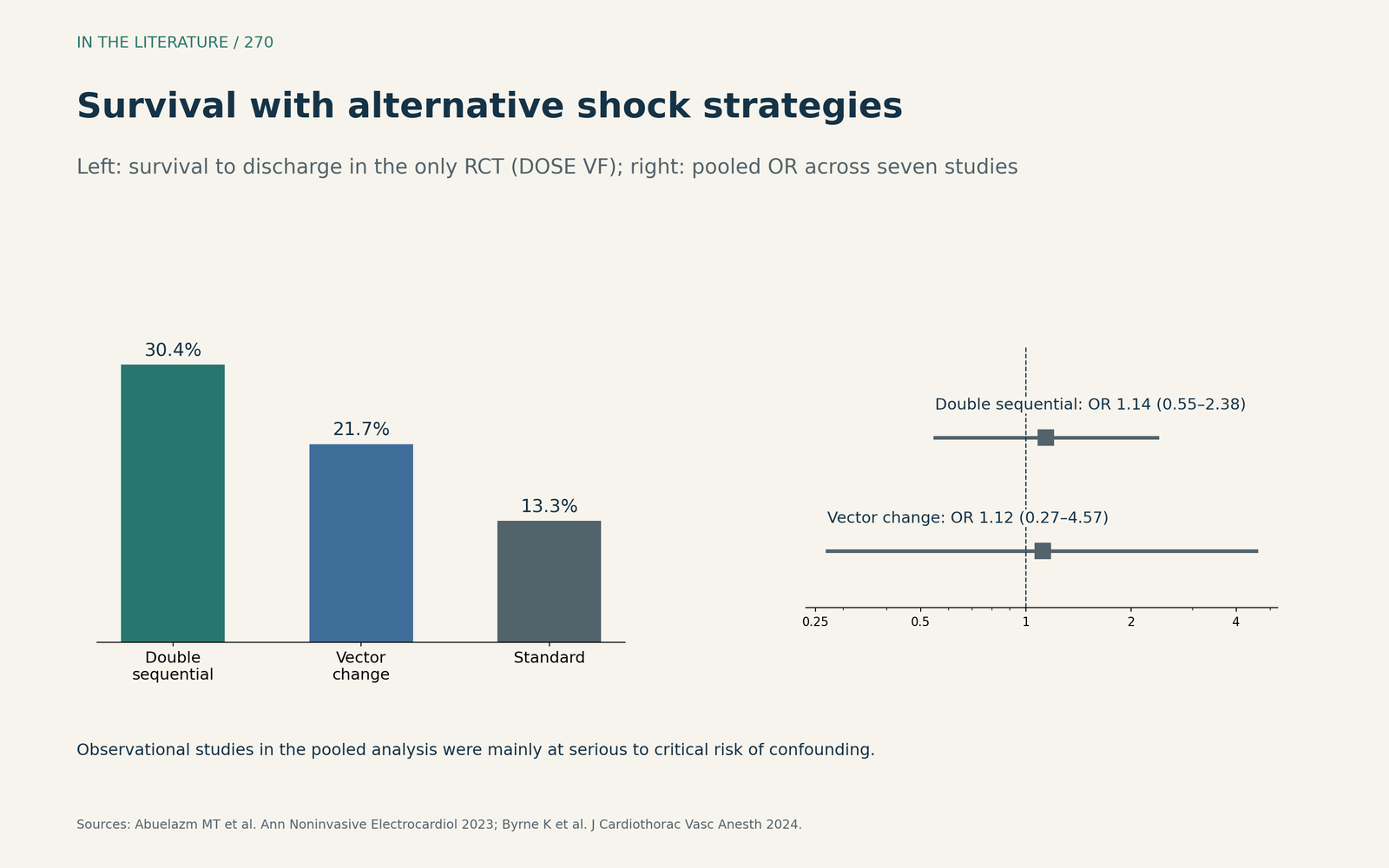
Figure 1. One trial showed a survival gain; pooled estimates did not. Data from Abuelazm et al. and Byrne et al.[3], [2] View larger.

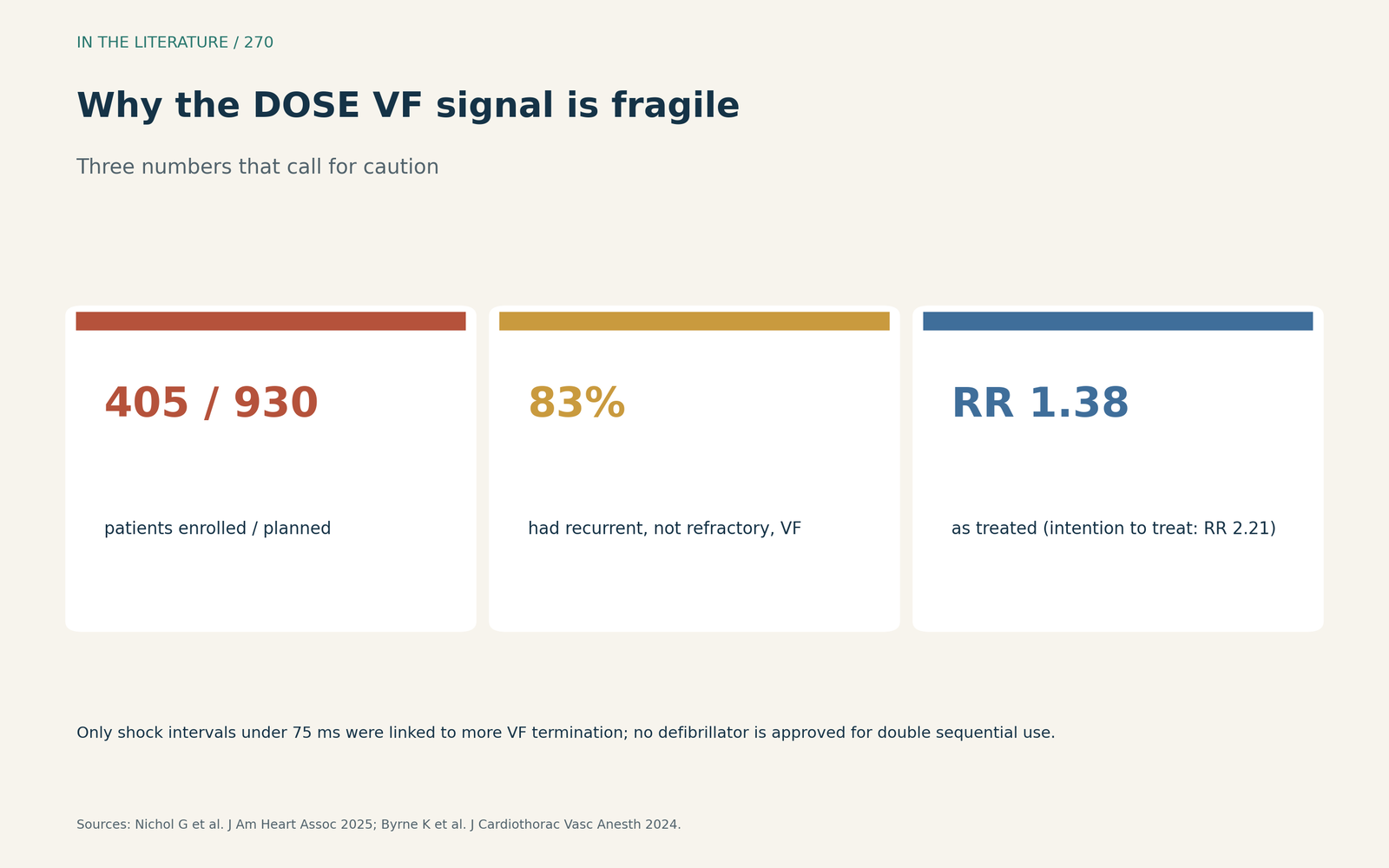
Figure 2. Small enrolment, mostly recurrent VF and a weaker as-treated estimate. Data from Nichol et al. and Byrne et al.[1], [2] View larger.

Guidelines and adjuncts
The Korean ALS guideline (Kim et al., Clin Exp Emerg Med 2026) states that after three or more failed shocks, vector change or double sequential defibrillation may be considered with trained staff and extra equipment (weak recommendations), that routine double sequential defibrillation is not currently recommended, and that if ROSC is not achieved despite high-quality CPR, extracorporeal CPR should be considered.[5] An esmolol meta-analysis included only four retrospective studies (Lau et al., Acute Crit Care 2026): esmolol was associated with more temporary ROSC (RR 1.80) but not with survival to discharge (RR 1.08), and it may be considered as salvage therapy, though timing and dosing remain undefined.[6]
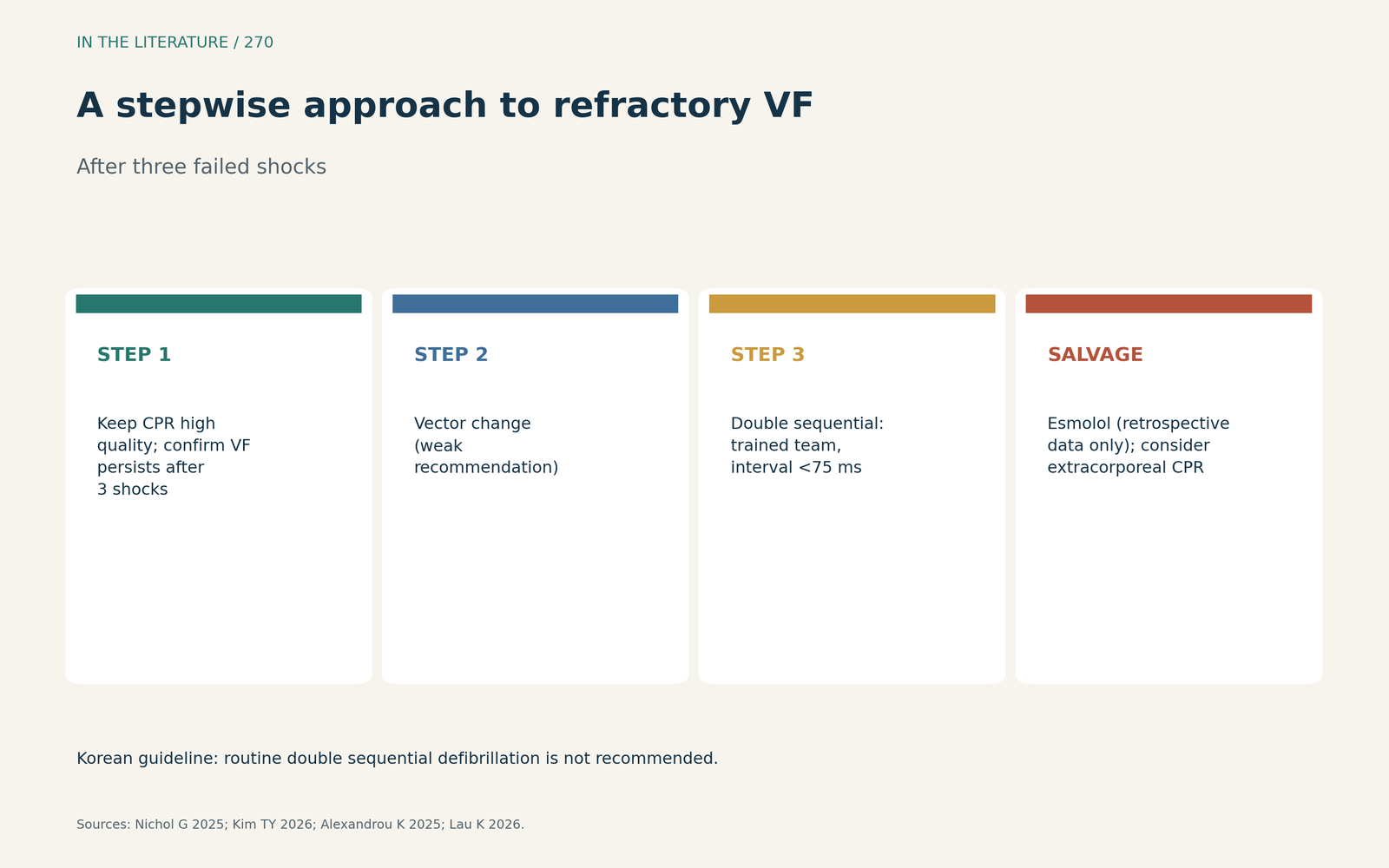
Figure 3. Escalation after three failed shocks. Synthesized from Nichol et al., Kim et al., Alexandrou et al. and Lau et al.[1], [5], [4], [6] View larger.

Three takeaways
- Reassess strategy once VF persists after three shocks, while keeping CPR quality high.[1], [5]
- Vector change or double sequential defibrillation is reasonable for trained teams, but evidence rests on one interrupted trial and pooled data are neutral.[2], [3], [4]
- If double sequential shocks are used, keep the interval under 75 ms; consider esmolol or extracorporeal CPR as salvage.[1], [5], [6]
References
- Nichol G, Atkins DL, Koster RW, et al. Scientific priorities related to the use of double sequential external defibrillation in patients with refractory cardiac arrest: report from a multistakeholder think tank. J Am Heart Assoc. 2025;14(21):e044130. doi:10.1161/JAHA.125.044130
- Byrne K, Garland M, Turner E. Can lightning strike twice? Double sequential external defibrillation, extracorporeal cardiopulmonary resuscitation, and the International Liaison Committee on Resuscitation guidelines. J Cardiothorac Vasc Anesth. 2024;38(5):1081–1083. doi:10.1053/j.jvca.2024.02.013
- Abuelazm MT, Ghanem A, Katamesh BE, et al. Defibrillation strategies for refractory ventricular fibrillation out-of-hospital cardiac arrest: a systematic review and network meta-analysis. Ann Noninvasive Electrocardiol. 2023;28(5):e13075. doi:10.1111/anec.13075
- Alexandrou K, Khattab E, Asimakopoulou E. Enhancing patient safety in refractory ventricular fibrillation: a systematic review of double sequential and vector change defibrillation barriers. Healthcare (Basel). 2025;13(20):2645. doi:10.3390/healthcare13202645
- Kim TY, Ahn GJ, Cha KC, et al. 2025 Korean guidelines for cardiopulmonary resuscitation: part 4. Adult advanced life support. Clin Exp Emerg Med. 2026;13(Suppl 1):S32–S60. doi:10.15441/ceem.26.073
- Lau K, Chau YLA, Cheng TA, et al. Esmolol in the management of refractory ventricular fibrillation: a systematic review and meta-analysis. Acute Crit Care. 2026;41(3):598–607. doi:10.4266/acc.001675