
ITL-31527225f851
Juan Li · In the Literature · Updated November 16, 2026
Watch the video

Key points
- Confirm the actual vessel, incision, and access technique before choosing a regional block; “subclavian TAVR” may describe an infraclavicular axillary approach.
- Intermediate cervical plexus block with infiltration and light sedation has prospective feasibility evidence for selected transcarotid procedures, without proof of superiority over general anesthesia.
- An awake strategy needs adequate analgesia, patient cooperation, and an immediately workable conversion plan.
- Assess the proposed injection site and antithrombotic regimen together. Ultrasound guidance does not remove the need to respect applicable antithrombotic intervals.
- An access-route comparison does not answer whether regional anesthesia is better than general anesthesia.
The incision is the first anesthetic question
When transfemoral access is unsuitable, choosing “regional anesthesia” is not yet a complete plan. A neck incision for carotid exposure and an infraclavicular axillary approach create different analgesic requirements. Percutaneous puncture and surgical exposure also differ. The useful first discussion with the operator is therefore about the actual incision, expected dissection, and possible extension of the procedure.
Sherwood and colleagues’ 2025 SCAI alternative-access consensus notes that infraclavicular transaxillary TAVR is often called trans-subclavian TAVR incorrectly; true supraclavicular subclavian access is uncommon. That distinction matters before deciding what a proposed block must cover. The consensus does not endorse one named regional block for every alternative-access procedure. [1]
For transcarotid TAVR, the consensus describes general anesthesia in more than 90% of patients, usually preferred for comfort. For transaxillary access, some operators prefer local anesthesia to facilitate neurologic surveillance; percutaneous access has been associated with more frequent moderate sedation than surgical access. These describe practice and observational associations, not a randomized demonstration that one anesthetic strategy improves outcomes. [1]
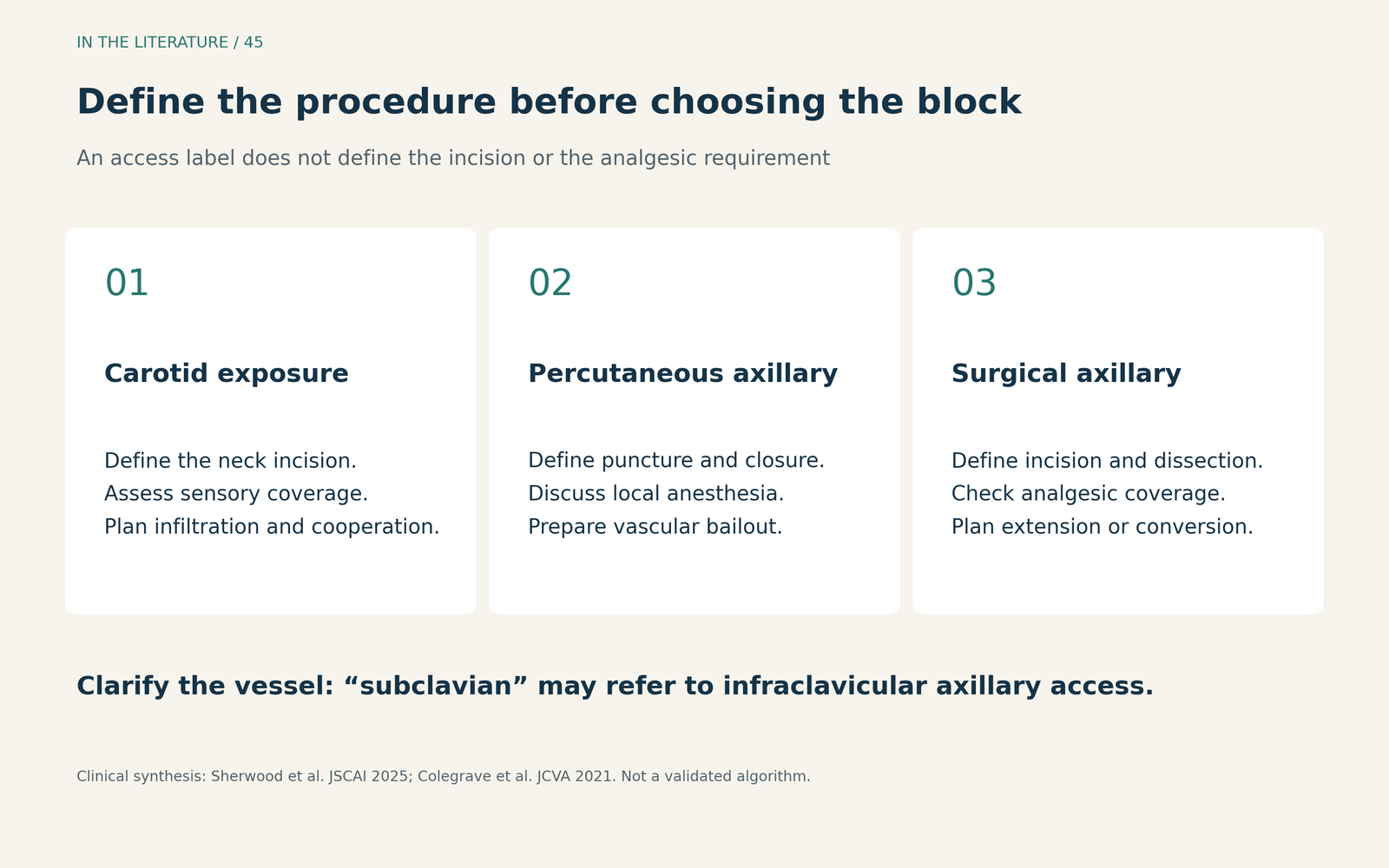
Figure 1. Match the analgesic plan to the actual procedure. These planning questions are a clinical synthesis of the SCAI access descriptions and the Colegrave protocol; they are not a validated block-selection algorithm. [1, 2] View figure

What intermediate cervical plexus block has actually shown
Colegrave and colleagues’ JCVA 2021 prospective, single-center study enrolled 31 consecutive transcarotid TAVR patients. 28 received ultrasound-guided intermediate cervical plexus block with light sedation; three selected for planned general anesthesia were excluded from that treatment group. This was a descriptive feasibility study, not a comparison between anesthetic strategies. [2]
The technique included more than a single cervical plexus injection: the protocol also described an additional injection near the carotid sheath and subcutaneous infiltration. Sedation was kept light to permit repeated assessment of consciousness, verbal responses, and contralateral hand strength. That explains the intended workflow; it does not establish a reduction in stroke. [2]
No conversion to general anesthesia was required in the block group. Nevertheless, 3 patients (11%) needed additional surgical infiltration, and 10 (36%) developed transient dysphonia, which resolved by the end of the procedure. A postoperative cervical hematoma requiring surgical hemostasis was reported as a surgical complication. The cohort should not be described as entirely complication-free, and its size cannot exclude uncommon severe harms. [2]
For clinical planning, the supported conclusion is that this combined technique can work in selected patients with an experienced team. It does not establish that an isolated injection reliably covers all surgical stimulation, or that avoiding general anesthesia is itself a patient benefit. Assess the field before incision, agree on supplemental infiltration, and retain the ability to change the plan if cooperation, analgesia, or procedural conditions deteriorate. These are practical implications of the study, rather than outcomes it tested. [2]
A newer study compares access routes, not anesthetics
Ramirez and colleagues’ JCVA 2026 study adds contemporary observational experience. Only its indexed abstract was available for review. The retrospective single-center cohort included 868 patients, with 135 matched pairs in the transfemoral-versus-transcarotid analysis. All procedures used local or locoregional anesthesia with conscious sedation. [3]
Consequently, this study does not compare regional anesthesia with general anesthesia. Its reported absence of statistically significant differences in mortality or stroke cannot establish equivalence, noninferiority, or an anesthetic advantage. Without the full methods and results, the abstract also cannot determine which cervical block, dose, or conversion protocol should be adopted. [3]
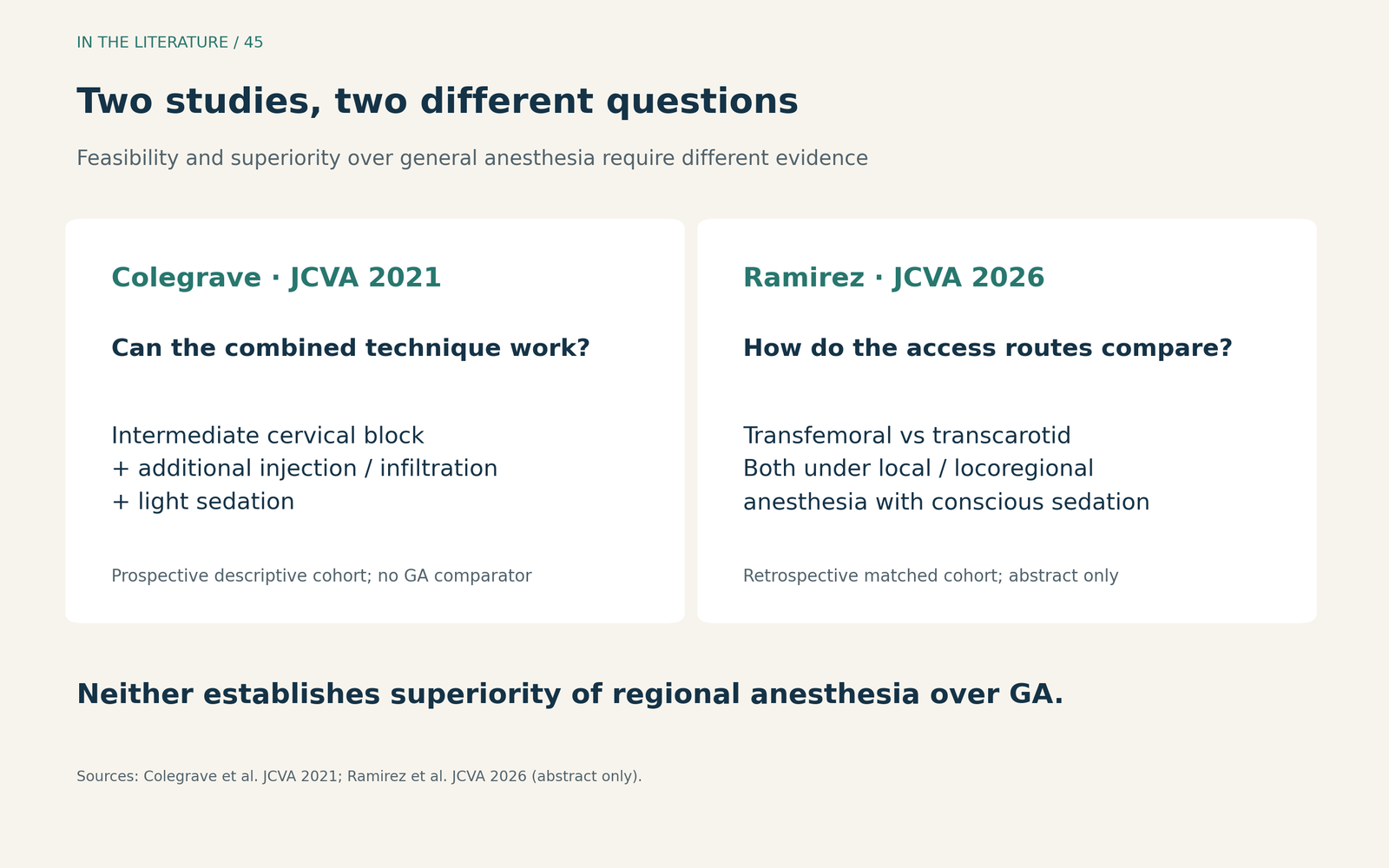
Figure 2. Read the study question before applying its conclusion. Neither of these studies provides a randomized regional-anesthesia-versus-general-anesthesia comparison. Ramirez is represented only to the extent reported in its abstract. [2, 3] View figure

Evaluate bleeding risk at the proposed injection site
The 2022 joint ESAIC/ESRA guideline by Kietaibl and colleagues separates superficial, lower-risk nerve procedures from deep, higher-risk procedures. Its classification lists superficial and deep cervical plexus blocks separately. The intermediate cervical technique described by Colegrave should not automatically be assigned the superficial category, particularly when the planned procedure includes an additional injection near the carotid sheath. [2, 4]
Use the actual needle trajectory, proximity to large vessels, compressibility, and consequences of bleeding in the assessment. Review the specific antithrombotic drugs, doses, timing, and renal function where relevant, together with the procedural anticoagulation plan. The European guideline applies more restrictive, neuraxial-style intervals to deep procedures; its recommendations are not a single universal stop-drug rule for every peripheral block. Ultrasound guidance does not modify the recommended antithrombotic intervals. [4]
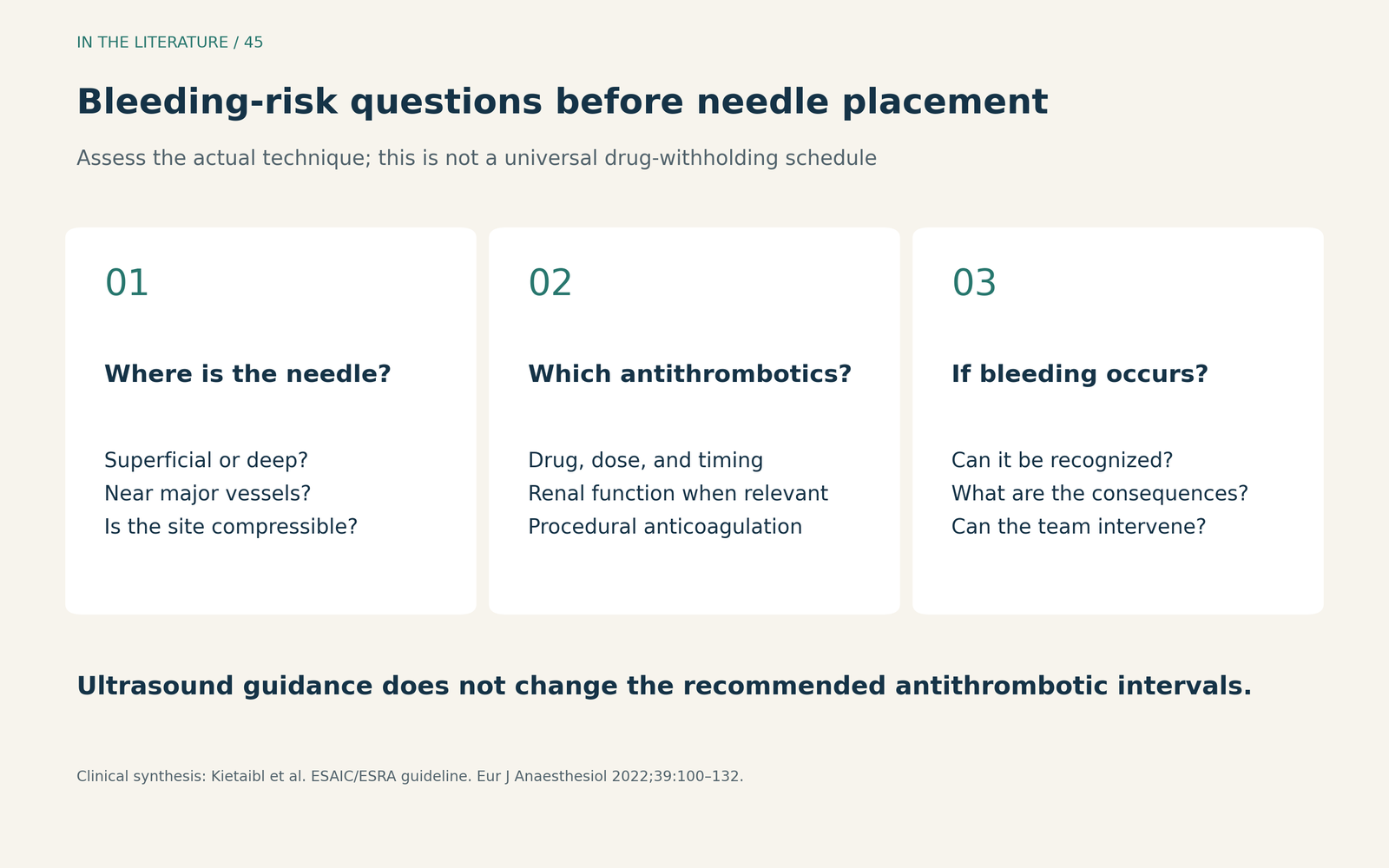
Figure 3. Three questions to resolve before needle placement. This is a planning aid based on the ESAIC/ESRA guideline, not a drug-specific withholding schedule. The classification of an intermediate cervical approach requires assessment of the actual technique. [4] View figure

Make conversion feasible before choosing an awake approach
Before starting, the team should agree on the expected sensory coverage, how supplementation will be provided, what degree of cooperation is needed, and how the airway can be reached if conversion becomes necessary. Increasing sedation is not a substitute for reassessing inadequate analgesia or a changing procedural problem. This is a clinical planning inference from the feasibility evidence and the access-specific rescue requirements. [1, 2]
For axillary access, SCAI specifically emphasizes readiness for bleeding or vascular bailout. Axillary tissue planes can conceal substantial bleeding before it becomes clinically apparent. A comfortable, communicative patient therefore still needs active surveillance for access complications. A block changes analgesia; it does not remove the vascular procedure’s risks. [1]
Three takeaways
- Choose around the incision. Confirm carotid versus axillary/subclavian anatomy and percutaneous versus surgical access before discussing a named block.
- Use feasibility evidence at its proper strength. Intermediate cervical plexus block with infiltration and light sedation can support selected transcarotid procedures; superiority over general anesthesia remains unestablished by these studies.
- Plan bleeding management and conversion in advance. Assess the actual injection site and antithrombotic regimen, and preserve a workable route to additional analgesia, airway control, and vascular rescue.
References
- Sherwood M, Allen KB, Dahle TG, et al. SCAI Expert Consensus Statement on Alternative Access for Transcatheter Aortic Valve Replacement. J Soc Cardiovasc Angiogr Interv. 2025;4(3 Part A):102514. doi:10.1016/j.jscai.2024.102514. Figure 1 corrected in the published corrigendum.
- Colegrave N, Mascitti P, Zannis K, et al. Ultrasound-Guided Intermediate Cervical Plexus Block for Transcarotid Transcatheter Aortic Valve Replacement. J Cardiothorac Vasc Anesth. 2021;35(6):1747–1750. doi:10.1053/j.jvca.2020.08.053.
- Ramirez AD, Squiccimarro E, Pagano P, et al. Transfemoral Versus Transcarotid Transcatheter Aortic Valve Replacement Under Locoregional Anesthesia: A Propensity-Matched Single-Center Analysis of 868 Patients. J Cardiothorac Vasc Anesth. 2026;40(6):1678–1688. doi:10.1053/j.jvca.2026.01.027. Abstract only.
- Kietaibl S, Ferrandis R, Godier A, et al. Regional anaesthesia in patients on antithrombotic drugs: Joint ESAIC/ESRA guidelines. Eur J Anaesthesiol. 2022;39(2):100–132. doi:10.1097/EJA.0000000000001600.