
ITL-dc545730c2ab
Juan Li, MD · Updated November 15, 2026
Watch the video

Key points
- Conscious sedation is a reasonable starting option for suitable transfemoral TAVR patients. Randomized evidence supports a defined 30-day composite outcome; the 2026 Italian consensus also favors less invasive approaches in most scenarios. [1, 2]
- Cooperation, supine tolerance, and imaging needs can change the plan. The new JCVA cohort describes these as practical reasons for selecting general anesthesia. [3]
- Shorter recovery and better survival are different claims. Registry associations with shorter hospitalization do not establish that sedation itself improves survival. [4]
- A long-term survival benefit remains unconfirmed. SOLVE-TAVI's 5-year mortality signal is clinically interesting, but exploratory in interpretation. [5]
- “Monitored anesthesia care” does not specify sedation depth. Deep sedation can produce substantial hypercapnia, making the ventilation and rescue plan part of the initial decision. [6]
For a patient scheduled for transfemoral transcatheter aortic valve replacement (TAVR), the useful question is: Can this patient remain comfortable, cooperative, and adequately ventilated while the team completes the planned procedure and imaging? The answer helps identify when conscious sedation is feasible and when the control offered by general anesthesia (GA) may be valuable.
This discussion concerns the transfemoral approach. Conscious sedation, deep sedation, and monitored anesthesia care (MAC) should also be distinguished: MAC is used for different anesthetic practices across studies, including substantially deeper sedation than the conscious-sedation strategy tested in SOLVE-TAVI. [1, 6]
Start with what the randomized comparison actually established
SOLVE-TAVI randomized 447 predominantly elderly, intermediate- or high-risk patients to conscious sedation or GA. Patients with cardiogenic shock or hemodynamic instability, or a clear clinical reason to favor one anesthetic, were excluded. Its 30-day primary composite included death, stroke, myocardial infarction, infection requiring antibiotics, and acute kidney injury. [1]
That endpoint occurred in 27.2% with conscious sedation and 26.4% with GA. The absolute difference was +0.8 percentage points, with a 90% confidence interval of −6.2 to +7.8 points. This met the trial's prespecified equivalence criterion of ±10 percentage points. The finding supports conscious sedation as an option in the population studied; it does not establish equal mortality or interchangeability in every patient. [1]
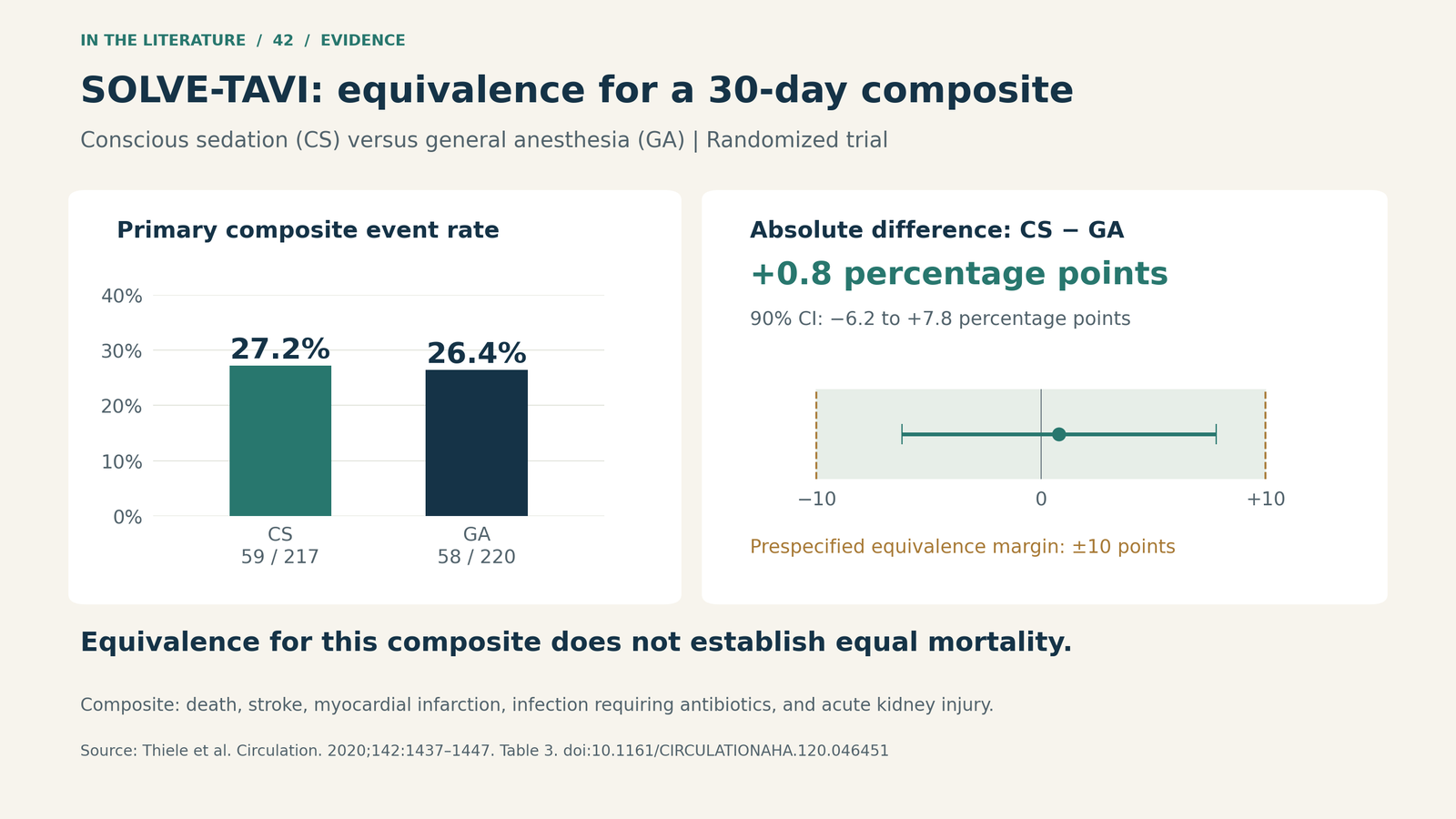
Figure 1. The endpoint and equivalence margin matter. Original visualization of the published primary composite results, with denominators of 217 and 220. The confidence interval shown is 90%, as used for this equivalence analysis. [1]
Recovery advantages are less uniform across study designs. In the US TVT Registry, an analysis of 120,080 patients associated conscious sedation with shorter hospitalization and lower mortality, using hospital sedation preference as an instrumental variable. Selection and center-level differences still complicate causal interpretation. In SOLVE-TAVI, median ICU and hospital stays were the same in both groups: 24 hours and 7 days, respectively. A sedation pathway may support efficient recovery, but a guaranteed reduction in length of stay is too strong a promise. [1, 4]
What the new JCVA study adds
Samanidis and colleagues examined 1,390 transfemoral TAVI procedures performed at one center from 2015 through 2024: 508 under GA and 882 under MAC. Median ICU stay was 2 days with MAC versus 3 with GA; median hospital stay was 5 versus 6 days. These are unadjusted group comparisons. [3]
The adjusted analysis did not identify an independent association between anesthetic strategy and long-term mortality: the reported hazard ratio was 0.94 (95% CI, 0.74–1.18). This observational result does not prove equivalence. MAC also became the preferred approach late in 2019, so anesthesia choice was intertwined with changes in procedural practice over time. [3]
The clinical value of this paper is the distinction it reinforces: a streamlined anesthetic pathway may accompany faster recovery, while a long-term survival advantage remains uncertain. Its description of patient selection is equally useful—GA was reserved in part for patients with cognitive impairment, severe orthopnea preventing prolonged supine tolerance, or a need for continuous transesophageal echocardiography (TEE). These were that center's selection practices, rather than randomized evidence that GA improves outcomes in each subgroup. [3]
Longer follow-up of SOLVE-TAVI adds a different signal. At 5 years, the composite of death, stroke, myocardial infarction, and acute kidney injury was 51.4% with conscious sedation versus 61.3% with GA (HR, 0.80; 95% CI, 0.62–1.04). All-cause mortality, a secondary outcome, was lower with sedation: 41.5% versus 54.3% (HR, 0.70; 95% CI, 0.53–0.94). However, the trial was powered for its 30-day endpoint, and the authors state that the mortality finding would not remain statistically significant after adjustment for multiple comparisons. It is a signal for confirmation, rather than a sufficient basis for choosing sedation to prolong life. [5]
Make the choice around four practical questions
Cooperation and positioning come first. Assess whether the patient can communicate, tolerate the environment, and remain supine for the anticipated procedure. A diagnostic label alone is less informative than its functional consequences. If anxiety, cognitive impairment, or severe orthopnea makes the intended approach unrealistic, reassess the plan with the procedural team. The new JCVA report illustrates how these factors influenced actual selection. [3]
Define the imaging requirement explicitly. If continuous TEE is essential, consider how it will be tolerated and whether planned GA will facilitate the necessary examination. The requirement for imaging should be agreed before assuming that a routine sedation pathway will fit the case. [3]
Then assess ventilation at the depth actually required. A patient who needs deep sedation to remain immobile presents a different respiratory problem from a comfortable patient under light-to-moderate sedation. The balance includes both the feasibility of ventilation during sedation and the consequences of induction and controlled ventilation under GA. Figure 2 organizes these considerations; it is a clinical synthesis rather than a validated selection rule. [1, 3, 6]
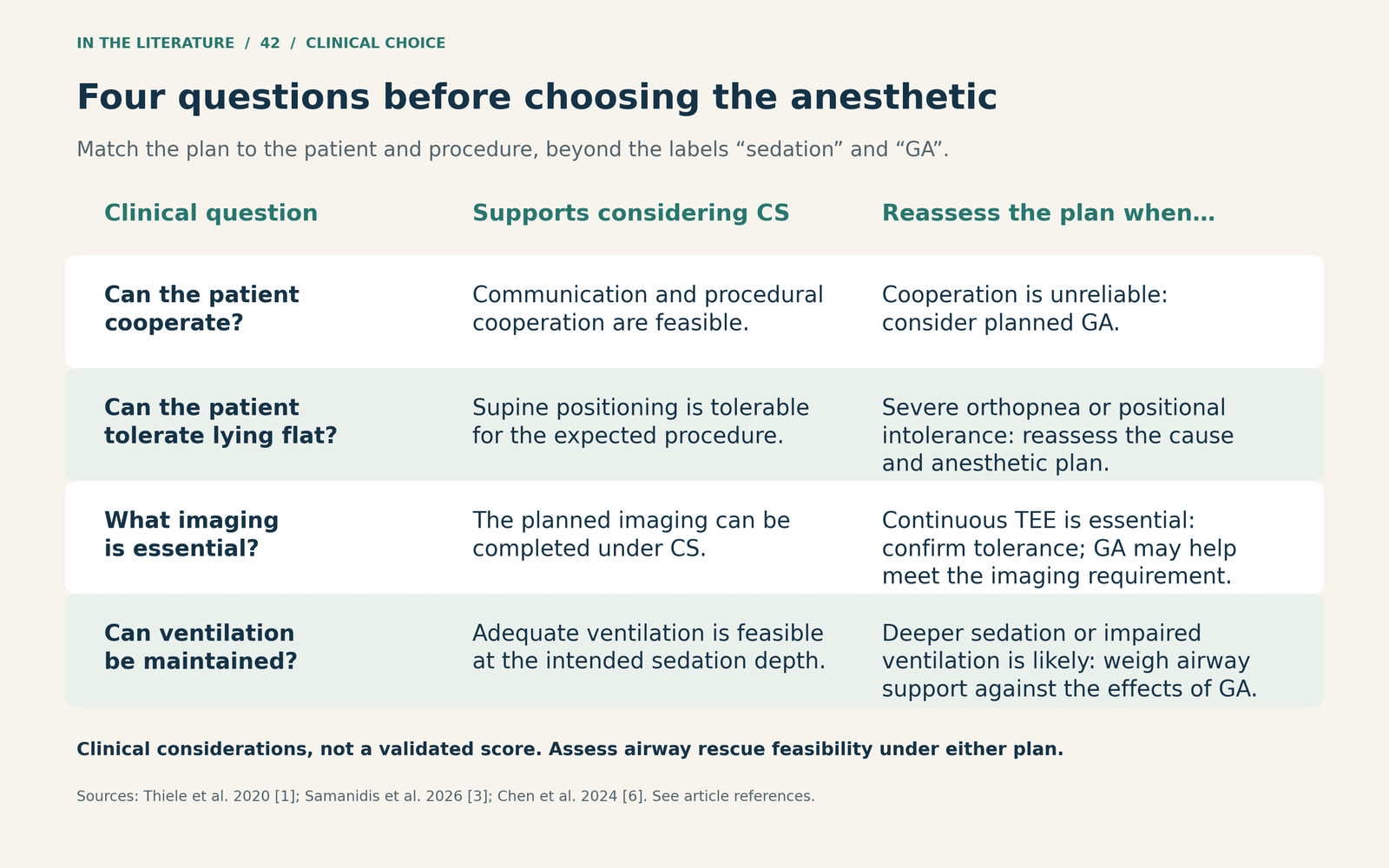
Figure 2. Patient and procedural requirements should shape the plan. A need to reassess does not automatically mandate GA. The cooperation, positioning, and TEE considerations reflect the selection practices described in the JCVA cohort; ventilation considerations also draw on SOLVE-TAVI and the hypercapnia study. [1, 3, 6]
The 2026 Italian interdisciplinary consensus is consistent with considering a less invasive approach: its abstract reports that local anesthesia alone and conscious sedation were judged appropriate in most evaluated scenarios. Only the abstract was available for this article, so its detailed scenario ratings are not reproduced here. [2]
Sedation depth and conversion belong in the initial plan
In a retrospective cohort of 201 TAVR patients with arterial blood gas measurements during MAC, 52 patients (26%) had a PaCO₂ above 60 mmHg at valve deployment. Sedation was predominantly deep, using propofol and dexmedetomidine. This is not a rate to apply to all conscious-sedation practice. It illustrates why oxygenation alone cannot characterize ventilation, and why the intended depth must be specified when discussing “MAC.” [6]
The same study associated more marked hypercapnia and acidosis with greater vasoactive support. It did not establish that hypercapnia caused worse postoperative outcomes. The practical implication is to follow ventilation as well as oxygenation and hemodynamics, rather than infer respiratory adequacy from an acceptable oxygen saturation. SOLVE-TAVI's conscious-sedation protocol included capnography and the ability to escalate airway support. [1, 6]
Conversion also needs to be discussed before sedation begins. In SOLVE-TAVI, 13 of 218 patients in the conscious-sedation group—about 6%—converted to GA. Reasons included agitation, respiratory insufficiency, hemodynamic problems, and emergency surgery; their urgency was not uniform. Before starting, the team should agree on clinical triggers, airway access, available equipment, and who will perform each part of an escalation. This is a practical application of the reported complications, not a trial-tested rescue protocol. [1]
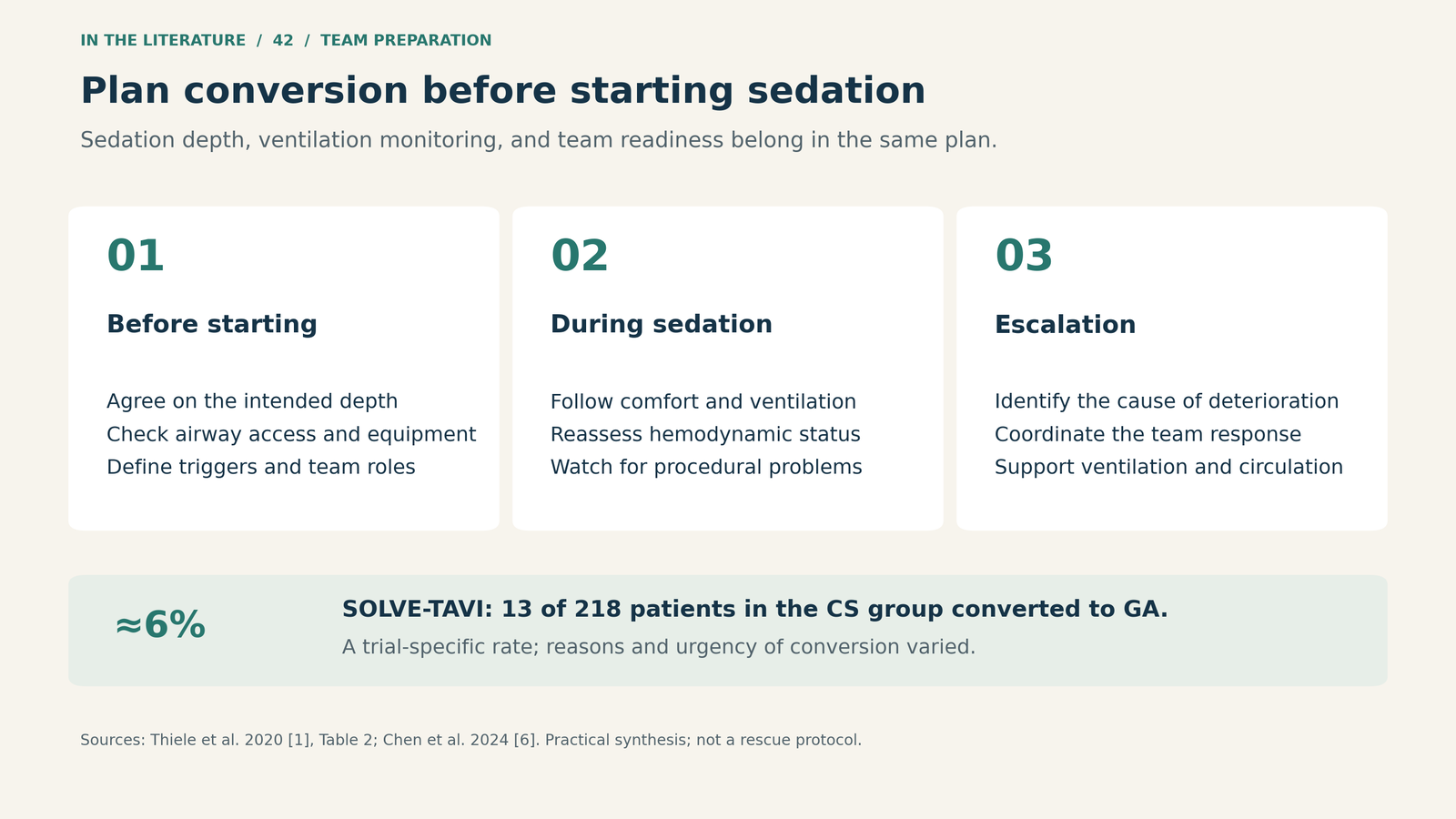
Figure 3. A sedation plan includes preparation for escalation. The conversion rate is specific to SOLVE-TAVI and should not be treated as a universal contemporary rate. [1, 6]
Is local anesthesia alone the next step?
DOUBLE-CHOICE addresses a related but different decision. In 752 randomized patients, a minimalist strategy including isolated local anesthesia was compared with conscious sedation—not GA. The published abstract reports noninferiority for its 30-day composite endpoint, with higher patient-reported anxiety and stress under the minimalist strategy and potentially more pain and discomfort. Only the abstract was available here. This supports keeping patient comfort within the decision, even when procedural outcomes permit a less intensive anesthetic approach. [7]
Three takeaways
- Use conscious sedation when it fits the patient, procedure, and team. Explain its evidence in terms of the outcomes actually studied; do not promise a survival benefit.
- Choose planned GA when its control addresses a concrete clinical need. Cooperation, supine tolerance, imaging, and ventilation are more useful decision points than a blanket preference for one technique.
- Specify the depth, monitor ventilation, and prepare for conversion. Those details determine what a sedation strategy means at the bedside.
References
- Thiele H, Kurz T, Feistritzer HJ, Stachel G, Hartung P, Lurz P, et al. General versus local anesthesia with conscious sedation in transcatheter aortic valve implantation: the randomized SOLVE-TAVI trial. Circulation. 2020;142(15):1437–1447. doi:10.1161/CIRCULATIONAHA.120.046451.
- Ajello V, Fresilli S, D'Amico F, Franceschini G, Aloisio T, Gottin L, et al. Management of anaesthesia for transfemoral transcatheter aortic valve implantation: an Italian interdisciplinary consensus statement. Br J Anaesth. 2026;136(3):824–835. doi:10.1016/j.bja.2025.10.052. Abstract only.
- Samanidis G, Kanakis M, Koziakas IG, Falara A, Nikoli E, Griva P, et al. Long-term survival of patients undergoing transcatheter aortic valve implantation under general anesthesia versus monitored anesthesia care. J Cardiothorac Vasc Anesth. Published online August 30, 2026. doi:10.1053/j.jvca.2026.08.158.
- Butala NM, Chung M, Secemsky EA, Manandhar P, Marquis-Gravel G, Kosinski AS, et al. Conscious sedation versus general anesthesia for transcatheter aortic valve replacement: variation in practice and outcomes. JACC Cardiovasc Interv. 2020;13(11):1277–1287. doi:10.1016/j.jcin.2020.03.008.
- Feistritzer HJ, Kurz T, Vonthein R, Schröder L, Stachel G, Eitel I, et al. Effect of valve type and anesthesia strategy for TAVR: 5-year results of the SOLVE-TAVI trial. J Am Coll Cardiol. 2025;85(1):74–82. doi:10.1016/j.jacc.2024.09.007.
- Chen T, Asher S, Apruzzese P, Owusu-Dapaah H, Gonzalez G, Maslow A. Hypercapnia during transcatheter aortic valve replacement under monitored anaesthesia care: a retrospective cohort study. Open Heart. 2024;11(2):e002801. doi:10.1136/openhrt-2024-002801.
- Feistritzer HJ, Ender J, Lauten P, Rudolph TK, Rudolph V, Geisler T, et al. Peri-interventional anesthesia strategies for transcatheter aortic valve implantation: a multicenter, randomized, controlled, noninferiority trial. Circulation. 2025;152(22):1526–1537. doi:10.1161/CIRCULATIONAHA.125.076557. Abstract only.