ITL-ad2b230b8650
Juan Li, MD · Updated November 18, 2026
Key points
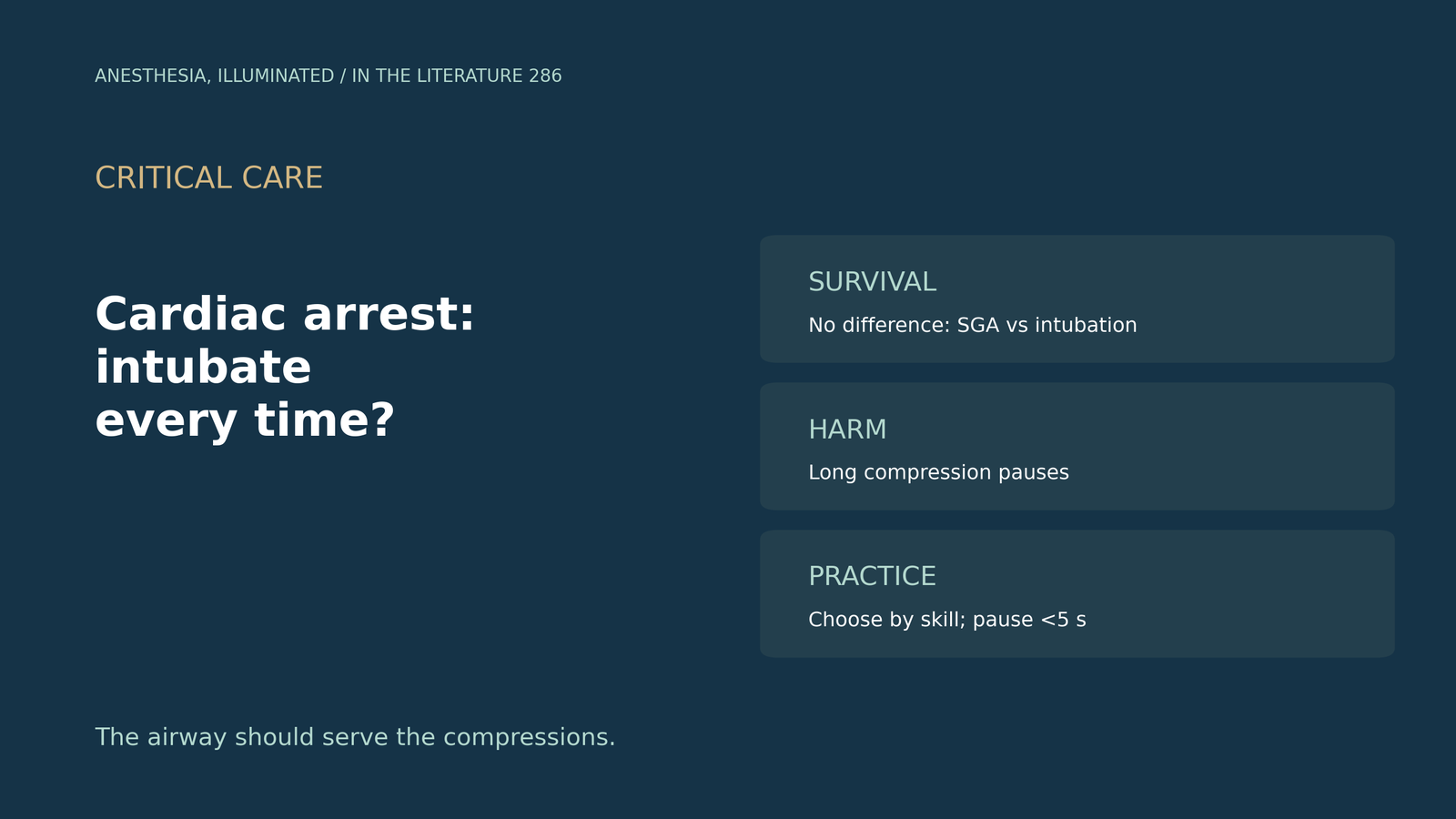
- The debate is real. One side calls intubation the most protective airway; the other would reserve it for selected patients.[1], [2]
- Survival did not differ out of hospital. Across 246,659 patients, supraglottic airways and intubation gave similar survival to discharge.[3]
- In-hospital data are confounded. Registry estimates of harm from intubation were implausibly large, and a trial found similar outcomes with bag-mask ventilation.[4]
- Guidelines let skill decide. Bag-mask or an advanced airway is acceptable, and any intubation pause should be under 5 seconds.[5]
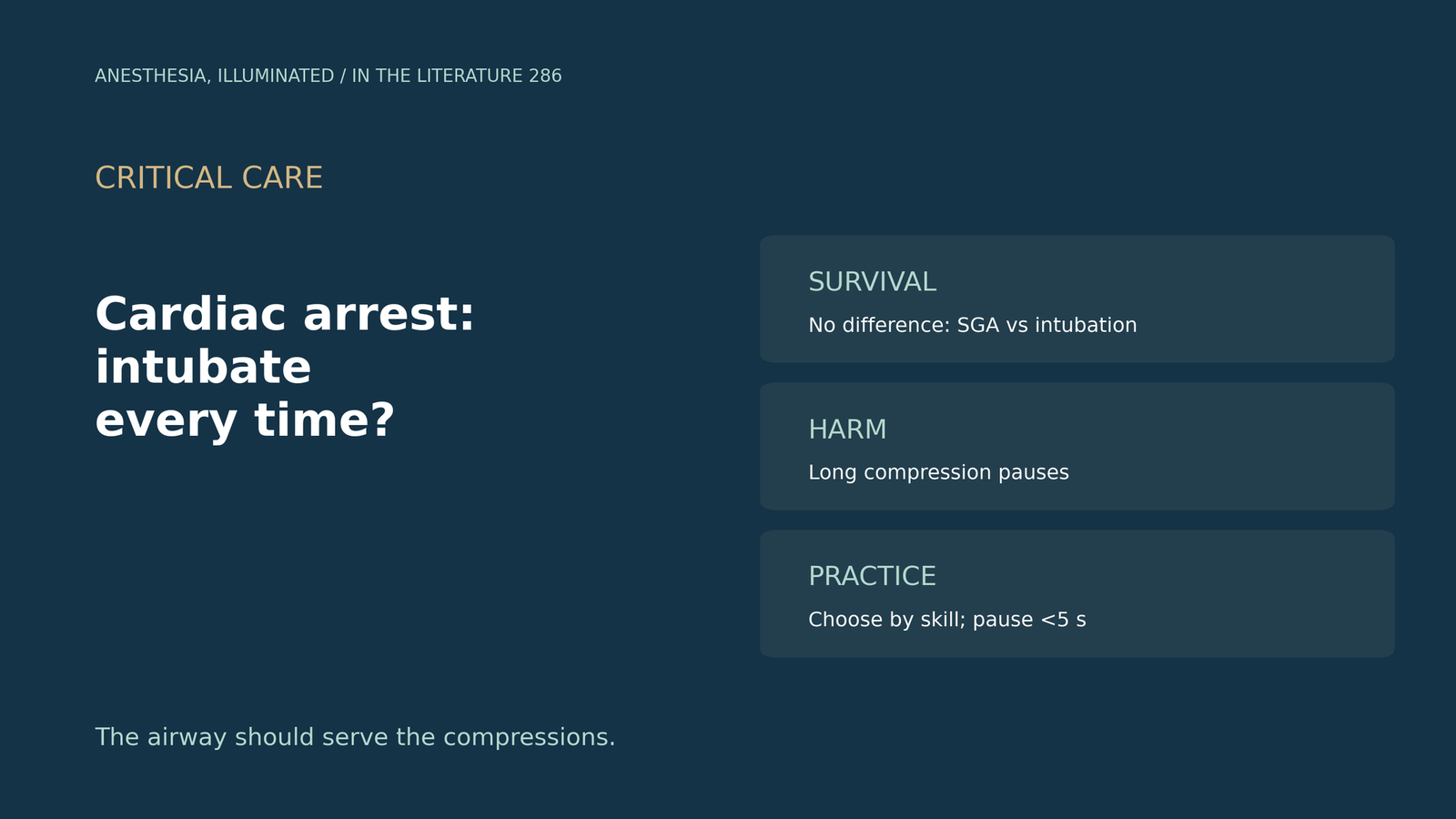
During CPR on the ward, an anaesthetist arrives and the team asks whether to stop compressions to intubate. Should every patient in arrest be intubated?
The pro and con
The pro side argues that routine intubation is the most protective airway in cardiac arrest, and that its most compelling argument is protection from airway soiling (Gilbey, J Cardiothorac Vasc Anesth 2023). Guidance recommends that only rescuers with over 95% intubation success should intubate, and the pro author accepts that the risk of intubation is not worth taking without the right conditions.[1]
The con side argues that intubation should not be routine but reserved for selected patients (Milne, J Cardiothorac Vasc Anesth 2023). One out-of-hospital study found intubation interrupted compressions for a median of 109.5 seconds, and the con author concludes that current evidence is equivocal.[2]
Out-of-hospital evidence
In 246,659 out-of-hospital arrests (Costa et al., Resusc Plus 2026), survival to discharge did not differ between SGA and intubation (RR 0.96). Overall, SGA was associated with lower ROSC than intubation (RR 0.86), but in the randomized trials SGA had a higher ROSC rate than intubation (RR 1.09). The authors attribute the divergence to confounding by indication and resuscitation-time bias in observational data.[3]
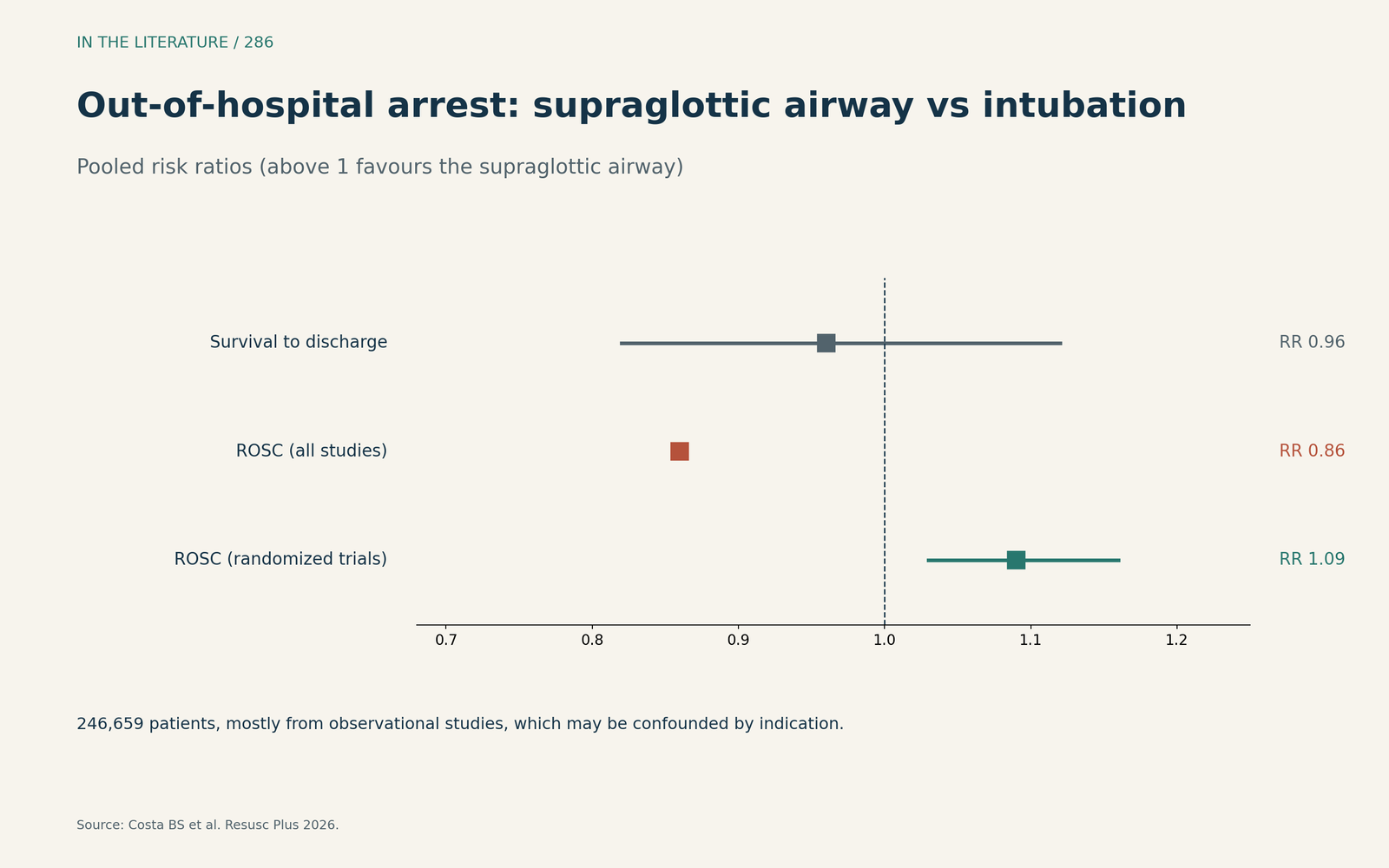
Figure 1. Survival did not differ; ROSC favoured intubation in observational data but the supraglottic airway in trials. Data from Costa et al.[3] View larger.

In-hospital evidence
A registry analysis included 210,115 in-hospital cardiac arrests (Holmberg et al., Resusc Plus 2026). Intubation is still performed in more than half of in-hospital arrests in the United States. Conventional analysis linked intubation with an implausibly large absolute reduction in survival, and the authors judge the large harm estimates most likely due to limitations of the analysis. They note that in a Danish study, compression pauses over 10 seconds occurred in 21 percent of cases, and that a randomized trial of bag-mask ventilation vs intubation found similar outcomes (4.3 vs 4.2 percent).[4]
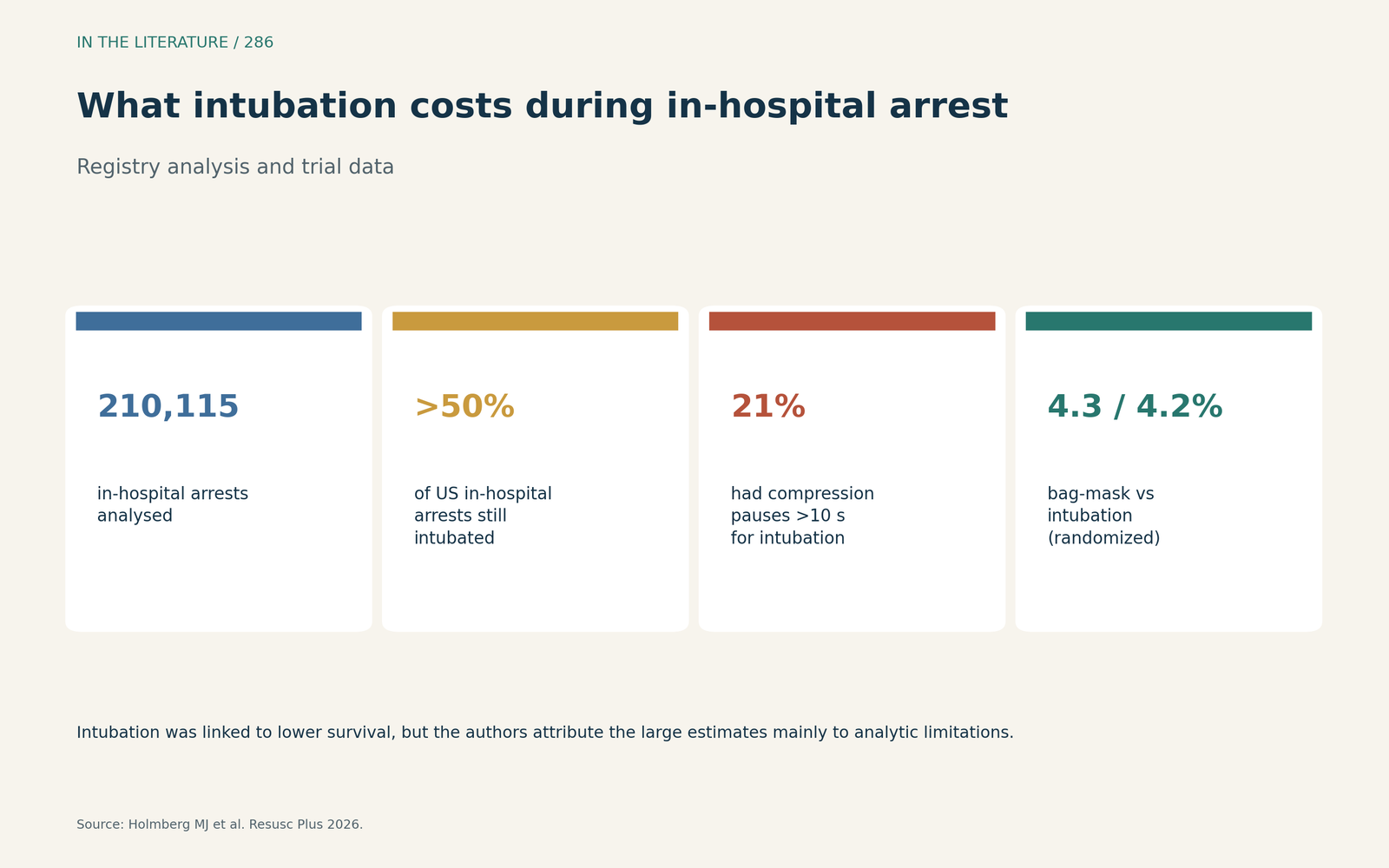
Figure 2. Intubation remains common, often interrupts compressions, and showed no advantage over bag-mask ventilation in a trial. Data from Holmberg et al.[4] View larger.

What the guideline says
The 2025 Korean CPR guideline (Kim et al., Clin Exp Emerg Med 2026) states that providers may use either bag-mask ventilation or an advanced airway during CPR (weak recommendation, moderate certainty). For providers with limited intubation experience, bag-mask ventilation is preferred and an SGA is recommended as the initial advanced airway; in in-hospital arrest, either an SGA or intubation may be used. Any interruption for intubation should be limited to less than 5 seconds, and waveform capnography is strongly recommended with clinical judgment.[5]
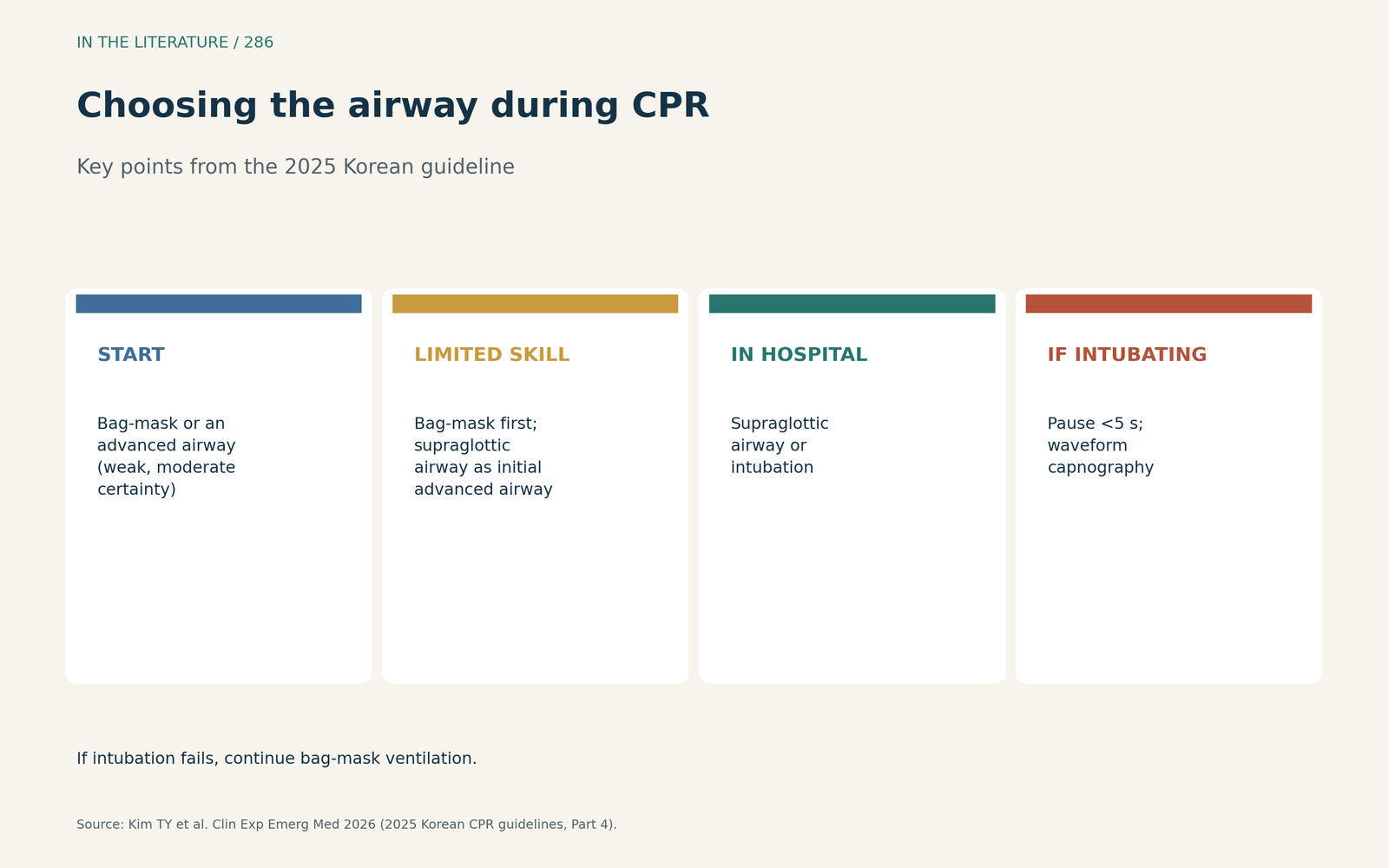
Figure 3. Choose the airway by skill and setting, and protect compressions. Data from the 2025 Korean CPR guideline.[5] View larger.

Three takeaways
- Routine intubation has not shown a survival advantage; supraglottic airways and bag-mask ventilation are acceptable.[3], [4]
- Intubate only with high skill and the right setup, keeping any pause under 5 seconds and confirming with waveform capnography.[1], [5]
- Let the airway serve the compressions, not the other way round.[2], [5]
References
- Gilbey T. Pro: we should routinely intubate all patients in cardiac arrest. J Cardiothorac Vasc Anesth. 2023;37:1315–1317. doi:10.1053/j.jvca.2023.01.035
- Milne B. Con: we should not routinely intubate all patients in cardiac arrest. J Cardiothorac Vasc Anesth. 2023;37:1318–1320. doi:10.1053/j.jvca.2023.01.018
- Costa BS, Colla MCP, de Morais JW, et al. Supraglottic airway versus endotracheal intubation in out-of-hospital cardiac arrest: a systematic review and meta-analysis. Resusc Plus. 2026;32:101491. doi:10.1016/j.resplu.2026.101491
- Holmberg MJ, Granfeldt A, Andersen LW. Intubation during in-hospital cardiac arrest: an instrumental variable analysis. Resusc Plus. 2026;27:101202. doi:10.1016/j.resplu.2025.101202
- Kim TY, Ahn GJ, Cha KC, et al. 2025 Korean guidelines for cardiopulmonary resuscitation: part 4. Adult advanced life support. Clin Exp Emerg Med. 2026;13(Suppl 1):S32. doi:10.15441/ceem.26.073