
ITL-5cf7949e8e60
Watch the video

Figure 1. Remote ischemic preconditioning uses brief limb ischemia and reperfusion; its value depends on the clinical protocol, not just applying a cuff. Conceptual illustration.
Key points
- HypnoRenalRIP found a different urinary biomarker response to RIPC under sevoflurane and propofol.
- Its primary endpoint was a biomarker change, not acute kidney injury (AKI), dialysis, or survival.
- The lower numerical AKI rate with sevoflurane plus RIPC was not statistically significant across the four groups; the trial was not powered to establish an AKI benefit.
- Other trials support a possible clinical benefit of RIPC, but timing, population, anesthetic exposure, and AKI definitions differ.
- Guidelines support considering RIPC with volatile anesthesia. This does not establish that switching an otherwise suitable anesthetic solely for RIPC will improve outcomes.
For a cardiac surgical patient at high risk of AKI, a few cycles of arm-cuff inflation seem an attractive preventive measure. If propofol interferes with that response, should the anesthetic be changed to sevoflurane?
HypnoRenalRIP provides a reason to take anesthetic exposure seriously when planning RIPC. Its stronger message concerns a biological response; its clinical outcome data do not, by themselves, justify a universal drug switch.[1]
A mechanistic trial with four treatment groups
The single-center trial enrolled 160 adults at high AKI risk undergoing cardiac surgery with cardiopulmonary bypass. Patients received propofol or sevoflurane anesthesia, combined with RIPC or sham treatment. Each active RIPC group had 60 patients; each sham group had 20. RIPC consisted of three cycles of five minutes of ischemia followed by five minutes of reperfusion after induction and before incision.[1]
The primary endpoint was the change in urinary [TIMP-2]·[IGFBP7] from before to after the intervention, comparing the two active RIPC groups. The change was greater with sevoflurane plus RIPC (P=.022). Importantly, the regimens differed at induction too: the sevoflurane group received thiopental, whereas the propofol group received propofol. This tests anesthetic regimens, not an isolated maintenance-agent substitution.[1]
Why could an early rise in a kidney-stress marker be desirable?
Timing changes the interpretation. The proposed RIPC mechanism involves a brief stress signal that induces a protective, transient cell-cycle arrest before the surgical insult. In this trial, sevoflurane plus RIPC produced an early biomarker response; four hours after bypass, that group had lower biomarker concentrations than the other groups. The latter measurements were exploratory post hoc analyses.[1]
This pattern is compatible with the proposed mechanism. It does not mean that a higher postoperative kidney-stress value is reassuring, or that clinicians should try to raise the biomarker. A preconditioning response before injury and an elevated marker after surgery answer different questions.
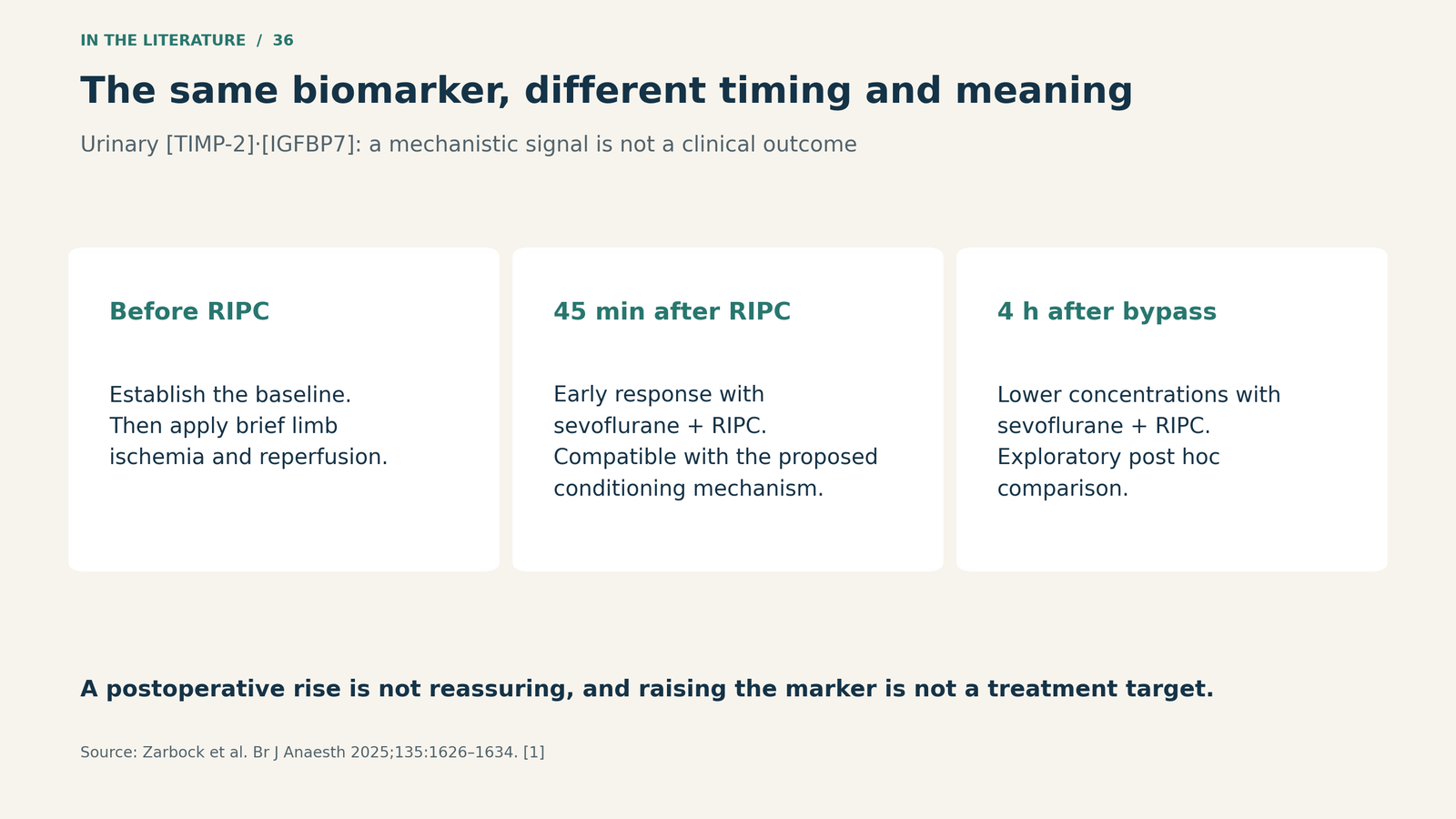
Figure 2. A timing-based interpretation of [TIMP-2]·[IGFBP7]. The proposed protective mechanism is not a validated treatment target, and the postoperative biomarker comparisons were exploratory.[1]

The patient-centered result remains uncertain
AKI within 72 hours occurred in 8/20 patients receiving propofol plus sham, 27/60 receiving propofol plus RIPC, 9/20 receiving sevoflurane plus sham, and 18/60 receiving sevoflurane plus RIPC. The overall comparison was not significant (P=.353). Dialysis-related outcomes, mortality, and major adverse kidney events likewise did not show significant between-group differences.[1]
The 30% versus 45% contrast between the two active RIPC arms is interesting, but it is not a demonstrated treatment effect. It should not be presented as an established absolute risk reduction or converted into a clinical number needed to treat. Equally, a trial powered for a biomarker cannot rule out a clinically useful benefit.
RIPC was not entirely without local effects: petechial bleeding was more frequent in the active groups, although persistent adverse limb effects were not reported. Patients with severe kidney dysfunction and several other important conditions were excluded. The studied protocol therefore should not be applied indiscriminately.[1]
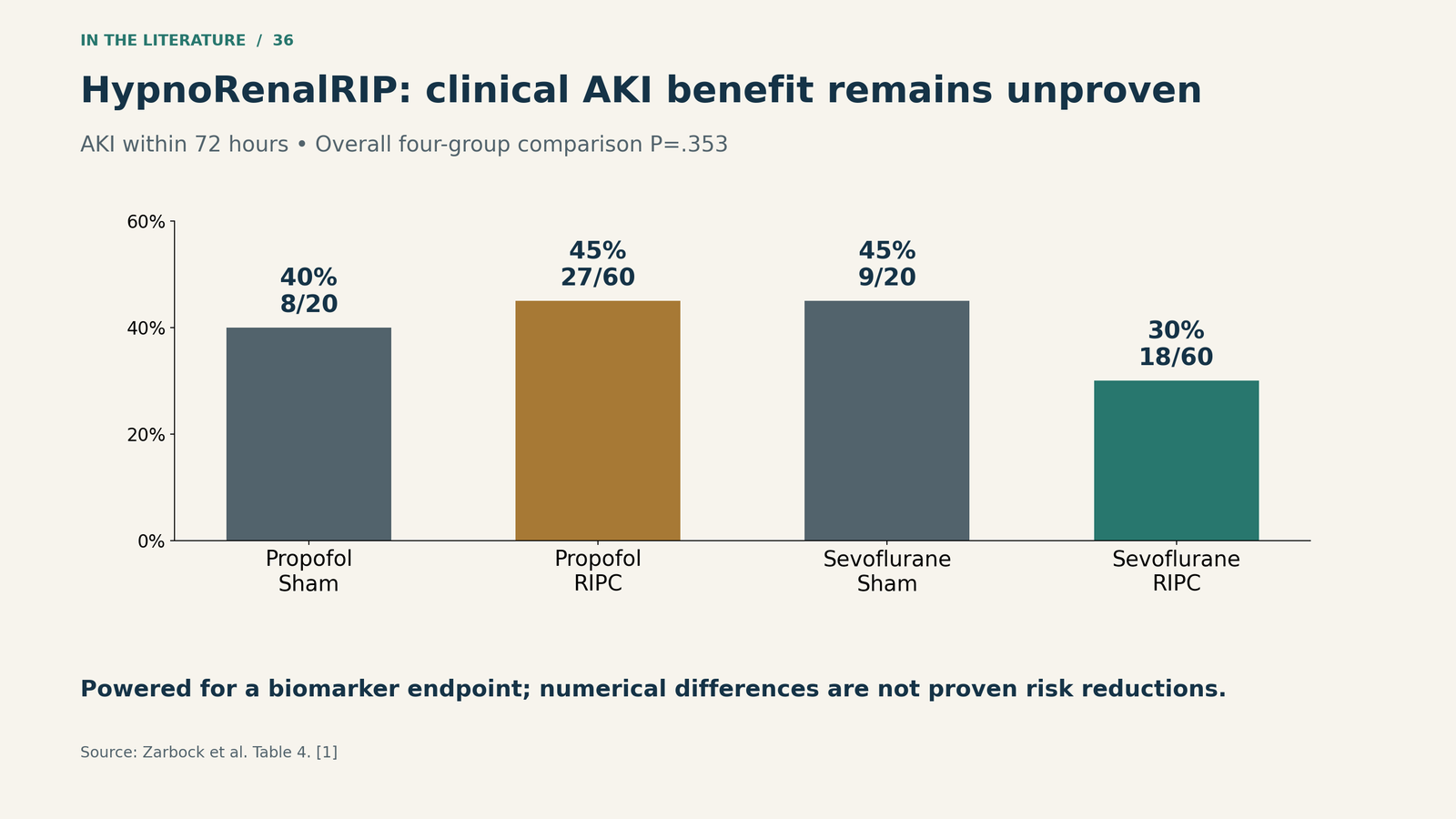
Figure 3. Observed 72-hour AKI rates, with group denominators. These secondary outcomes do not establish that changing from propofol to sevoflurane prevents AKI.[1]

Clinical RIPC evidence is broader than this biomarker trial
Jia and colleagues randomized 509 high-risk patients to four cuff cycles or sham 24 hours before surgery. AKI within seven days occurred in 69/254 (27.2%) versus 90/255 (35.3%): odds ratio 0.68 (95% CI, 0.47–1.00; P=.048). Dialysis and 90-day mortality were not significantly reduced. Anesthesia included both propofol and sevoflurane, administered after the earlier conditioning intervention. This supports a possible benefit of delayed RIPC; it does not settle the interaction during immediate, postinduction RIPC.[2]
A 2026 valve-surgery trial by Wang and colleagues used etomidate induction and sevoflurane maintenance, with RIPC after induction. Among 159 analyzed patients, creatinine-defined AKI within 48 hours occurred in 11/80 receiving RIPC versus 21/79 controls. This is another encouraging clinical signal, but it was a single-center study, excluded advanced kidney dysfunction, and did not randomize the anesthetic. It therefore cannot establish the benefit of switching drugs.[3]
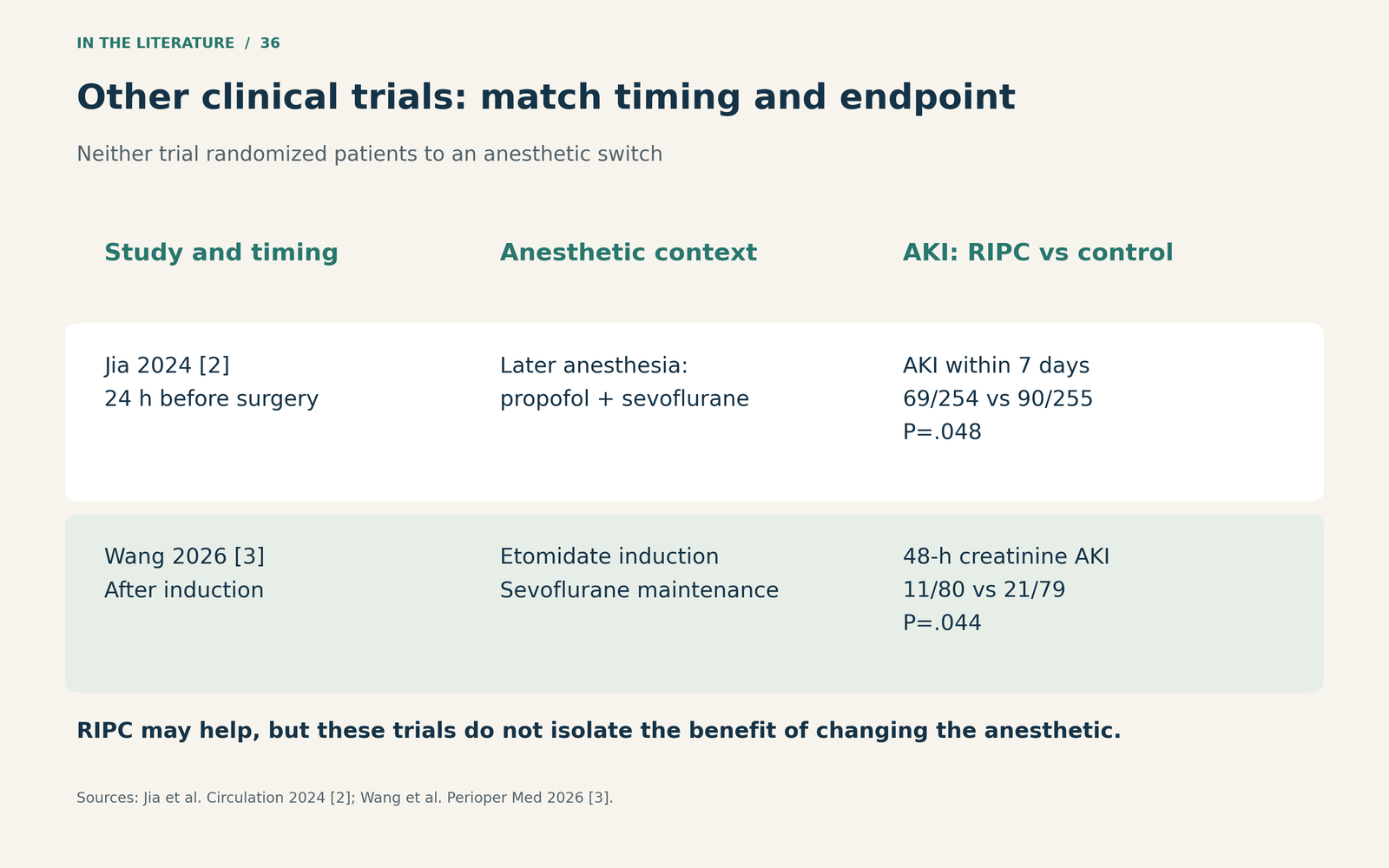
Figure 4. Match the timing and endpoint before combining the message of different RIPC trials. Neither study directly tested switching from propofol to sevoflurane.[2, 3]

What should change in clinical planning?
The 2024 EACTS/EACTAIC/EBCP cardiopulmonary bypass guideline, published in 2025, says RIPC should be considered in patients anesthetized with volatile agents to improve outcomes and reduce myocardial and kidney injury (Class IIa, Level A). That supports consideration within a defined protocol; it is not a requirement that every patient receive sevoflurane and RIPC.[4]
If RIPC is selected, define when it will occur, review the entire anesthetic regimen and limb suitability, and record clinical renal outcomes rather than declaring success from a biomarker alone. For a patient already receiving a volatile technique, the guideline provides a basis for considering RIPC. For a patient otherwise suited to propofol, HypnoRenalRIP alone does not demonstrate that a drug switch improves AKI, dialysis, or survival.
Three takeaways
- Separate a biological response from proven patient benefit. HypnoRenalRIP's positive primary endpoint was a biomarker change.
- Timing and anesthetic context matter. Delayed RIPC and postinduction RIPC should not be treated as interchangeable interventions.
- Consider RIPC deliberately, not automatically. Follow a defined clinical protocol and evaluate AKI and recovery; the evidence does not establish a universal anesthetic switch.
References
- Zarbock A, Schöne LM, Kellum JA, Gerss J, Weiss R, Booke H, et al. Impact of propofol or sevoflurane on the renoprotective effect of remote ischaemic preconditioning in cardiac surgery: the HypnoRenalRIP randomised clinical trial. Br J Anaesth. 2025;135(6):1626–1634. doi:10.1016/j.bja.2025.08.055.
- Jia P, Ji Q, Zou Z, Zeng Q, Ren T, Chen W, et al. Effect of delayed remote ischemic preconditioning on acute kidney injury and outcomes in patients undergoing cardiac surgery: a randomized clinical trial. Circulation. 2024;150(17):1366–1376. doi:10.1161/CIRCULATIONAHA.124.071408.
- Wang H, Liao Q, Huang Y, Miao P, Guo K. Effects of remote ischaemic preconditioning against acute kidney injury in cardiac surgery patients: a randomized controlled trial. Perioper Med (Lond). 2026;15:9. doi:10.1186/s13741-025-00636-3.
- Wahba A, Kunst G, De Somer F, Agerup Kildahl H, Milne B, Kjellberg G, et al. 2024 EACTS/EACTAIC/EBCP Guidelines on cardiopulmonary bypass in adult cardiac surgery. Br J Anaesth. 2025;134(4):917–1008. doi:10.1016/j.bja.2025.01.015.