ITL-937d56d26f69
Juan Li · In the Literature · Updated November 16, 2026
Watch the video
Key points
- In anatomically suitable patients with a small native annulus, SMART provides randomized evidence favoring the tested supra-annular self-expanding valves for hemodynamic performance.
- The clinical composite met noninferiority at one year; this is not proof of better survival, fewer clinical events, or equivalent outcomes.
- SMART's bioprosthetic valve dysfunction endpoint included high gradients and severe prosthesis–patient mismatch; it was not a rate of irreversible valve degeneration.
- Conduction risk and future coronary access can change the preferred device even when one platform is expected to deliver a lower gradient.
- Choose an actual valve generation for an actual anatomy, and consider the next intervention before performing the first.
Start with the patient who could receive either valve
The CT shows a small native aortic annulus in a patient with severe symptomatic aortic stenosis. Both candidate transcatheter platforms are feasible. The useful question is whether the expected hemodynamic gain should determine the choice—or whether another consequence matters more for this patient.
A supra-annular self-expanding valve has a strong evidence-based case when avoiding residual high gradients and prosthesis–patient mismatch is a major priority. It is not an automatic choice for every small annulus. The evidence is device specific, and the tradeoffs extend beyond valve opening area. [1]
SMART randomized 737 patients with CT annular area ≤430 mm² and anatomy suitable for transfemoral implantation of either study platform. It compared Evolut PRO/PRO+/FX with SAPIEN 3/3 Ultra. Participants were predominantly women, with a mean age of 80 years. These were native-valve procedures, not treatment of failed surgical bioprostheses. [1]
Separate the three results that are often blended together
First, the clinical coprimary endpoint—death, disabling stroke, or rehospitalization for heart failure through 12 months—had Kaplan–Meier estimates of 9.4% with self-expanding versus 10.6% with balloon-expandable valves. The absolute difference was −1.2 percentage points, with a 90% CI of −4.9 to 2.5. This met the prespecified 8-percentage-point noninferiority margin; it did not demonstrate clinical superiority. The clinical analysis used the 716 as-treated patients, not all 737 randomized participants. [1]
Second, mean Doppler gradient at 12 months was 7.7 versus 15.7 mmHg, favoring the self-expanding platform. This is a clinically relevant performance difference in a population vulnerable to a small effective orifice. [1]
Third, the Kaplan–Meier estimate for the bioprosthetic valve dysfunction (BVD) composite was 9.4% versus 41.6%. Its definition included a mean gradient ≥20 mmHg, severe prosthesis–patient mismatch, and other valve-related events. The analysis used the successfully implanted cohort. The 41.6% figure does not mean that this proportion of balloon-expandable valves had structurally degenerated, failed, or required replacement within a year. [1]
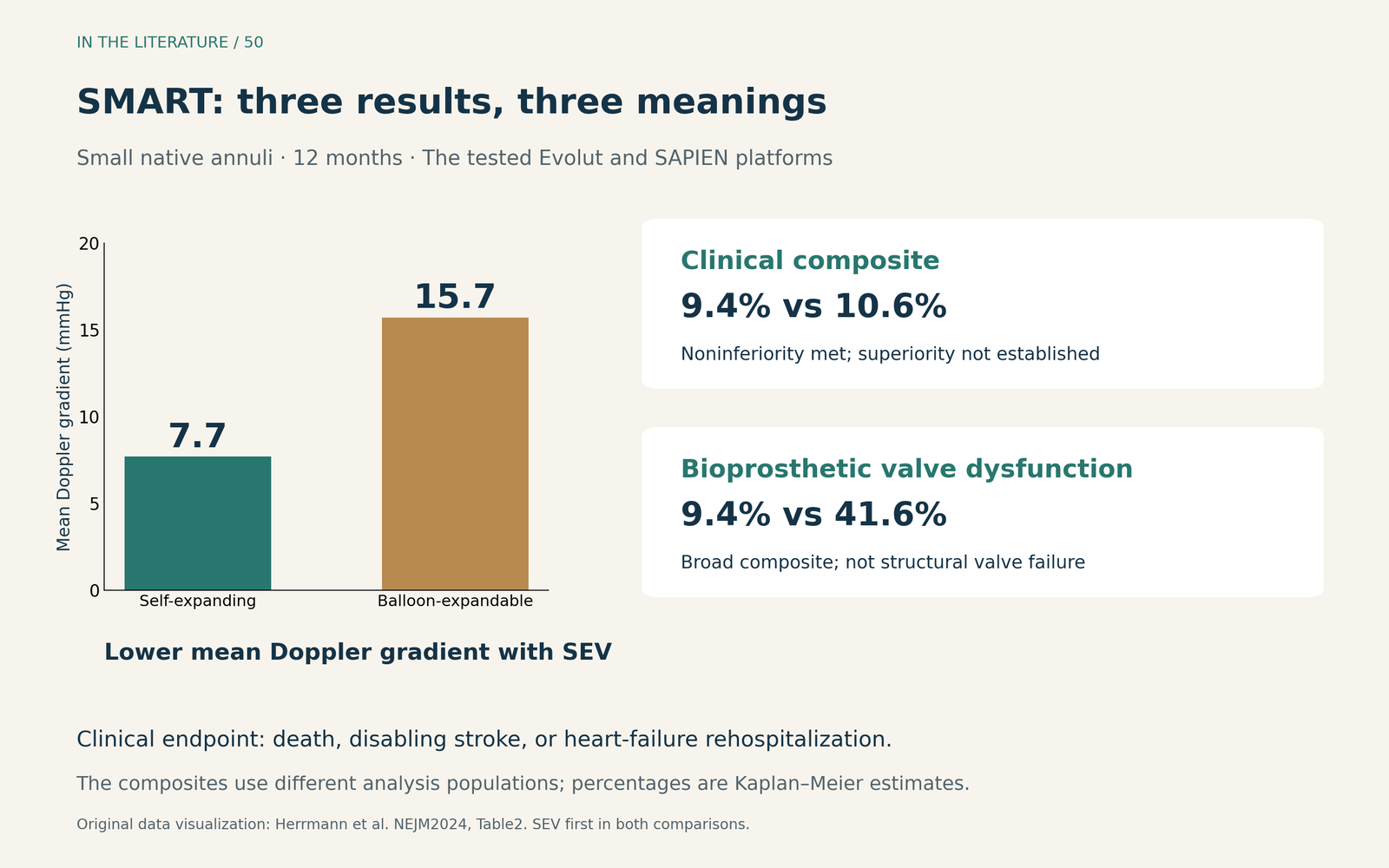
Figure 1. Three different SMART results at 12 months. Mean Doppler gradients are shown on the left; the clinical and BVD composites answer different questions and use different analysis populations. [1] View figure

What does subsequent evidence add?
The 2025 SMART BVD paper tested alternative definitions in a post hoc analysis of the same one-year cohort. The hemodynamic advantage persisted across the definitions examined. That strengthens confidence in the performance finding; it is neither an independent trial nor a new long-term follow-up. These two full SMART reports do not establish superior long-term survival or durability. [1, 2]
The 2026 RESOLVE report adds longer observational follow-up, with an important qualification. This single-center retrospective cohort included 345 balloon-expandable and 78 self-expanding recipients who survived beyond 30 days. At a median five-year follow-up, the adjusted hazard ratio for death, stroke, or heart-failure hospitalization was 1.65 for self-expanding versus balloon-expandable valves (95% CI 0.88–3.09; P=0.11). The wide interval does not establish equivalence or exclude clinically important differences. Nonrandom selection, older procedural years, and the survivor restriction prevent this study from settling which platform provides better long-term clinical outcomes. [3]
A lower gradient can come with a different access problem
Coronary access deserves attention before implantation. In the prospective, nonrandomized CAvEAT registry, both coronary arteries could be selectively engaged immediately after TAVR in 141/158 SAPIEN 3/Ultra recipients (89%) versus 71/158 Evolut Pro/Pro+ recipients (45%). This was a broader native-valve population, not a dedicated small-annulus trial. [4]
The endpoint matters: failure of selective engagement is not the same as inability to perform PCI. The protocol also prohibited guidewire and catheter-extension bailout techniques. These findings identify a planning issue, not a lifetime PCI-failure rate, and they should not be assigned unchanged to newer valve generations. [4]
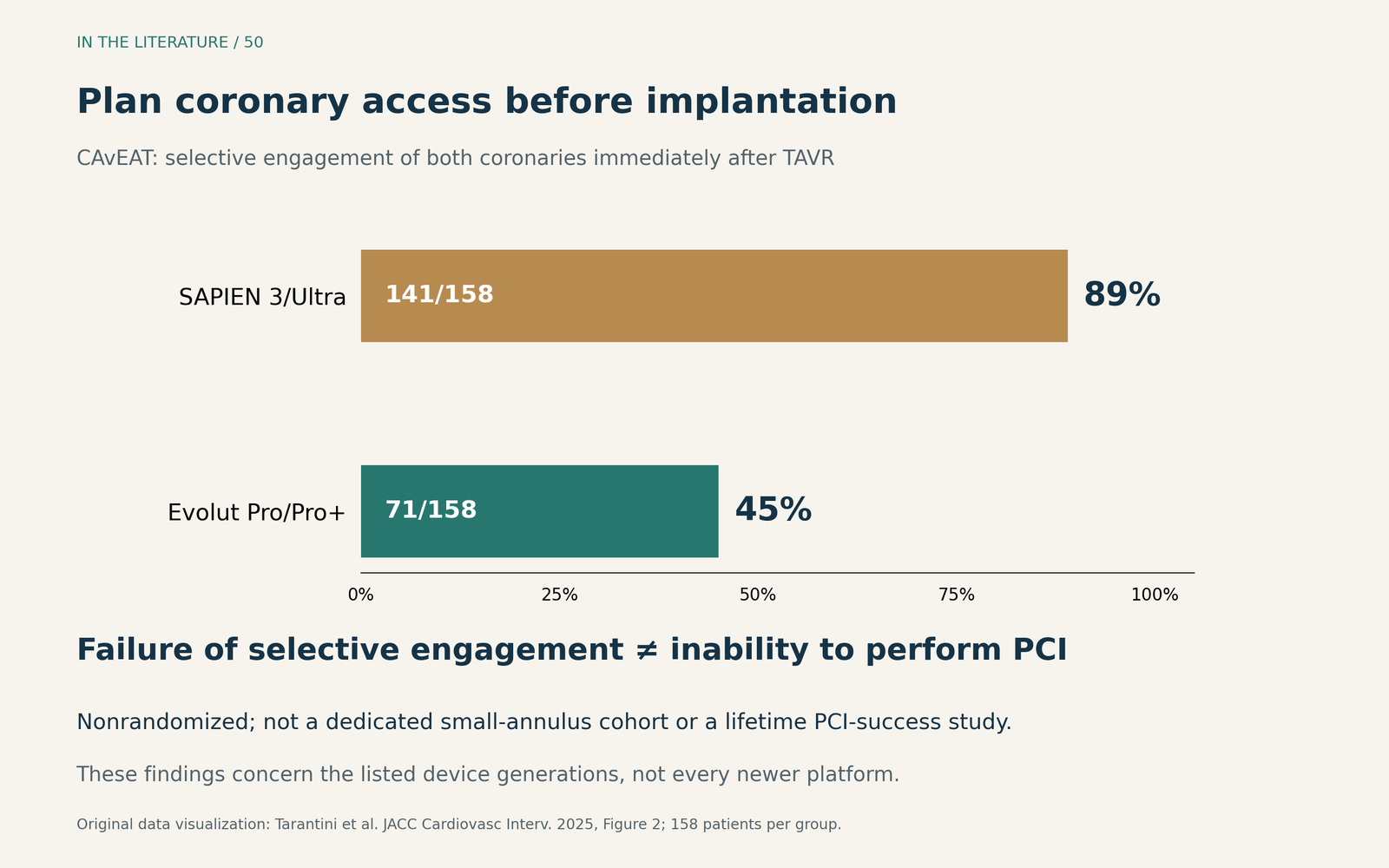
Figure 2. Immediate selective engagement of both coronary arteries in CAvEAT. The comparison is observational and device specific; nonselective access may still permit PCI. [4] View figure

Conduction risk is another part of the discussion. In SMART, new permanent pacemaker implantation by 30 days was 12.1% versus 7.8%, self-expanding versus balloon-expandable, with HR 1.61 (95% CI 0.98–2.65). The numerical difference warrants attention, but its confidence interval crosses 1: the trial did not establish a between-group difference in this endpoint. Neither “identical pacing risk” nor “proven excess” is an accurate summary. [1]
Translate the evidence into a device choice
The 2025 ESC/EACTS guideline recognizes the benefit of supra-annular designs in reducing PPM in small annuli. It also asks clinicians to account for significant coronary disease, future coronary access, and the feasibility of later intervention when choosing and implanting a valve. Device design, commissural alignment, implantation depth, and the anticipated neo-skirt of a future redo procedure all matter. [5]
For the Heart Team, a practical synthesis is to compare the expected hemodynamics of the feasible devices, then identify the consequence that could change that preference: conduction injury, difficult coronary access, or an unfavorable path to reintervention. A favorable gradient is a reason to choose a valve; it should sit alongside those other consequences rather than stand in for them. [1, 4, 5]
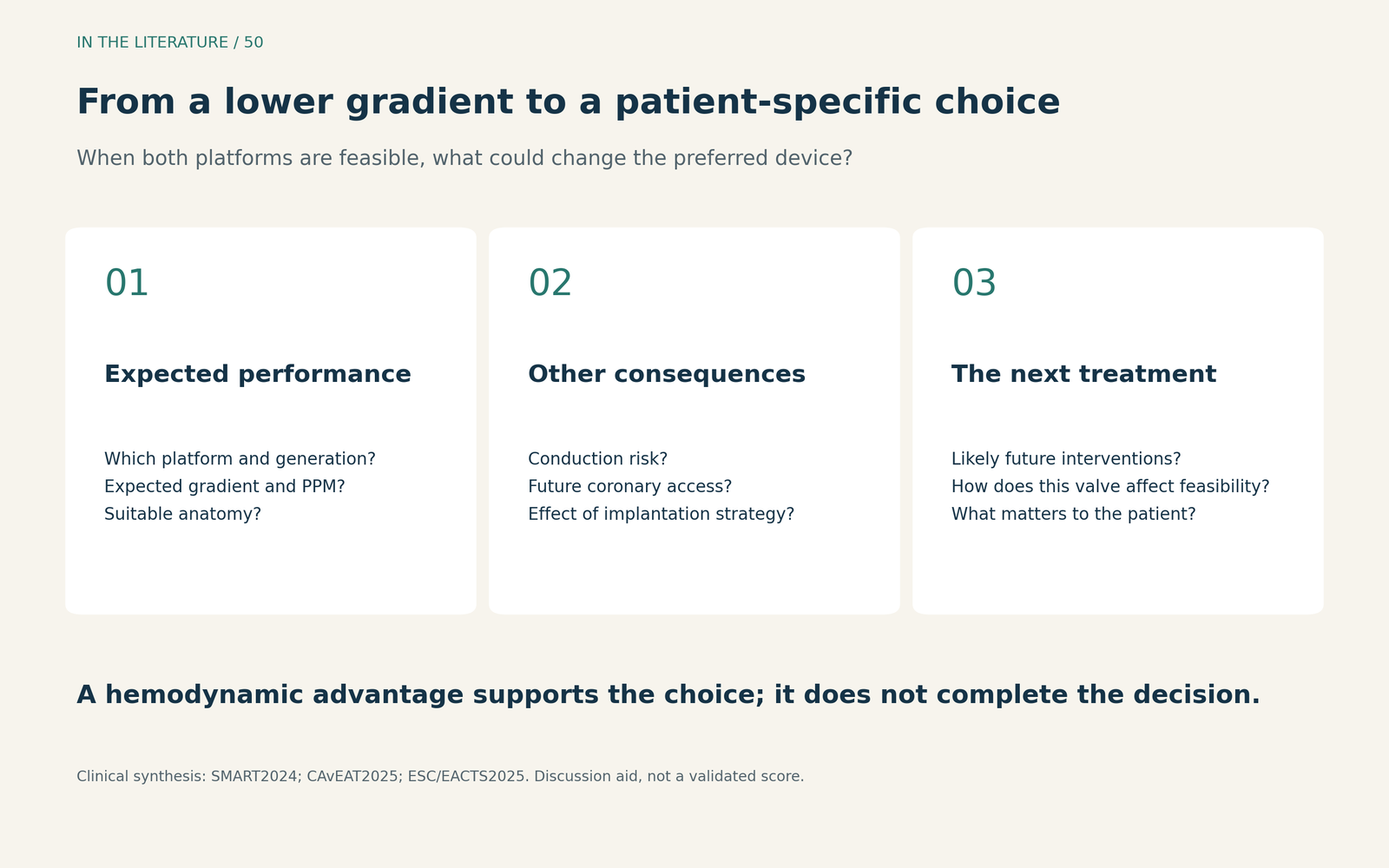
Figure 3. Questions for individualized valve selection. This is a clinical discussion aid, not a validated scoring system or an automatic treatment rule. [1, 4, 5] View figure

Three takeaways
- Give the hemodynamic advantage its proper weight. For suitable small native annuli, SMART supports the tested supra-annular platform when residual gradient and mismatch are major concerns.
- Name the endpoint before quoting the result. Clinical noninferiority, Doppler gradient, and a broad BVD composite do not mean the same thing; none alone proves superior durability.
- Choose for the patient's next steps as well as today's implant. Conduction risk, coronary access, and future intervention can change the preferred device despite a predicted gradient advantage.
References
- Herrmann HC, Mehran R, Blackman DJ, et al. Self-Expanding or Balloon-Expandable TAVR in Patients with a Small Aortic Annulus. N Engl J Med. 2024;390(21):1959–1971. doi:10.1056/NEJMoa2312573.
- Herrmann HC, Blackman DJ, Attizzani GF, et al. Evaluation of Bioprosthetic Valve Dysfunction in the SMART Randomized Clinical Trial. Circ Cardiovasc Interv. 2025;18(8):e015202. doi:10.1161/CIRCINTERVENTIONS.125.015202.
- Pawar S, Patel V, Nagasaka T, et al. Long-Term Clinical Outcomes of Balloon-Expandable Versus Self-Expanding Transcatheter Aortic Valve Replacement in Patients With Small Aortic Annulus. J Am Heart Assoc. 2026;15(1):e045417. doi:10.1161/JAHA.125.045417.
- Tarantini G, Nai Fovino L, Belloni F, et al. The Coronary Access After TAVI (CAvEAT) Study: A Prospective Registry of CA After TAVR. JACC Cardiovasc Interv. 2025;18(12):1571–1583. doi:10.1016/j.jcin.2025.05.002.
- Praz F, Borger MA, Lanz J, et al. 2025 ESC/EACTS Guidelines for the management of valvular heart disease. Eur J Cardiothorac Surg. 2025;67(8):ezaf276. doi:10.1093/ejcts/ezaf276.