ITL-ce2e0286f7bf
Juan Li, MD · Updated November 17, 2026
Watch the video
Key points
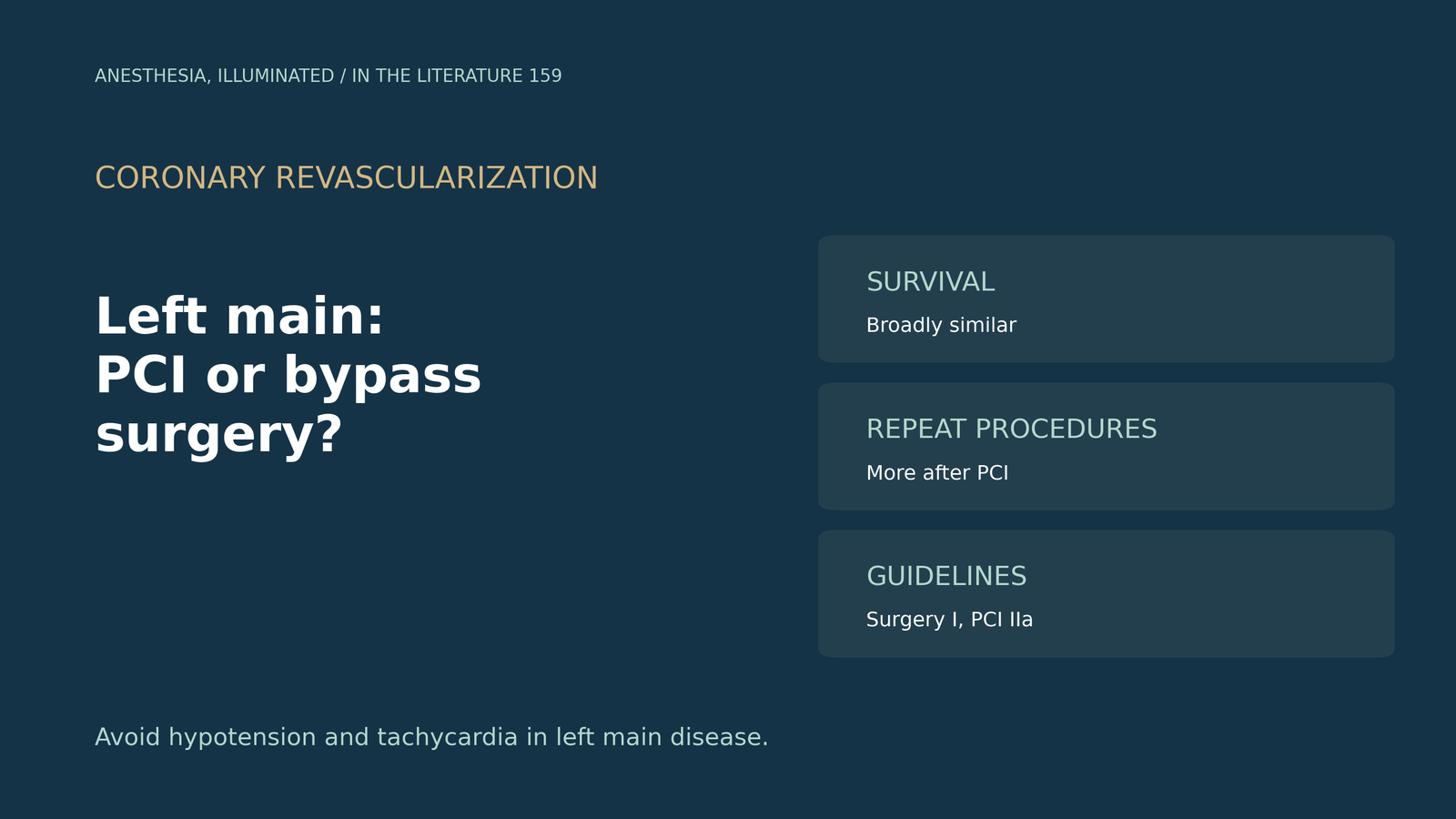
- Mortality looks similar. In SYNTAX left main, 10-year death was 27% with PCI and 28% with bypass surgery, and pooled 5-year mortality was 10.7% vs 10.5%.[1]
- The trials disagree on composites. In EXCEL, the 5-year composite was 22.0% vs 19.2%, not significantly different, whereas NOBLE found higher MACCE with PCI (28% vs 19%).[1]
- Repeat procedures favor surgery. PCI increased unplanned revascularization (relative risk 1.73).[1]
- Guidelines prefer surgery, with PCI reasonable. Bypass surgery is class I and PCI class IIa; pooled trials could exclude only large differences in mortality.[2]
- Real-world registries disagree on mortality and include many patients with acute coronary syndrome, so they cannot settle the question.[3], [4]
A patient with stable left main disease and an intermediate anatomic score is discussed by the heart team before the anesthesiologist meets them. How do PCI and bypass surgery compare, and what matters for anesthetic care?[1], [2]
What the trials show
Shekhar and colleagues summarize the randomized evidence. In SYNTAX left main, 10-year death was 27% vs 28%; in PRECOMBAT, 10-year MACCE was 29.8% vs 24.7%. EXCEL showed fewer early events with PCI at 30 days (4.9% vs 7.9%) but a similar 5-year composite (22.0% vs 19.2%), while NOBLE found higher MACCE with PCI (28% vs 19%). Pooled 5-year mortality was 10.7% vs 10.5%, but PCI increased unplanned revascularization (relative risk 1.73), and the authors regard the two strategies as complementary.[1]
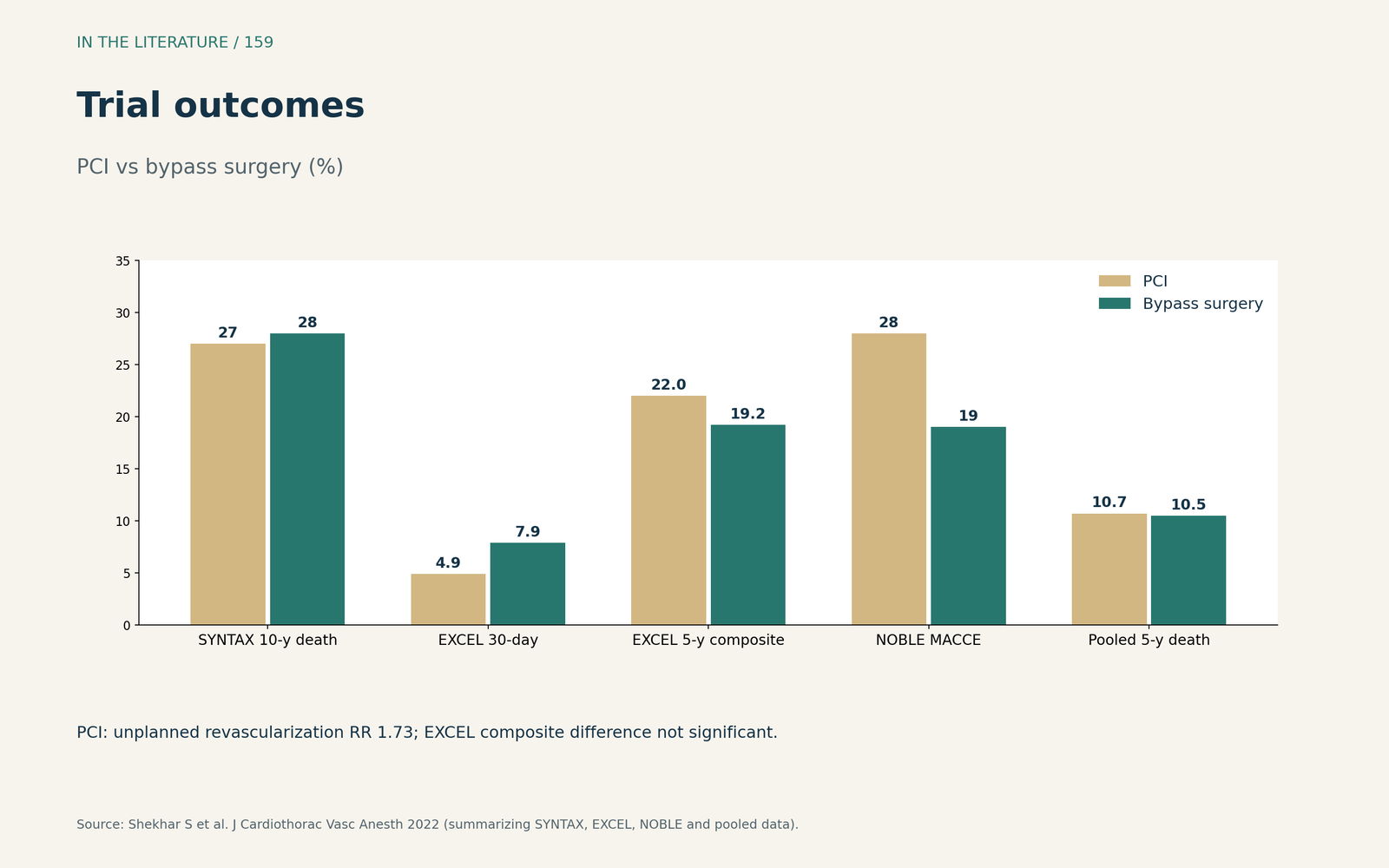
Figure 1. Trial outcomes. Redrawn from Shekhar et al.[1] View larger.

Guidelines and the anesthetic view
Doan and Chaney note that in EXCEL all-cause mortality was higher with PCI (13% vs 10%), that guidelines rate bypass surgery class I and PCI class IIa, and that pooled trials were large enough to exclude only large mortality differences; both options are reasonable according to patient preference, expertise and local volumes. Because the left main supplies at least 70% of the myocardium, hypotension and tachycardia are poorly tolerated, and no induction or maintenance drug has proved superior.[2]
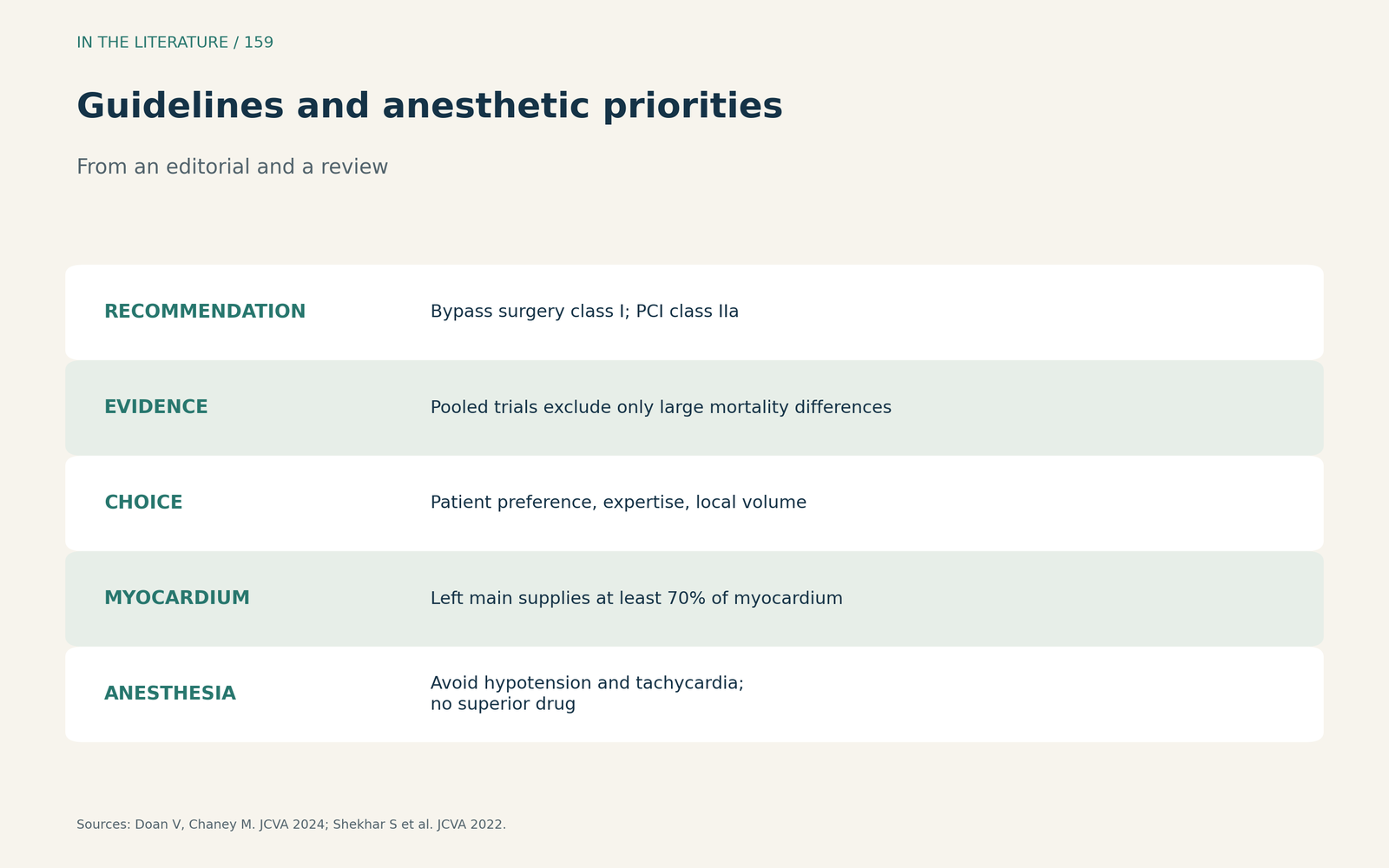
Figure 2. Guidelines and anesthetic priorities. Synthesized from Doan and Chaney and Shekhar et al.[2], [1] View larger.

What recent registries add
A provincial registry from Alberta matched 487 pairs and suggested that bypass surgery remain preferred, but could not assess the extent of concomitant disease.[3] A Warsaw heart team registry found no significant difference in overall mortality and more strokes after surgery (11.0% vs 3.8%), but 65.2% of its patients presented with an acute coronary syndrome.[4]
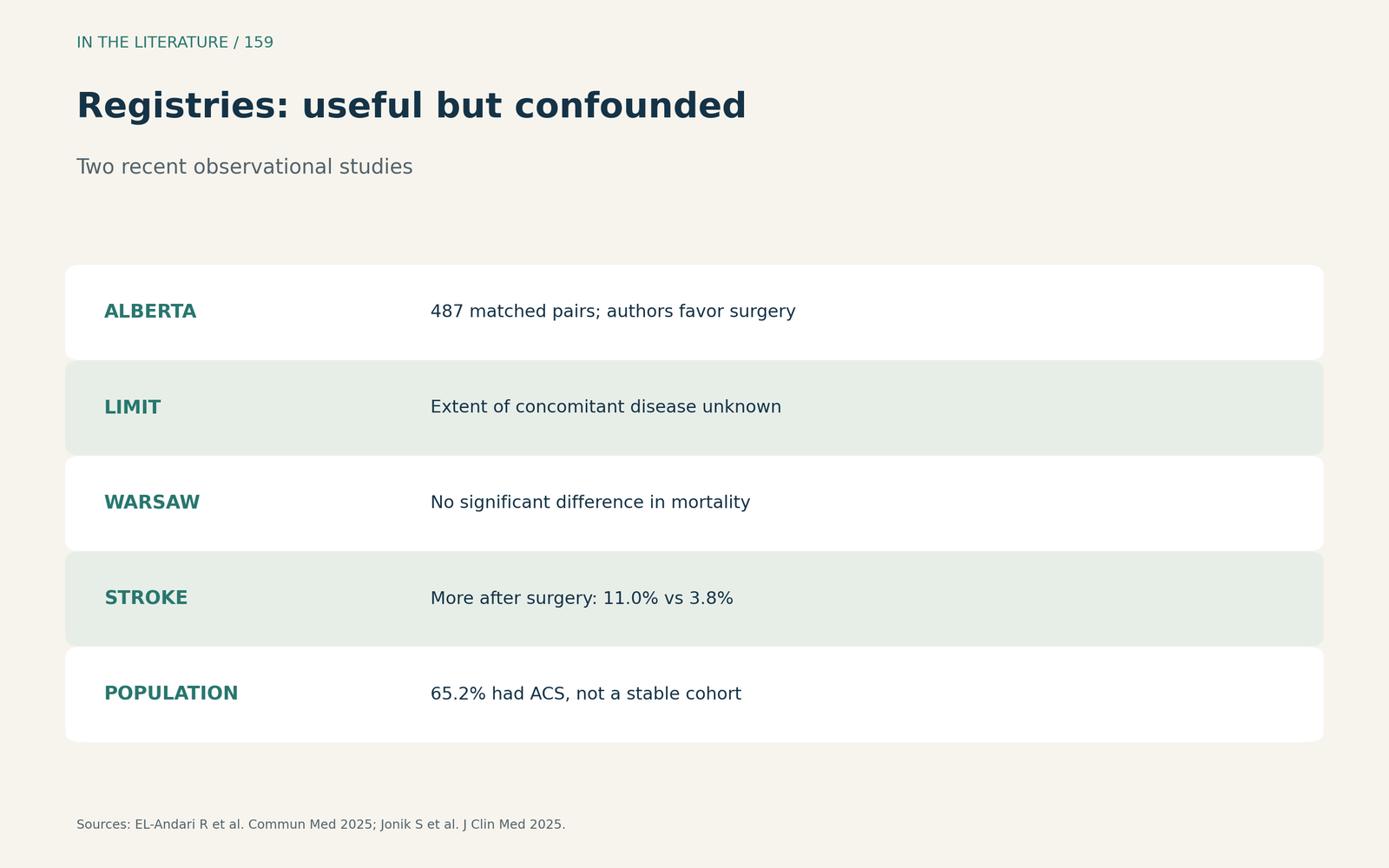
Figure 3. Registries: useful but confounded. Synthesized from EL-Andari et al. and Jonik et al.[3], [4] View larger.

Three takeaways
- Survival is similar; durability is not. Expect more repeat revascularization after PCI.[1]
- Surgery is preferred, PCI is reasonable. The choice depends on anatomy, patient preference and local expertise.[2]
- Protect the left main perioperatively. Avoid hypotension and tachycardia.[2]
References
- Shekhar S, Mohananey D, Villablanca P, et al. Revascularization strategies for stable left main coronary artery disease: analysis of current evidence. J Cardiothorac Vasc Anesth. 2022;36(8):3370–3378. doi:10.1053/j.jvca.2021.12.016
- Doan V, Chaney M. "Widowmaker," still deserve its name? J Cardiothorac Vasc Anesth. 2024;38(3):591–594. doi:10.1053/j.jvca.2023.11.029
- EL-Andari R, Kang J, Fialka N, et al. Revascularization strategy for left main coronary artery disease comparing percutaneous coronary intervention versus coronary artery bypass grafting. Commun Med (Lond). 2025;5(1):402. doi:10.1038/s43856-025-01098-w
- Jonik S, Gumiężna K, Baruś P, et al. Coronary artery bypass grafting versus percutaneous coronary intervention for left main coronary artery disease—long-term outcomes. J Clin Med. 2025;14(16):5747. doi:10.3390/jcm14165747