
ITL-33be196549a6
Juan Li, MD · Updated November 18, 2026
Key points
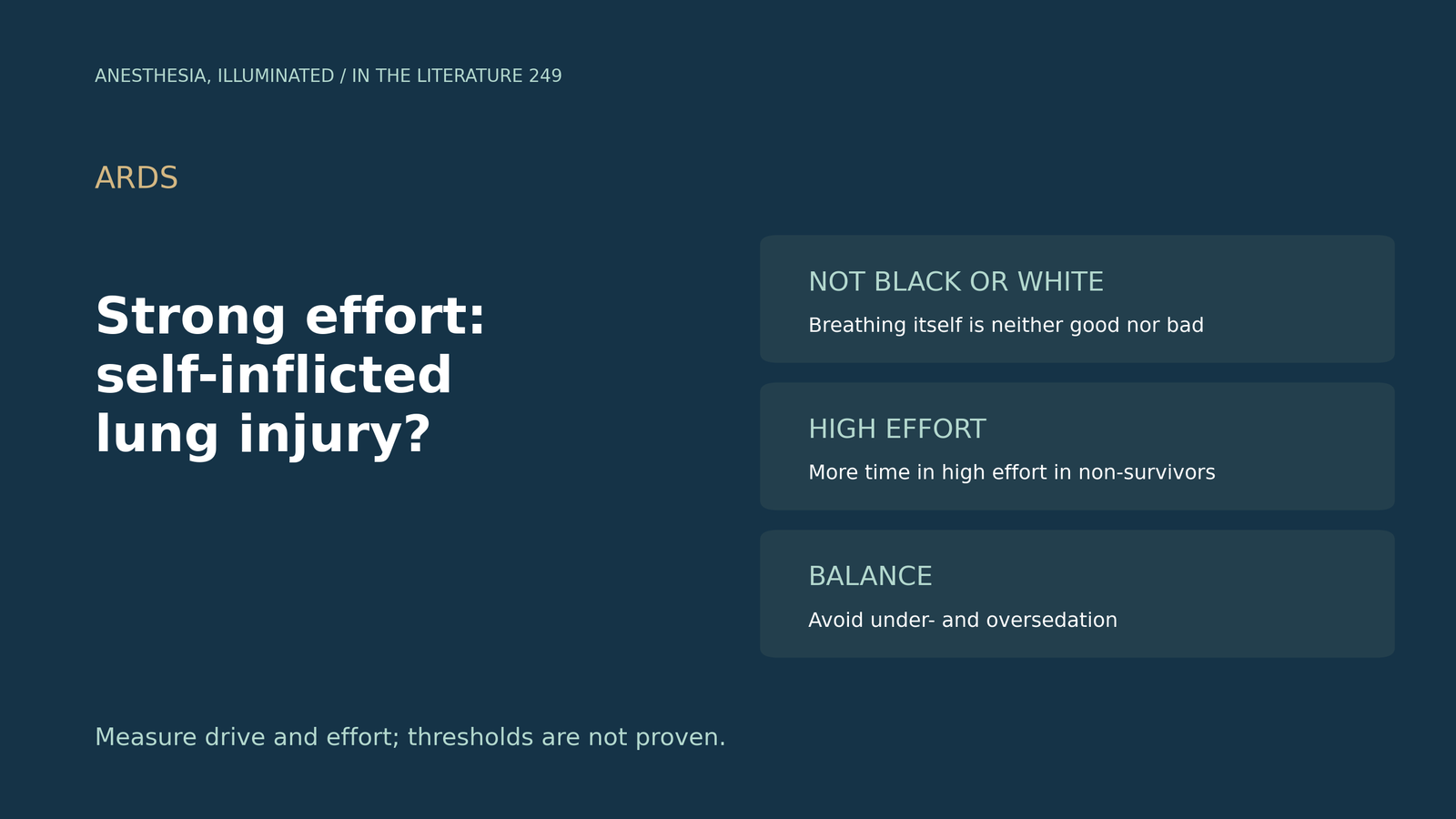
- It depends. Spontaneous breathing in ARDS is neither intrinsically protective nor intrinsically harmful.[1]
- Time in high effort matters. Non-survivors spent more time in high effort (12% vs 3%), although median effort stayed within normal ranges.[2]
- No safe line yet. There are no definite safe cutoffs separating low from high effort.[3]
- Sedation cuts both ways. Too little permits injurious effort; too much may cause diaphragm atrophy.[1], [4]
- Not proven. No high-quality evidence shows that physiology-guided management improves outcomes.[1]
A patient with ARDS is switched from controlled to pressure support ventilation. Tidal volumes jump to 10 mL/kg and the oesophageal pressure swing is large. Is this healthy recovery or self-inflicted injury?[1], [3]
Why effort can harm
Merola et al. (J Clin Med 2026) note that spontaneous breathing is neither intrinsically protective nor intrinsically harmful, and that dorsal tidal volume during spontaneous breathing can be nearly threefold higher in experiments.[1] About 30% of ARDS patients are already breathing spontaneously, and stronger efforts were associated with more severe lung injury in experimental studies (Marongiu et al., J Clin Med 2024).[5] Spinelli et al. (Intensive Care Med 2020) add that the more severe the lung injury, the higher the inspiratory effort.[6] In 26 patients with continuous oesophageal pressure recordings (Parrilla-Gómez et al., Crit Care Med 2025), non-survivors spent more time in high effort (12% vs 3%), yet median effort values stayed within normal ranges, and appropriate limits are not well defined.[2]
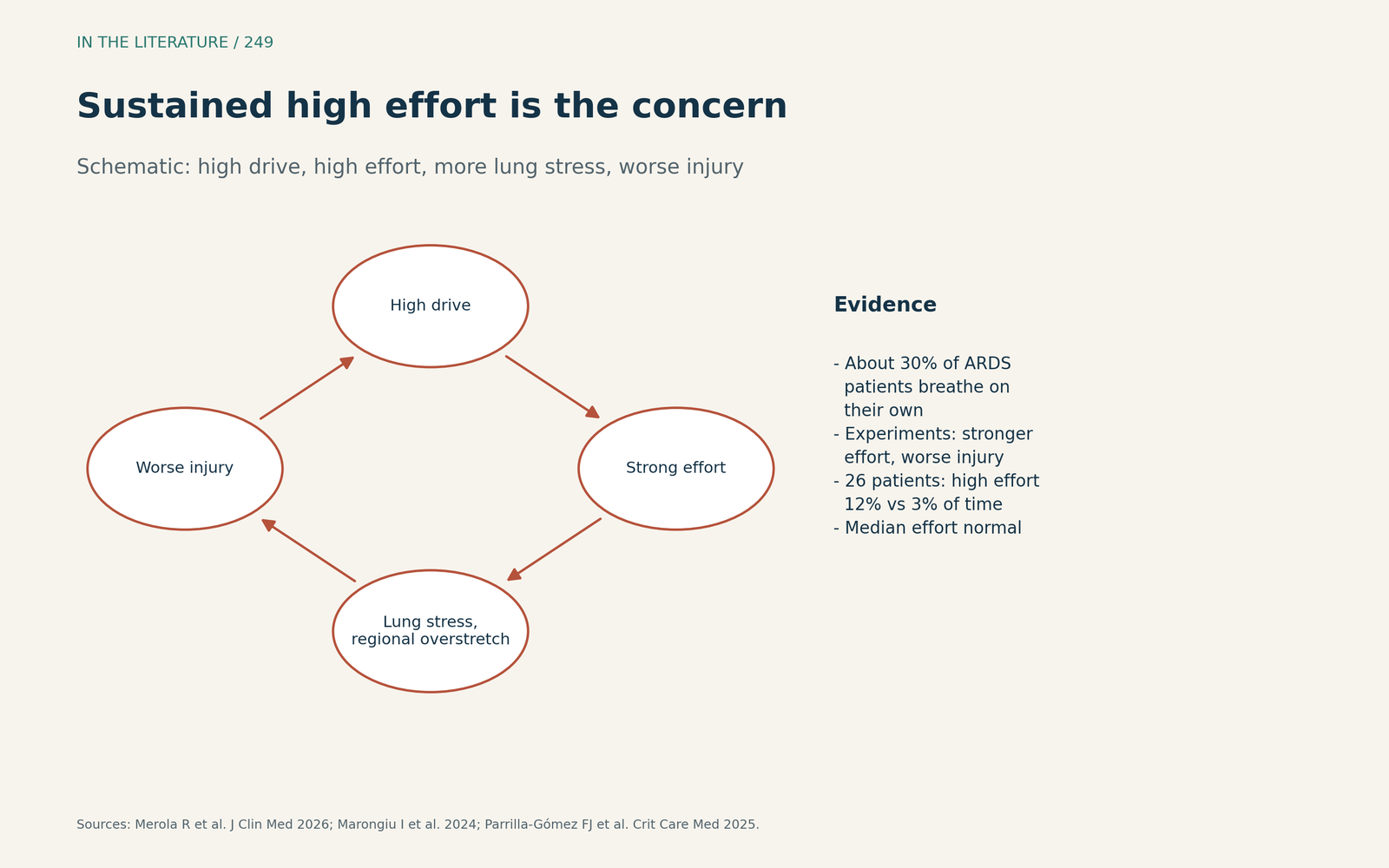
Figure 1. Sustained high effort, not breathing itself, is the concern (schematic). Concept from Merola et al.; data from Parrilla-Gómez et al. and Marongiu et al.[1], [2], [5] View larger.

How to measure drive and effort
Normal P0.1 typically ranges between 0.5 and 1.5 cmH2O, and normal oesophageal pressure swings between 5 and 10 cmH2O.[1] Chiumello et al. (Ann Intensive Care 2026) report that a P0.1 above 3.5 cmH2O had high sensitivity and specificity for high effort in a small trial and that a pressure muscle index above 6 cmH2O marks under-assistance, but there are no definite safe cutoffs and safe targets are not well defined.[3] At the switch to assisted ventilation, 4171 breaths in 48 patients showed dynamic transpulmonary driving pressure above 15 cmH2O in 60% of breaths (Balzani et al., J Clin Med 2024).[7] An editorial (Calabrese and London, Anesthesiology 2023) calls mechanical power a potentially sensitive tool for spotting spontaneously breathing patients at risk, but notes that practical questions remain before it can replace clinical judgment.[8]
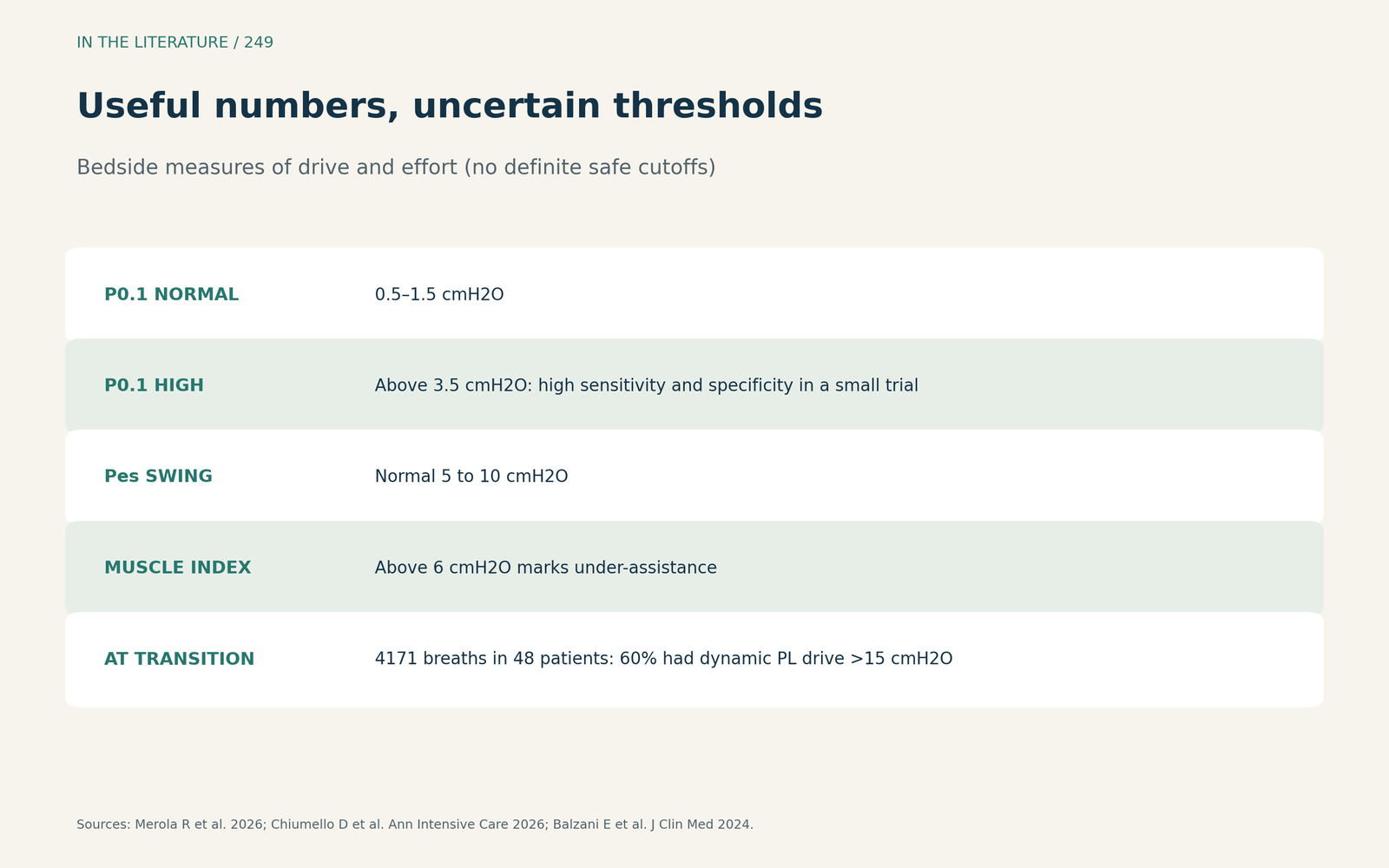
Figure 2. Useful numbers, uncertain thresholds. Data from Merola et al., Chiumello et al. and Balzani et al.[1], [3], [7] View larger.

Controlling drive without oversedating
Chanques et al. (Intensive Care Med 2020) note that maintaining spontaneous breathing may be beneficial, that excessive analgesia and sedation may induce diaphragm atrophy, that propofol and midazolam reduce respiratory drive, and that treating hyperthermia and acidosis may also reduce it.[4] Opioids might be of limited value for controlling drive.[6] Insufficient sedation permits excessive drive and effort, whereas deep sedation has its own harms, and no high-quality evidence shows that physiology-guided management improves outcomes.[1]
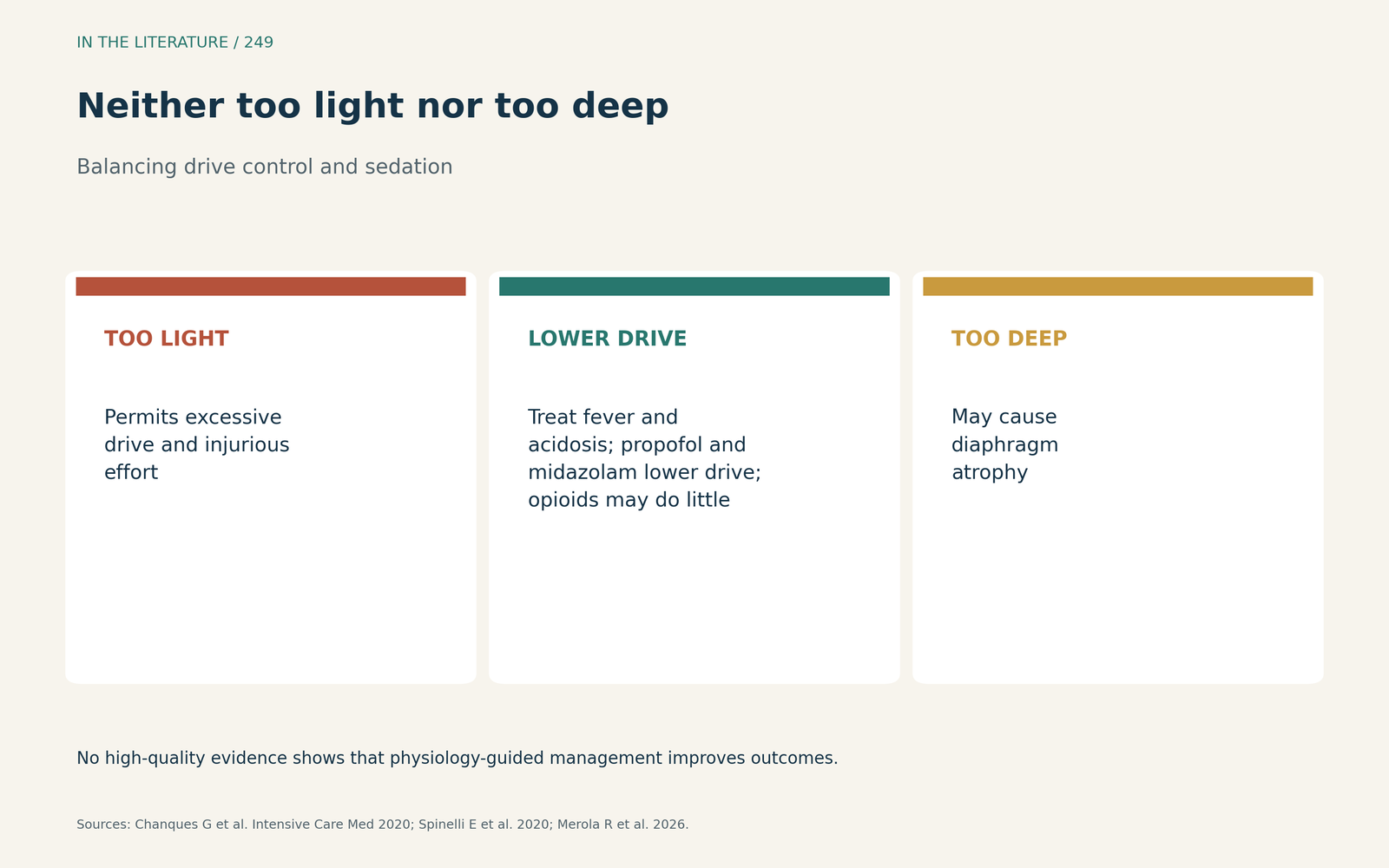
Figure 3. Neither too light nor too deep. Synthesized from Chanques et al., Spinelli et al. and Merola et al.[4], [6], [1] View larger.

Three takeaways
- Allow spontaneous breathing, but watch for sustained high effort, especially after switching to assisted modes.[1], [2], [7]
- Measure P0.1 or oesophageal pressure swings where possible; treat thresholds as guides, not proven targets.[1], [3]
- Lower drive with fever and acidosis control and careful sedation, avoiding both under- and oversedation.[4], [1]
References
- Merola R, Rocco PRM, Battaglini D. Patient self-inflicted lung injury in ARDS: from physiological concept to clinical syndrome. J Clin Med. 2026;15(4):1412. doi:10.3390/jcm15041412
- Parrilla-Gómez FJ, Castellví-Font A, Boutonnet V, et al. Association of breathing effort with survival in patients with acute respiratory distress syndrome. Crit Care Med. 2025;53(10):e1982–e1994. doi:10.1097/CCM.0000000000006797
- Chiumello D, Muscas A, Mancusi S, Fioccola A. The invasive and non-invasive monitoring of inspiratory effort and drive during assisted mechanical ventilation. Ann Intensive Care. 2026;16:100003. doi:10.1016/j.aicoj.2025.100003
- Chanques G, Constantin JM, Devlin JW, et al. Analgesia and sedation in patients with ARDS. Intensive Care Med. 2020;46(12):2342–2356. doi:10.1007/s00134-020-06307-9
- Marongiu I, Slobod D, Leali M, et al. Clinical and experimental evidence for patient self-inflicted lung injury (P-SILI) and bedside monitoring. J Clin Med. 2024;13(14):4018. doi:10.3390/jcm13144018
- Spinelli E, Mauri T, Beitler JR, et al. Respiratory drive in the acute respiratory distress syndrome: pathophysiology, monitoring, and therapeutic interventions. Intensive Care Med. 2020;46(4):606–618. doi:10.1007/s00134-020-05942-6
- Balzani E, Murgolo F, Pozzi M, et al. Respiratory drive, effort, and lung-distending pressure during transitioning from controlled to spontaneous assisted ventilation in patients with ARDS: a multicenter prospective cohort study. J Clin Med. 2024;13(17):5227. doi:10.3390/jcm13175227
- Calabrese DR, London MJ. Paradox of power: dynamic tools to predict respiratory failure in spontaneously breathing patients. Anesthesiology. 2023;138(3):238–240. doi:10.1097/ALN.0000000000004490