
ITL-3c5c2c0ff4b5
Juan Li, MD · Updated November 18, 2026
Key points
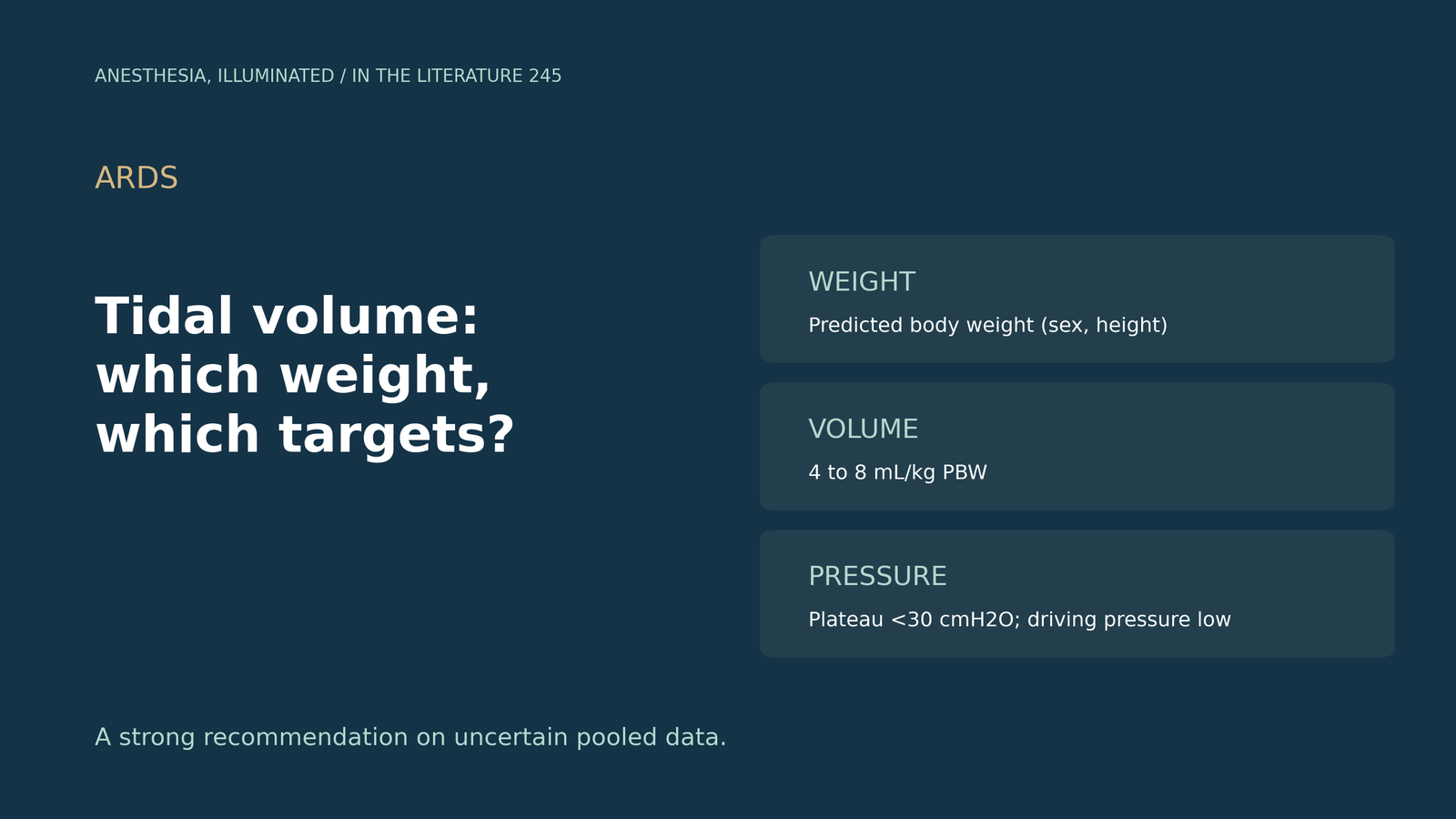
- Use predicted body weight. Vt should be measured and adjusted using PBW, which uses sex and height as a surrogate for lung size.[1], [2]
- The range. ESICM recommends 4 to 8 mL/kg PBW with plateau pressure below 30 cmH2O; many guidelines cite about 6 mL/kg.[1], [2]
- Not by sex. Indexed to PBW, tidal volume was similar between sexes, and driving pressure was 15.4 vs 14.9 cmH2O.[2]
- Driving pressure: the variable most strongly linked with mortality, yet limiting it did not significantly reduce deaths (RR 0.63).[3]
- Strong, not proven. The low-Vt recommendation is strong despite pooled RR 0.82 crossing 1.[1]
A 160 cm woman with ARDS weighs 95 kg. The ventilator is set to 6 mL/kg of her actual weight, nearly 570 mL. Which weight should the setting use, and what pressure targets come next?[1], [2]
Which weight?
The ESICM guideline (Grasselli et al., Intensive Care Med 2023) notes that trials variably calculated tidal volume using adjusted, ideal or predicted body weight, that some investigators use IBW and PBW interchangeably, and states that Vt should be measured and adjusted using PBW.[1] Mohamed et al. (Crit Care 2026) explain that guidelines recommend about 6 mL/kg PBW calculated with the Devine formula, which uses sex and height as a surrogate for lung size and was originally developed in the 1970s for drug dosing.[2] In 5,367 patients from ARDS trials, tidal volume indexed to PBW was similar between sexes, and driving pressure was 15.4 cmH2O in females and 14.9 cmH2O in males, though residual confounding cannot be excluded.[2] Sanfilippo et al. (J Cardiothorac Vasc Anesth 2022) encourage tables or a mobile app to calculate the correct tidal volume.[4]
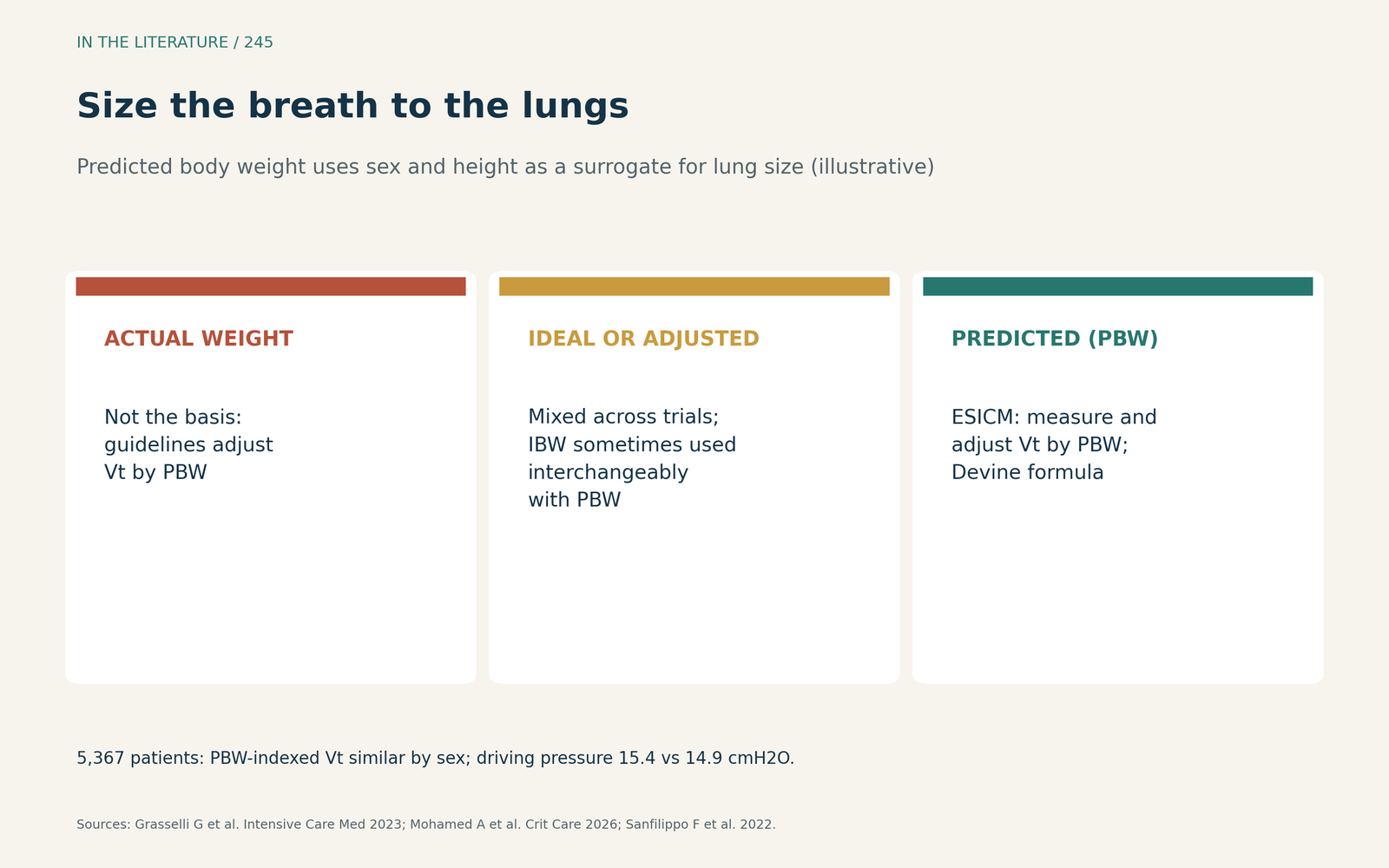
Figure 1. Size the breath to the lungs, not the body (illustrative). Synthesized from Grasselli et al., Mohamed et al. and Sanfilippo et al.[1], [2], [4] View larger.

Which targets?
ESICM describes low tidal volume as 4 to 8 mL/kg PBW with plateau pressure below 30 cmH2O.[1] Driving pressure is the ventilatory variable most strongly associated with ARDS mortality and should be kept as low as possible.[3], [4] Yet in a meta-analysis of driving-pressure-limiting trials with 431 patients (Agrafiotis et al., Crit Care 2026), three of which targeted 14 cmH2O or less, mortality was not significantly reduced (RR 0.63), heterogeneity was substantial (I2 75%), and further lowering is often not feasible without unsafe hypoventilation and hypercapnia.[3] Correspondence on cardiac surgery adds that lower driving pressures are harder to achieve in obese patients (Qu et al., Anesthesiology 2020),[5] and that the best lung-protective strategy for cardiac surgery has yet to be fully worked out (Mathis et al., Anesthesiology 2020).[6]
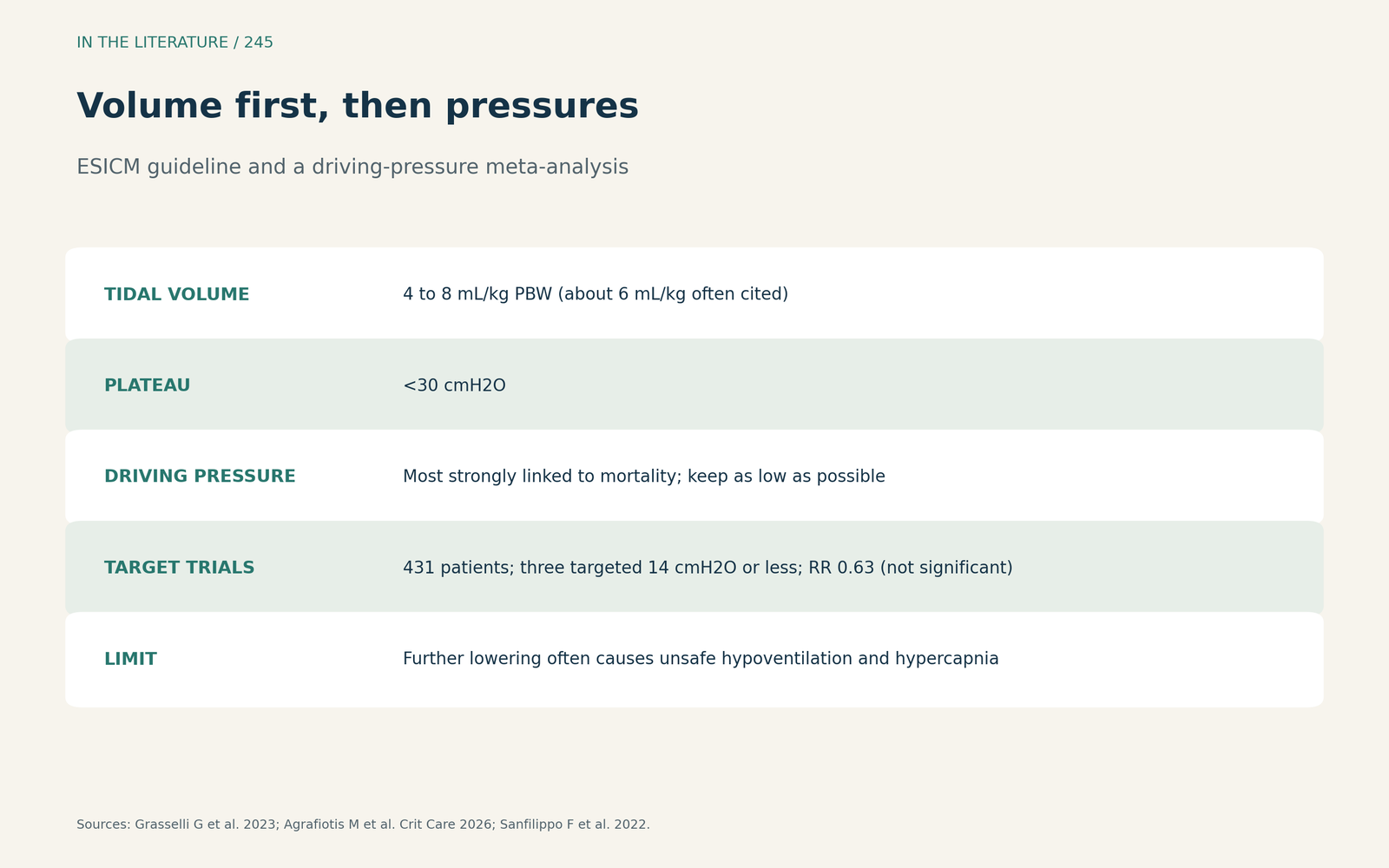
Figure 2. Volume first, then pressures. Data from Grasselli et al. and Agrafiotis et al.[1], [3] View larger.

How strong is the evidence?
ESICM made low Vt a strong recommendation based on expert opinion despite lack of statistical significance: the pooled mortality estimate had RR 0.82 with a confidence interval crossing 1, and no new trials have been published since 2006.[1] In ICU patients without ARDS, low Vt did not change ventilator-free days versus 8 to 10 mL/kg.[4]
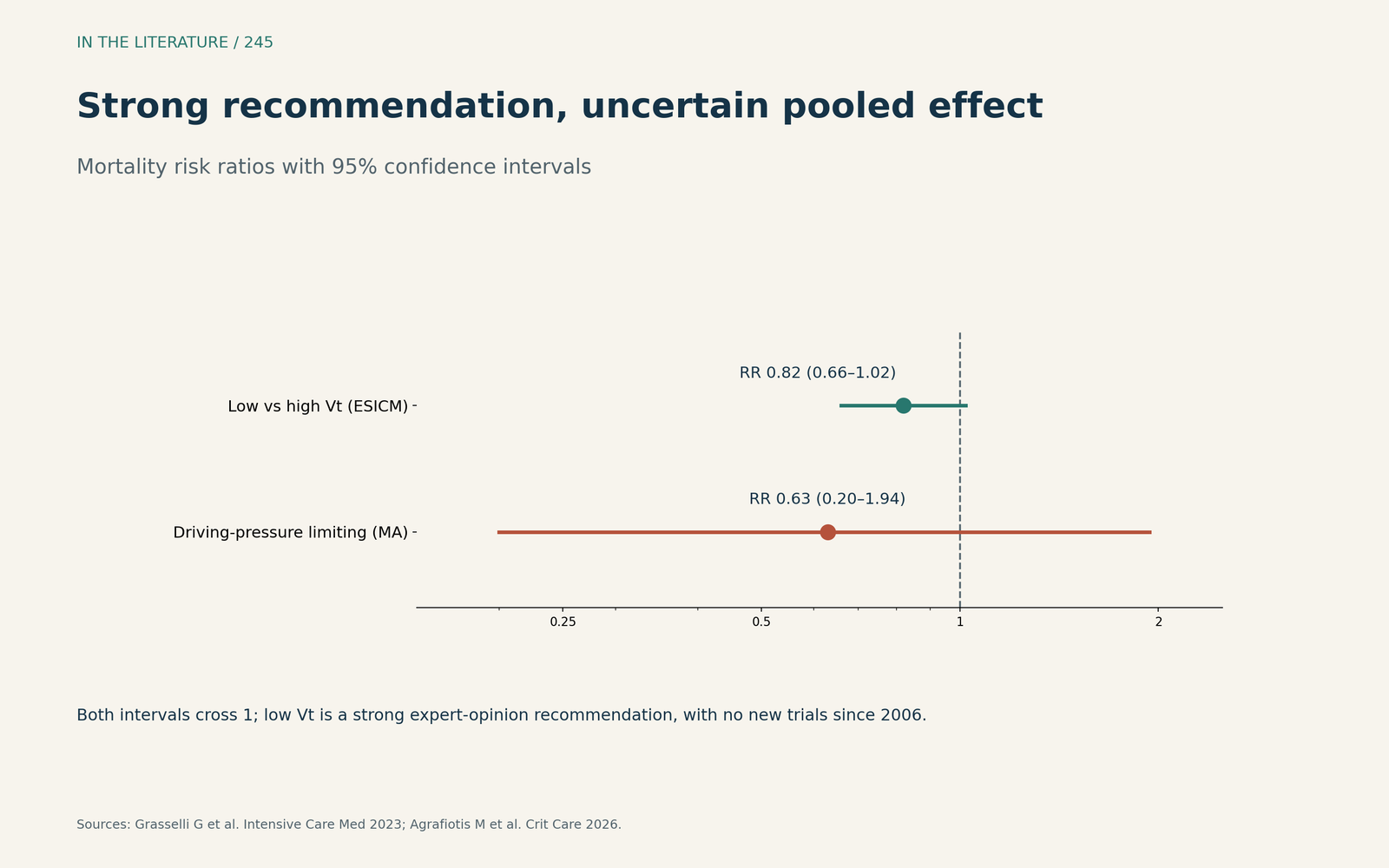
Figure 3. Strong recommendation, uncertain pooled effect. Data from Grasselli et al., Agrafiotis et al. and Sanfilippo et al.[1], [3], [4] View larger.

Three takeaways
- Calculate predicted body weight from sex and height before setting tidal volume.[1], [2]
- Use 4 to 8 mL/kg PBW and keep plateau pressure below 30 cmH2O.[1]
- Keep driving pressure as low as feasible, but do not chase it at the cost of dangerous hypercapnia.[3], [4]
References
- Grasselli G, Calfee CS, Camporota L, et al. ESICM guidelines on acute respiratory distress syndrome: definition, phenotyping and respiratory support strategies. Intensive Care Med. 2023;49(7):727–759. doi:10.1007/s00134-023-07050-7
- Mohamed A, Reddy N, Paul T, et al. Examining the intersection of biologic sex and predicted body weight in patients with acute respiratory distress syndrome. Crit Care. 2026;30(1):398. doi:10.1186/s13054-026-06150-2
- Agrafiotis M, Georgopoulos M, Akoumianaki E, et al. Effect of driving pressure-limiting strategies on outcomes of patients with ARDS: a meta-analysis of randomized controlled trials. Crit Care. 2026;30(1):175. doi:10.1186/s13054-026-05876-3
- Sanfilippo F, Palumbo GJ, Bignami E, et al. Acute respiratory distress syndrome in the perioperative period of cardiac surgery: predictors, diagnosis, prognosis, management options, and future directions. J Cardiothorac Vasc Anesth. 2022;36(4):1169–1179. doi:10.1053/j.jvca.2021.04.024
- Qu Z, Zhang H, Zhou S. Lung-protective ventilation in cardiac surgery: comment. Anesthesiology. 2020;132(6):1610–1611. doi:10.1097/ALN.0000000000003292
- Mathis MR, Likosky DS, Haft JW, et al. Lung-protective ventilation in cardiac surgery: reply. Anesthesiology. 2020;132(6):1611–1613. doi:10.1097/ALN.0000000000003294