
ITL-0dc0e28a8504
Juan Li, MD · Updated November 18, 2026
Key points
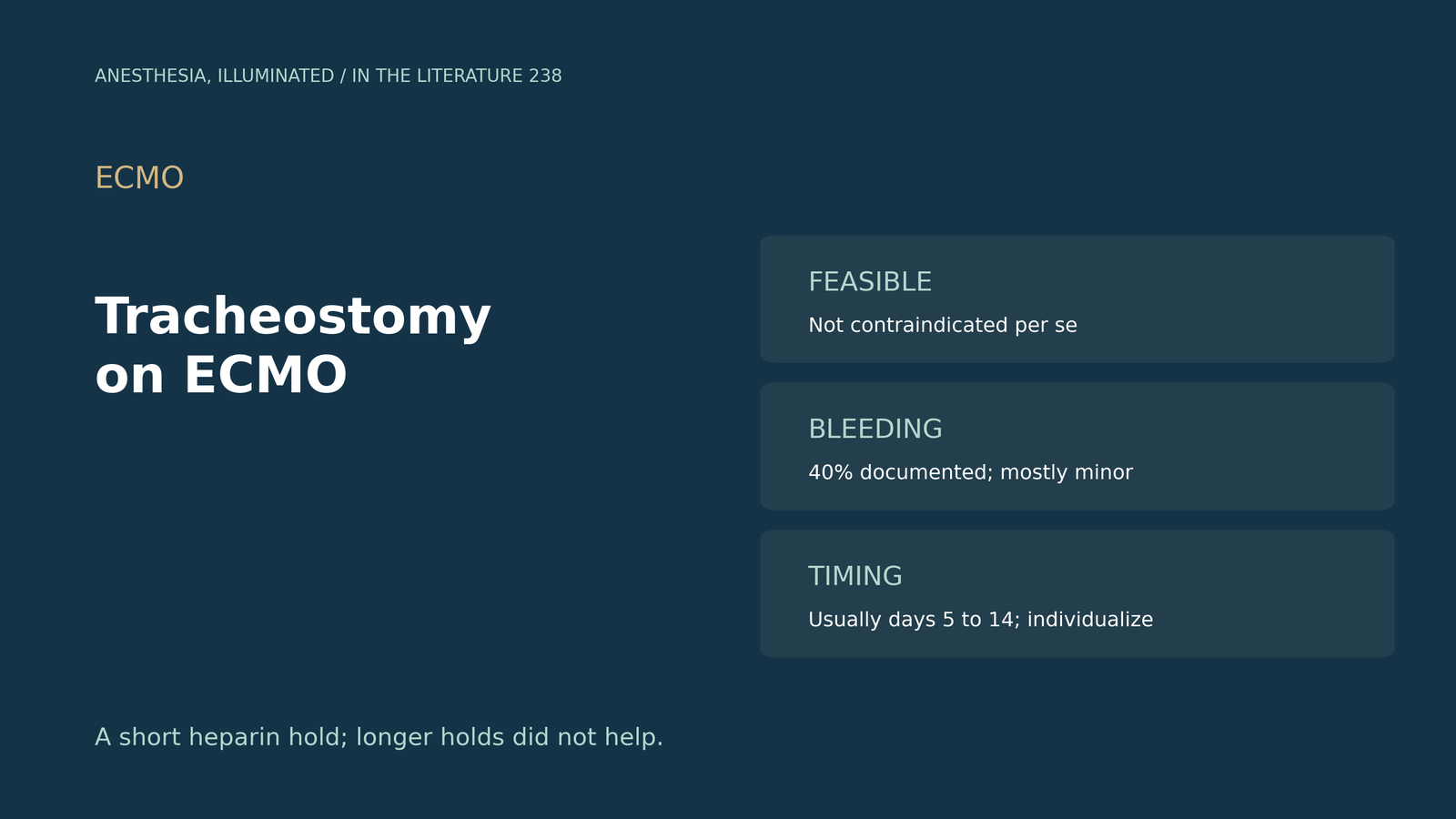
- Feasible. Across 13 studies with 1918 patients, tracheostomy during ECMO was feasible, and it should not be considered contraindicated per se.[1]
- But it bleeds. The documented bleeding rate was 40%, with 8% significant; local bleeding was higher during ECMO than after decannulation (25% vs 7%).[1]
- Anticoagulation. Holding anticoagulation for more than 4 hours did not reduce bleeding compared with a 4-hour hold.[2]
- Timing. Most procedures were done between day 5 and day 14; early tracheostomy was linked to shorter ECMO support (12 vs 21 days).[1]
- Survival. Early versus late tracheostomy showed no significant difference in survival.[3]
A patient on venovenous ECMO for ARDS is on day 8, awake enough to cooperate but still needing the ventilator, and on heparin. Is this the time to do a tracheostomy, and what should happen to the heparin?[1], [2]
How much bleeding to expect
Neri et al. (J Clin Med 2026) reviewed 13 studies with 1918 patients: bleeding was documented in 40% (32% minor and 8% significant), and in one multicenter study local bleeding was higher with tracheostomy during ECMO than after decannulation (25% vs 7%); all studies were observational.[1] Elmelliti et al. (J Cardiothorac Vasc Anesth 2023) note that periprocedural bleeding has been reported as high as 40%, yet in their series no patient had a life-threatening complication within 48 hours and 75% had minimal or no bleeding.[2] Tham et al. (Ann Thorac Surg Short Rep 2025) cite major bleeding of 2% to 11% and minor bleeding of 30% to 40%.[3]
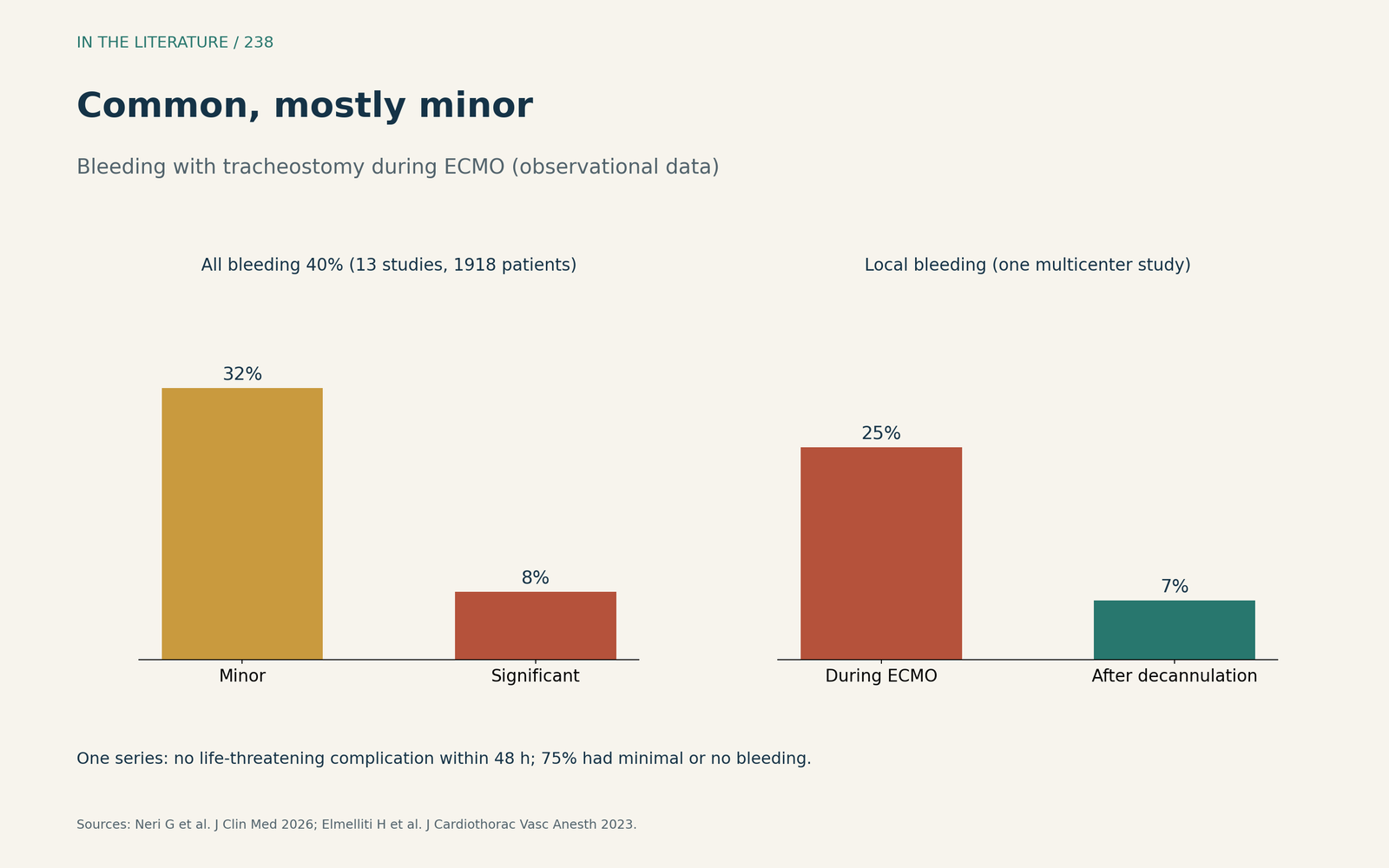
Figure 1. Common, mostly minor. Data from Neri et al., Elmelliti et al. and Tham et al.[1], [2], [3] View larger.

What to do with anticoagulation
Elmelliti et al. held anticoagulation for 4 hours before invasive procedures and note that holding it for more than 4 hours did not reduce bleeding compared with a 4-hour hold.[2] Valchanov et al. (J Cardiothorac Vasc Anesth 2021) considered an APTT ratio of 1.5 to 1.8 safe and, as experience grew, did not stop anticoagulation in 15 patients, without bleeding complications; they also recommend limiting the number of operators.[4] In Zapletal et al. (J Clin Med 2026), none of 84 patients under uninterrupted therapeutic anticoagulation had severe procedure-related bleeding, though there was no non-anticoagulated control group; the authors suggest the procedure may not need to be delayed solely for anticoagulation.[5]
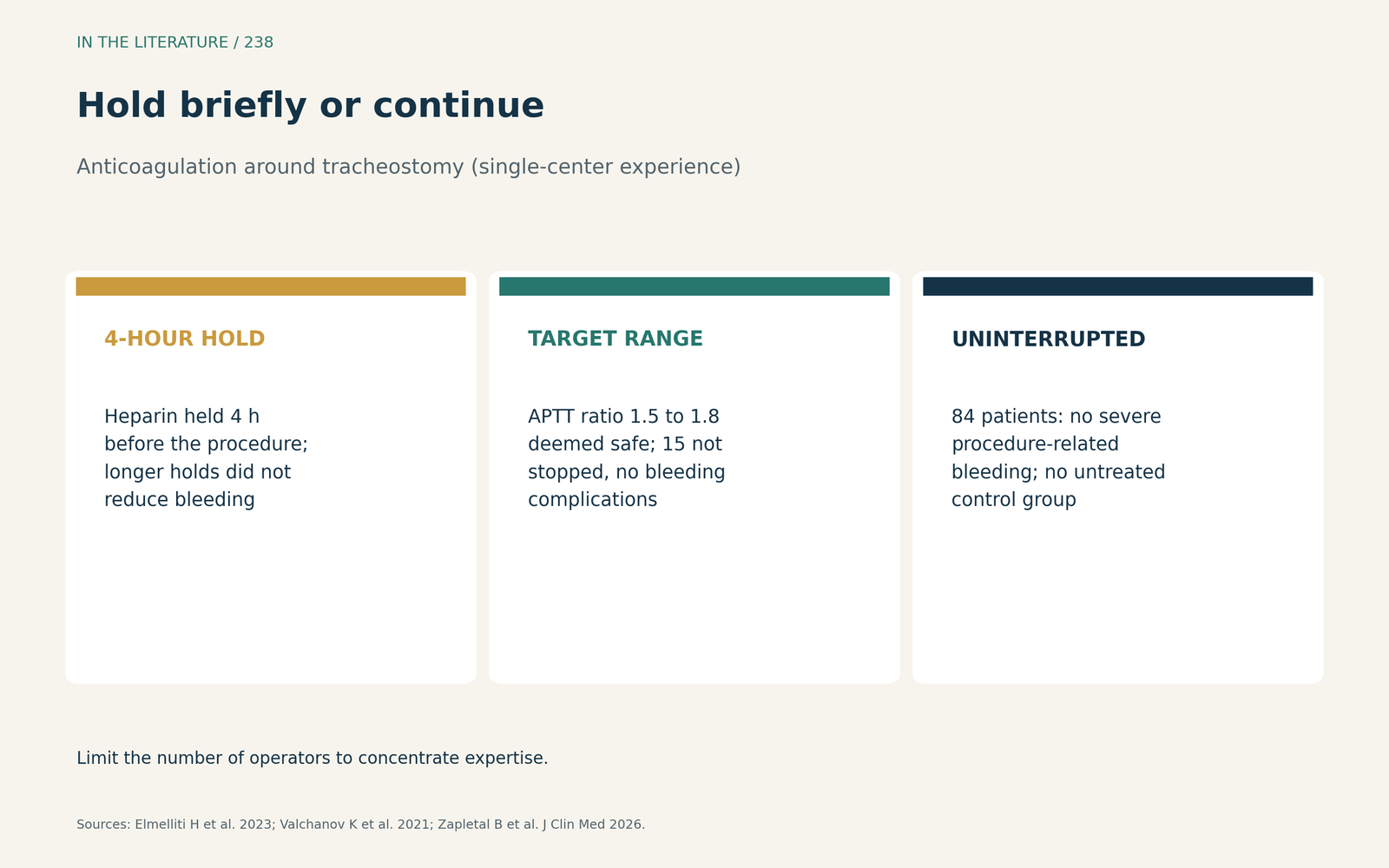
Figure 2. Hold briefly or continue; longer holds did not help. Synthesized from Elmelliti et al., Valchanov et al. and Zapletal et al.[2], [4], [5] View larger.

When to do it
In most studies tracheostomy was done between day 5 and day 14 of ECMO; in one study, early tracheostomy was associated with shorter ECMO support than late (12 vs 21 days).[1] Tham et al. defined early as within 4 days and found no significant difference in survival, in a small study subject to selection bias.[3] In the COVID series of Elmelliti et al., tracheostomy came at an average of 22 days.[2]
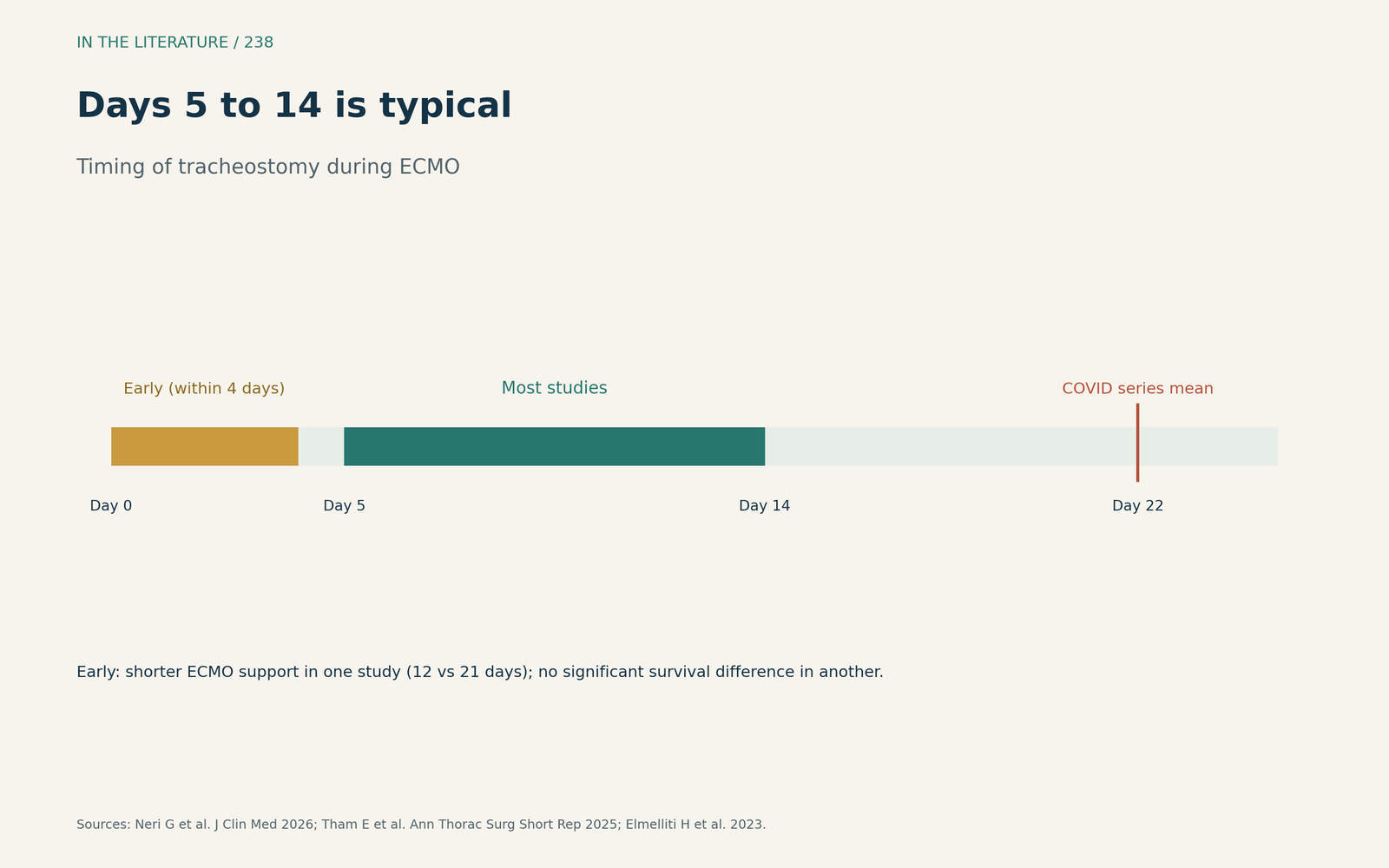
Figure 3. Days 5 to 14 is typical; earlier is under study. Data from Neri et al., Tham et al. and Elmelliti et al.[1], [3], [2] View larger.

Three takeaways
- Tracheostomy on ECMO is feasible, but plan for local bleeding.[1]
- A short heparin hold is common; holding longer than 4 hours did not reduce bleeding.[2], [5]
- Individualize timing: earlier procedures were linked to shorter support, but survival benefit is unproven.[1], [3]
References
- Neri G, Mazza G, Ielapi J, et al. Tracheostomy during extracorporeal membrane oxygenation in adult ICU patients: a systematic review. J Clin Med. 2026;15(9):3517. doi:10.3390/jcm15093517
- Elmelliti H, Mutkule DP, Imran M, et al. Bleeding hazard of percutaneous tracheostomy in COVID-19 patients supported with venovenous extracorporeal membrane oxygenation: a case series. J Cardiothorac Vasc Anesth. 2023;37(1):73–80. doi:10.1053/j.jvca.2022.09.084
- Tham E, Rothenberg P, Campbell S, et al. Early tracheostomy in patients requiring venovenous extracorporeal membrane oxygenation. Ann Thorac Surg Short Rep. 2025;3(2):499–503. doi:10.1016/j.atssr.2024.10.002
- Valchanov K, Salaunkey K, Parmar J. Percutaneous dilatational tracheostomy in coronavirus disease 2019 extracorporeal membrane oxygenation patients: a case series. J Cardiothorac Vasc Anesth. 2021;35(1):348–350. doi:10.1053/j.jvca.2020.06.024
- Zapletal B, Schultz MJ, Brenner MJ, Laengle S, Tschernko EM. Safety of percutaneous dilatational tracheostomy under uninterrupted therapeutic anticoagulation. J Clin Med. 2026;15(13):4877. doi:10.3390/jcm15134877