ITL-dddc126a2756
Juan Li, MD · Updated November 18, 2026
Key points
- Benefit is in how patients feel. In TRISCEND II, the benefit was driven mainly by quality-of-life metrics (KCCQ difference 17.8 points).[1]
- Not in hard outcomes, yet. There were no differences in mortality or heart failure hospitalization.[1]
- Real costs. Severe bleeding at one year was 15.4% vs 5.3%, and a new pacemaker was implanted in 17.4% vs 2.3%.[1]
- Open label matters. In an unblinded trial, a placebo effect cannot be excluded.[2]
- Pick patients well. Quality-of-life improvement is the only randomized benefit so far, so patients with reduced quality of life or previous HF hospitalizations should be prioritized.[3]
An older patient with severe tricuspid regurgitation, swollen legs and limited exercise asks whether a new valve will help them live longer. What can TTVR honestly promise?[1], [3]
What the randomized trial showed
Pospishil and Neuburger (J Cardiothorac Vasc Anesth 2025) summarize TRISCEND II: the benefit was driven mainly by quality-of-life metrics, with a between-group KCCQ difference of 17.8 points, and there were no differences in mortality or HF hospitalization. They note that KCCQ changes of 5, 10 and 20 points mark small, moderate and large improvements, and that about three patients needed treatment for one more patient alive and well.[1] Trela and Dhawan (J Cardiothorac Vasc Anesth 2025) add that severe TR was reduced to moderate or less in 92.4% of patients but that, in an unblinded trial, a placebo effect cannot be excluded.[2]
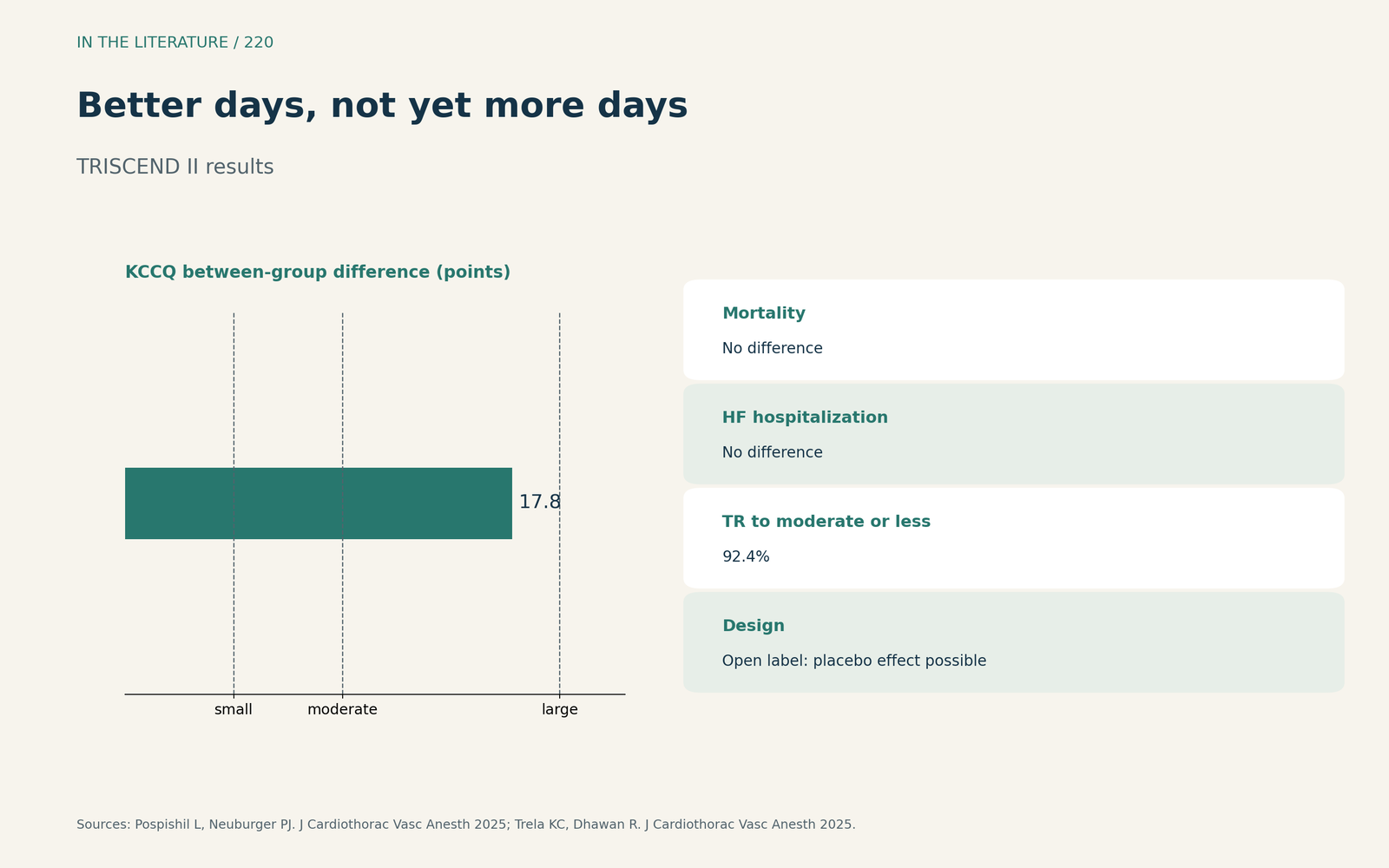
Figure 1. Better days, not yet more days. Redrawn from Pospishil and Neuburger, and Trela and Dhawan.[1], [2] View larger.

The price of the benefit
Severe bleeding at one year was 15.4% vs 5.3%, and a new permanent pacemaker was implanted in 17.4% vs 2.3%.[1] Khatib et al. (J Cardiothorac Vasc Anesth 2026) warn that the RV may deteriorate acutely after complete elimination of TR.[4] Hatab et al. (Struct Heart 2025) pooled only nonrandomized observational studies: KCCQ-12 improved by 22 points, NYHA III/IV persisted in 12.7%, a new pacemaker was needed in 7.98%, and heavy reliance on patient-reported outcomes complicates interpretation.[5] Grangeon et al. (ESC Heart Fail 2026) modeled an ICER of €24 109 per QALY, which rose to €86 428 per QALY if no mortality difference was assumed.[6]
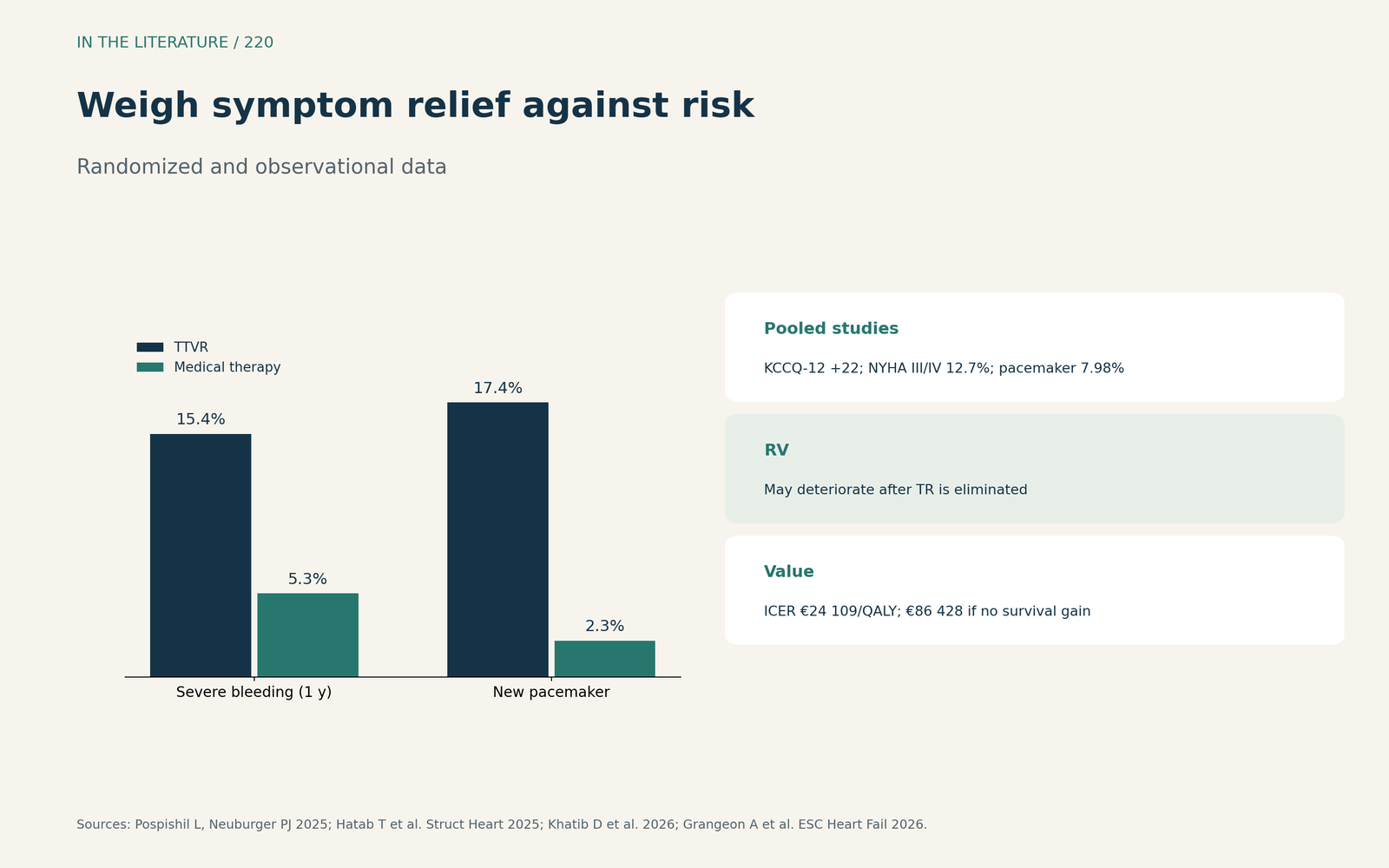
Figure 2. Weigh symptom relief against bleeding, pacing and RV risk. Synthesized from Pospishil and Neuburger, Hatab et al., Khatib et al. and Grangeon et al.[1], [5], [4], [6] View larger.

Who should get it
Hausleiter et al. (JACC State-of-the-Art Review 2025) note that quality-of-life improvement is the only benefit proven by randomized trial at one year so far, so patients with reduced quality of life or previous HF hospitalizations should be prioritized; the effect on hard endpoints remains unknown.[3] TTVR could have great value for highly symptomatic patients,[2] and for some, improving the quality of remaining years may matter more than lifespan; whether quality-of-life gains alone justify the intervention remains unanswered.[1] An AHA scientific statement (Davidson et al., Circulation 2024) notes a paucity of evidence on early intervention and optimal timing, and that for an elderly, frail patient, relieving symptoms and improving present quality of life may be the primary goal.[7]
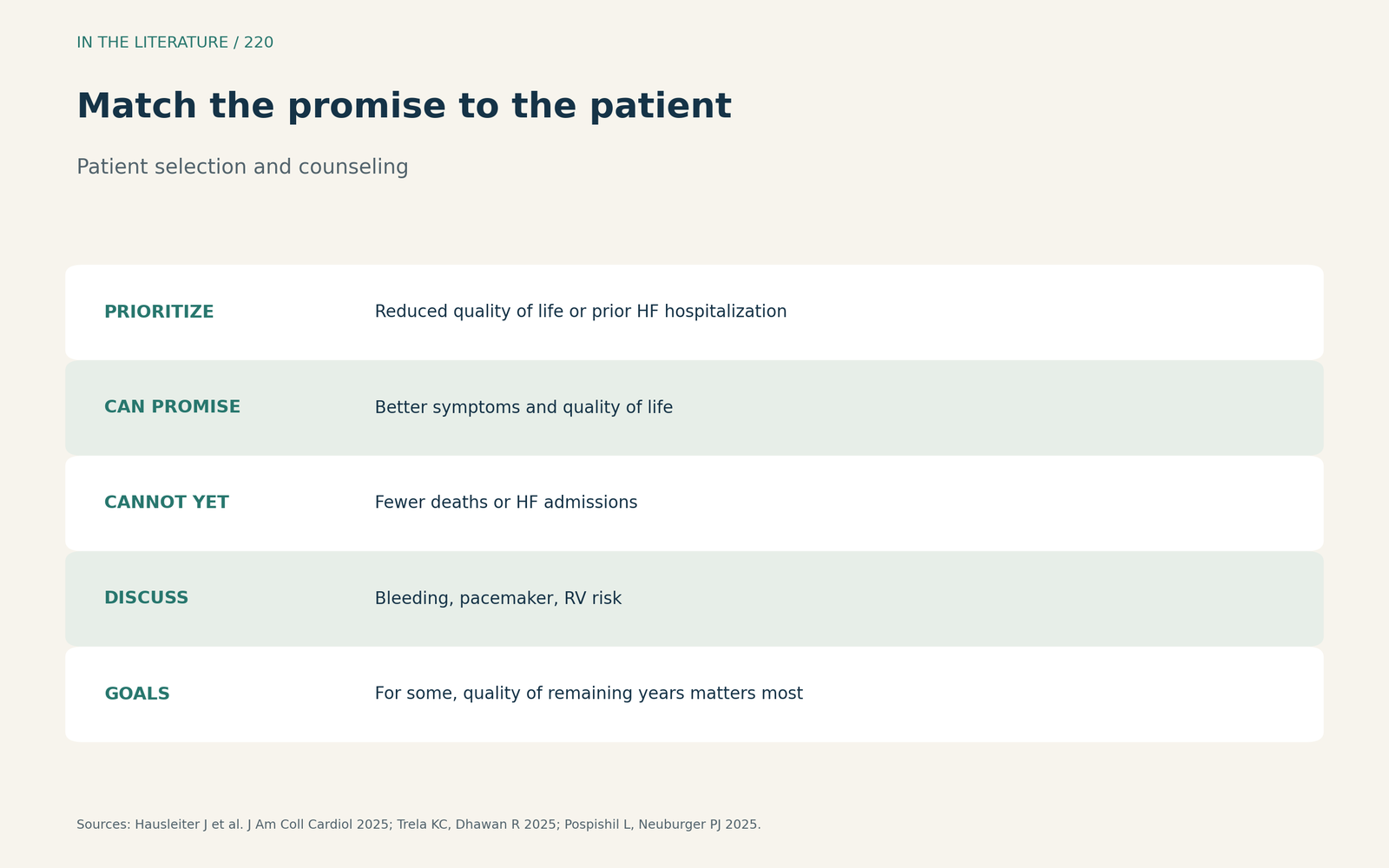
Figure 3. Match the promise to the patient. Synthesized from Hausleiter et al., Trela and Dhawan, and Pospishil and Neuburger.[3], [2], [1] View larger.

Three takeaways
- TTVR improves symptoms and quality of life; it has not yet shown fewer deaths or HF admissions.[1], [3]
- Discuss bleeding, pacemaker and RV risks alongside the expected symptom gain.[1], [4]
- Prioritize highly symptomatic patients whose goal is a better daily life.[2], [3]
References
- Pospishil L, Neuburger PJ. Quality of life versus clinical outcomes: what is the proper metric to assess the benefit of transcatheter tricuspid valve replacement? J Cardiothorac Vasc Anesth. 2025;39(4):877–879. doi:10.1053/j.jvca.2025.01.016
- Trela KC, Dhawan R. Transcatheter tricuspid valve replacement: a new frontier in isolated tricuspid valve regurgitation. J Cardiothorac Vasc Anesth. 2025;39(6):1369–1371. doi:10.1053/j.jvca.2025.02.026
- Hausleiter J, Stolz L, Lurz P, et al. Transcatheter tricuspid valve replacement: JACC state-of-the-art review. J Am Coll Cardiol. 2025;85(3):265–291. doi:10.1016/j.jacc.2024.10.071
- Khatib D, Sheu R, Belani K, Rong LQ. Transcatheter tricuspid valve interventions for tricuspid regurgitation: a review of percutaneous annuloplasty, edge-to-edge repair, and valve replacement devices. J Cardiothorac Vasc Anesth. 2026;40(1):309–323. doi:10.1053/j.jvca.2025.10.015
- Hatab T, Badwan O, Alkhatib R, et al. Clinical outcomes following transcatheter tricuspid valve replacement: a meta-analysis. Struct Heart. 2025;9(11):100721. doi:10.1016/j.shj.2025.100721
- Grangeon A, Connock M, Auguste P, et al. Cost-effectiveness of TTVR with EVOQUE system in patients with severe tricuspid regurgitation based on TRISCEND II trial. ESC Heart Fail. 2026;13(5):xvag137. doi:10.1093/eschf/xvag137
- Davidson LJ, Tang GHL, Ho EC, et al. The tricuspid valve: a review of pathology, imaging, and current treatment options: a scientific statement from the American Heart Association. Circulation. 2024;149(22):e1223–e1238. doi:10.1161/CIR.0000000000001232