ITL-c38cab682c76
Juan Li · In the Literature · Updated November 16, 2026
Watch the video
Key points
- Before treating a failed surgical bioprosthesis, distinguish pre-existing prosthesis–patient mismatch (PPM) from acquired valve dysfunction; they can coexist.
- Anticipated valve-in-valve (ViV) hemodynamics depend on the type and size of both the old surgical valve and the proposed transcatheter valve.
- A small true internal diameter increases concern for residual high gradients, but a single mean-gradient cutoff does not diagnose PPM or structural degeneration.
- LYTEN’s three-year results favor self-expanding valves for Doppler gradients in the studied small surgical valves; the reported clinical outcomes do not establish superiority or equivalence.
- If severe PPM or coronary obstruction is anticipated, compare ViV with redo surgery before committing to another valve inside the old one.
First ask what is causing the high gradient
A patient with a failing small surgical aortic bioprosthesis may appear well suited to a less invasive reintervention. The useful question is more specific: will implanting another valve provide enough hemodynamic relief for this patient?
Start with the original postoperative echocardiogram and the subsequent trajectory. PPM describes an otherwise normally functioning prosthesis whose effective orifice is too small relative to the patient. It is not synonymous with structural valve degeneration. A patient can also develop degeneration or another acquired problem on top of pre-existing PPM. [1]
The 2024 ASE guideline recommends integrating leaflet structure and motion with several hemodynamic measures. Mean gradient and velocity are flow dependent; effective orifice area (EOA), Doppler velocity index (DVI), and the serial comparison help interpret them. A high-flow state, pressure recovery, or obstruction outside the prosthesis may also affect the assessment. Conversely, low flow can conceal the gradient expected from PPM. One high number cannot identify the mechanism, and one low number cannot certify normal function. [1]
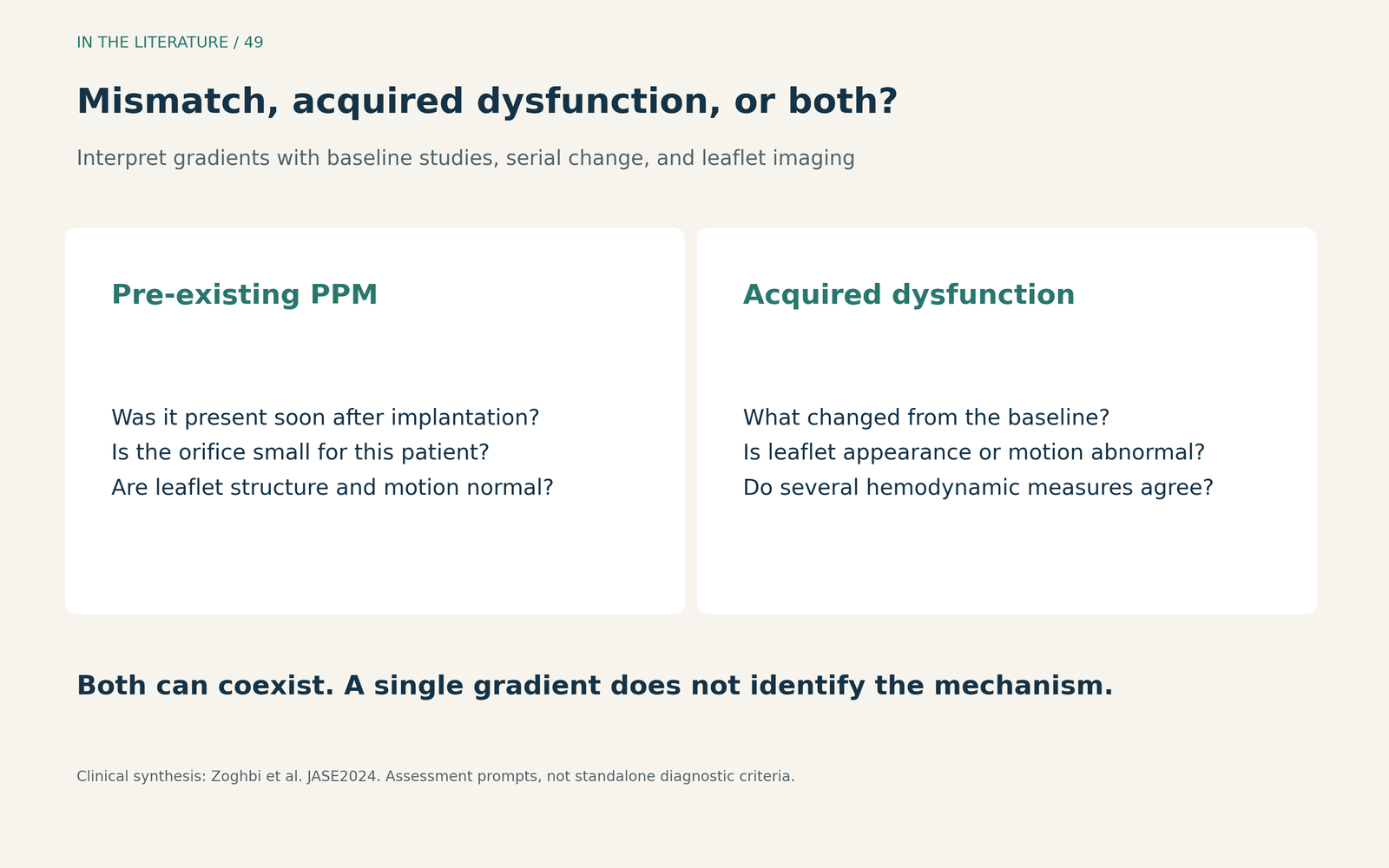
Figure 1. Questions that help separate pre-existing PPM from acquired dysfunction. The two can coexist; these are assessment prompts, not standalone diagnostic criteria. [1] View figure

Assess the actual old–new valve combination
The ASE guideline emphasizes that post-ViV hemodynamics depend on both prostheses. A surgical size label alone is not an adequate description of the planned combination. In Yamashita and colleagues’ 2025 single-center study, the relevant grouping was true internal diameter, not the number on the surgical valve label. [1, 2]
Among 91 recipients of newer-generation Evolut ViV valves, 35 had a failed surgical valve with true internal diameter ≤19 mm and 56 had a larger valve. A mean gradient ≥20 mmHg occurred in 14/35 (40%) versus 5/56 (8.9%), respectively, at 30 days, using in-hospital data when 30-day data were unavailable. The smaller-valve group therefore had substantially more residual high gradients despite use of a supra-annular self-expanding valve. This retrospective comparison identifies a planning concern; it does not prove that the gradient caused later clinical events. [2]
For the Heart Team, the practical implication is to establish the old valve’s exact model and relevant internal dimensions, then evaluate the expected performance of the proposed transcatheter valve within it. The study’s ≤19 mm grouping is not a universal threshold for accepting or rejecting ViV. [1, 2]
What does randomized evidence add?
The 2026 three-year LYTEN report, available here as an abstract only, describes a prespecified secondary analysis of a randomized trial in failed small surgical aortic bioprostheses. The treated groups comprised 46 balloon-expandable SAPIEN 3/ULTRA recipients and 52 self-expanding Evolut R/PRO/PRO+ recipients. Its ≤23 mm eligibility description should not be treated as interchangeable with Yamashita’s true-internal-diameter definition. [3]
At three years, mean Doppler gradients were 13±9 mmHg with self-expanding versus 20±9 mmHg with balloon-expandable valves (P=0.002). The composite of death, stroke, or heart-failure hospitalization was 25.5% versus 32.6%, respectively (P=0.489). Thus, the reported hemodynamic advantage did not establish a clinical-outcome advantage; the absence of a significant clinical difference also does not establish equivalence. The abstract does not provide the denominator for every three-year echocardiographic endpoint. [3]
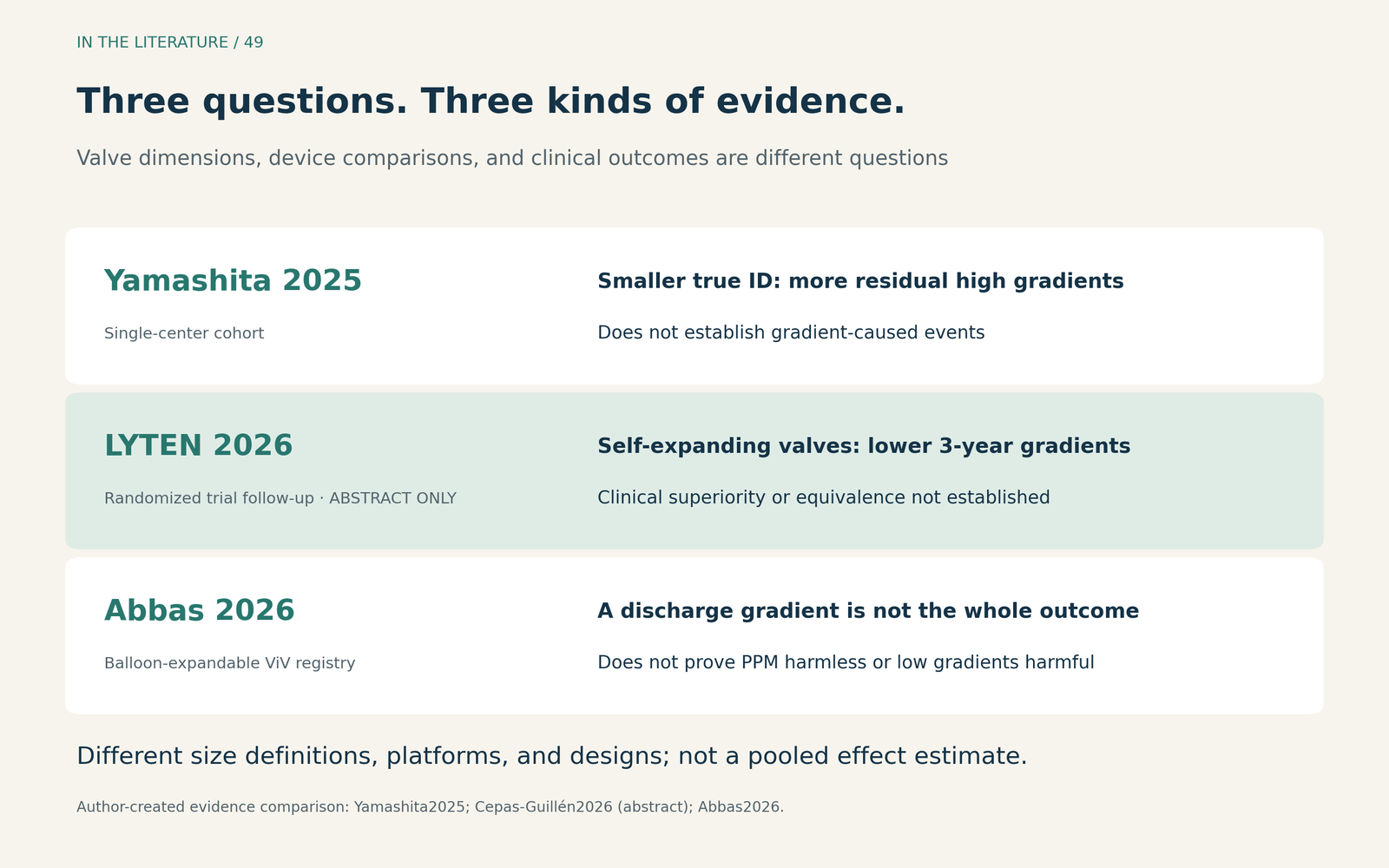
Figure 2. An evidence comparison, not a pooled treatment estimate. LYTEN is represented by its published abstract; the other two studies were assessed from their full reports. Populations, valve platforms, size definitions, and study designs differ. [2, 3, 4] View figure

A lower gradient is not the whole outcome
Abbas and colleagues’ 2026 STS/ACC TVT Registry analysis included 13,054 patients undergoing transfemoral ViV using balloon-expandable valves. A discharge mean gradient <10 mmHg was associated with higher five-year mortality than a gradient ≥10 mmHg: HR 1.15, 95% CI 1.02–1.29. Severe PPM and a discharge gradient ≥20 mmHg were not predictors of five-year mortality in this cohort. Longer-term follow-up depended on Medicare linkage; not every participant was observed for five years. [4]
These findings do not mean that a low gradient is harmful, that PPM is harmless, or that leaving a high gradient improves survival. They show why a postoperative gradient should be interpreted in the patient’s physiologic context. The registry reported ejection fraction but lacked flow measurements and DVI data; it cannot fully explain the low-gradient association. It also cannot compare self-expanding with balloon-expandable valves. [4]
The authors caution against using a single postoperative echocardiographic gradient alone to trigger further valve optimization. That is an interpretation of observational findings, not a randomized test of bioprosthetic valve fracture (BVF) or postdilation. In practice, combine symptoms, ventricular function, flow assessment, EOA/DVI, leaflet imaging, and change from baseline before deciding what the gradient means. New deterioration still warrants investigation. [1, 4]
Make the decision before adding another valve
The 2025 ESC/EACTS guideline says transfemoral aortic ViV should be considered for significant prosthetic dysfunction in patients at intermediate or high surgical risk, provided anatomical and prosthetic features are suitable and the Heart Team has assessed the case. It specifically identifies anticipated PPM in a small surgical valve as a factor that can alter the intervention and valve selected. [5]
When severe PPM or coronary obstruction is anticipated, the guideline notes that redo surgical replacement may be preferable, despite its greater surgical risk. This is a conditional comparison requiring assessment of both options, not a blanket preference for surgery. Bioprosthetic valve fracture or leaflet modification may be considered in carefully selected patients at high surgical risk at experienced centers; they address different problems and are not automatic responses to a residual-gradient threshold. [5]
The discussion should therefore end with an expected clinical benefit for this patient, not simply the technical feasibility of fitting a second valve inside the first.
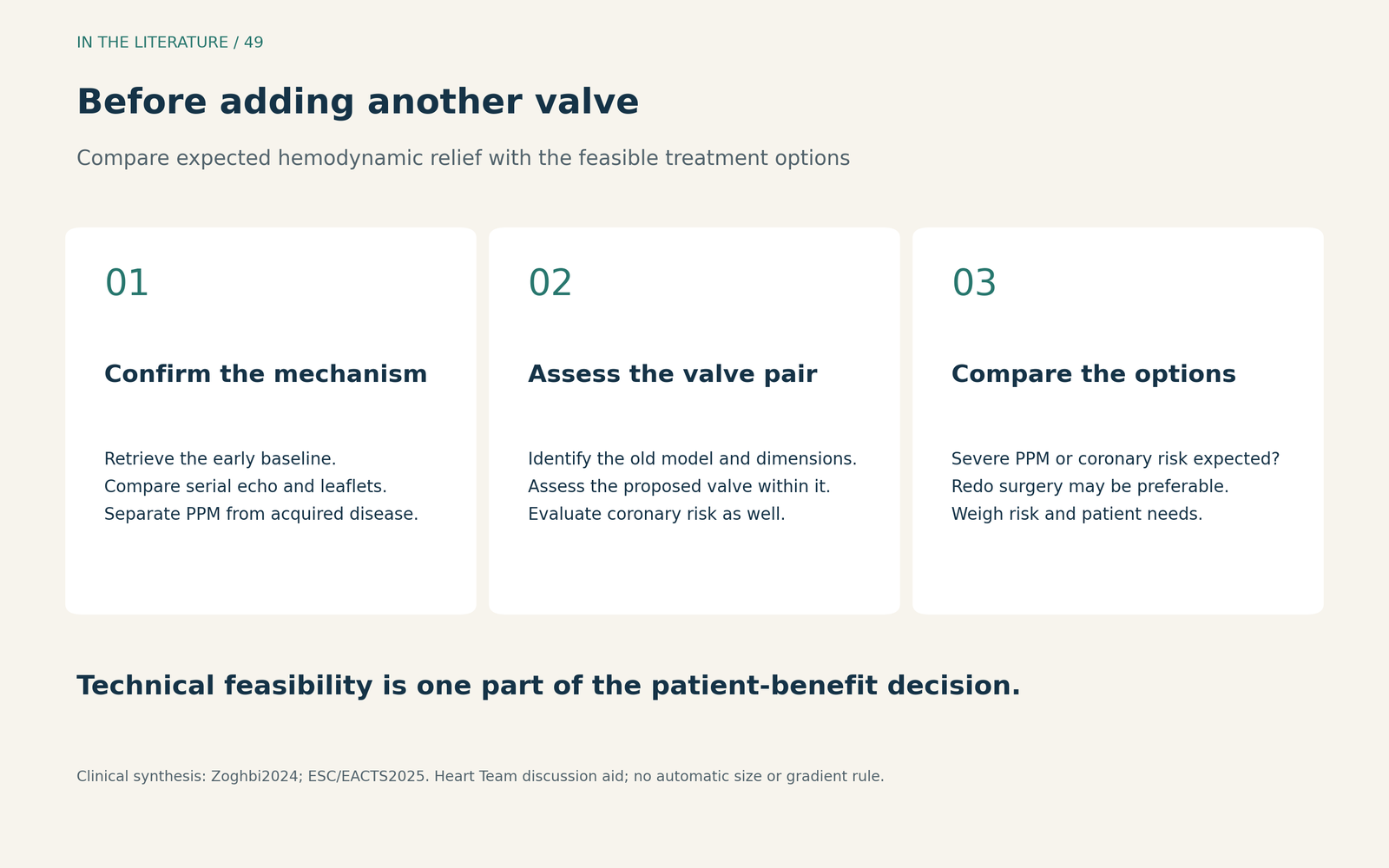
Figure 3. A Heart Team discussion aid. Expected hemodynamics and coronary risk belong in the decision before ViV; a single size or gradient threshold cannot select the intervention. [1, 5] View figure

Three takeaways
- Identify the mechanism before treating the number. Retrieve the postoperative baseline and distinguish pre-existing PPM from newly acquired dysfunction.
- Plan for the old valve and the new valve together. Smaller true internal diameter can leave high gradients even with a self-expanding valve; lower gradients alone do not prove better survival.
- Compare the achievable benefit of ViV and redo surgery. Anticipated severe PPM or coronary obstruction can change the preferred approach; residual gradient alone should not dictate an additional maneuver.
References
- Zoghbi WA, Jone PN, Chamsi-Pasha MA, et al. Guidelines for the Evaluation of Prosthetic Valve Function With Cardiovascular Imaging: A Report From the American Society of Echocardiography Developed in Collaboration With the Society for Cardiovascular Magnetic Resonance and the Society of Cardiovascular Computed Tomography. J Am Soc Echocardiogr. 2024;37(1):2–63. doi:10.1016/j.echo.2023.10.004.
- Yamashita Y, Baudo M, Sicouri S, et al. Transcatheter Aortic Valve-in-Valve Implantation with Newer Generation Evolut Valve by Size of Failed Bioprosthesis. Anatol J Cardiol. 2025;29(3):118–123. doi:10.14744/AnatolJCardiol.2024.4633.
- Cepas-Guillén P, Abbas AE, Serra V, et al. Balloon- Versus Self-Expanding Transcatheter Valves for Failed Small Surgical Aortic Bioprostheses: 3-Year Results of the LYTEN Trial. Circ Cardiovasc Interv. 2026;19(3):e016255. doi:10.1161/CIRCINTERVENTIONS.125.016255. Abstract only.
- Abbas AE, Kaneko T, Khalili H, et al. Hemodynamics and Mid-Term Clinical Outcomes Following Valve-in-Valve TAVR With Balloon-Expandable Valves. Circ Cardiovasc Interv. 2026;19(3):e015945. doi:10.1161/CIRCINTERVENTIONS.125.015945.
- Praz F, Borger MA, Lanz J, et al. 2025 ESC/EACTS Guidelines for the management of valvular heart disease. Eur J Cardiothorac Surg. 2025;67(8):ezaf276. doi:10.1093/ejcts/ezaf276.