ITL-97dfc6d14b54
Juan Li, MD · Updated November 18, 2026
Key points
- A harm signal. In LOVIT, death or persistent organ dysfunction occurred in 44.5% with vitamin C and 38.5% with placebo.[1]
- An early hope that did not hold. The CITRIS-ALI mortality difference was one of 46 secondary outcomes, without correction for multiple comparisons.[2]
- Earlier is not better. Vitamin C given in the emergency department did not reduce organ dysfunction.[3]
- The combination did not help either. VITAMINS, ACTS and VICTAS found no survival benefit.[4], [5], [6]
- Guidance is against routine use. The Surviving Sepsis Campaign gives a weak recommendation against routine intravenous vitamin C.[7]
A patient with septic shock is on rising norepinephrine, and a colleague suggests adding vitamin C, thiamine and hydrocortisone. What do the trials say about this cocktail?
Vitamin C alone
LOVIT (Lamontagne et al., N Engl J Med 2022) randomized 872 ICU patients with sepsis on vasopressors to intravenous vitamin C or placebo. Death or persistent organ dysfunction at 28 days occurred in 44.5% with vitamin C and 38.5% with placebo (RR 1.21, 95% CI 1.04–1.40), and death by 28 days in 35.4% versus 31.6% (RR 1.17).[1] Earlier, CITRIS-ALI (Fowler et al., JAMA 2019) enrolled 167 patients with sepsis and ARDS to vitamin C 50 mg/kg or placebo; day-28 mortality was 29.8% versus 46.3%, but this was one of 46 secondary outcomes and the analyses did not account for multiple comparisons.[2] C-EASIE (Vandervelden et al., Crit Care 2025) gave vitamin C early in the emergency departments of 8 Belgian hospitals and did not significantly reduce organ dysfunction.[3]
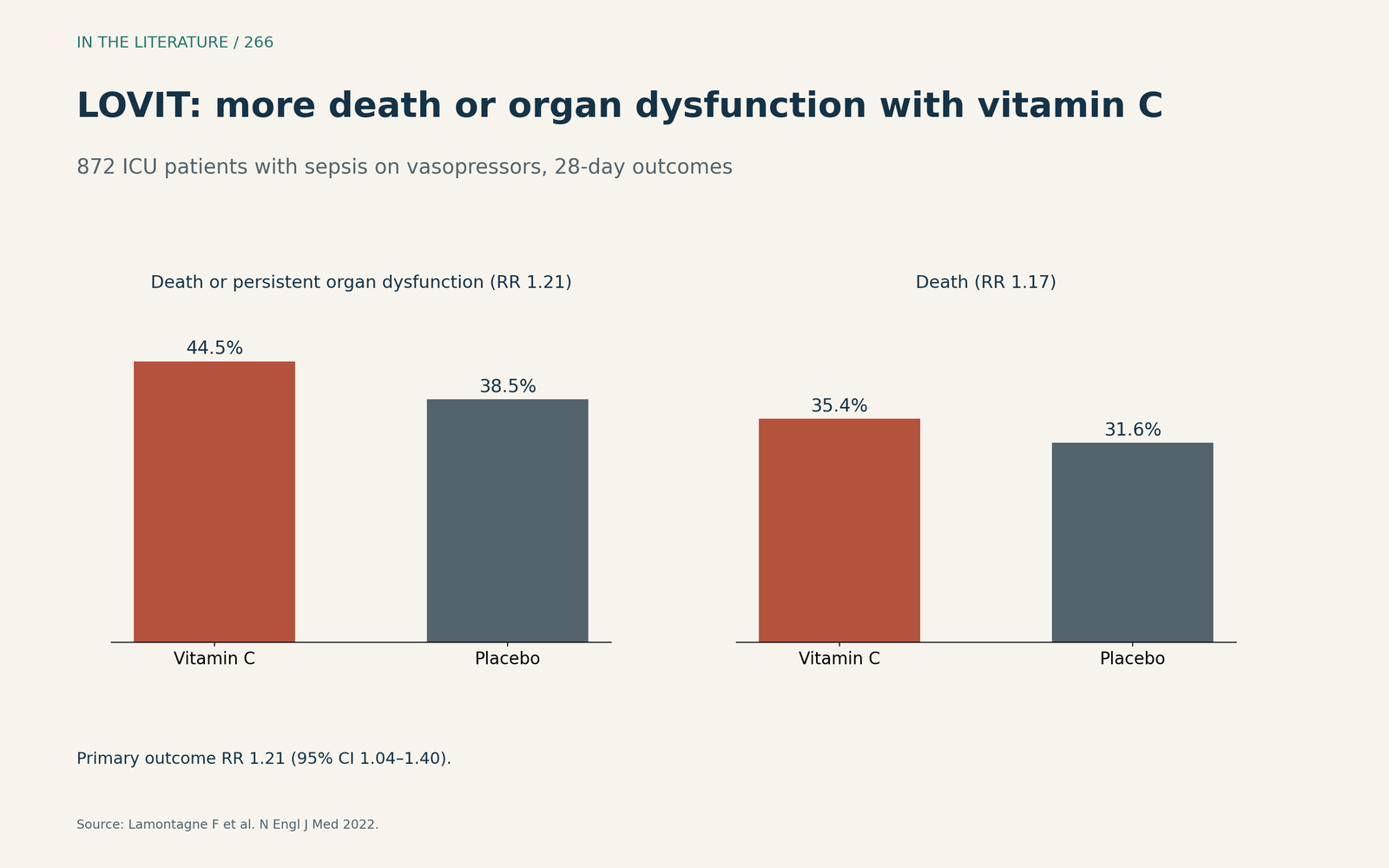
Figure 1. In the largest blinded trial, outcomes were worse with vitamin C. Data from LOVIT.[1] View larger.

Vitamin C with hydrocortisone and thiamine
VITAMINS (Fujii et al., JAMA 2020) compared vitamin C 1.5 g every 6 hours with hydrocortisone and thiamine against hydrocortisone alone in septic shock: time alive and free of vasopressors to day 7 was 122.1 versus 124.6 hours, and 90-day mortality was 28.6% versus 24.5%.[4] In ACTS (Moskowitz et al., JAMA 2020; 205 patients), 30-day mortality was 34.7% with the combination and 29.3% with placebo, and the investigators concluded that the data do not support routine use.[5] VICTAS (Sevransky et al., JAMA 2021) was stopped after 501 participants when funding was withheld; 30-day mortality was 22% with the combination and 24% with placebo.[6]
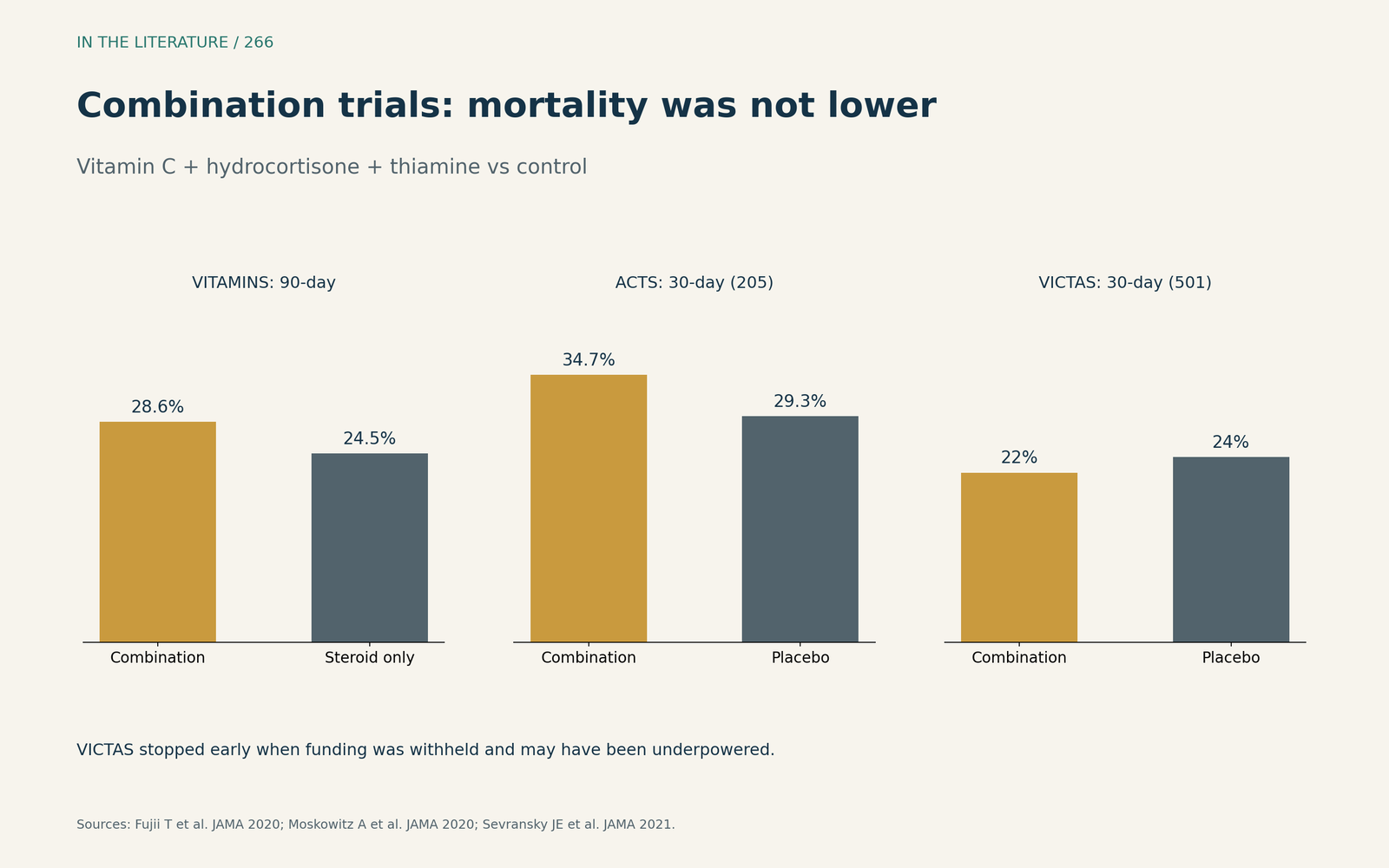
Figure 2. Mortality with vitamin C, hydrocortisone and thiamine versus control in three trials. Data from VITAMINS, ACTS and VICTAS.[4], [5], [6] View larger.

What the pooled evidence and guidance say
An updated meta-analysis (Cai et al., Front Nutr 2026) pooled fourteen RCTs with 1,958 patients of vitamin C monotherapy: any mortality benefit was driven by single-centre studies and not observed in multicentre trials, and the two largest double-blind multicentre RCTs, LOVIT and C-EASIE, showed no mortality benefit. The Surviving Sepsis Campaign issued a weak recommendation against routine intravenous vitamin C in adults with sepsis.[7] An umbrella review of 31 systematic reviews (Vera-Ponce et al., PLoS One 2026) found that combinations with thiamine did not reduce mortality, that haemodynamic benefits were small and attributable to the corticosteroid, and that the findings do not support routine intravenous vitamin C in any regimen.[8] Outside sepsis, after out-of-hospital cardiac arrest, 10 g of vitamin C resulted in 2.5 points less improvement in organ dysfunction score (Rozemeijer et al., Intensive Care Med 2026).[9]
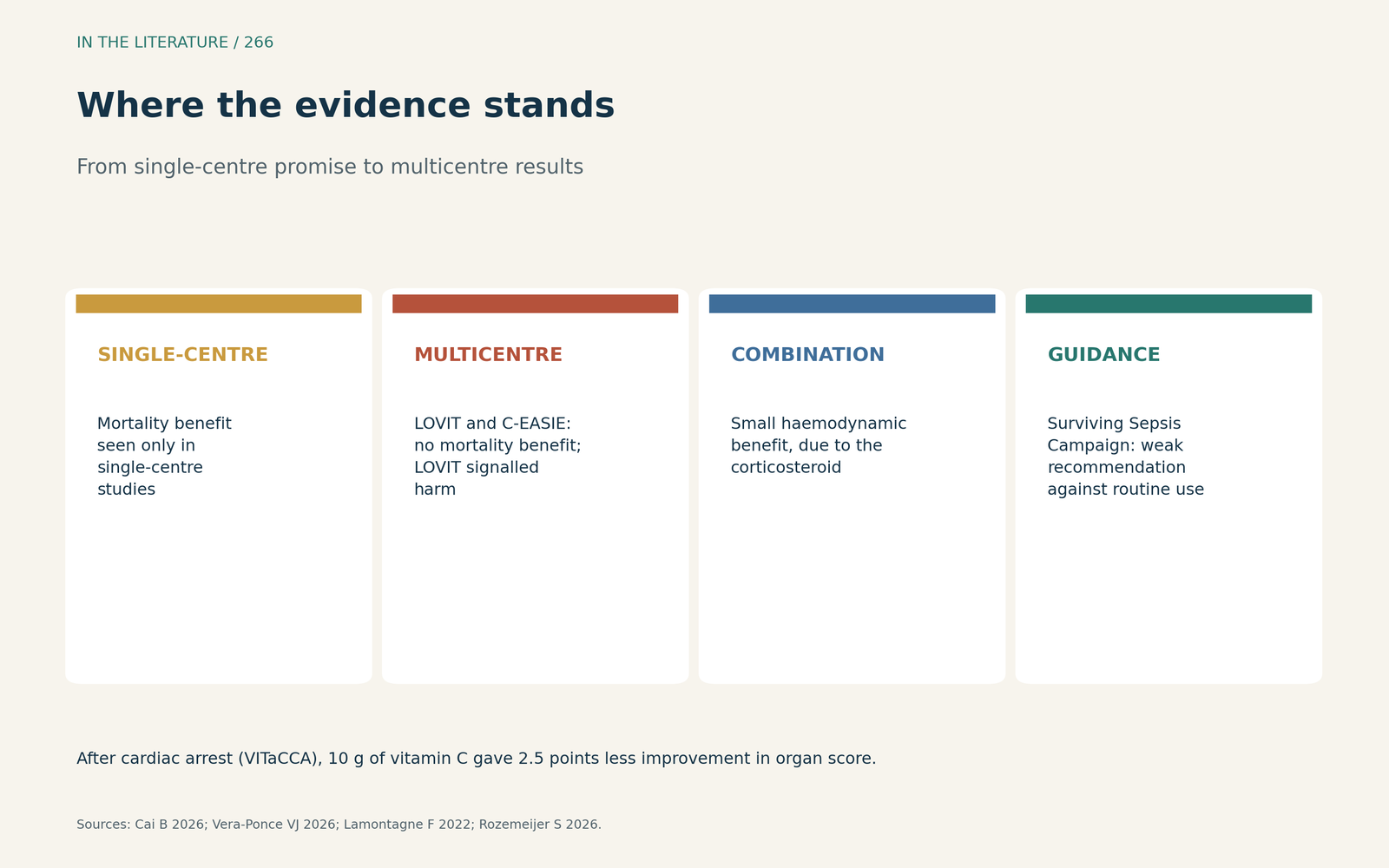
Figure 3. Single-centre promise, multicentre null or harm. Synthesized from Cai et al., Vera-Ponce et al., LOVIT and VITaCCA.[7], [8], [1], [9] View larger.

Three takeaways
- Do not give intravenous vitamin C routinely in sepsis; the largest blinded trial suggested harm.[1], [7]
- Adding thiamine and hydrocortisone does not change survival; any haemodynamic effect comes from the steroid.[4], [5], [6], [8]
- Give hydrocortisone for its own indication; the vitamin cocktail adds nothing measurable beyond the steroid.[8]
References
- Lamontagne F, Masse MH, Menard J, et al. Intravenous vitamin C in adults with sepsis in the intensive care unit. N Engl J Med. 2022;386(25):2387–2398. doi:10.1056/NEJMoa2200644
- Fowler AA III, Truwit JD, Hite RD, et al. Effect of vitamin C infusion on organ failure and biomarkers of inflammation and vascular injury in patients with sepsis and severe acute respiratory failure: the CITRIS-ALI randomized clinical trial. JAMA. 2019;322(13):1261–1270. doi:10.1001/jama.2019.11825
- Vandervelden S, Cortens B, Fieuws S, et al. Early administration of vitamin C in patients with sepsis or septic shock in emergency departments: a multicenter, double-blind, randomized controlled trial: the C-EASIE trial. Crit Care. 2025;29(1):160. doi:10.1186/s13054-025-05383-x
- Fujii T, Luethi N, Young PJ, et al. Effect of vitamin C, hydrocortisone, and thiamine vs hydrocortisone alone on time alive and free of vasopressor support among patients with septic shock: the VITAMINS randomized clinical trial. JAMA. 2020;323(5):423–431. doi:10.1001/jama.2019.22176
- Moskowitz A, Huang DT, Hou PC, et al. Effect of ascorbic acid, corticosteroids, and thiamine on organ injury in septic shock: the ACTS randomized clinical trial. JAMA. 2020;324(7):642–650. doi:10.1001/jama.2020.11946
- Sevransky JE, Rothman RE, Hager DN, et al. Effect of vitamin C, thiamine, and hydrocortisone on ventilator- and vasopressor-free days in patients with sepsis: the VICTAS randomized clinical trial. JAMA. 2021;325(8):742–750. doi:10.1001/jama.2020.24505
- Cai B, Xiao Q, Xia Y, et al. Intravenous vitamin C as micronutrient therapy in patients with sepsis or septic shock: an updated systematic review and meta-analysis of randomized controlled trials. Front Nutr. 2026;13:1905726. doi:10.3389/fnut.2026.1905726
- Vera-Ponce VJ, Ballena-Caicedo J, Valladolid-Sandoval LAM, et al. Monotherapy or combinations? Intravenous vitamin C in sepsis and septic shock: an umbrella review of 31 systematic reviews. PLoS One. 2026;21(7):e0351072. doi:10.1371/journal.pone.0351072
- Rozemeijer S, Dubois EA, de Grooth HJ, et al. Early high-dose vitamin C for out-of-hospital cardiac arrest: the VITaCCA randomized clinical trial. Intensive Care Med. 2026;52:1447–1457. doi:10.1007/s00134-026-08492-5