
ITL-388f0a6cf690
Juan Li, MD · Updated November 18, 2026
Key points
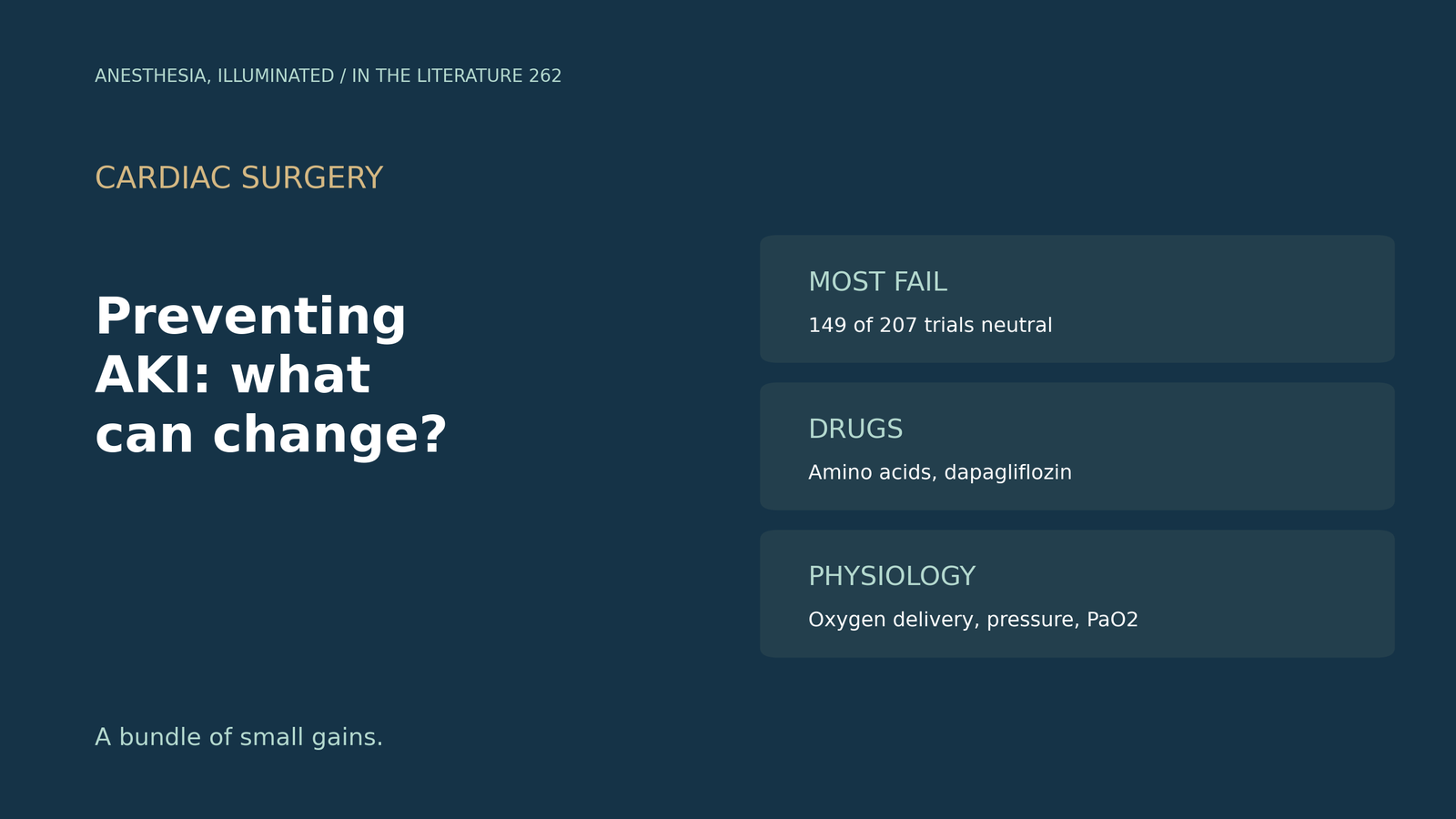
- Most strategies fail. Of 207 RCTs testing 55 interventions, 149 were neutral.[1]
- No high-quality non-drug fix. No non-pharmacological intervention had high-quality evidence, and none reduced mortality.[2]
- Amino acids helped. In PROTECTION, AKI fell from 31.7% to 26.9%.[3]
- So did dapagliflozin. In MERCURI-2, AKI fell from 52% to 28%.[4]
- Watch the physiology. Lower CVP after bypass, avoiding hypotension outside bypass and avoiding hyperoxia are plausible targets, though the evidence is weaker.[5], [6], [7]
A patient with diabetes and chronic kidney disease is scheduled for coronary bypass on cardiopulmonary bypass. What can the team actually change to lower the risk of AKI?
What the trial evidence shows overall
A systematic review (D'Amico et al., J Cardiothorac Vasc Anesth 2026) found 207 RCTs with 63,785 patients testing 55 interventions: 149 were neutral, 50 reported benefit and 8 reported harm. Most strategies did not reduce AKI; amino acids, dexmedetomidine, nitric oxide and remote ischemic preconditioning showed favorable signals, but risk of bias and small-study effects were not formally assessed.[1] Across 86 trials with 25,855 patients (Hariri et al., Crit Care 2023), no non-pharmacological intervention had high-quality evidence; goal-directed perfusion (RR 0.55, 0.40–0.76) and remote ischemic preconditioning (RR 0.86) reduced AKI with moderate-quality evidence, and none reduced mortality.[2]
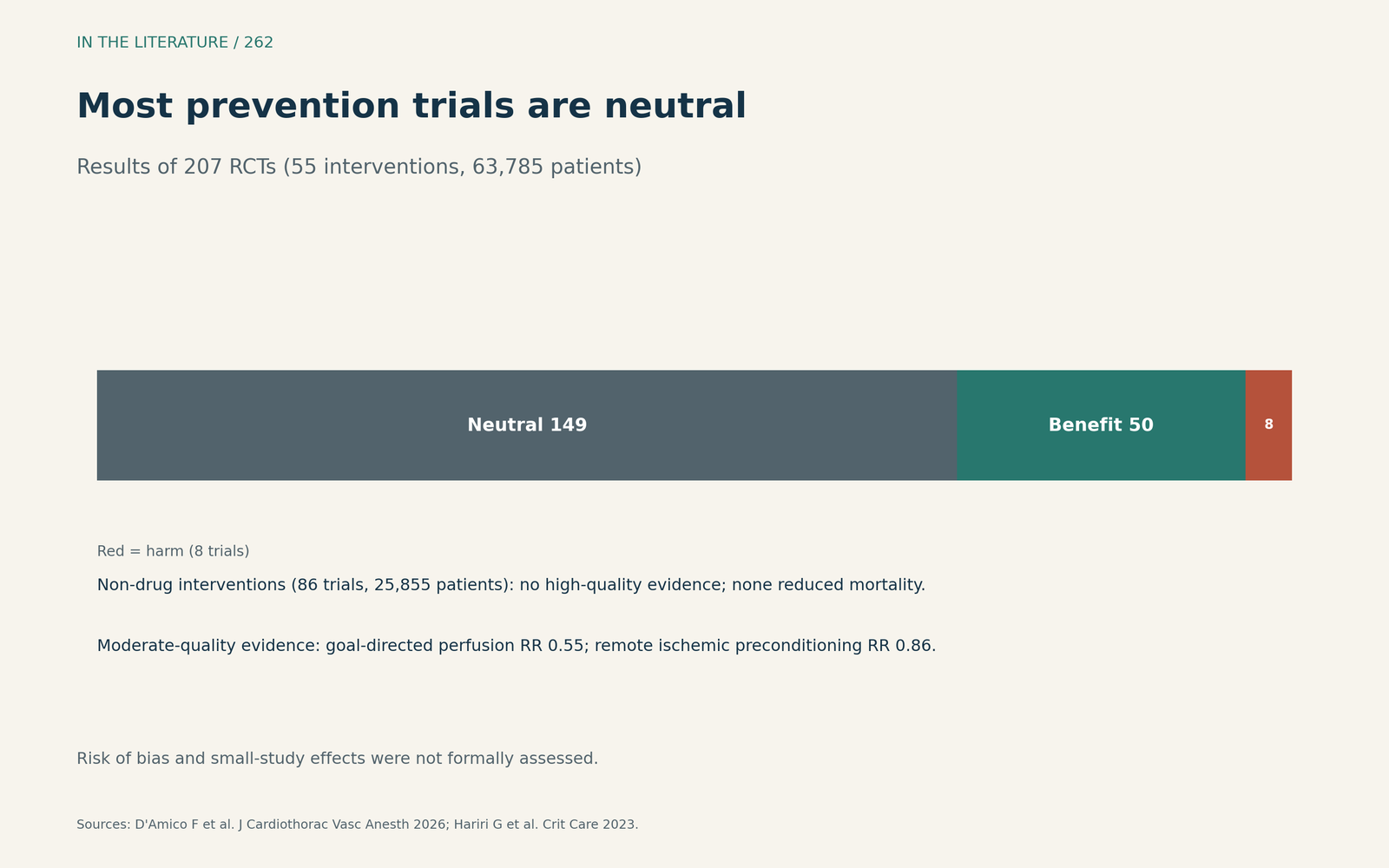
Figure 1. Of 207 trials, most showed no effect. Data from D'Amico et al. and Hariri et al.[1], [2] View larger.

Drugs and haemodynamic targets with trial support
In PROTECTION (Landoni et al., N Engl J Med 2024), 3511 patients received intravenous amino acids at 2 g per kilogram of ideal body weight per day or placebo; AKI fell from 31.7% to 26.9% (RR 0.85), and stage 3 AKI from 3.0% to 1.6%.[3] In MERCURI-2 (Oosterom-Eijmael et al., JAMA 2026), perioperative dapagliflozin reduced AKI over 7 days from 52% to 28% (RR 0.54), with no difference in major adverse cardiac events at 30 days (5.6% vs 6.1%); 76% of participants were male.[4] In a single-centre trial (Chen et al., Front Med 2026), controlled low central venous pressure after bypass lowered AKI from 59.8% to 44.9%, but the difference was no longer significant without the urine-output criterion, and the trial was unblinded.[5]
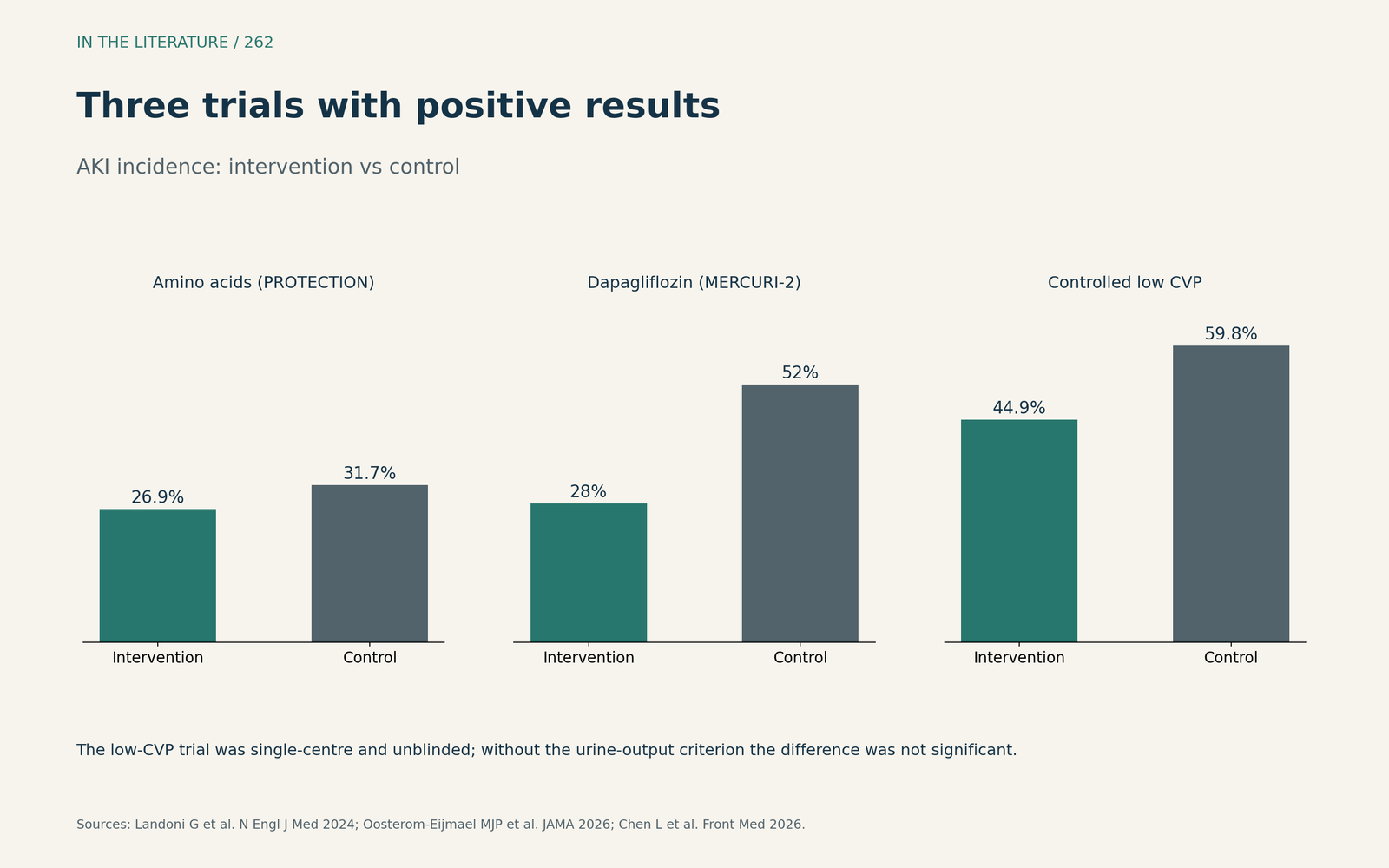
Figure 2. Amino acids and dapagliflozin reduced AKI in randomized trials. Data from PROTECTION, MERCURI-2 and Chen et al.[3], [4], [5] View larger.

Modifiable intraoperative exposures
In a retrospective cohort (Armengol de la Hoz et al., Anesthesiology 2022), each 10 min of MAP below 65 mmHg outside bypass was associated with a composite of AKI, stroke and death (adjusted OR 1.06), whereas hypotension during bypass was not (adjusted OR 1.04, 0.99 to 1.09); a retrospective design cannot establish causation.[6] Each hour with PaO2 100 mmHg above 300 mmHg was associated with a 9.4% higher AKI risk, which was lowest with PaO2 between 80 and 200 mmHg (Bae et al., J Cardiothorac Vasc Anesth 2021).[7] The POQI/ERAS Cardiac consensus (Brown et al., J Cardiothorac Vasc Anesth 2023) recommends goal-directed perfusion targeting oxygen delivery above 280 mL/min/m2 and notes that high-quality trials supported only 3 strategies: a KDIGO care bundle, vasopressin in vasoplegic shock and goal-directed oxygen delivery.[8]
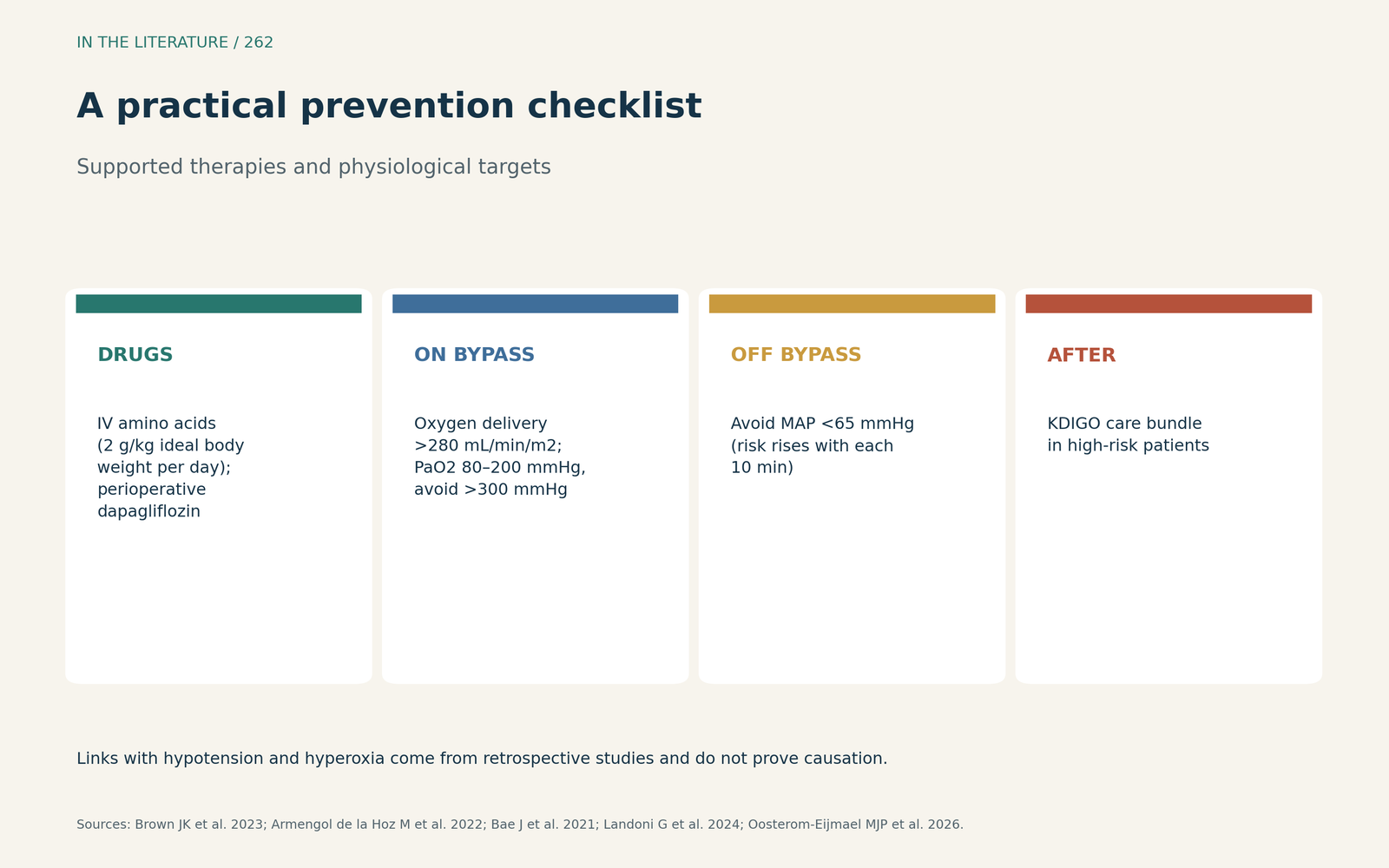
Figure 3. Combine supported therapies with physiological targets. Synthesized from the POQI/ERAS consensus, de la Hoz et al., Bae et al., PROTECTION and MERCURI-2.[8], [6], [7], [3], [4] View larger.

Three takeaways
- Expect most single interventions to fail; prevention of AKI after cardiac surgery is a bundle of small gains.[1], [2]
- Amino acids and perioperative dapagliflozin reduced AKI in randomized trials; low CVP after bypass is promising but less certain.[3], [4], [5]
- Target oxygen delivery on bypass, avoid hypotension outside bypass and hyperoxia, and apply a KDIGO bundle in high-risk patients.[6], [7], [8]
References
- D’Amico F, Bonizzoni MA, Losiggio R, et al. Acute kidney injury after cardiac surgery: a systematic review of pharmacological and non-pharmacological interventions. J Cardiothorac Vasc Anesth. 2026. Published online September 2026. doi:10.1053/j.jvca.2026.09.020
- Hariri G, Collet L, Duarte L, et al. Prevention of cardiac surgery-associated acute kidney injury: a systematic review and meta-analysis of non-pharmacological interventions. Crit Care. 2023;27(1):354. doi:10.1186/s13054-023-04640-1
- Landoni G, Monaco F, Ti LK, et al. A randomized trial of intravenous amino acids for kidney protection. N Engl J Med. 2024;391(8):687–698. doi:10.1056/NEJMoa2403769
- Oosterom-Eijmael MJP, Hulst AH, Monteiro de Oliveira NP, et al. Dapagliflozin and acute kidney injury following cardiac surgery: a randomized clinical trial. JAMA. 2026;336(9):765. doi:10.1001/jama.2026.9268
- Chen L, Hu L, He Y, et al. Controlled low central venous pressure after cardiopulmonary bypass reduces acute kidney injury following cardiac surgery: a randomized controlled trial. Front Med (Lausanne). 2026;13:1846773. doi:10.3389/fmed.2026.1846773
- Armengol de la Hoz M, Rangasamy V, Brenes Bastos A, et al. Intraoperative hypotension and acute kidney injury, stroke, and mortality during and outside cardiopulmonary bypass: a retrospective observational cohort study. Anesthesiology. 2022;136(6):927–939. doi:10.1097/ALN.0000000000004175
- Bae J, Kim J, Lee S, et al. Association between intraoperative hyperoxia and acute kidney injury after cardiac surgery: a retrospective observational study. J Cardiothorac Vasc Anesth. 2021;35(8):2405–2414. doi:10.1053/j.jvca.2020.11.054
- Brown JK, Shaw AD, Mythen MG, et al. Adult cardiac surgery-associated acute kidney injury: joint consensus report. J Cardiothorac Vasc Anesth. 2023;37(9):1579–1590. doi:10.1053/j.jvca.2023.05.032