ITL-72559ec3525f
Juan Li, MD · Updated November 18, 2026
Key points
- A stress signal, not just hypoxia. Hyperlactatemia is perhaps better considered an indicator of body stress, and it should not be used in isolation.[1]
- The repeat level beats percentage clearance. In sepsis, the 6-hour lactate level predicted death better than 6-hour clearance (AUC 0.720 vs 0.656).[2]
- Oxygen delivery may already be adequate. Lactate often rises despite preserved oxygenation and oxygen delivery.[3]
- Less fluid did not slow lactate resolution. In a CLASSIC post hoc analysis, restrictive fluids did not seem to affect time to resolution.[4]
- Cardiogenic shock follows the same rule. Lactate after 8 h predicted mortality better than baseline lactate.[5]
A patient with septic shock has a raised lactate that has barely fallen after initial resuscitation, while blood pressure has improved. Does the lactate mean more fluid is needed, or something else?
What a raised lactate means
Bakker and Singer (Crit Care Sci 2026) suggest that hyperlactatemia is perhaps better considered an indicator of body stress. Higher initial and peak lactate and slower normalization are all poor prognostic factors, and the increased risk begins even within the normal range; early normalization after initial resuscitation reflects restored tissue perfusion.[1] Payen et al. (Crit Care 2026) note that elevated lactate often occurs despite preserved oxygenation and adequate oxygen delivery, and that lactate levels alone are unlikely to reveal the mechanism.[3] A classic review (Vincent and De Backer, N Engl J Med 2013) adds that with effective therapy blood lactate should fall over a period of hours,[6] and failure to clear it should prompt a broader search for its cause (Pino and Singh, Anesthesiology 2021).[7]
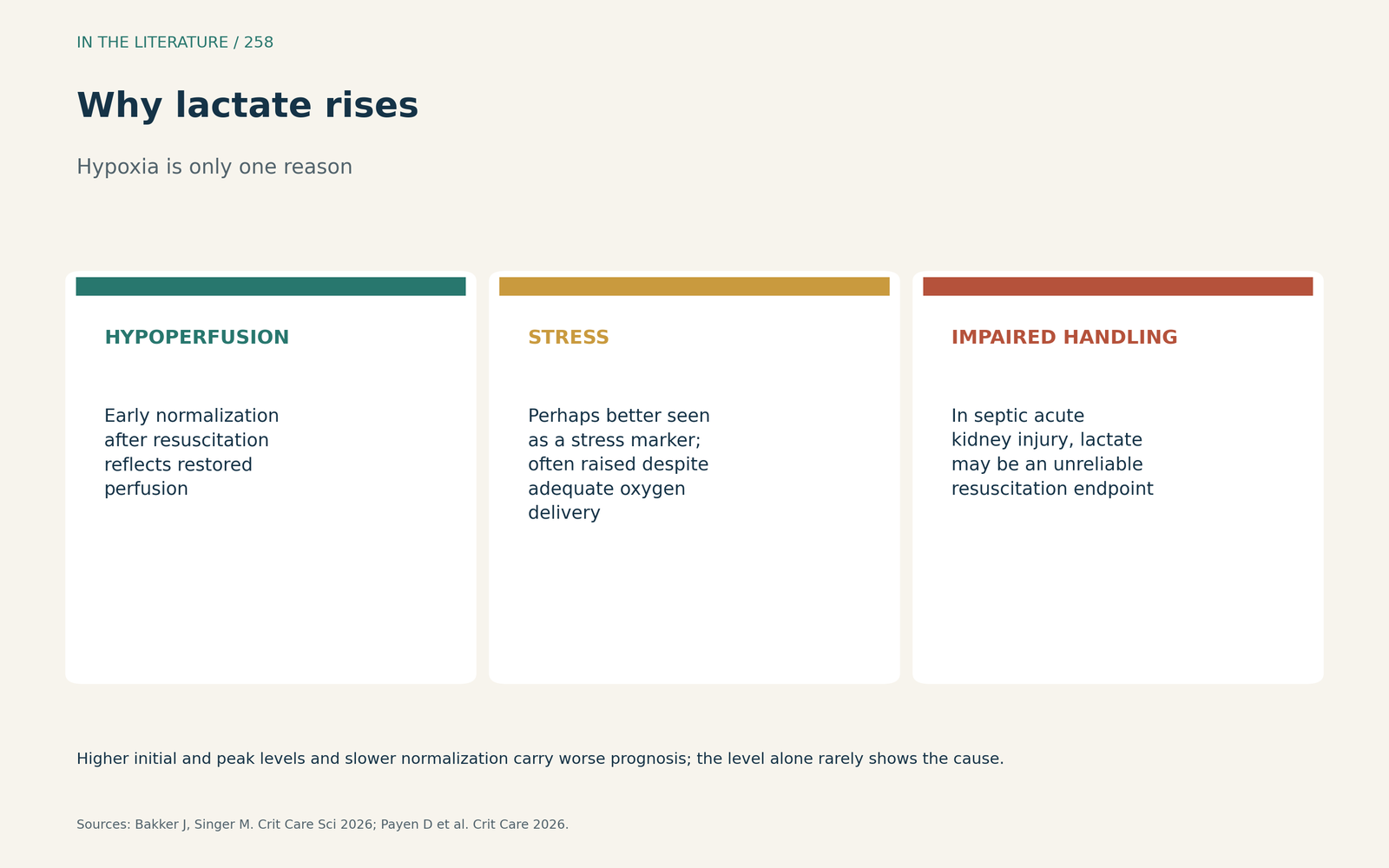
Figure 1. Hypoxia is only one of several reasons for a raised lactate. Synthesized from Bakker and Singer and Payen et al.[1], [3] View larger.

Level versus clearance
In 363 patients with sepsis and initial hyperlactatemia (Lee et al., Medicine 2021), 30-day mortality was 40.8%. The 6-hour lactate level predicted death better than 6-hour clearance (AUC 0.720 vs 0.656), although the study came from a single hospital.[2] In cardiogenic shock (Fuernau et al., JACC Cardiovasc Interv 2020), arterial lactate after 8 h predicted mortality better than baseline lactate; AUCs were 0.69 for baseline, 0.76 for the 8-h level and 0.59 for clearance, and an 8-h cutoff of 3.1 mmol/L discriminated best.[5] Levy et al. (Ann Intensive Care 2026) add that isolated values provide limited information once resuscitation has started, that early clearance identifies reversible shock, and that pre-ECMO lactate should not be a stand-alone criterion for futility.[8]
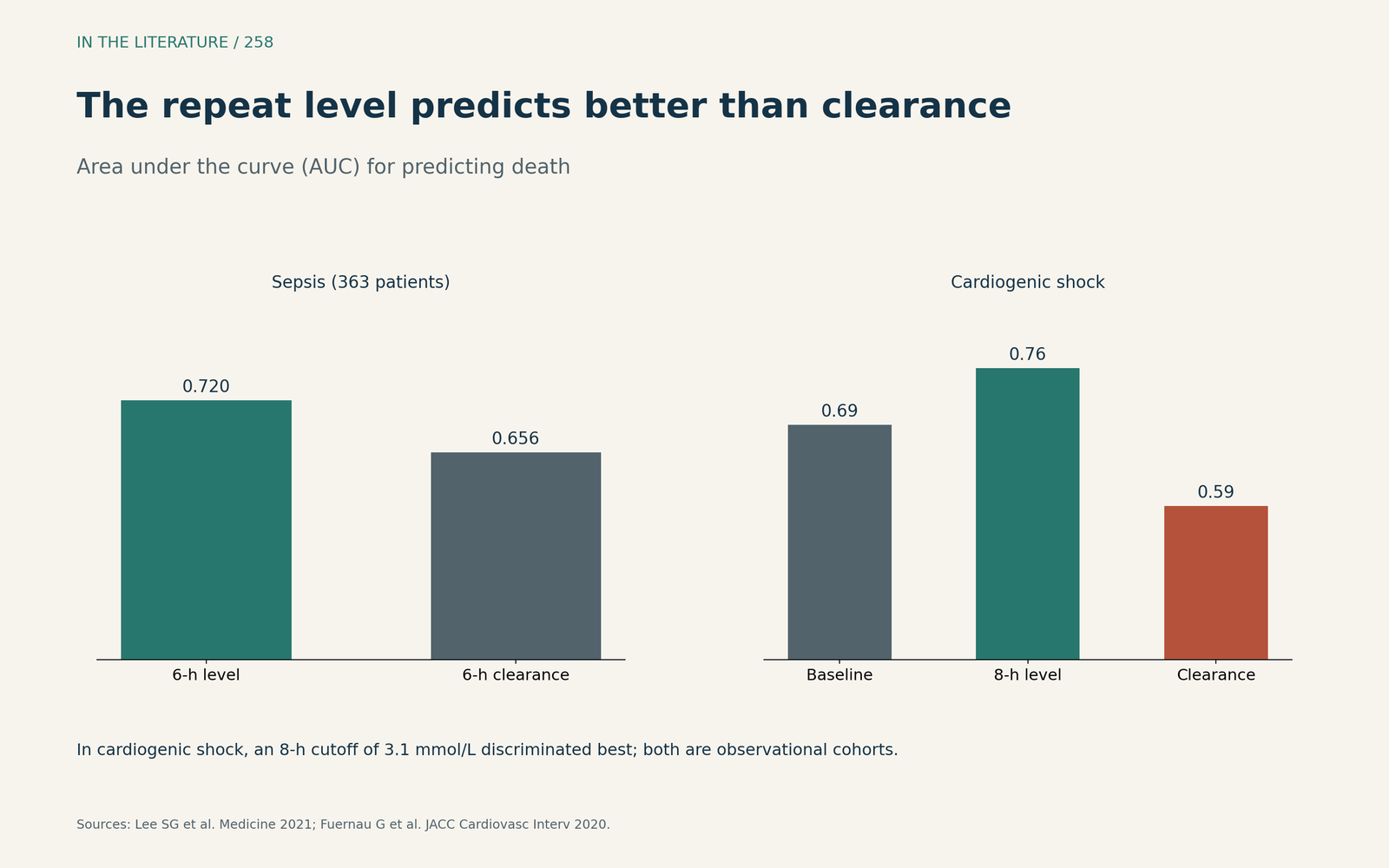
Figure 2. In both cohorts, the follow-up level outperformed percentage clearance. Data from Lee et al. and Fuernau et al.[2], [5] View larger.

Using lactate to guide treatment
In ANDROMEDA-SHOCK itself (Hernández et al., JAMA 2019), among 424 patients, 28-day mortality was 34.9% with capillary refill-targeted versus 43.4% with lactate-targeted resuscitation, a non-significant difference in a trial that may have been underpowered.[9] In ANDROMEDA-SHOCK, post hoc harm appeared when lactate fell less than 20% after 2 hours yet protocolized resuscitation continued.[1] In a CLASSIC post hoc analysis (Ahlstedt et al., Intensive Care Med 2024), restrictive fluids did not seem to affect time to resolution of hyperlactatemia (hazard ratios 0.94 at day 1 and 1.21 at days 2–3), and lactate has poor specificity for hypoperfusion.[4] In septic acute kidney injury, lactate may be an unreliable endpoint, and chasing it with more fluid may contribute to fluid overload and organ dysfunction.[3] Guzzi et al. (J Cardiothorac Vasc Anesth 2026) advise that lactate should not be the sole trigger for intervention and that decisions should rest on a temporal trend rather than a single value.[10] Protocolized early goal-directed therapy did not improve outcomes over usual care in 3723 patients (PRISM, N Engl J Med 2017).[11] After cardiac surgery, 37 of 432 patients (8.5%) developed late hyperlactatemia in one cohort (Aubourg et al., J Cardiothorac Vasc Anesth 2022).[12]
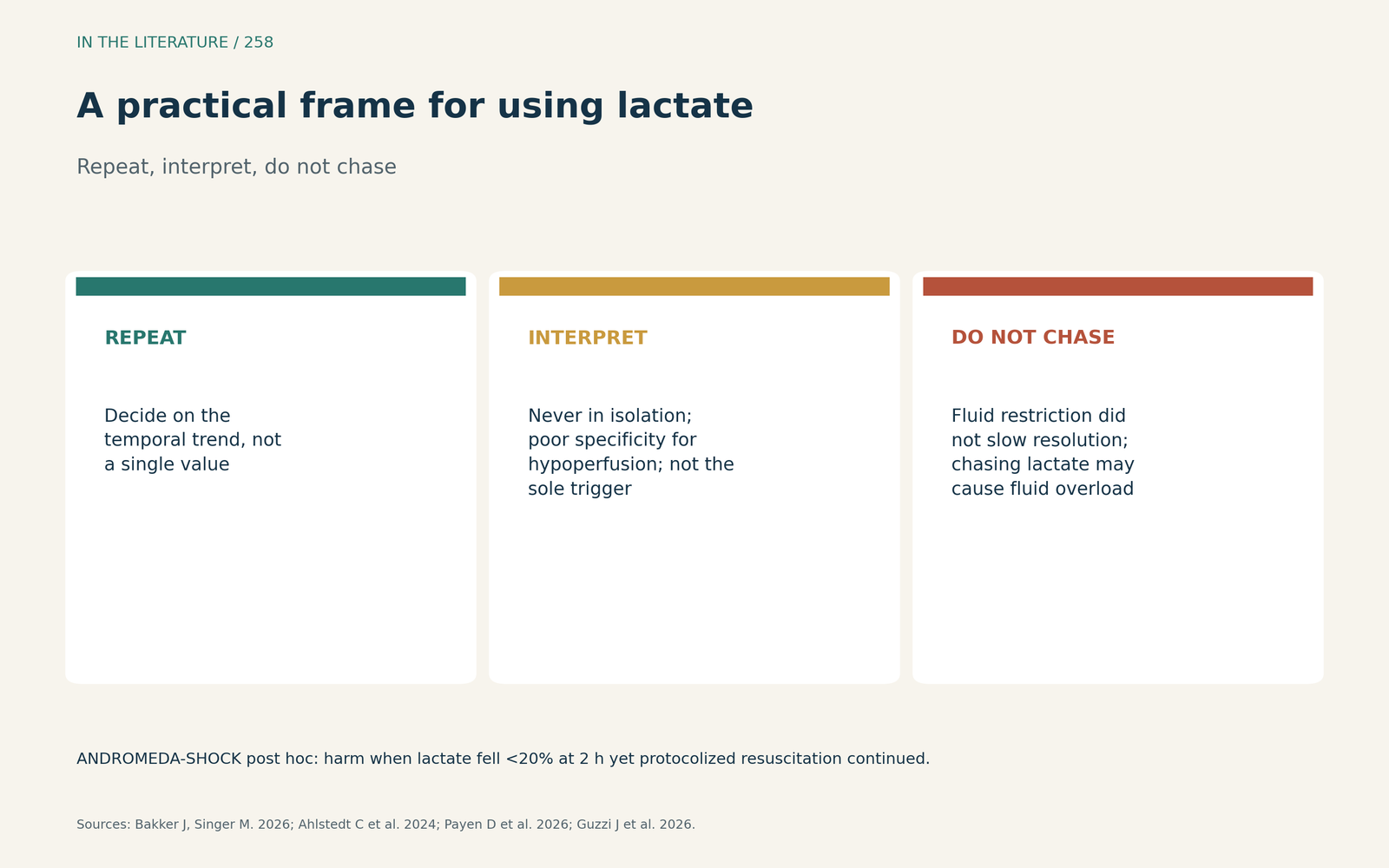
Figure 3. Read the trend with perfusion signs; do not chase the number. Synthesized from Bakker and Singer, Ahlstedt et al., Payen et al. and Guzzi et al.[1], [4], [3], [10] View larger.

Three takeaways
- Treat a raised lactate as a marker of stress and risk, not proof of tissue hypoxia.[1], [3]
- Repeat it: the follow-up level and its trend carry more information than a single value or percentage clearance.[2], [5], [10]
- Combine lactate with other perfusion signs, and do not give fluid just to lower it.[1], [3], [4]
References
- Bakker J, Singer M. How to use lactate levels to guide septic shock resuscitation: an update. Crit Care Sci. 2026;38:e20260083. doi:10.62675/2965-2774.20260083
- Lee SG, Song J, Park DW, et al. Prognostic value of lactate levels and lactate clearance in sepsis and septic shock with initial hyperlactatemia: a retrospective cohort study according to the Sepsis-3 definitions. Medicine (Baltimore). 2021;100(7):e24835. doi:10.1097/MD.0000000000024835
- Payen D, Rimmelé T, Gómez H. Hyperlactatemia in sepsis and shock: a renal metabolic perspective. Crit Care. 2026;30:499. doi:10.1186/s13054-026-06095-6
- Ahlstedt C, Sivapalan P, Kriz M, et al. Effects of restrictive fluid therapy on the time to resolution of hyperlactatemia in ICU patients with septic shock: a secondary post hoc analysis of the CLASSIC randomized trial. Intensive Care Med. 2024;50(5):678–686. doi:10.1007/s00134-024-07385-9
- Fuernau G, Desch S, de Waha-Thiele S, et al. Arterial lactate in cardiogenic shock: prognostic value of clearance versus single values. JACC Cardiovasc Interv. 2020;13(19):2208–2216. doi:10.1016/j.jcin.2020.06.037
- Vincent JL, De Backer D. Circulatory shock. N Engl J Med. 2013;369(18):1726–1734. doi:10.1056/NEJMra1208943
- Pino RM, Singh J. Appropriate clinical use of lactate measurements. Anesthesiology. 2021;134(4):637–644. doi:10.1097/ALN.0000000000003655
- Levy B, Hernandez G, Merdji H. Lactate in cardiogenic shock: pathophysiology, prognostic value, and clinical interpretation. Ann Intensive Care. 2026;16:100061. doi:10.1016/j.aicoj.2026.100061
- Hernández G, Ospina-Tascón GA, Damiani LP, et al. Effect of a resuscitation strategy targeting peripheral perfusion status vs serum lactate levels on 28-day mortality among patients with septic shock: the ANDROMEDA-SHOCK randomized clinical trial. JAMA. 2019;321(7):654–664. doi:10.1001/jama.2019.0071
- Guzzi J, Salter R, Pettit S, et al. Rethinking lactate in cardiac surgery and intensive care. J Cardiothorac Vasc Anesth. 2026;40(7):2177–2190. doi:10.1053/j.jvca.2026.03.010
- PRISM Investigators; Rowan KM, Angus DC, Bailey M, et al. Early, goal-directed therapy for septic shock — a patient-level meta-analysis. N Engl J Med. 2017;376(23):2223–2234. doi:10.1056/NEJMoa1701380
- Aubourg C, Collard A, Leger M, et al. Risk factors and consequences of late-onset hyperlactatemia after cardiac surgery with cardiopulmonary bypass: a single-center retrospective study. J Cardiothorac Vasc Anesth. 2022;36(11):4077–4084. doi:10.1053/j.jvca.2022.07.007