ITL-97ce99519434
Juan Li, MD · Updated November 18, 2026
Key points
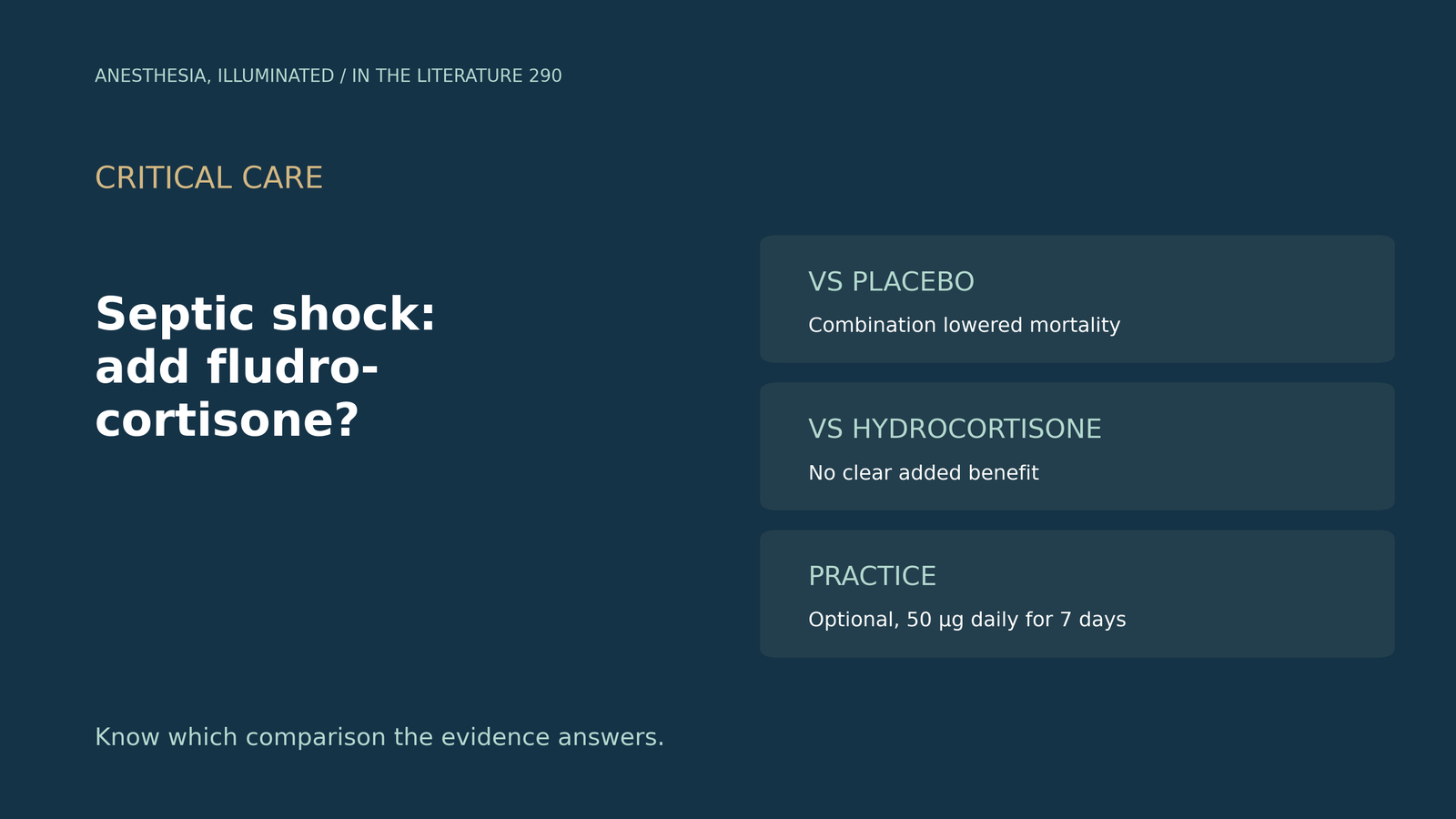
- Against placebo, the combination helped. In APROCCHSS, hydrocortisone plus fludrocortisone lowered 90-day mortality.[1]
- Against hydrocortisone alone, the answer is unclear. FluDReSS found no faster shock resolution and was underpowered.[2]
- Pooled data depend on the comparator. The combination ranked best against placebo, but showed no survival advantage over hydrocortisone alone.[3], [4]
- Guidelines leave it optional. The usual regimen is hydrocortisone 200 mg/day with or without fludrocortisone 50 µg daily for 7 days.[5], [6]
A patient in septic shock on rising noradrenaline has just started hydrocortisone 200 mg/day. Should enteral fludrocortisone be added?
Combination vs placebo
In APROCCHSS (1241 patients), 90-day mortality was 43.0% with hydrocortisone plus fludrocortisone vs 49.1% with placebo (Annane et al., N Engl J Med 2018). The relative risk of death was 0.88, vasopressor-free days to day 28 were higher (17 vs 15), and hyperglycemia was more common with hydrocortisone plus fludrocortisone. The comparator was placebo, not hydrocortisone alone.[1]
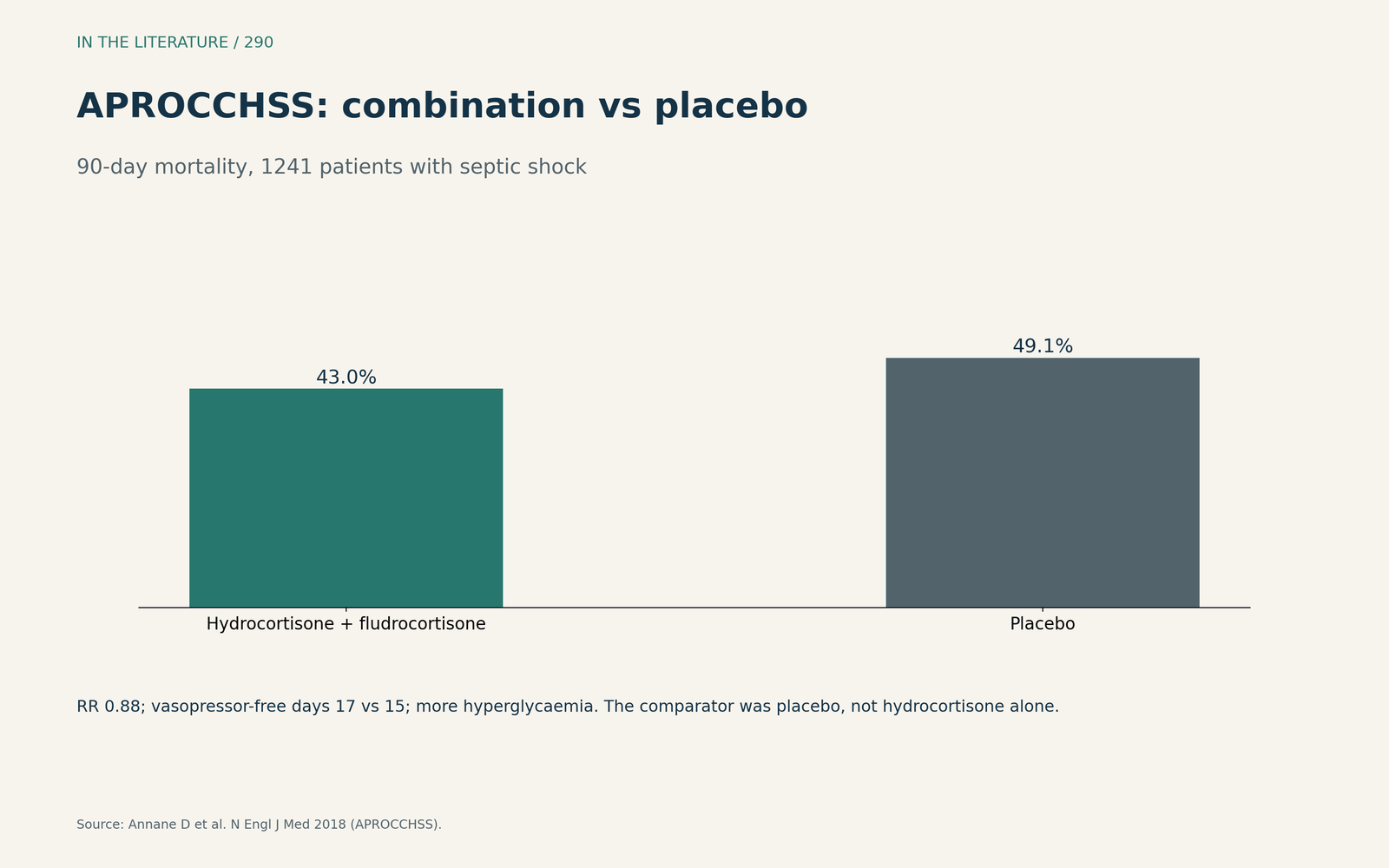
Figure 1. The combination lowered 90-day mortality compared with placebo. Data from APROCCHSS.[1] View larger.

Combination vs hydrocortisone alone
FluDReSS randomized 153 patients already on hydrocortisone to no fludrocortisone or one of three fludrocortisone doses (Walsham et al., Intensive Care Med 2024). Adding fludrocortisone did not shorten time to shock resolution. 28-day mortality was 24% without fludrocortisone and 17%, 11% and 11% with increasing doses, a non-significant difference; the trial was underpowered to detect differences in shock reversal, and plasma fludrocortisone levels varied widely, from 0 to 677 ng/L.[2]
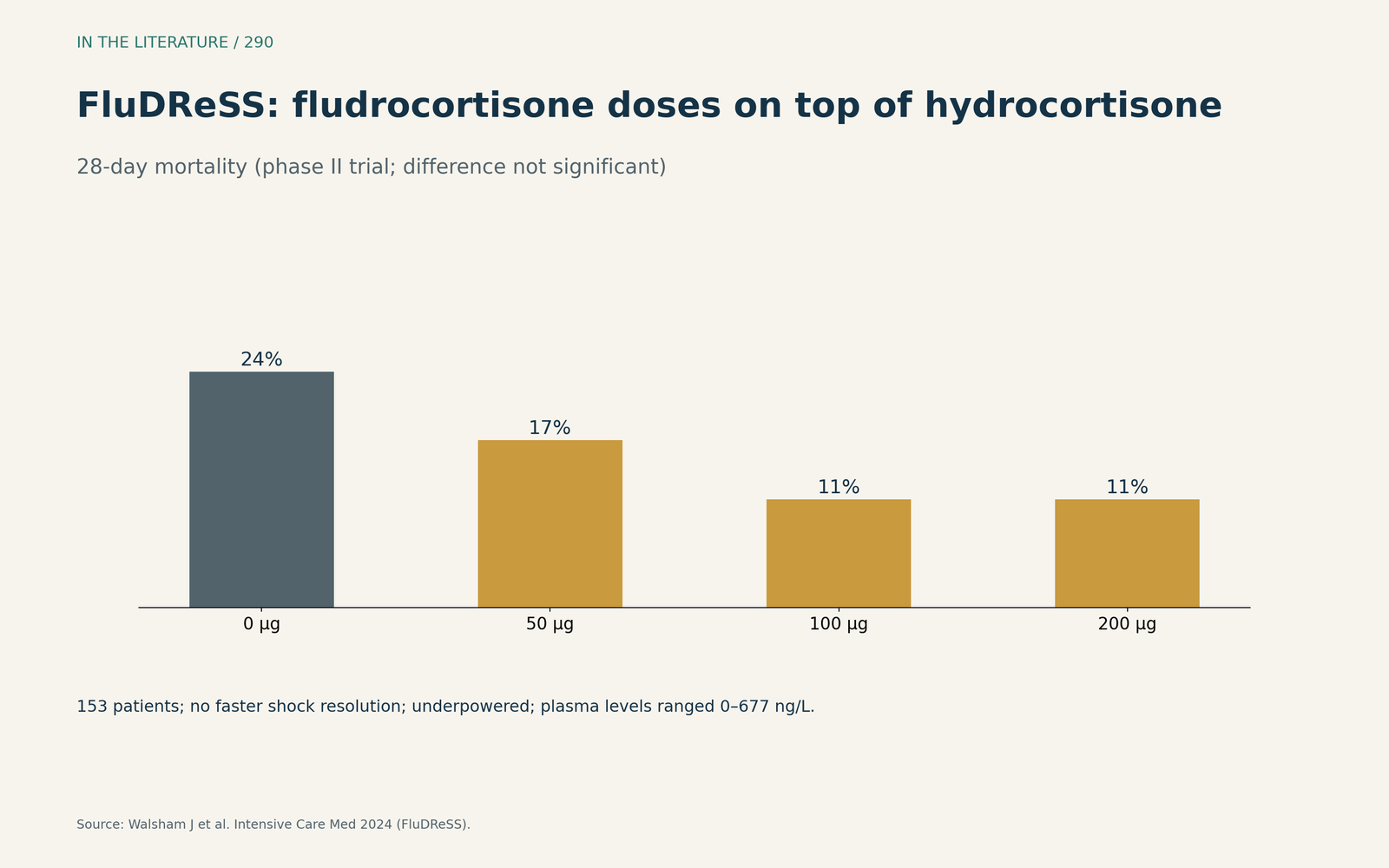
Figure 2. Mortality was numerically lower with fludrocortisone, but the difference was not significant in this phase II trial. Data from FluDReSS.[2] View larger.

A Bayesian network meta-analysis included 19 studies with 95,841 patients (Lai et al., Crit Care Med 2024). Hydrocortisone plus fludrocortisone had the lowest short-term mortality vs placebo (OR 0.79, low certainty), and the authors state that these findings are not definitive.[3] In an updated meta-analysis (Sun et al., Front Med 2026), against hydrocortisone alone, no survival advantage was seen in randomized trials (553 patients), and in cohorts of 88,666 patients the 28-day mortality RR was 0.99. Benefit over placebo may reflect the overall steroid effect rather than fludrocortisone itself, and the authors suggest routine fludrocortisone may be unnecessary for the general septic shock population.[4]
Guideline and mechanism
A common regimen is hydrocortisone 200 mg/day with or without fludrocortisone 50 µg enterally for 7 days (Chaudhuri et al., Crit Care Med 2024).[5] A mechanistic review suggests 50 µg daily for 7 days without tapering when fludrocortisone is used, notes that added fludrocortisone may worsen hyperglycaemia compared with hydrocortisone alone, and concludes that mechanistic promise has not yet translated into compelling clinical evidence (Nethathe et al., Br J Anaesth 2024).[6]
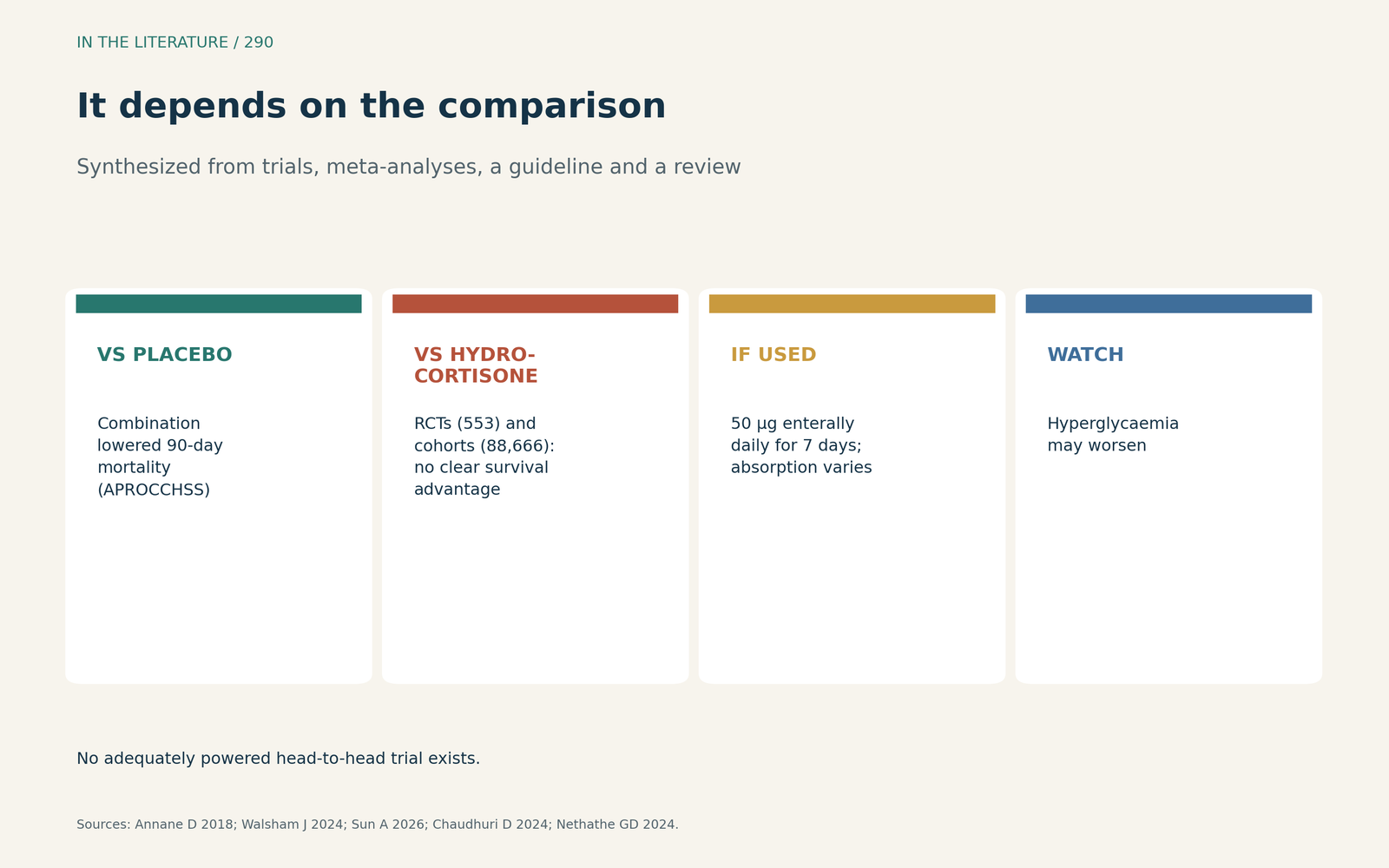
Figure 3. The evidence differs by comparator: clear against placebo, unclear against hydrocortisone alone. Synthesized from APROCCHSS, FluDReSS, Sun et al., Chaudhuri et al. and Nethathe et al.[1], [2], [4], [5], [6] View larger.

Three takeaways
- Hydrocortisone plus fludrocortisone is better than placebo, but that does not prove fludrocortisone adds to hydrocortisone.[1], [4]
- Direct comparisons show no clear added survival benefit; the only dedicated trial was small and underpowered.[2], [3]
- Adding fludrocortisone 50 µg daily for 7 days is an acceptable option, not a requirement; watch glucose.[5], [6]
References
- Annane D, Renault A, Brun-Buisson C, et al.; CRICS-TRIGGERSEP Network. Hydrocortisone plus fludrocortisone for adults with septic shock. N Engl J Med. 2018;378(9):809–818. doi:10.1056/NEJMoa1705716
- Walsham J, Hammond N, Blumenthal A, et al. Fludrocortisone dose-response relationship in septic shock: a randomised phase II trial. Intensive Care Med. 2024;50:2050–2060. doi:10.1007/s00134-024-07616-z
- Lai PC, Lai CH, Lai ECC, Huang YT. Do we need to administer fludrocortisone in addition to hydrocortisone in adult patients with septic shock? An updated systematic review with Bayesian network meta-analysis of randomized controlled trials and an observational study with target trial emulation. Crit Care Med. 2024;52(4):e193–e202. doi:10.1097/CCM.0000000000006161
- Sun A, Gao X, Gao Z, Zhang Q, He W. Hydrocortisone combined with fludrocortisone for treatment of adults with septic shock: an updated meta-analysis and systematic review. Front Med (Lausanne). 2026;13:1755626. doi:10.3389/fmed.2026.1755626
- Chaudhuri D, Nei AM, Rochwerg B, et al. 2024 focused update: guidelines on use of corticosteroids in sepsis, acute respiratory distress syndrome, and community-acquired pneumonia. Crit Care Med. 2024;52(5):e219–e233. doi:10.1097/CCM.0000000000006172
- Nethathe GD, Lipman J, Anderson R, Fuller PJ, Feldman C. Glucocorticoids with or without fludrocortisone in septic shock: a narrative review from a biochemical and molecular perspective. Br J Anaesth. 2024;132(1):53–65. doi:10.1016/j.bja.2023.10.034