ITL-d7ab5a2831b6
Juan Li, MD · Updated November 17, 2026
Watch the video
Key points
- Global hemodynamics can look normal while capillary perfusion is impaired, a mismatch called loss of hemodynamic coherence. Sublingual video microscopy shows the capillaries directly.[1]
- Bypass usually reduces perfused capillaries. In a systematic review of 19 studies, most reported a fall in perfused vessel density or proportion of perfused vessels; the fall resolved by the end of surgery in 29% of studies and lasted at least 24 hours in 24%.[2]
- Microcirculatory measures add information that blood pressure and lactate do not. After bypass they did not track postoperative hemodynamic indices or lactate, and impaired skin microvascular reactivity was independently associated with organ dysfunction and slow recovery.[3], [4]
- Raising pressure does not guarantee capillary flow. In one study cited by a review, phenylephrine raised perfusion pressure from 47 to 68 mmHg while capillary flow worsened.[1], [5]
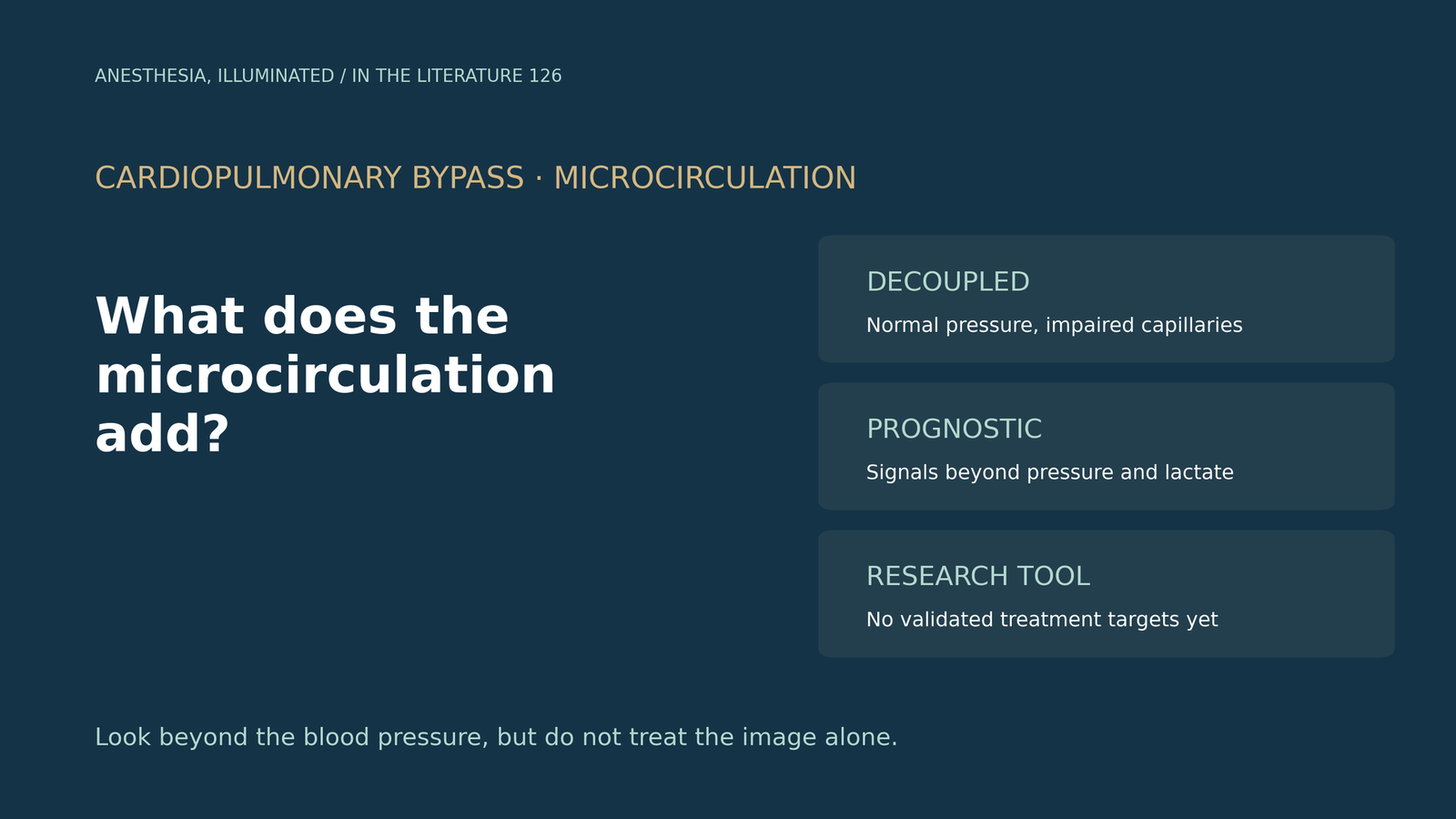
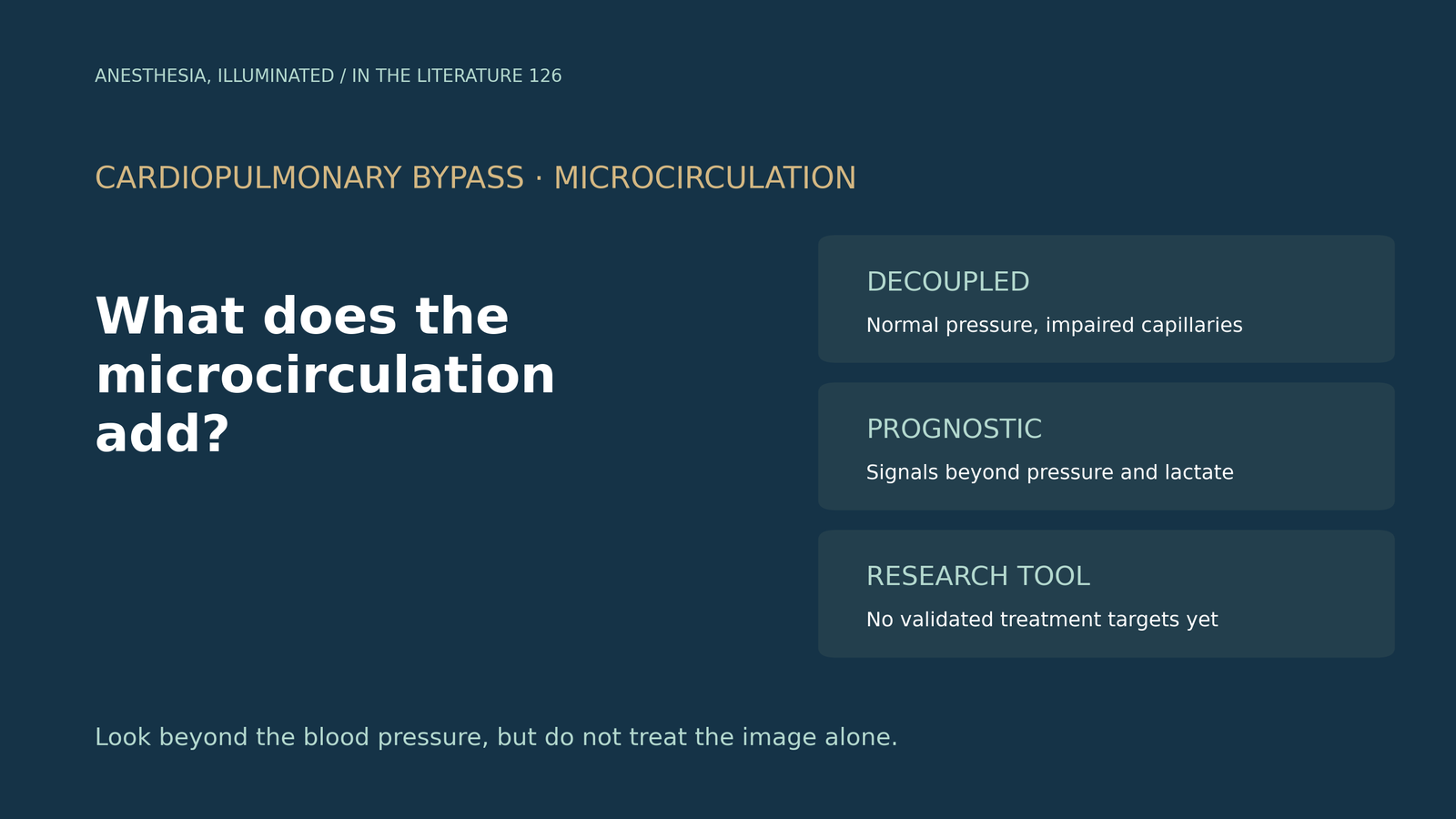
- It is not ready to guide routine care. Analysis is slow and variable, no treatment targets are validated, and in a multicenter shock trial that included post-cardiac-surgery patients, microcirculation-guided therapy was stopped for futility.[5], [6]
During a valve operation, mean arterial pressure and pump flow are on target and lactate is normal, but the patient looks mottled at the end of bypass. What would a look at the microcirculation add, and should it change treatment?[1], [2]
What it measures
Handheld sidestream or incident dark-field microscopes placed under the tongue record short videos of red cells moving through capillaries. From them, analysts derive total and perfused vessel density, the proportion of perfused vessels and a flow index. Flick and colleagues explain that macrocirculation and microcirculation can uncouple, so a restored blood pressure does not ensure capillary perfusion. They also note practical limits: absolute perfused vessel density can vary by up to 30% between methods, and analysis of a single video can take up to 20 minutes.[1]
What bypass does to the capillaries
Den Os and colleagues reviewed 19 studies with 584 patients. Of the studies that measured perfused vessels, 77% showed a decrease after bypass started; total vessel density showed no clear change. Perfusion normalized by the end of surgery in 29% of studies and remained reduced for at least 24 hours in 24%, and the authors conclude that maintaining systemic hemodynamics does not guarantee microcirculatory perfusion. They also counted 23 subtly different definitions of the same parameters.[2]
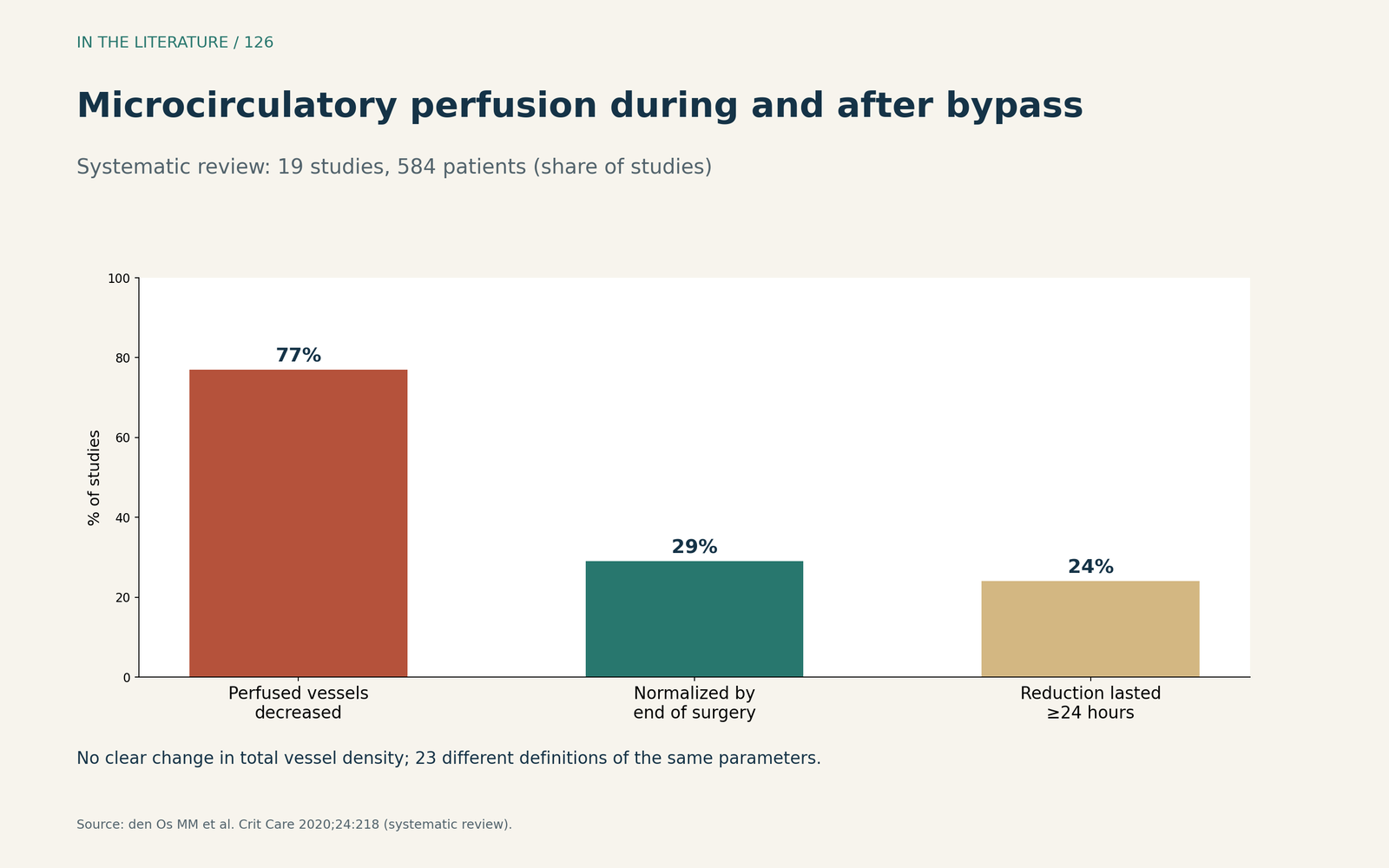
Figure 1. Microcirculatory perfusion during and after bypass. Redrawn from the systematic review by den Os et al.[2] View larger.

Does it add prognostic information?
Li and colleagues followed 24 patients after bypass with a pulmonary artery catheter; microcirculatory variables did not correlate with postoperative hemodynamic indices or with arterial lactate.[3] Orbegozo and colleagues used a skin thermal challenge measured with laser Doppler; a lower skin blood flow response was independently associated with organ dysfunction and slow recovery, and this method does not require a sedated, ventilated patient.[4] In mechanical circulatory support, the perfused vessel density measured just after starting ECMO predicted survival in one study, and changes after therapy appeared within minutes.[7] In a secondary analysis of a perioperative oxygen trial after off-pump surgery, 80% oxygen was associated with higher vessel density scores, but the difference was judged clinically negligible.[8]
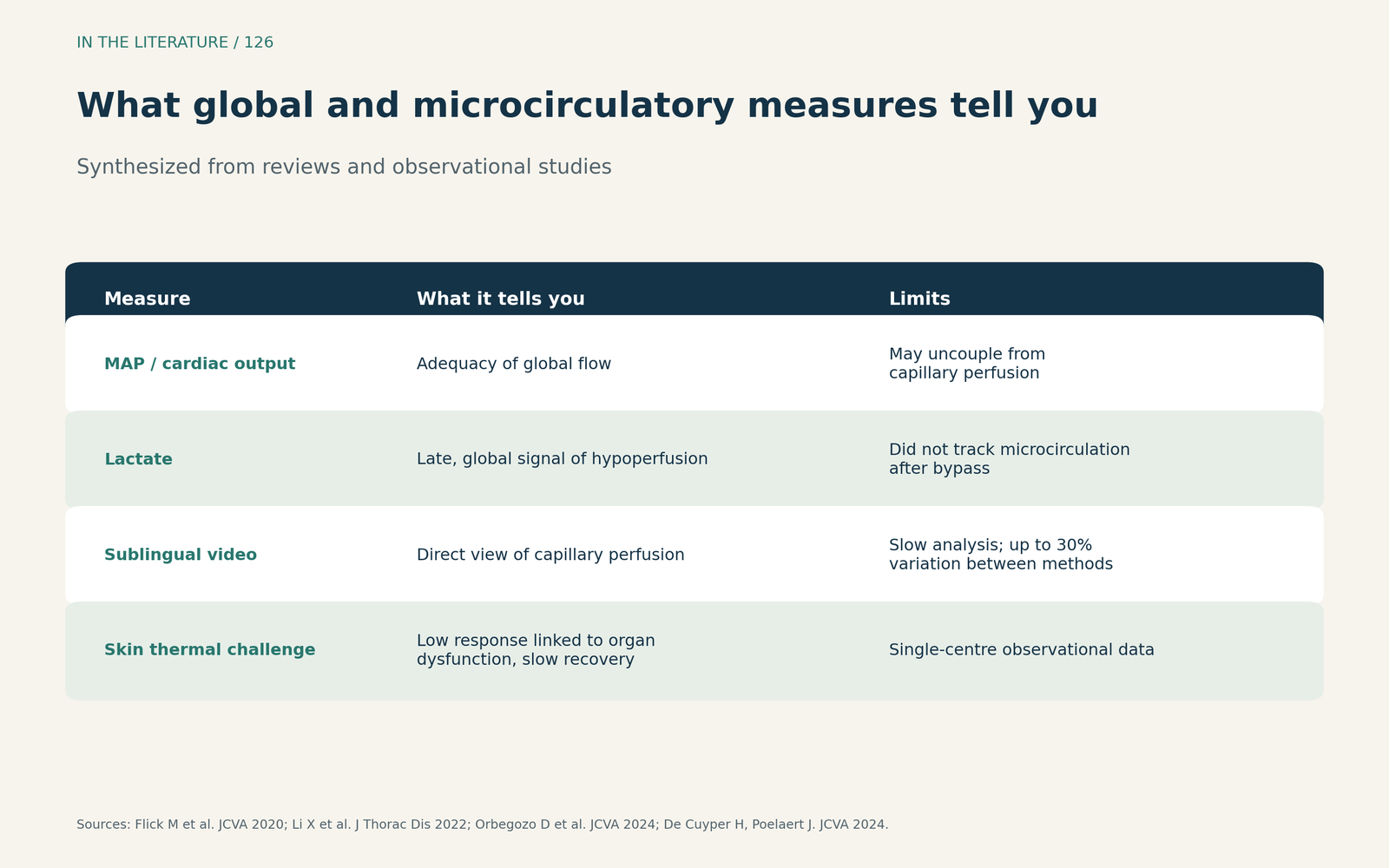
Figure 2. What global and microcirculatory measures tell you. Synthesized from Flick et al., Li et al., Orbegozo et al. and De Cuyper and Poelaert.[1], [3], [4], [5] View larger.

Can it guide treatment?
De Cuyper and Poelaert note that vasopressors may impair rather than improve the microcirculation, that handheld microscopes are not a standard of care, and that the technique remains mainly a research tool.[5] In the DAMIS trial, 141 patients in shock, including 27 after cardiac surgery, were randomized to therapy informed by sublingual perfusion or to usual care. Treatment was adjusted more often in the intervention arm (66.7% vs 41.8%), but the trial was stopped for futility, and admission perfusion was not associated with 30-day mortality.[6] As Flick and colleagues put it, monitoring alone will not improve outcome; a strategy built on microcirculatory targets still has to be tested.[1]
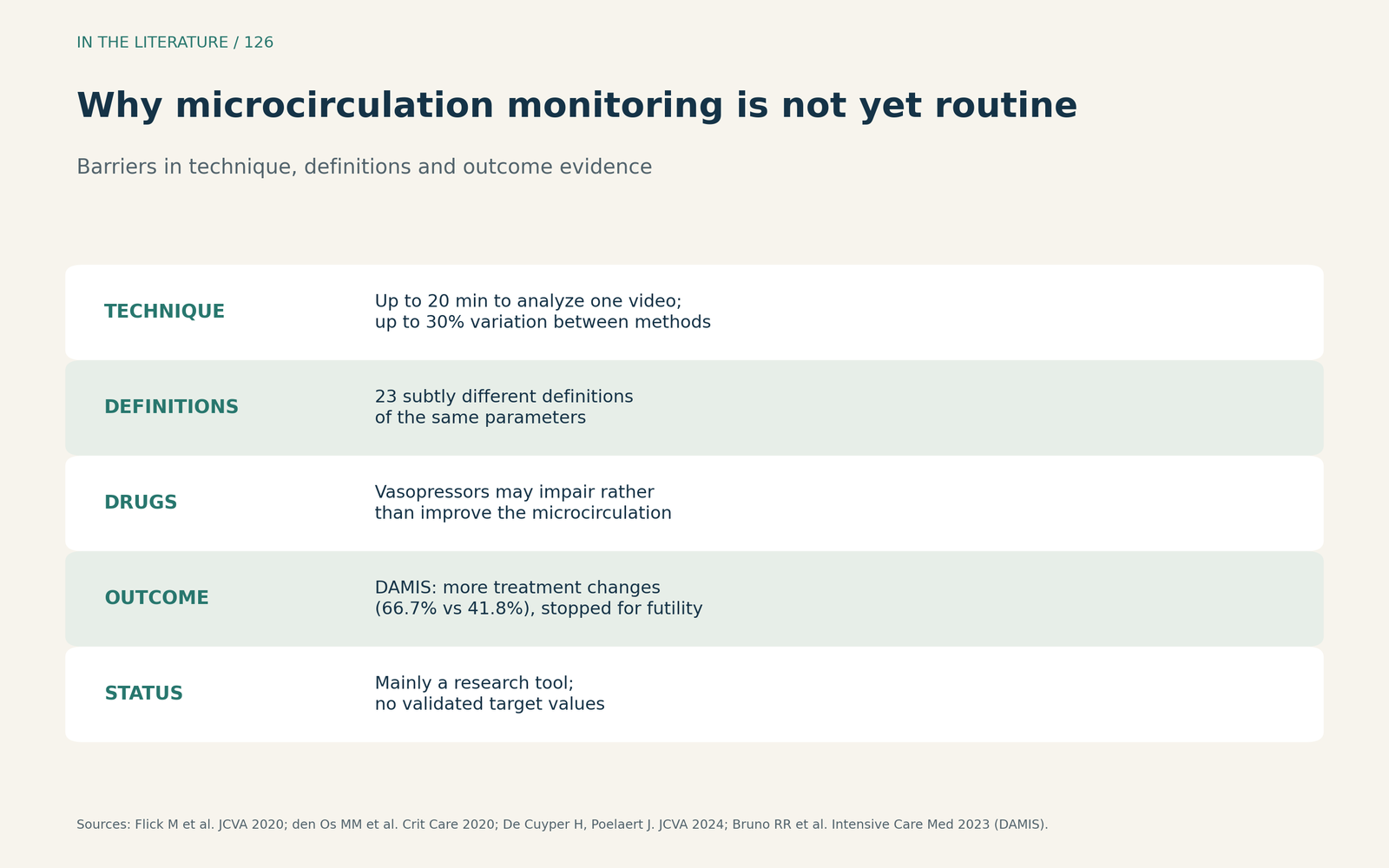
Figure 3. Why microcirculation monitoring is not yet routine. Synthesized from Flick et al., den Os et al., De Cuyper and Poelaert and the DAMIS trial.[1], [2], [5], [6] View larger.

Three takeaways
- Normal pressure does not prove normal perfusion. Capillary perfusion often falls on bypass and may stay low afterward.[1], [2]
- It adds information, not yet a target. Microcirculatory measures diverge from hemodynamics and lactate and carry prognostic signals.[3], [4]
- Do not treat the image alone. Analysis is slow and variable, and guided therapy has not improved survival.[5], [6]
References
- Flick M, Duranteau J, Scheeren TWL, Saugel B. Monitoring of the sublingual microcirculation during cardiac surgery: current knowledge and future directions. J Cardiothorac Vasc Anesth. 2020;34(10):2754–2765. doi:10.1053/j.jvca.2019.10.038
- den Os MM, van den Brom CE, van Leeuwen ALI, Dekker NAM. Microcirculatory perfusion disturbances following cardiopulmonary bypass: a systematic review. Crit Care. 2020;24(1):218. doi:10.1186/s13054-020-02948-w
- Li X, Tan T, Wu H, et al. Characteristics of sublingual microcirculatory changes during the early postoperative period following cardiopulmonary bypass-assisted cardiac surgery—a prospective cohort study. J Thorac Dis. 2022;14(10):3992–4002. doi:10.21037/jtd-22-1159
- Orbegozo D, Stringari G, Damazio R, et al. Altered microvascular reactivity during a skin thermal challenge is associated with organ dysfunction and slow recovery after cardiac surgery. J Cardiothorac Vasc Anesth. 2024;38(11):2684–2692. doi:10.1053/j.jvca.2024.06.045
- De Cuyper H, Poelaert J. Microcirculatory alterations in cardiac surgery: a comprehensive guide. J Cardiothorac Vasc Anesth. 2024;38(3):829–838. doi:10.1053/j.jvca.2023.11.042
- Bruno RR, Wollborn J, Fengler K, et al. Direct assessment of microcirculation in shock: a randomized-controlled multicenter study. Intensive Care Med. 2023;49(6):645–655. doi:10.1007/s00134-023-07098-5
- Putowski Z, Pluta MP, Rachfalska N, et al. Sublingual microcirculation in temporary mechanical circulatory support: a current state of knowledge. J Cardiothorac Vasc Anesth. 2023;37(10):2065–2072. doi:10.1053/j.jvca.2023.05.028
- Nam K, Chung J, Ju JW, et al. Intraoperative oxygenation and microcirculatory changes following off-pump coronary artery bypass grafting: an exploratory secondary analysis of a randomized clinical trial. J Cardiothorac Vasc Anesth. 2025;39(5):1188–1196. doi:10.1053/j.jvca.2025.01.045