
ITL-06ef28d2093f
Juan Li, MD · Updated November 18, 2026
Key points
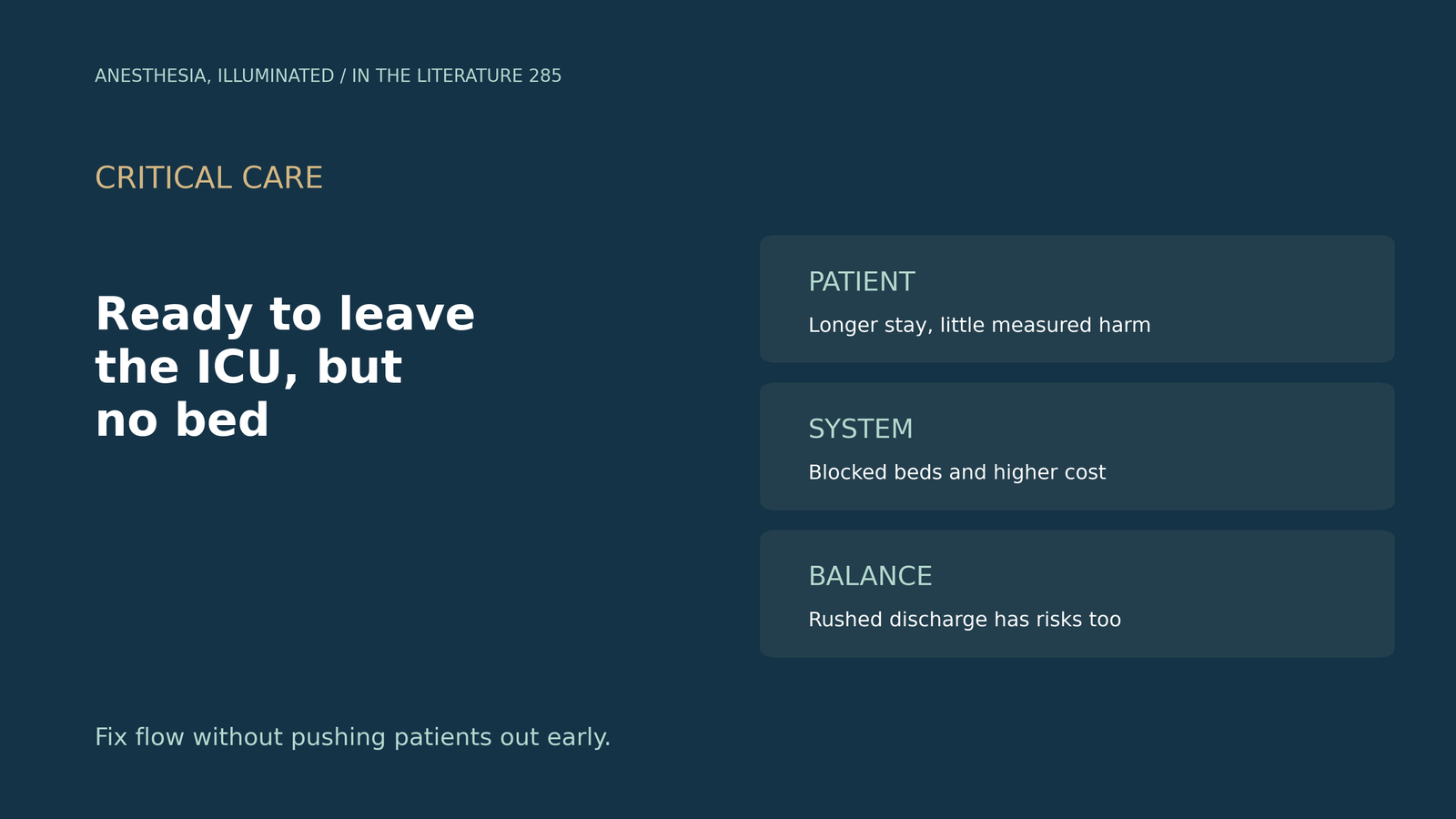
- Delay lengthens the stay. After cardiac surgery, delay added 0.72 days of hospital stay without changing readmission or 30-day mortality.[1]
- Delay is usually about beds. After liver transplantation, 68.5% were delayed, almost always for lack of a ward bed, with identical hospital stay.[2]
- The system pays. Waiting for transfer blocked ICU beds and cost about $1,342 per extra ICU day.[3]
- Busy ICUs move patients faster, at a price. Higher strain meant less delay but possibly worse outcomes.[4]
- Readmission is the real danger. Readmitted cardiac-surgery patients had much higher mortality.[5], [6]
A stable patient after cardiac surgery has a transfer order, but the stepdown unit is full. Does another night in the ICU harm the patient, and should the team push for transfer?
What delay does to patients
Of 5,777 cardiac-surgery patients ready for ICU discharge at one centre, 3,903 moved to stepdown on the same day (Diwan et al., J Cardiothorac Vasc Anesth 2023). Delay was associated with 0.72 more days of postoperative hospital stay; delayed patients stayed overnight in the ICU for lack of beds. Delayed discharge was not associated with readmission within 30 days, and there was no difference in 30-day mortality (3% vs 3%).[1]
After liver transplantation, 68.5% of 550 patients had ICU discharge delayed more than 8 hours after clearance (Salimi et al., J Clin Med 2022). The median delay was 30.7 hours, and ward bed availability alone accounted for 96.8% of delays. Median hospital stay was identical (18 days), but delirium and sleep disturbance were not routinely captured.[2]
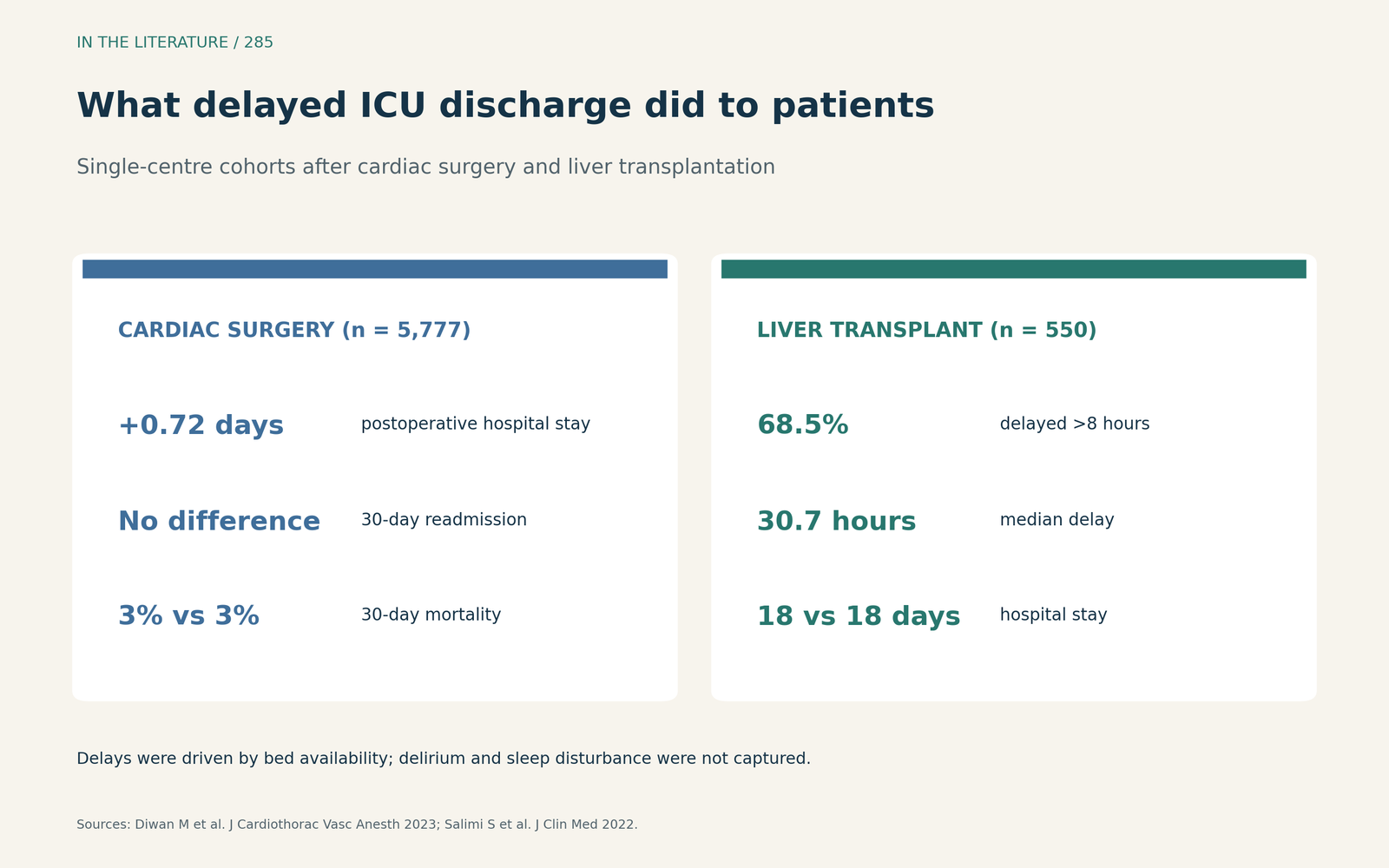
Figure 1. Delay lengthened the ICU stay but did not change readmission or survival in these cohorts. Data from Diwan et al. and Salimi et al.[1], [2] View larger.

What delay does to the ICU
In 7,623 ICU admissions at a Korean tertiary hospital (Choi et al., Acute Crit Care 2025), the median transfer latency was 5.7 hours, and 14.4% of transfers took more than 24 hours. In simulation, removing latency would cut the share of time with ICU occupancy above 80% by 32.8 percentage points, and an ICU day cost $1,342.54 more than a ward day. The study did not assess the effect of transfer delays on patient outcomes.[3]
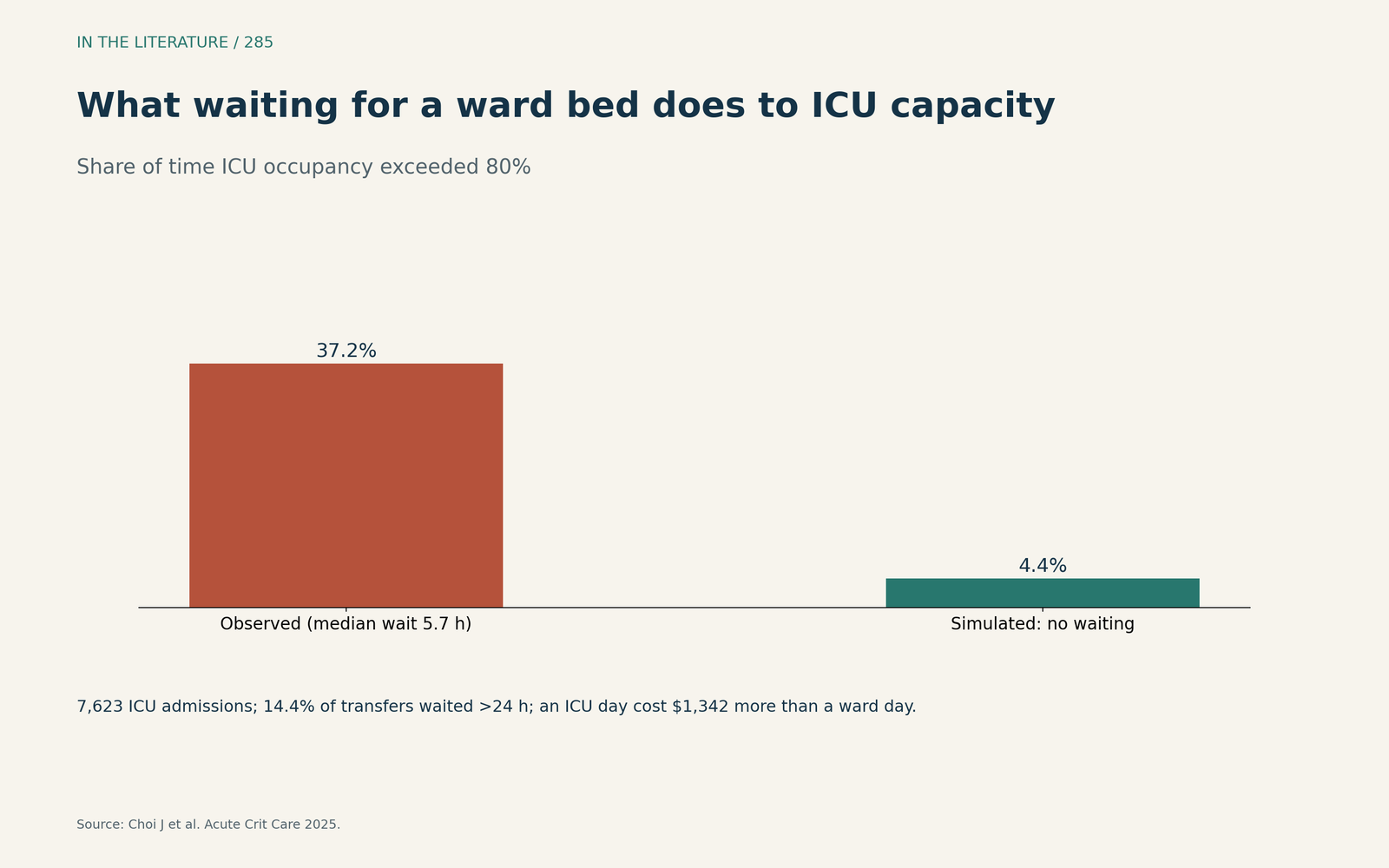
Figure 2. Waiting for ward beds kept the ICU above 80% occupancy far more often. Data from Choi et al.[3] View larger.

The other side: strain and readmission
In a national Australian registry (Pilcher et al., Crit Care Med 2023), discharge delay was defined as more than 12 hours after the patient was ready to leave the ICU, and among ICU survivors, 43,396 (16.3%) had discharge delay. Higher ICU strain was associated with less discharge delay (OR 0.58), and the authors suggest strain may promote flow efficiency at the cost of worse patient outcomes.[4]
The pooled rate of ICU readmission after cardiac surgery was 4.9%, and median in-hospital mortality was 15.4% in readmitted patients vs 1.4% in others; bed availability was not found to predict readmission (Kimani et al., J Cardiothorac Vasc Anesth 2021).[5] In a Vienna cohort, of 2,789 cardiac-surgery patients, 167 (6%) were readmitted to the ICU; readmitted patients were more likely to die (OR 5.3) and had longer initial ICU stays (median 5 vs 3 days) (Holaubek et al., J Cardiothorac Vasc Anesth 2022).[6]
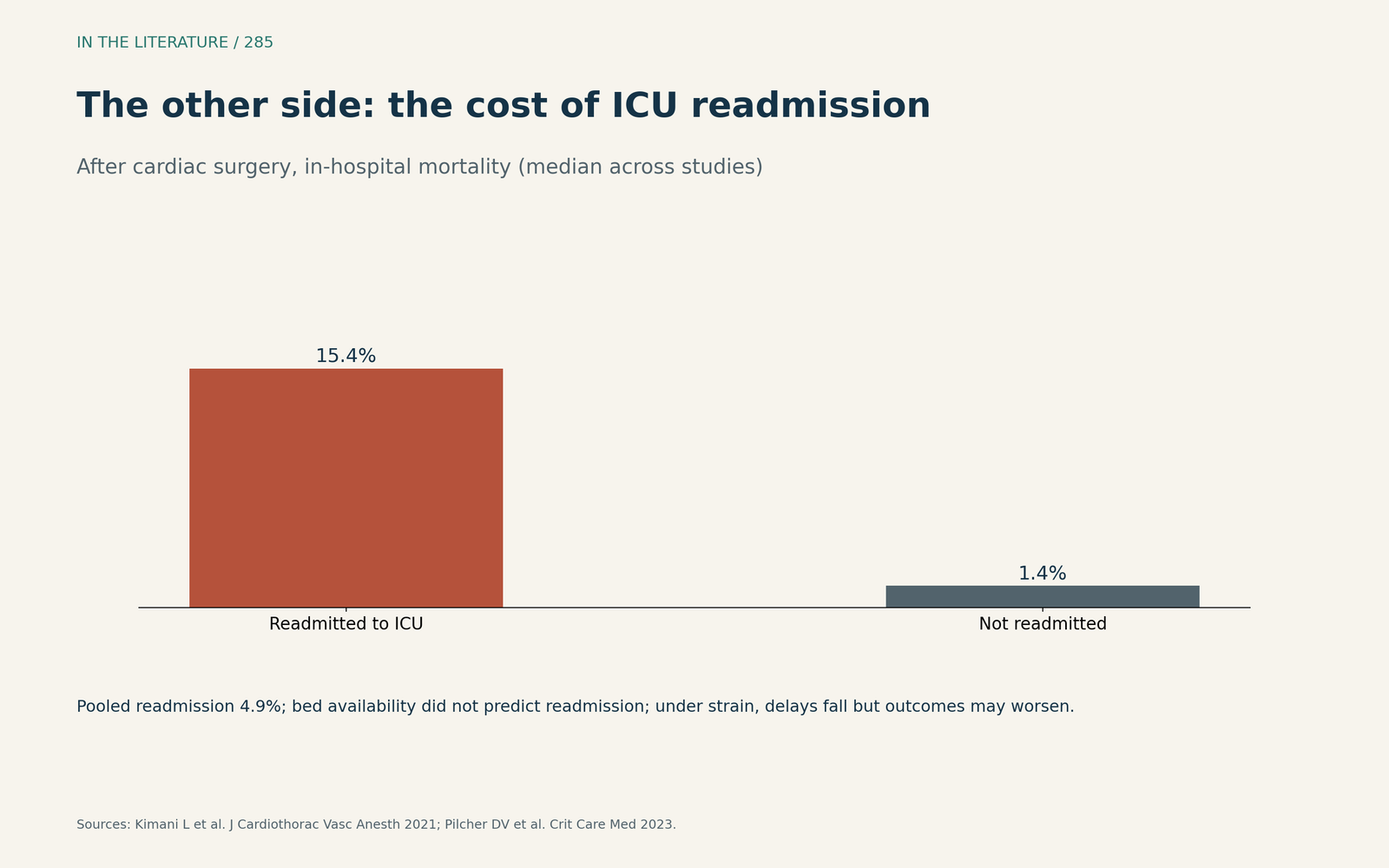
Figure 3. Readmission carries a much higher mortality than a smooth first discharge. Data from Kimani et al. and Pilcher et al.[4], [5] View larger.

Three takeaways
- A bed-driven delay in a stable patient mainly lengthens the stay; it was not linked to readmission or death in these cohorts.[1], [2]
- Delay is costly for the system: it blocks ICU beds and money that new admissions need.[3]
- Fix flow without pushing patients out early: readmission after premature discharge carries high mortality.[4], [5], [6]
References
- Diwan M, Mentz G, Romano M, Engoren M. Delayed discharge from the intensive care unit is associated with longer hospital lengths of stay. J Cardiothorac Vasc Anesth. 2023;37:232–236. doi:10.1053/j.jvca.2022.09.090
- Salimi S, Pandya K, Davis RJ, et al. Impact of intensive care unit discharge delay on liver transplantation outcomes. J Clin Med. 2022;11(9):2561. doi:10.3390/jcm11092561
- Choi J, Kim SH, Ko RE, et al. Simulating the effects of reducing transfer latency from the intensive care unit on intensive care unit bed utilization in a Korean tertiary hospital. Acute Crit Care. 2025;40(1):18–28. doi:10.4266/acc.002976
- Pilcher DV, Hensman T, Bihari S, et al. Measuring the impact of ICU strain on mortality, after-hours discharge, discharge delay, interhospital transfer, and readmission in Australia with the Activity Index. Crit Care Med. 2023;51(12):1623–1637. doi:10.1097/CCM.0000000000005985
- Kimani L, Howitt S, Tennyson C, et al. Predicting readmission to intensive care after cardiac surgery within index hospitalization: a systematic review. J Cardiothorac Vasc Anesth. 2021;35:2166–2179. doi:10.1053/j.jvca.2021.02.056
- Holaubek C, Winter F, Lesjak A, et al. Perioperative risk factors for intensive care unit readmissions and mortality after cardiac surgery. J Cardiothorac Vasc Anesth. 2022;36:2339–2343. doi:10.1053/j.jvca.2021.10.044