
ITL-5ce0791f0fc7
Juan Li, MD · Updated November 18, 2026
Key points
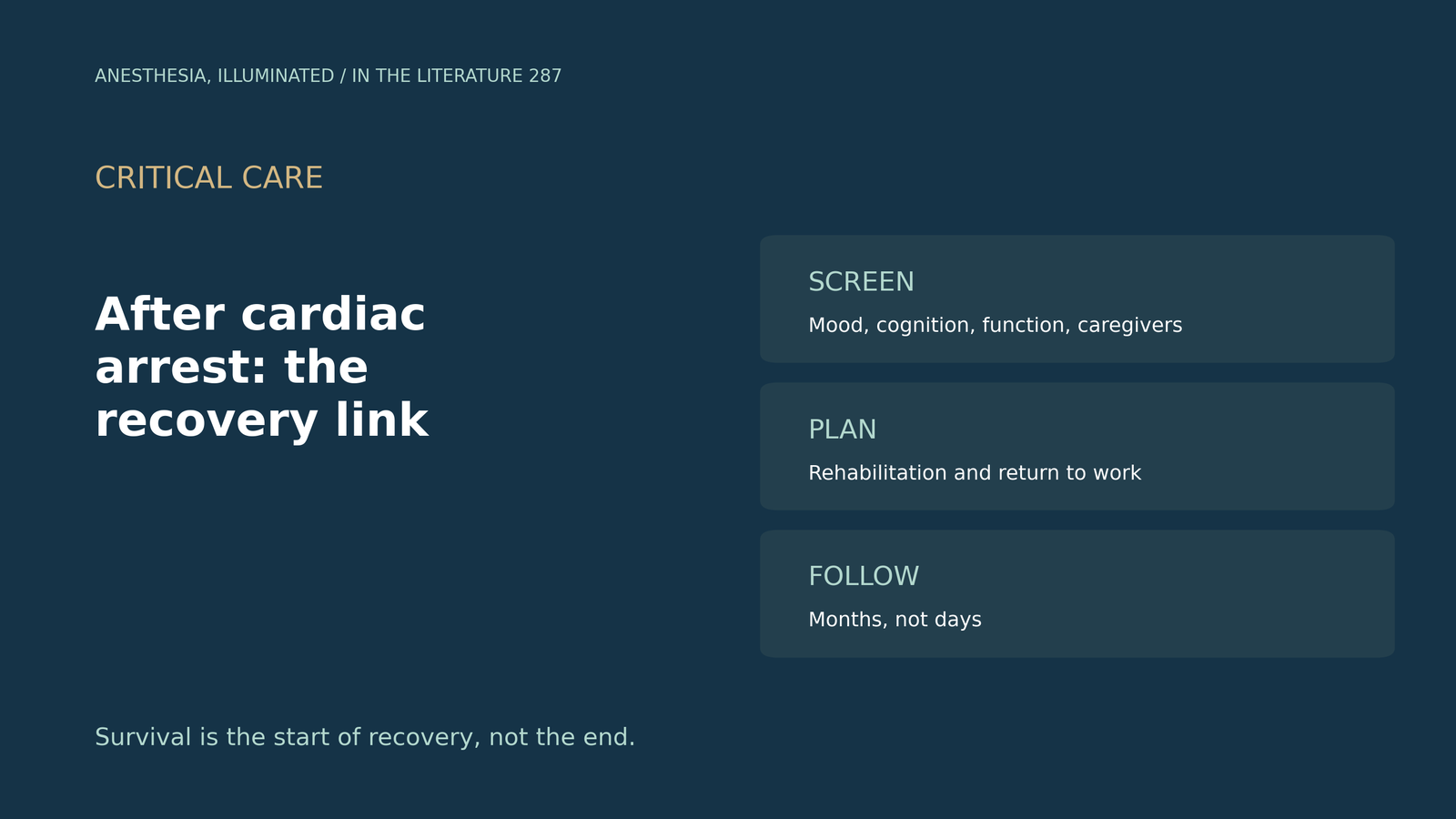
- Start before discharge. Survivors and caregivers should be screened for emotional distress and assessed for rehabilitation before going home.[1]
- The burden is broad. Cognitive impairment, depression, anxiety and PTSD are common, and return to work varies widely.[2]
- Interventions help a little. Structured psychological and cognitive support gave small gains in mood, with low-certainty evidence.[3]
- Systems lag behind. Follow-up is often limited to cardiology, and nearly half of working-age survivors did not return to work.[4]
- Children need long follow-up too. Quality of life should be measured up to a year, which takes dedicated time and staff.[5]
A patient who survived an out-of-hospital arrest is going home after ten days, neurologically "intact." What support should be arranged before and after discharge?
What the guideline recommends
The 2025 AHA post-cardiac arrest guideline (Hirsch et al., Circulation 2025) recommends that survivors and caregivers have structured assessment and treatment or referral for emotional distress before discharge (Class 1). Survivors should also have multimodal rehabilitation assessment and treatment for cognitive, physical, neurological and cardiopulmonary impairments before discharge.[1]
What survivors face
In the United States, more than 70,000 people survive sudden cardiac arrest each year (Seelhammer and Wittwer, J Cardiothorac Vasc Anesth 2021). Cognitive impairment affects 25% to 50% of survivors at six months; depression affects 8%–45%, anxiety 13%–42% and PTSD 19%–27%, and return-to-work rates vary between 13% and 76%. Most cognitive improvement occurs within three months of the arrest, and repeated, longer-term assessment of quality of life is recommended.[2]
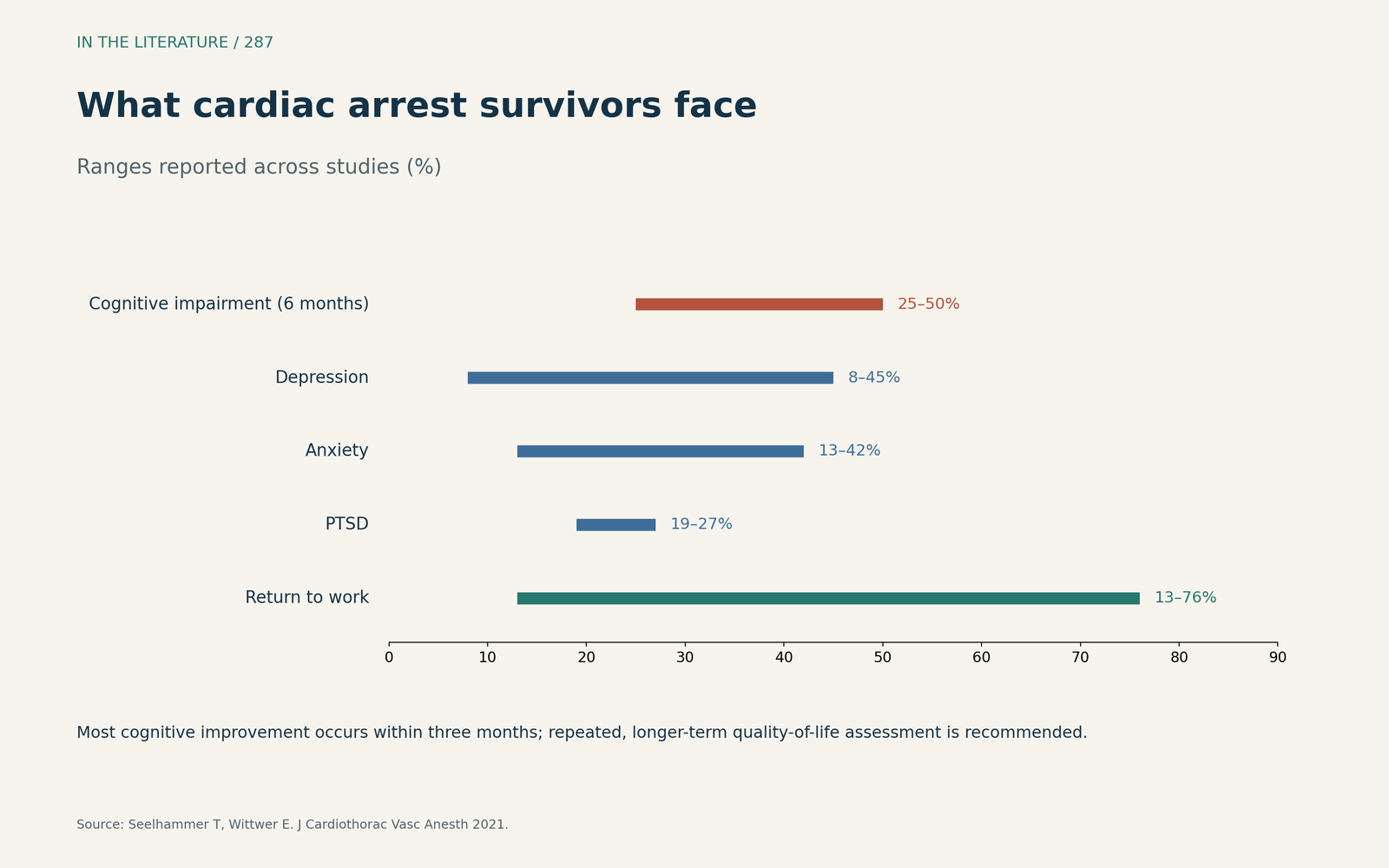
Figure 1. Survivors carry a wide range of cognitive and psychological problems. Data from Seelhammer and Wittwer.[2] View larger.

What interventions show
A systematic review (Ristagno et al., Resusc Plus 2026) found structured psychological or cognitive interventions tested in only 352 survivors, including two randomized trials. Small improvements were seen in anxiety, depression and post-traumatic stress, while cognition and participation in daily and social activities showed limited or short-term gains. An early nurse-led intervention gave minor improvements in anxiety and depression at 12 months. Cardiological and physical rehabilitation pathways are more established than psychological and cognitive support, and certainty of evidence ranged from low to very low.[3]
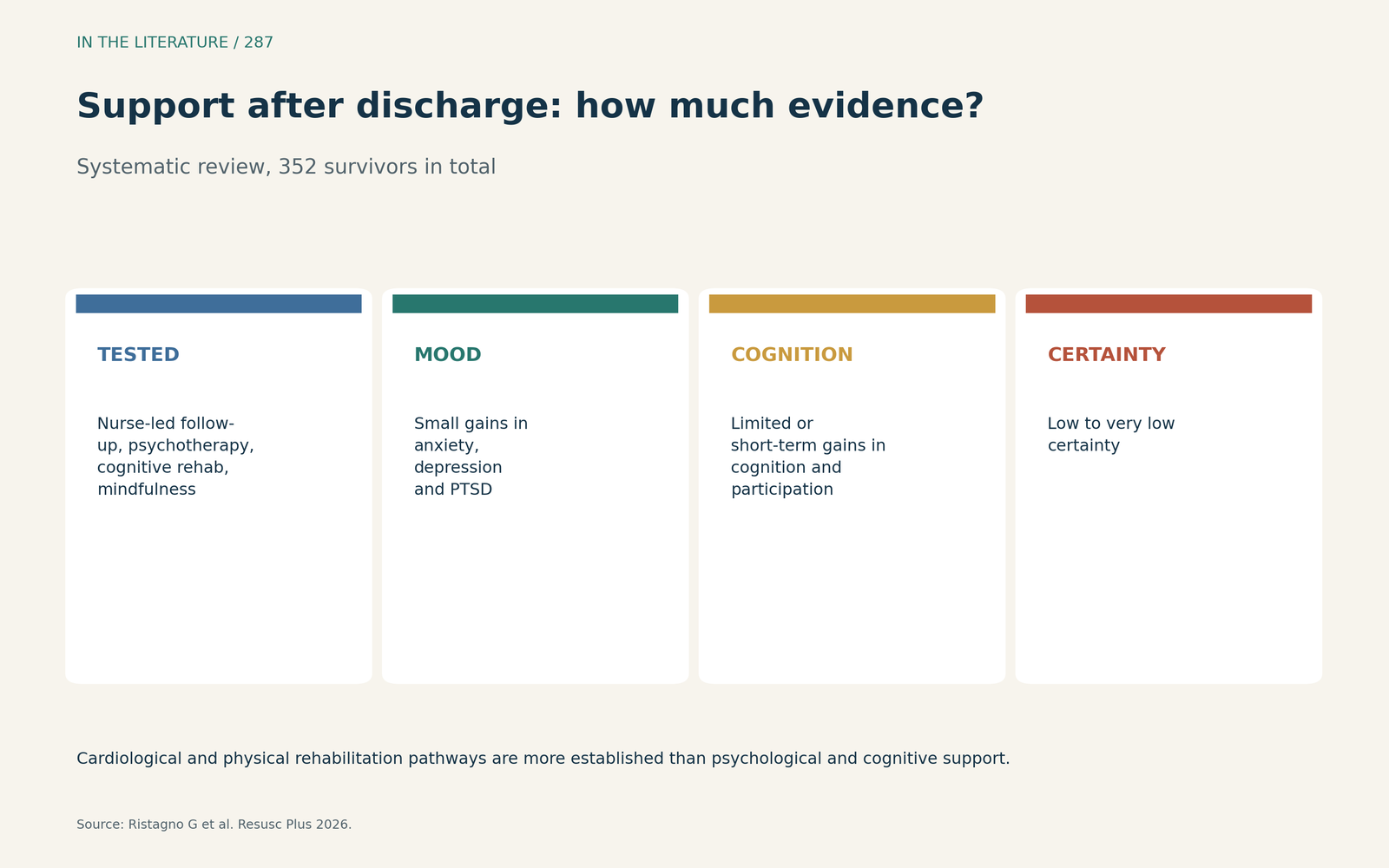
Figure 2. Tested interventions gave modest benefits, mainly for mood. Data from Ristagno et al.[3] View larger.

Systems and children
A scoping review (Kameliana et al., Malays J Med Sci 2026) found that nearly 50% of working-age survivors did not return to employment and that follow-up care was generally limited to cardiology appointments; it encourages every facility to develop a post-discharge pathway that includes PICS screening.[4] For children, recommended outcomes include health-related quality of life at 90 days and periodically up to one year, and long-term follow-up requires additional time and personnel (Chatterjee et al., J Cardiothorac Vasc Anesth 2021).[5]
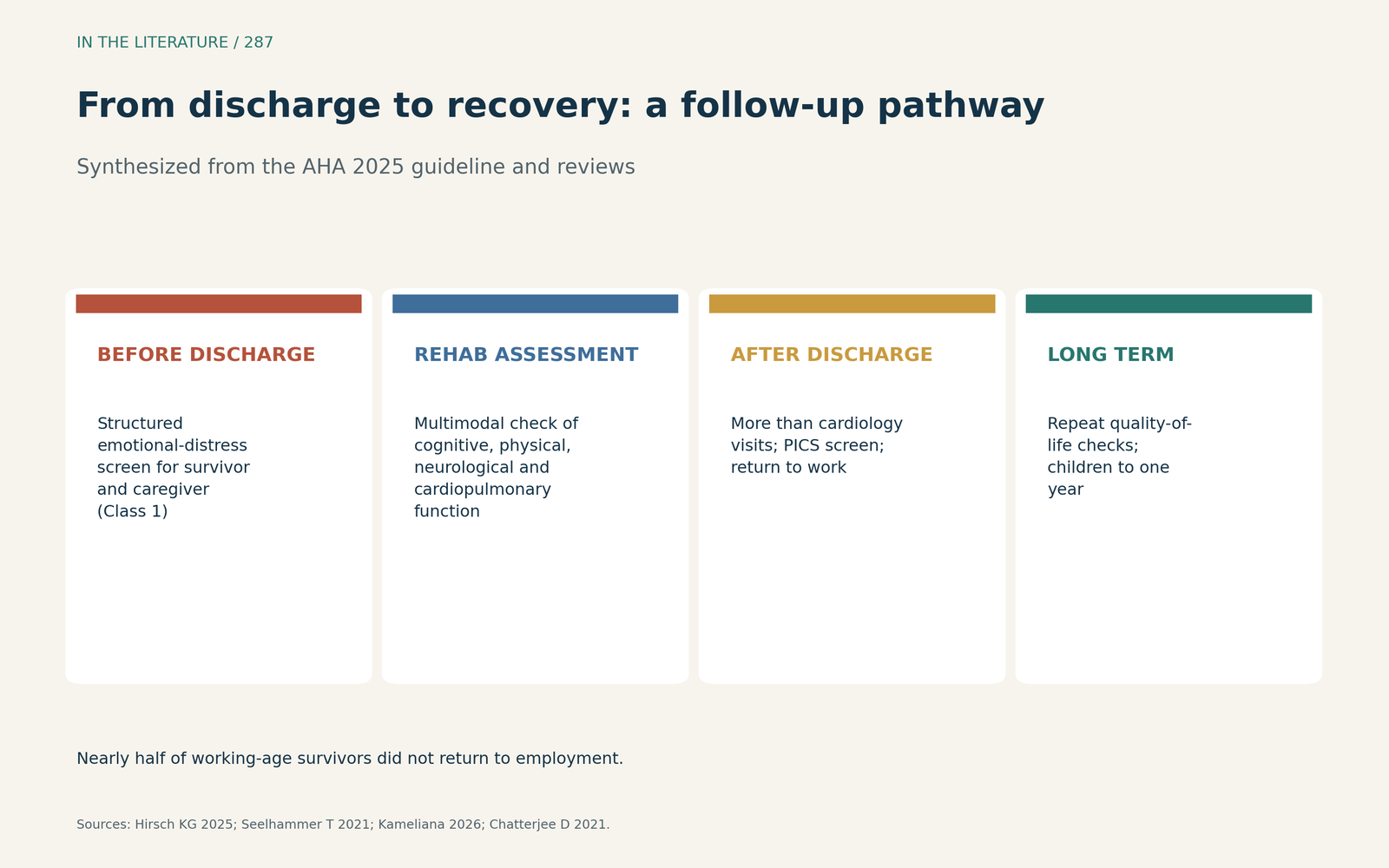
Figure 3. Screen and assess before discharge, then follow mood, cognition, function and work for months. Synthesized from Hirsch et al., Seelhammer and Wittwer, Kameliana et al. and Chatterjee et al.[1], [2], [4], [5] View larger.

Three takeaways
- Before discharge, screen survivor and caregiver for emotional distress and assess cognitive, physical and cardiopulmonary function.[1]
- Expect cognitive and psychological problems, and reassess over months rather than once.[2], [5]
- Offer psychological and rehabilitation support and a clear pathway beyond cardiology follow-up, while recognising the evidence is still thin.[3], [4]
References
- Hirsch KG, Amorim E, Coppler PJ, et al. Part 11: post-cardiac arrest care: 2025 American Heart Association guidelines for cardiopulmonary resuscitation and emergency cardiovascular care. Circulation. 2025;152(suppl 2):S673–S718. doi:10.1161/CIR.0000000000001375
- Seelhammer T, Wittwer E. Survivorship after sudden cardiac arrest: establishing a framework for understanding and care optimization. J Cardiothorac Vasc Anesth. 2021;35:368–373. doi:10.1053/j.jvca.2020.09.134
- Ristagno G, Cerchiari E, Madotto F, et al. Psychological and cognitive support after cardiac arrest: a systematic review. Resusc Plus. 2026;31:101450. doi:10.1016/j.resplu.2026.101450
- Kameliana, Wihastuti TA, Suryanto. Recovery phase in the chain of survival in cardiac arrest patients: scoping review. Malays J Med Sci. 2026;33(1):27–40. doi:10.21315/mjms-10-2025-730
- Chatterjee D, Houska N, Barrett C, Ing RJ. Standardizing outcomes for survivors of pediatric cardiac arrests. J Cardiothorac Vasc Anesth. 2021;35:1927–1929. doi:10.1053/j.jvca.2021.01.048