ITL-ba0846866324
Juan Li, MD · Updated November 18, 2026
Key points
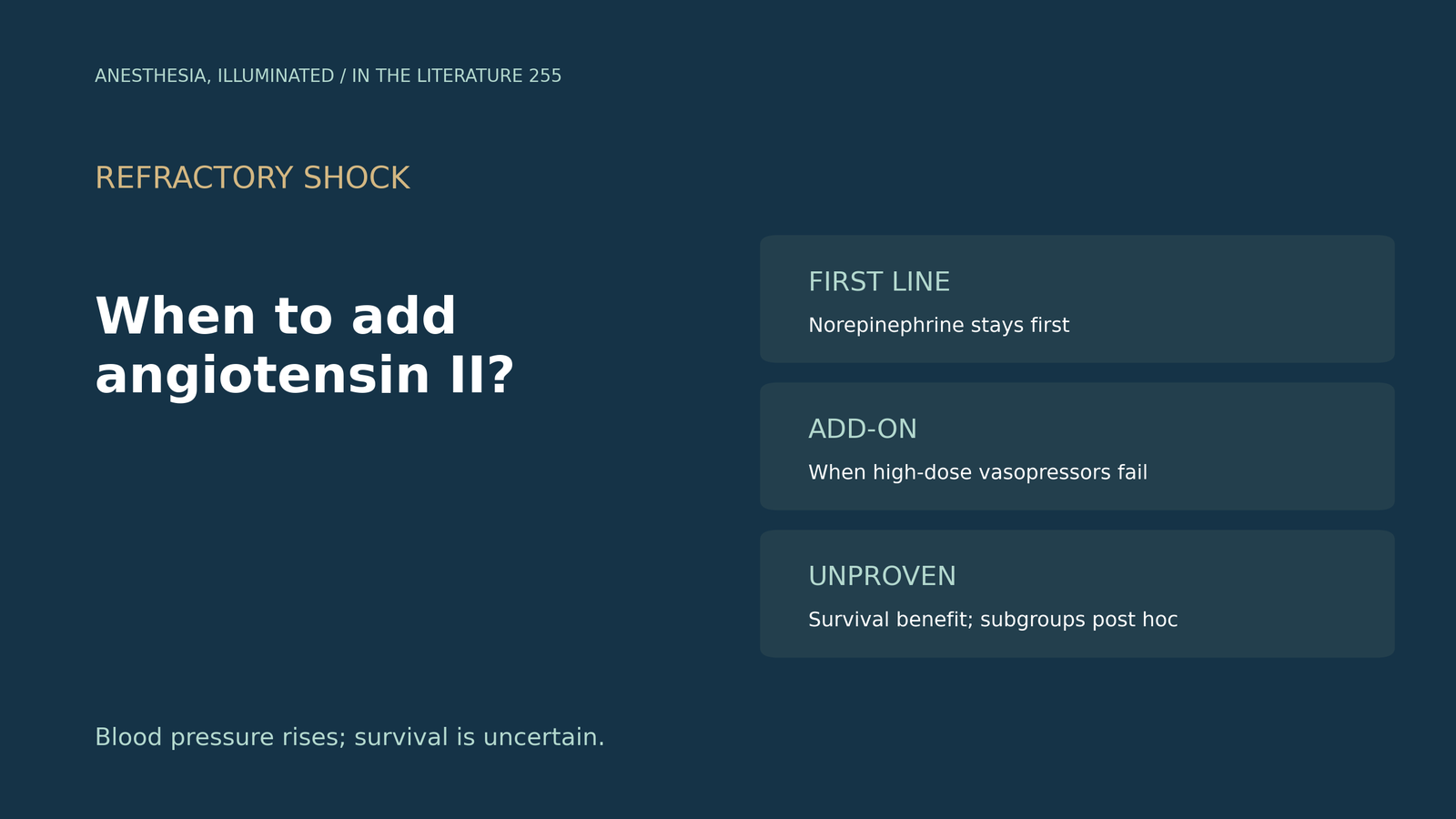
- It raises blood pressure. In ATHOS-3, the blood-pressure end point was reached in 69.9% with angiotensin II versus 23.4% with placebo.[1]
- Survival benefit is unproven. Day-28 death was 46.0% versus 53.8% (HR 0.78; P 0.12).[1]
- Not first line. The 2026 Surviving Sepsis guideline suggests norepinephrine as first line over vasopressin or angiotensin II.[2]
- Renin may identify responders. With renin above the median, 28-day mortality was 69.9% with placebo versus 51.1% with angiotensin II, in a post hoc analysis.[3]
- Lower doses and RRT are signals only. Exploratory subgroups at lower norepinephrine doses and on renal replacement therapy looked better, but these are hypothesis generating.[4], [5]
A patient with septic shock remains hypotensive on high-dose norepinephrine and vasopressin. Is this the time to add angiotensin II?
What ATHOS-3 and the guideline show
ATHOS-3 (Khanna et al., N Engl J Med 2017) analysed 321 patients with catecholamine-resistant vasodilatory shock, defined as needing more than 0.2 μg/kg/min of norepinephrine or equivalent. The blood-pressure end point was reached in 69.9% with angiotensin II versus 23.4% with placebo. Death by day 28 was 46.0% versus 53.8% (HR 0.78; P 0.12), a difference that was not significant. Serious adverse events occurred in 60.7% and 67.1%; the authors note that clinically important side effects cannot be excluded, and the trial was supported by the drug manufacturer.[1]
The Surviving Sepsis Campaign 2026 (Prescott et al., Intensive Care Med 2026) suggests norepinephrine as first line over vasopressin or angiotensin II. No RCT has compared angiotensin II with norepinephrine as first-line therapy; add-on RCTs with 341 patients gave a mortality RR of 0.85 (0.69 to 1.06; low certainty).[2]
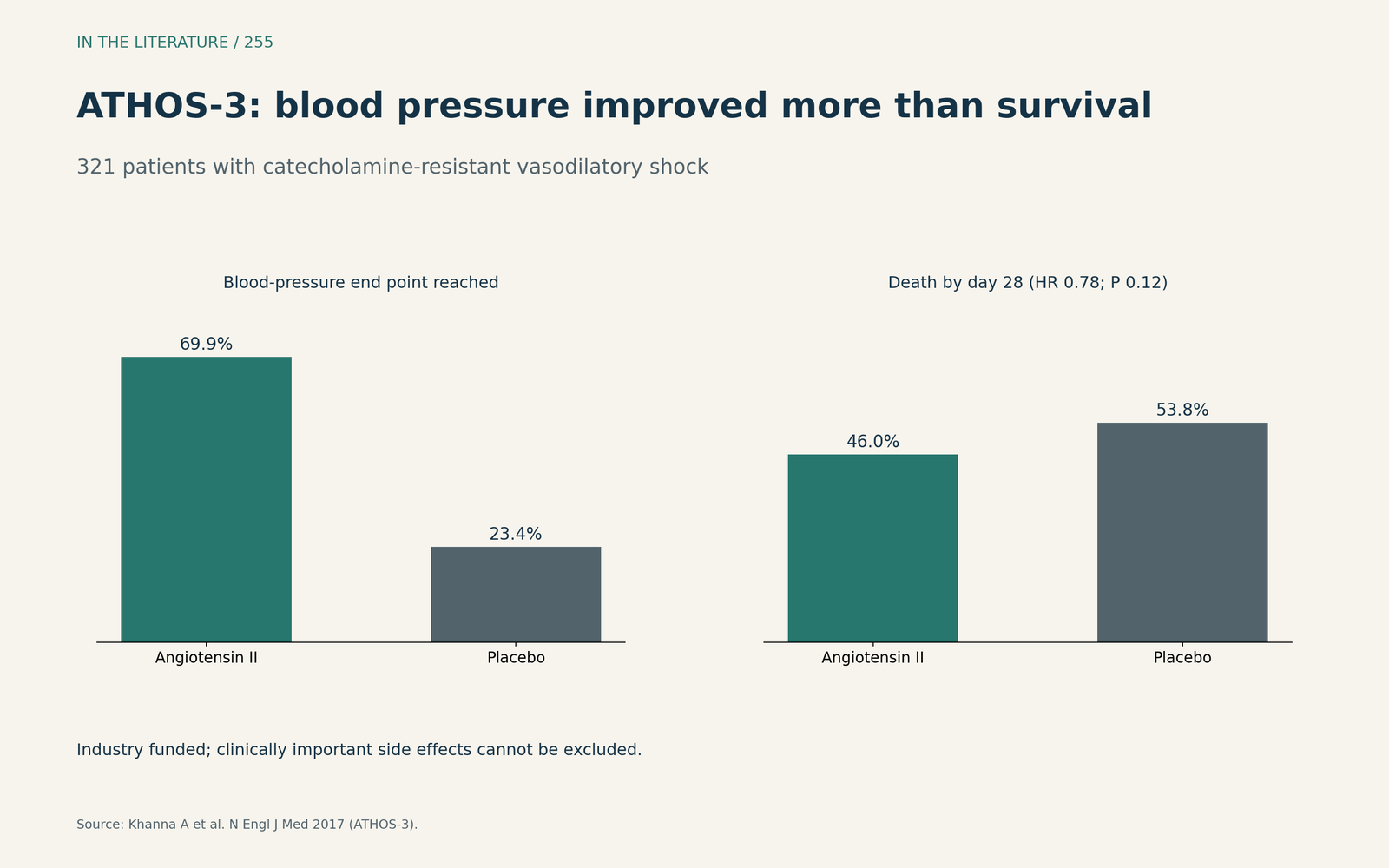
Figure 1. A large blood-pressure effect and a non-significant mortality difference. Data from ATHOS-3.[1] View larger.

Who may benefit: renin, dose and RRT
Renin was above normal in 194 of 255 ATHOS-3 patients (76%). With renin above the median, 28-day mortality was 69.9% with placebo versus 51.1% with angiotensin II; this analysis was post hoc (Bellomo et al., Am J Respir Crit Care Med 2020).[3] At norepinephrine-equivalent doses of 0.25 μg/kg/min or less, angiotensin II was associated with half the 28-day mortality risk (HR 0.509), but the authors state that no conclusions about timing can be drawn (Wieruszewski et al., Crit Care 2023).[4] In patients on renal replacement therapy, 28-day survival was 53% with angiotensin II versus 30% with placebo, and by day 7, 38% versus 15% had stopped RRT; these findings are hypothesis generating only (Tumlin et al., Crit Care Med 2018).[5]
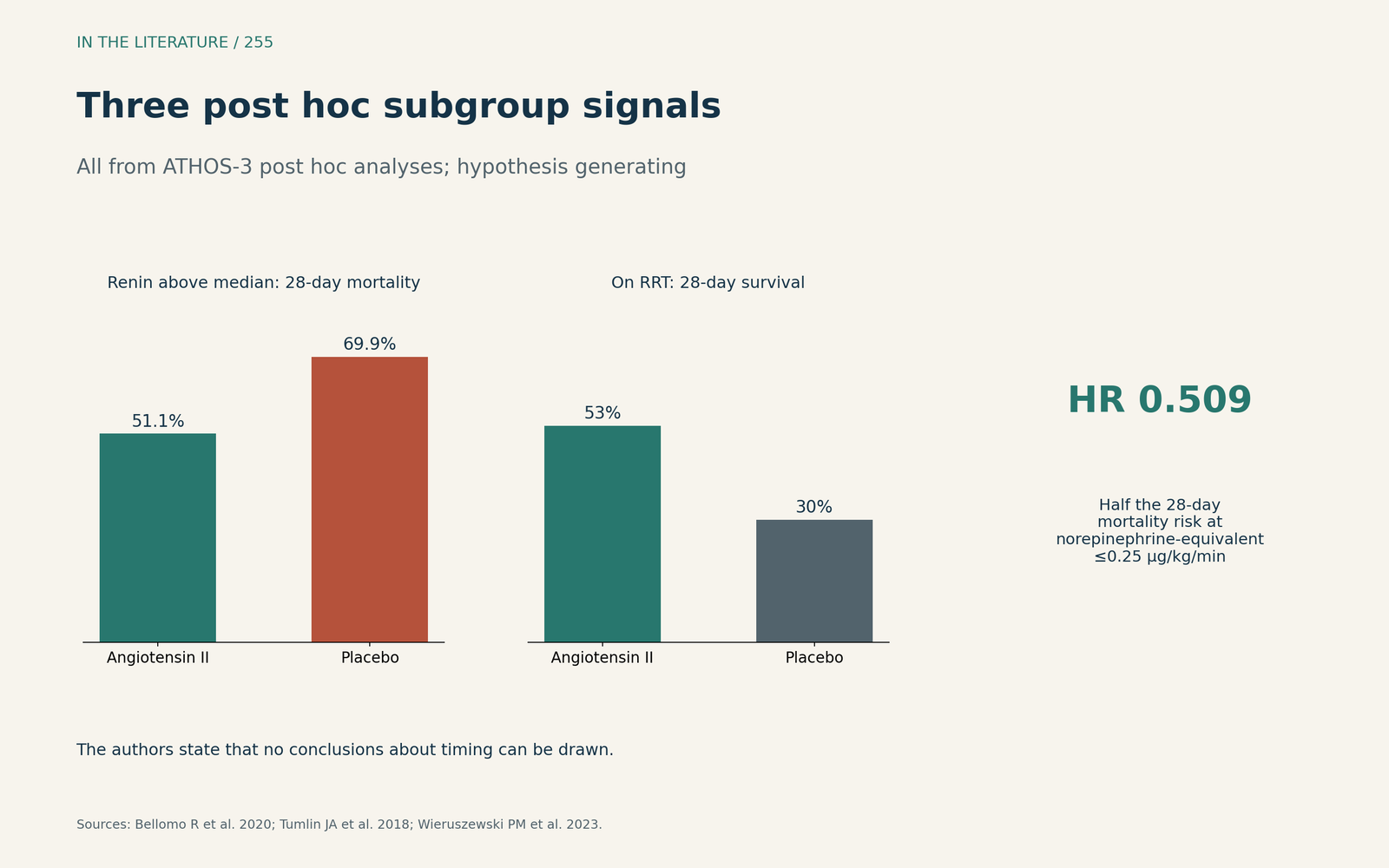
Figure 2. Three post hoc signals from ATHOS-3. Data from Bellomo et al., Wieruszewski et al. and Tumlin et al.[3], [4], [5] View larger.

Expert opinion and recent evidence
An Italian expert panel (Landoni et al., J Anesth Analg Crit Care 2024) considers adding angiotensin II at 20 ng/kg/min a valid option when norepinephrine exceeds 0.25–0.5 μg/kg/min, while calling dosing and timing a knowledge gap with unclear survival benefit in trials.[6] In a propensity-weighted cohort (Busse et al., Ann Intensive Care 2025), with 275 patients on angiotensin II and 536 on conventional therapy, angiotensin II was associated with lower 30-day mortality (OR 0.74, 0.55 to 0.99), but not at background norepinephrine above 0.6; as a retrospective study, it cannot infer causality.[7] Across 51 RCTs with 5715 patients (Kotani et al., Crit Care 2024), no individual non-adrenergic vasopressor showed a significant survival benefit in septic shock; lower use of renal replacement therapy was mainly driven by vasopressin and angiotensin II.[8] An editorial on the expert consensus (Pospishil et al., J Cardiothorac Vasc Anesth 2025) adds that there are no well-established guidelines on when to start angiotensin II, and that it carries a black box warning for increased thromboembolism risk.[9]
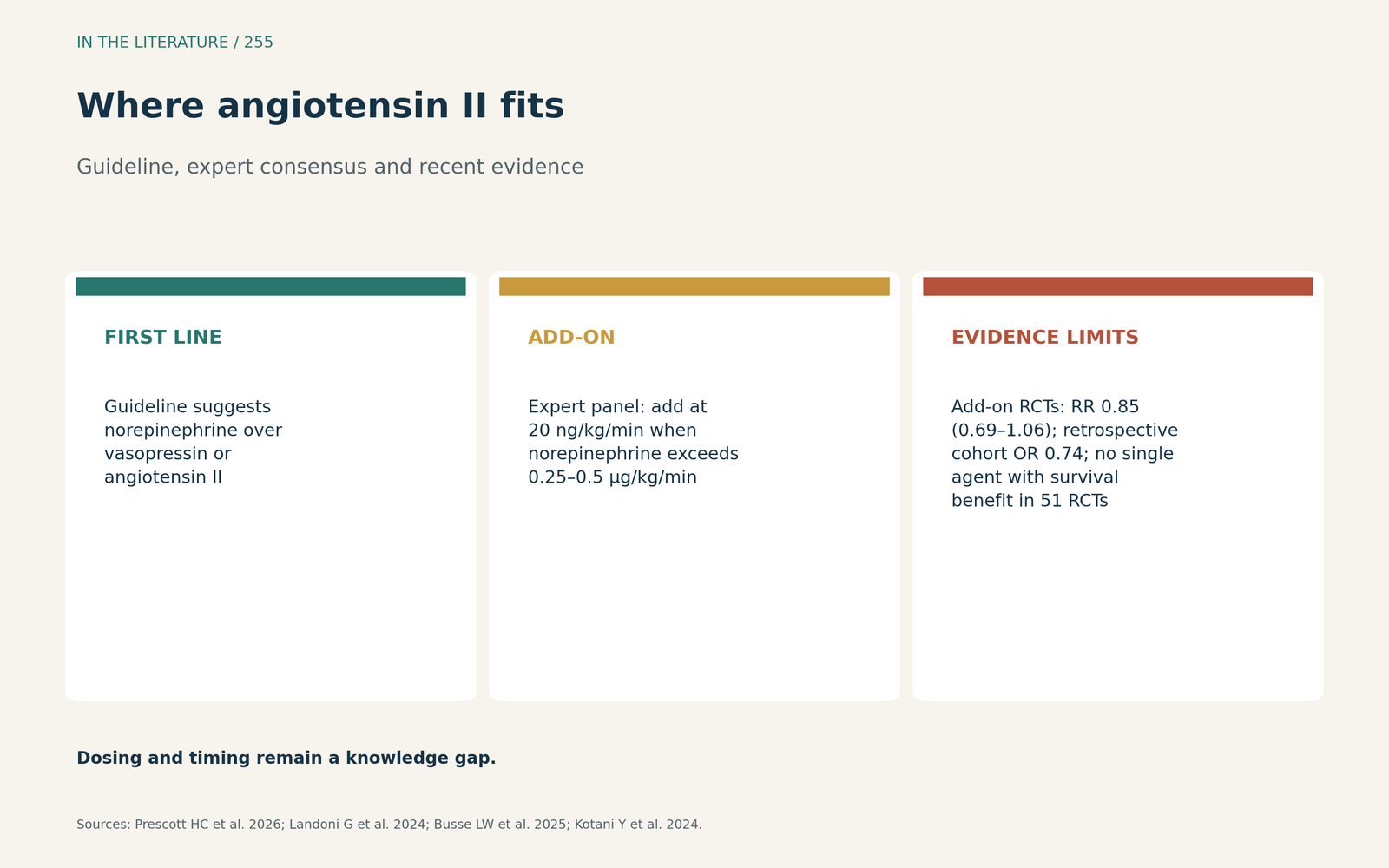
Figure 3. An add-on for refractory shock, not a first-line agent. Synthesized from Prescott et al., Landoni et al., Busse et al. and Kotani et al.[2], [6], [7], [8] View larger.

Three takeaways
- Keep norepinephrine first line; consider angiotensin II as an add-on when shock persists despite high-dose vasopressors.[1], [2], [6]
- Expect a blood-pressure response, not proven survival benefit.[1], [8]
- High renin, lower norepinephrine doses and renal replacement therapy are post hoc signals, not selection rules.[3], [4], [5]
References
- Khanna A, English SW, Wang XS, et al. Angiotensin II for the treatment of vasodilatory shock. N Engl J Med. 2017;377(5):419–430. doi:10.1056/NEJMoa1704154
- Prescott HC, Antonelli M, Alhazzani W, et al. Surviving Sepsis Campaign: international guidelines for management of sepsis and septic shock 2026. Intensive Care Med. 2026;52:863–936. doi:10.1007/s00134-026-08361-1
- Bellomo R, Forni LG, Busse LW, et al. Renin and survival in patients given angiotensin II for catecholamine-resistant vasodilatory shock: a clinical trial. Am J Respir Crit Care Med. 2020;202(9):1253–1261. doi:10.1164/rccm.201911-2172OC
- Wieruszewski PM, Bellomo R, Busse LW, et al. Initiating angiotensin II at lower vasopressor doses in vasodilatory shock: an exploratory post-hoc analysis of the ATHOS-3 clinical trial. Crit Care. 2023;27(1):175. doi:10.1186/s13054-023-04446-1
- Tumlin JA, Murugan R, Deane AM, et al. Outcomes in patients with vasodilatory shock and renal replacement therapy treated with intravenous angiotensin II. Crit Care Med. 2018;46(6):949–957. doi:10.1097/CCM.0000000000003092
- Landoni G, Cortegiani A, Bignami E, et al. The use of angiotensin II for the management of distributive shock: expert consensus statements. J Anesth Analg Crit Care. 2024;4:56. doi:10.1186/s44158-024-00186-y
- Busse LW, ten Lohuis C, Xu H, et al. Angiotensin II, conventional vasopressor therapy, and mortality in shock: a large, multicenter, propensity score-weighted analysis. Ann Intensive Care. 2025;15:104. doi:10.1186/s13613-025-01522-3
- Kotani Y, Belletti A, D’Amico F, et al. Non-adrenergic vasopressors for vasodilatory shock or perioperative vasoplegia: a meta-analysis of randomized controlled trials. Crit Care. 2024;28:439. doi:10.1186/s13054-024-05212-7
- Pospishil L, Kinney DA, Notarianni AP. The latest consensus on angiotensin II: still more work to be done. J Cardiothorac Vasc Anesth. 2025;39(1):4–7. doi:10.1053/j.jvca.2024.10.034