ITL-ddf19942a0fc
Juan Li, MD · Updated November 18, 2026
Key points
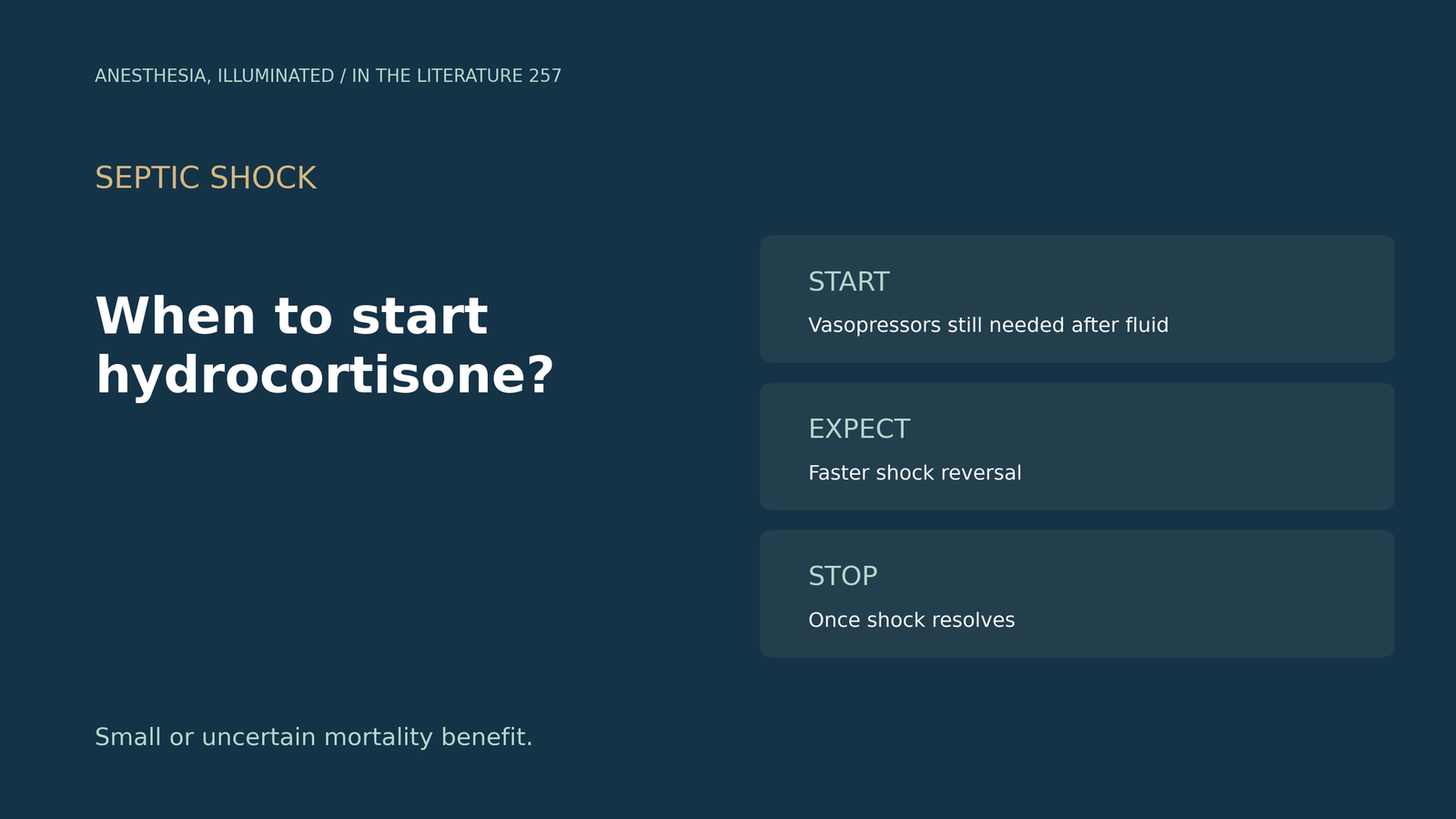
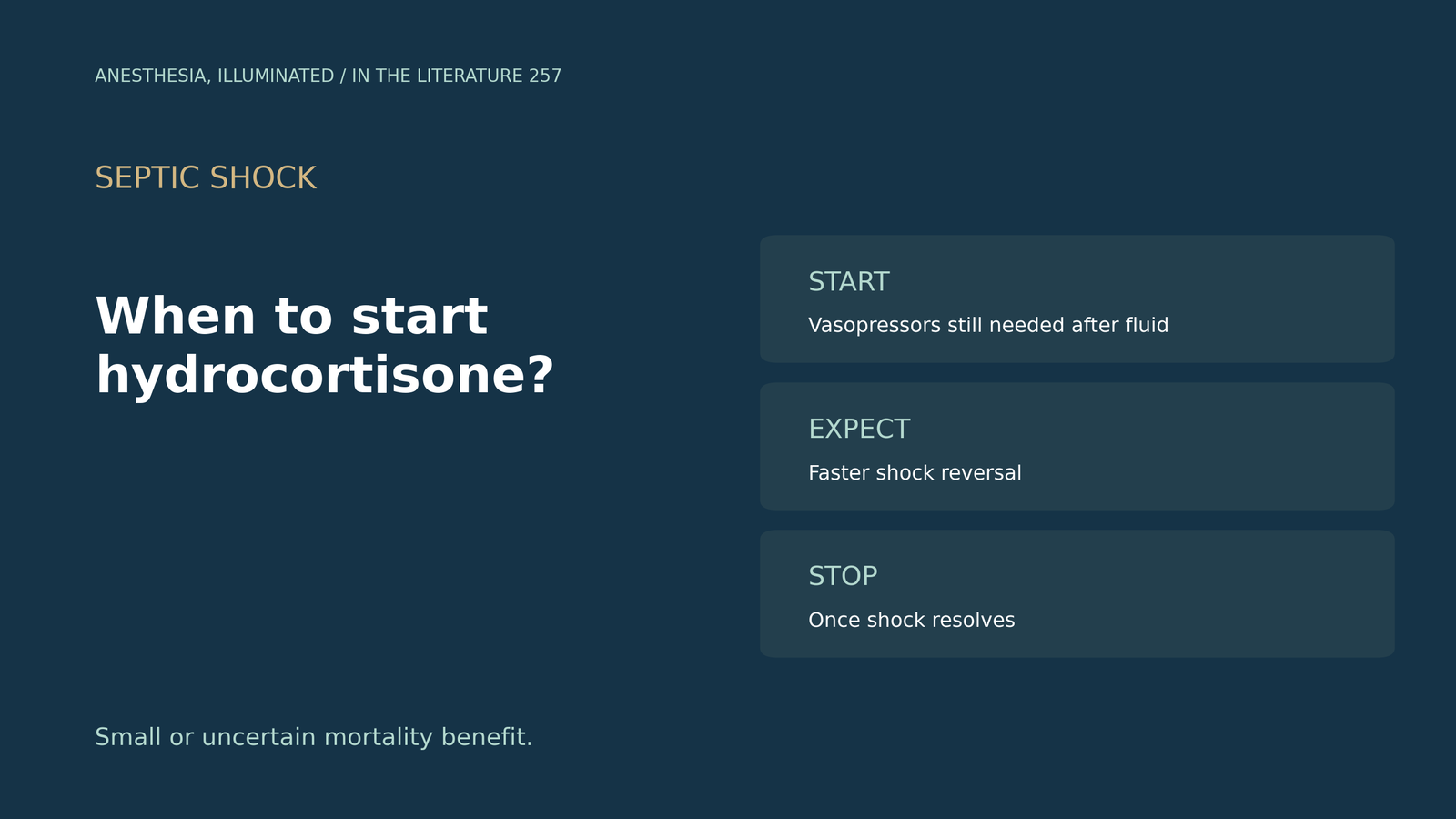
- Guidelines say yes, conditionally. The 2026 Surviving Sepsis guideline suggests IV corticosteroids for adults with septic shock (conditional, low certainty).[1] The SCCM 2024 update agrees and recommends against high-dose, short courses.[2]
- Faster reversal, uncertain survival. In ADRENAL, hydrocortisone sped shock resolution, but 90-day mortality was 27.9% versus 28.8%.[3]
- Pneumonia data conflict. An APROCCHSS subgroup found fewer deaths in pneumonia-related shock.[4] REMAP-CAP stopped hydrocortisone in severe pneumonia for futility.[5]
- Start for persistent vasopressor need, stop when shock resolves. Steroids are not part of initial resuscitation, and no ACTH test is needed.[6]
A patient with septic shock still needs rising norepinephrine several hours after fluids and antibiotics. Is it time to start hydrocortisone?
Guideline position
The Surviving Sepsis Campaign 2026 (Prescott et al., Intensive Care Med 2026) suggests IV corticosteroids for adults with septic shock (conditional, low certainty). A meta-analysis of 45 RCTs with 9543 patients suggested a small reduction in 28-day mortality (RR 0.92, 0.83 to 1.01), limited by imprecision and inconsistency.[1] The SCCM 2024 focused update (Chaudhuri et al., Crit Care Med 2024) also suggests corticosteroids for septic shock (conditional, low certainty) and recommends against high-dose, short-course regimens (above 400 mg/d for under 3 d). Corticosteroids probably reduce short-term mortality (RR 0.93, 0.88 to 0.98) and increase shock reversal (RR 1.24, 1.11 to 1.38; high certainty), but may increase neuromuscular weakness (RR 1.21, 1.01 to 1.45) and hyperglycemia (RR 1.13, 1.08 to 1.18).[2] An earlier meta-analysis of 37 RCTs with 9564 patients (Fang et al., JAMA Intern Med 2019) likewise associated corticosteroids with lower 28-day mortality (RR 0.90, 0.82–0.98).[7]
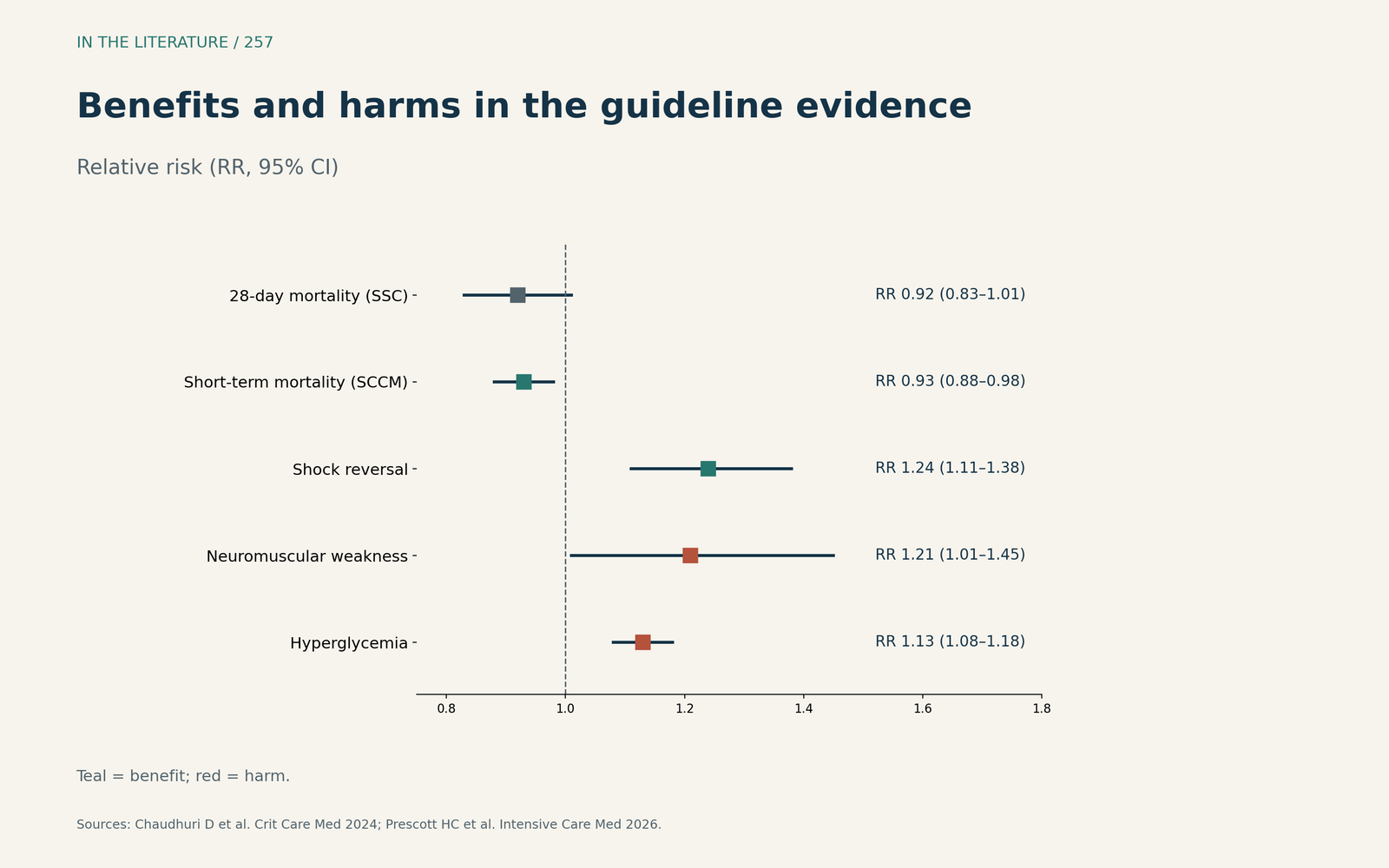
Figure 1. Shock reversal improves clearly; mortality effects are small. Data from the SCCM 2024 update and the Surviving Sepsis guideline.[2], [1] View larger.

What the trials show
ADRENAL (Venkatesh et al., N Engl J Med 2018) gave a continuous hydrocortisone infusion of 200 mg per day in septic shock. Among 3800 patients, 90-day mortality was 27.9% with hydrocortisone versus 28.8% with placebo, a non-significant difference, but shock resolved faster (median 3 vs 4 days).[3] APROCCHSS itself (Annane et al., N Engl J Med 2018), which gave hydrocortisone 50 mg every 6 hours with daily fludrocortisone for 7 days without tapering, found 90-day mortality of 43.0% versus 49.1% with placebo.[8] In a subgroup analysis of APROCCHSS (Heming et al., Lancet Respir Med 2024), 90-day deaths in pneumonia-related septic shock were 39% with hydrocortisone plus fludrocortisone versus 51% with placebo, with no significant effect outside pneumonia.[4] In contrast, REMAP-CAP (Intensive Care Med 2025) stopped a fixed 7-day hydrocortisone course in severe pneumonia for futility; 90-day mortality was 15% versus 9.8%, smaller benefits and possible harm were not excluded, and in vasopressor-dependent shock not due to influenza the adjusted OR for death was 1.53 (0.76 to 3.29).[5]
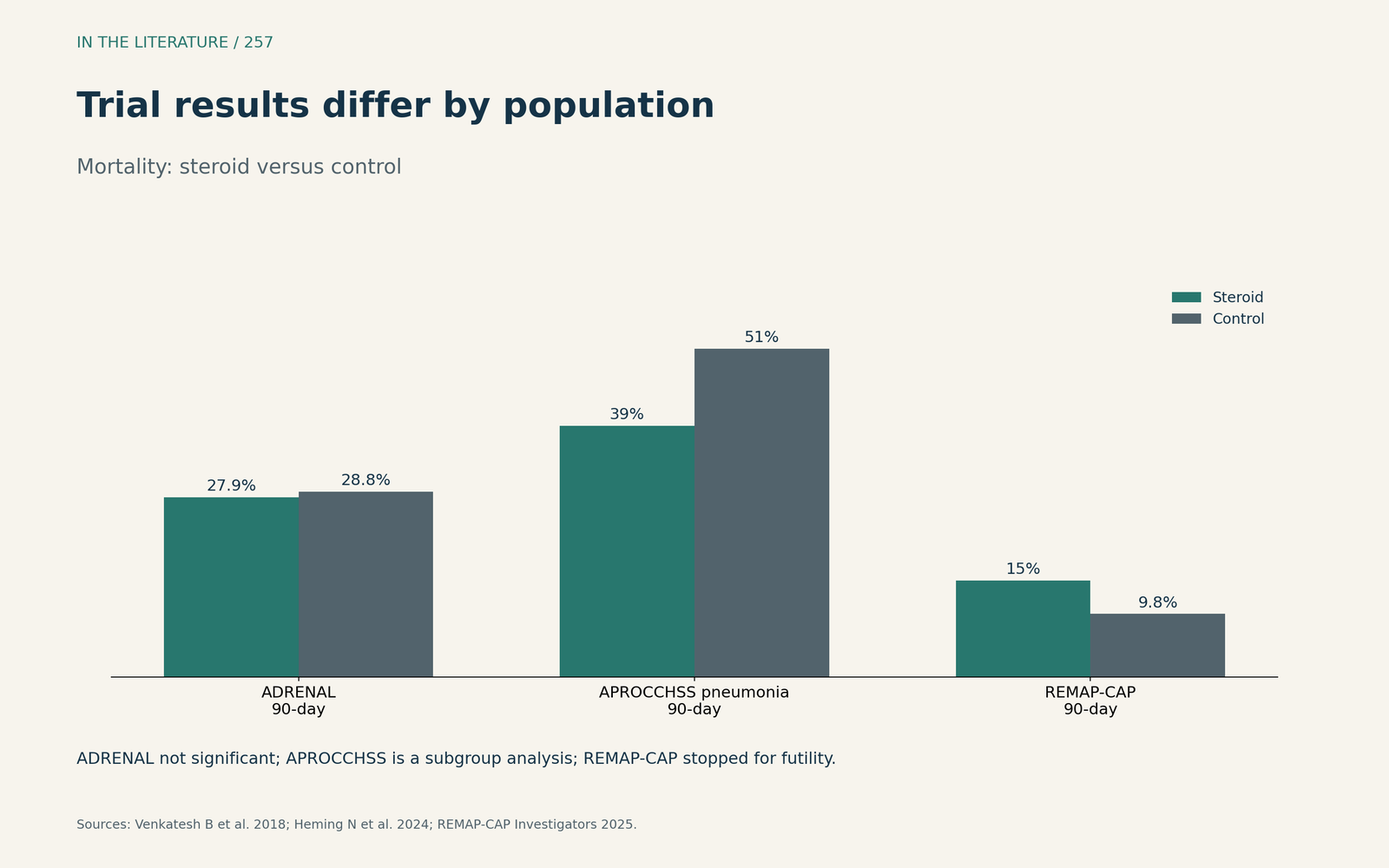
Figure 2. Mortality effects vary across trials and subgroups. Data from ADRENAL, the APROCCHSS pneumonia subgroup and REMAP-CAP.[3], [4], [5] View larger.

When to start and stop
A 2026 review (Chang et al., Eur J Clin Pharmacol 2026) notes that corticosteroids reduce vasopressor requirements even without consistent mortality benefit. Steroids are considered for patients who need vasopressors despite adequate fluid, not as part of initial resuscitation; RCTs do not support delaying them for an ACTH stimulation test; most trials stopped them once shock resolved; and a lack of response within 48–72 h warrants re-evaluation.[6] Timing in practice varies: among Surviving Sepsis panel members who use steroids, 90% prescribe 200 mg hydrocortisone-equivalent per day, and 34% start at norepinephrine below 0.2 μg/kg/min.[1] Whether fludrocortisone adds anything to hydrocortisone remains debatable (Nethathe et al., Anesthesiology 2020).[9]
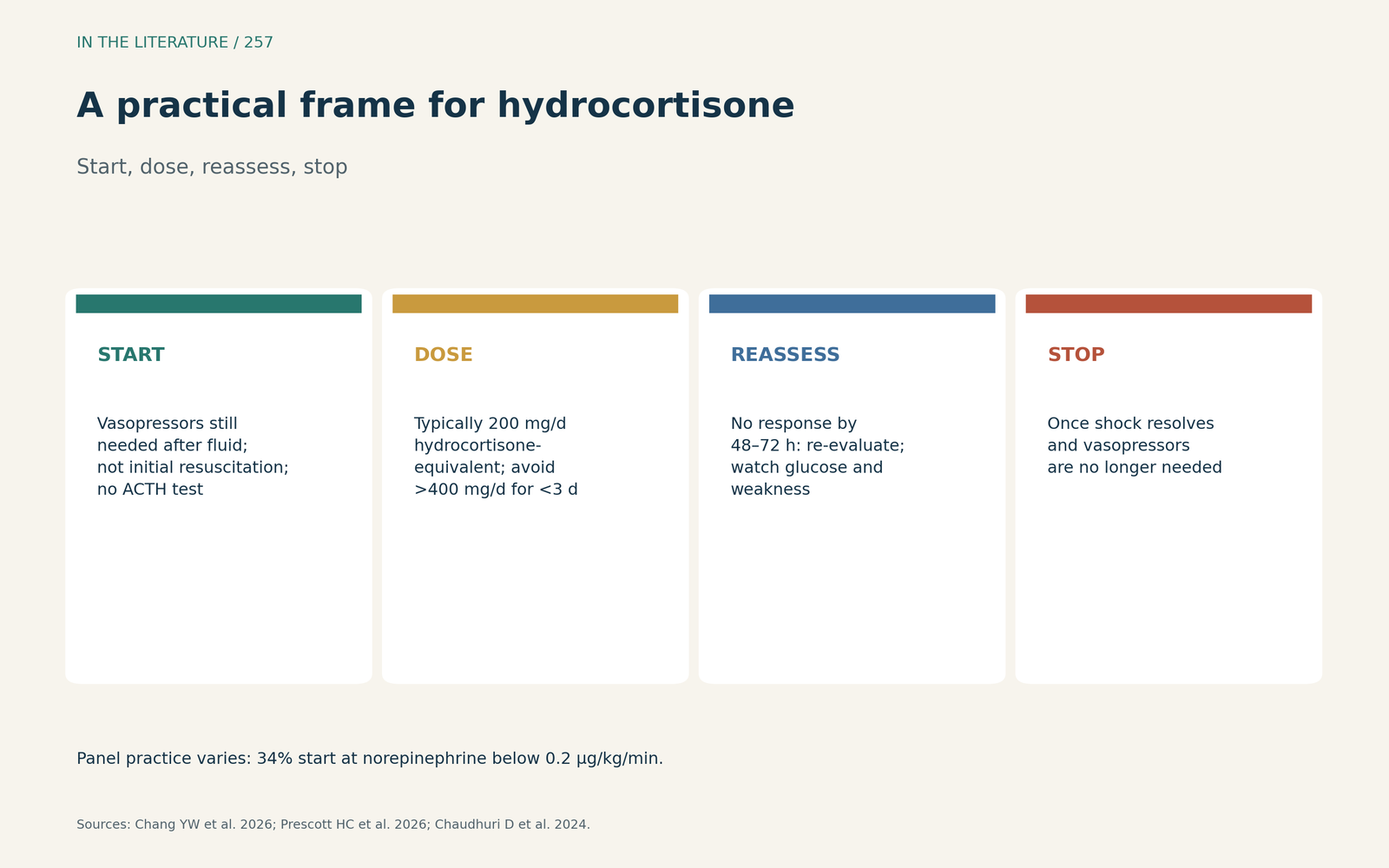
Figure 3. Start for persistent vasopressor need, reassess, stop when shock resolves. Synthesized from Chang et al., the Surviving Sepsis guideline and the SCCM update.[6], [1], [2] View larger.

Three takeaways
- Consider hydrocortisone when septic shock still needs vasopressors after fluid resuscitation, not as initial resuscitation.[1], [6]
- Expect faster shock reversal; mortality benefit is small or uncertain, and pneumonia data conflict.[2], [3], [4], [5]
- Avoid high-dose short courses, skip ACTH testing, watch glucose and weakness, and stop once shock resolves.[2], [6]
References
- Prescott HC, Antonelli M, Alhazzani W, et al. Surviving Sepsis Campaign: international guidelines for management of sepsis and septic shock 2026. Intensive Care Med. 2026;52:863–936. doi:10.1007/s00134-026-08361-1
- Chaudhuri D, Nei AM, Rochwerg B, et al. 2024 focused update: guidelines on use of corticosteroids in sepsis, acute respiratory distress syndrome, and community-acquired pneumonia. Crit Care Med. 2024;52(5):e219–e233. doi:10.1097/CCM.0000000000006172
- Venkatesh B, Finfer S, Cohen J, et al. Adjunctive glucocorticoid therapy in patients with septic shock. N Engl J Med. 2018;378(9):797–808. doi:10.1056/NEJMoa1705835
- Heming N, Renault A, Kuperminc E, et al. Hydrocortisone plus fludrocortisone for community acquired pneumonia-related septic shock: a subgroup analysis of the APROCCHSS phase 3 randomised trial. Lancet Respir Med. 2024;12(5):366–374. doi:10.1016/S2213-2600(23)00430-7
- REMAP-CAP Investigators; Heming N, Berry L, Lorenzi E, et al. Effect of hydrocortisone on mortality in patients with severe community-acquired pneumonia: the REMAP-CAP Corticosteroid Domain randomized clinical trial. Intensive Care Med. 2025;51(4):665–680. doi:10.1007/s00134-025-07861-w
- Chang YW, Chung CF, Lee SH, et al. Systemic corticosteroids in critical illness: an evidence-based framework for clinical decision-making. Eur J Clin Pharmacol. 2026;82(11):282. doi:10.1007/s00228-026-04211-7
- Fang F, Zhang Y, Tang J, et al. Association of corticosteroid treatment with outcomes in adult patients with sepsis: a systematic review and meta-analysis. JAMA Intern Med. 2019;179(2):213–223. doi:10.1001/jamainternmed.2018.5849
- Annane D, Renault A, Brun-Buisson C, et al. Hydrocortisone plus fludrocortisone for adults with septic shock. N Engl J Med. 2018;378(9):809–818. doi:10.1056/NEJMoa1705716
- Nethathe GD, Cohen J, Lipman J, et al. Mineralocorticoid dysfunction during critical illness: a review of the evidence. Anesthesiology. 2020;133(2):439–457. doi:10.1097/ALN.0000000000003365