
ITL-6c0e12667318
Juan Li, MD · Updated November 18, 2026
Key points
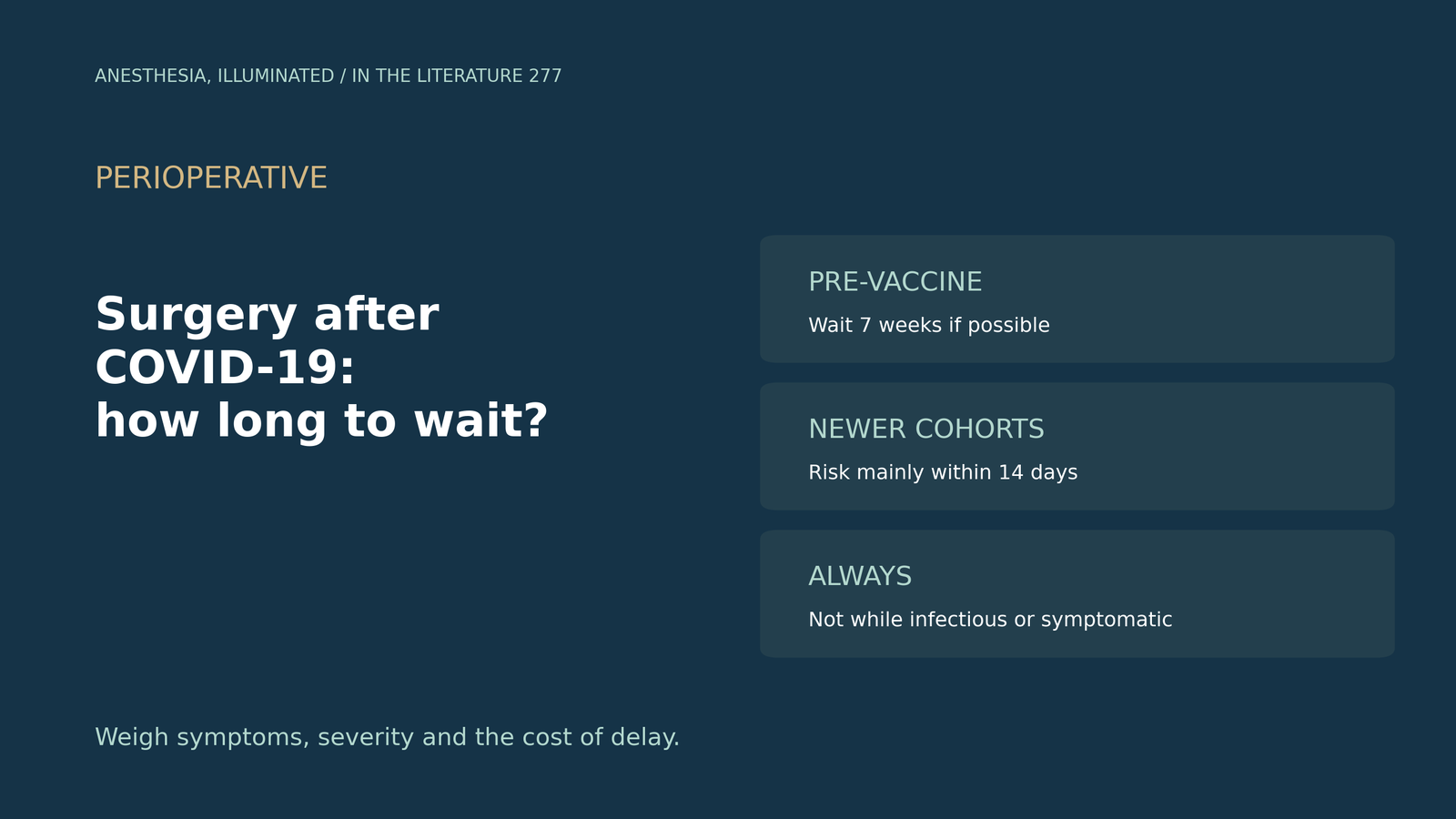
- Where 7 weeks came from. In 140,231 patients, mortality was higher with surgery within 6 weeks of infection.[1]
- Guidance kept it, pragmatically. UK consensus advises avoiding elective surgery within 7 weeks unless benefits outweigh risks.[2]
- Newer data narrow the window. In a US Veterans cohort, excess risk was confined to surgery within 14 days and ASA 4–5.[3]
- Symptoms matter more than days. In the Omicron era, prior COVID-19 did not raise respiratory morbidity, but ongoing symptoms did (OR 4.29).[4]
- Delay has costs too. Inappropriate surgical delay should be avoided.[5]
A patient booked for elective hernia repair tested positive for SARS-CoV-2 three weeks ago and now feels well. Should the operation go ahead?
Where the 7-week rule came from
Among 140,231 surgical patients in COVIDSurg (Anaesthesia 2021), 3127 (2.2%) had a preoperative SARS-CoV-2 diagnosis. Adjusted 30-day mortality was 1.5% without infection and higher with surgery 0–2, 3–4 and 5–6 weeks after diagnosis (about 4.1, 3.9 and 3.6); after 7 weeks or more, patients with ongoing symptoms still had higher mortality, and the authors advised delaying surgery at least 7 weeks where possible.[1] An updated UK consensus (El-Boghdadly et al., Anaesthesia 2022) advises avoiding elective surgery within 7 weeks unless benefits outweigh risks, notes higher risk with persistent symptoms or moderate-to-severe illness, says proceeding within 7 weeks will be pragmatic rather than evidence-based, and advises avoiding surgery while a patient may be infectious.[2]
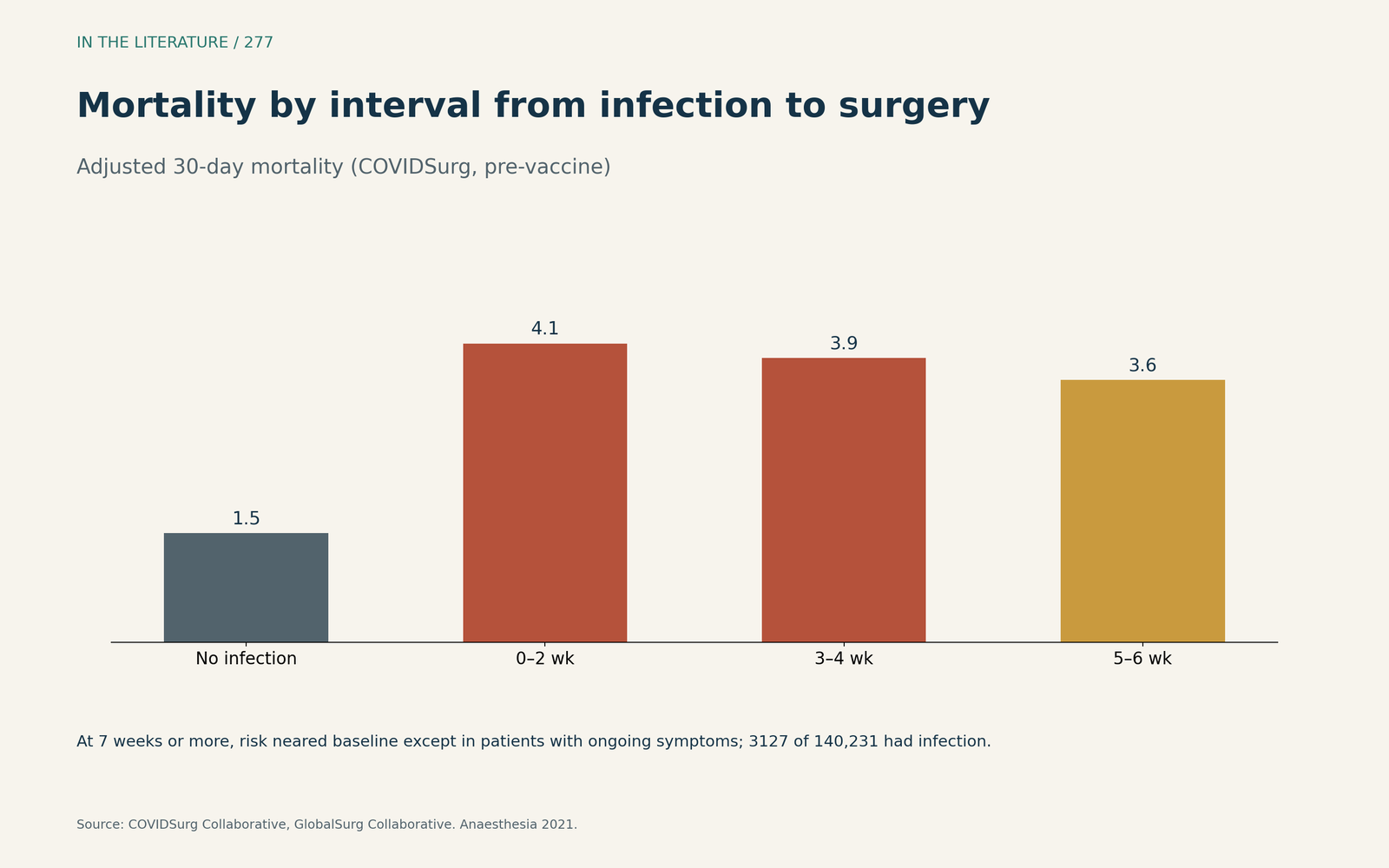
Figure 1. Pre-vaccine data showed higher mortality within 6 weeks. Data from COVIDSurg.[1] View larger.

What changed with vaccination and Omicron
In a US Veterans cohort (Leeds et al., Ann Surg 2024), 16,563 surgical patients (20%) had confirmed prior infection; worse outcomes were seen only for surgery within 14 days, the excess risk was confined to ASA class 4–5, outcomes did not differ by vaccination status, and the authors suggest timing precautions may unnecessarily delay needed surgery.[3] In DROMIS-22 (Garnier et al., eClinicalMedicine 2023), 4928 patients were assessed and 92.4% were vaccinated; preoperative COVID-19 was not associated with respiratory morbidity (OR 1.08), but ongoing symptoms on the day of surgery were (OR 4.29).[4]
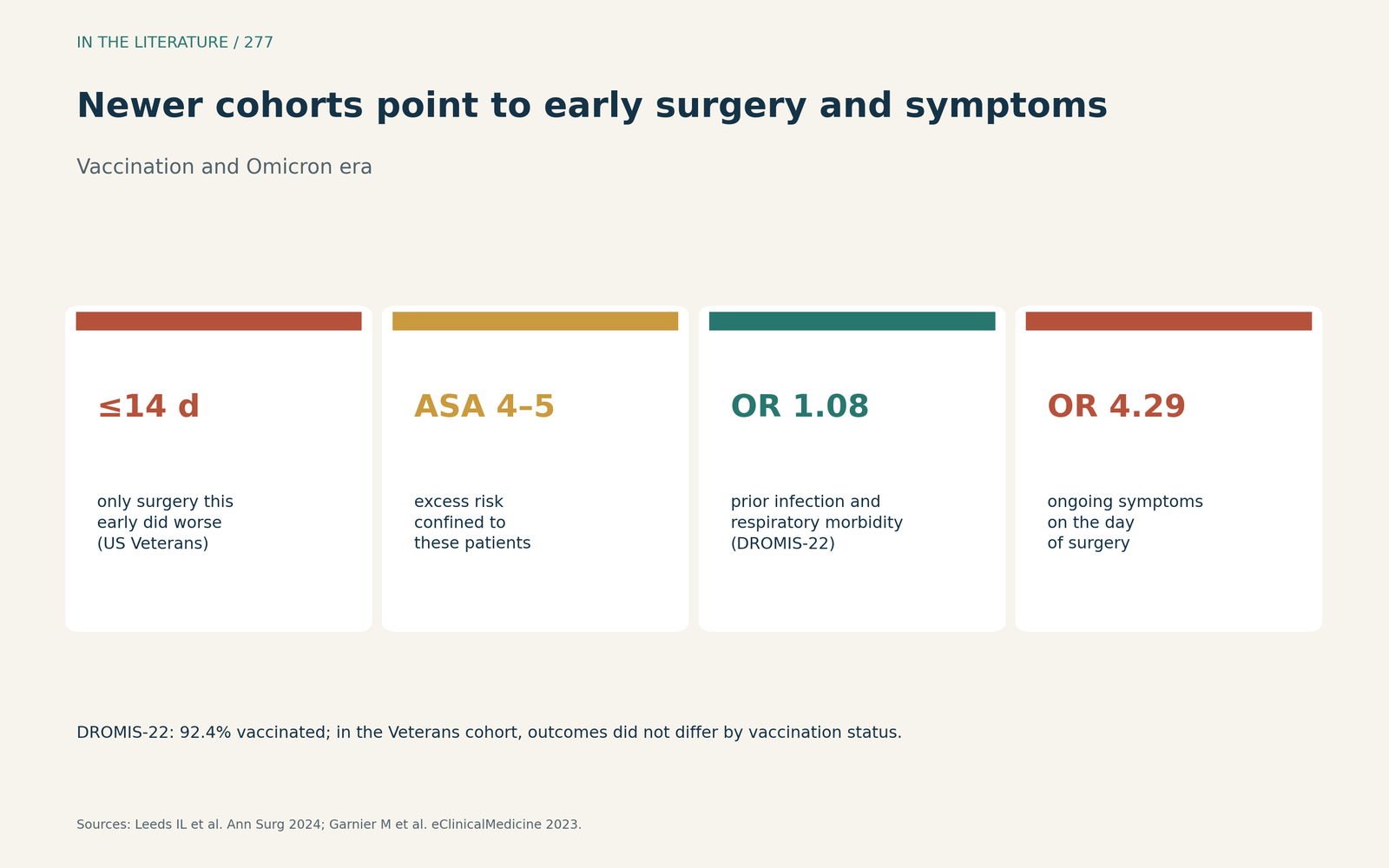
Figure 2. In vaccinated and Omicron-era cohorts, risk concentrated in early surgery, sick patients and those still symptomatic. Data from Leeds et al. and DROMIS-22.[3], [4] View larger.

Early pandemic practice
Early in the pandemic, thoracic teams postponed surgery at least 7–14 days after symptoms ended, while warning that inappropriate surgical delay should also be avoided (Fiorelli et al., J Cardiothorac Vasc Anesth 2020).[5]
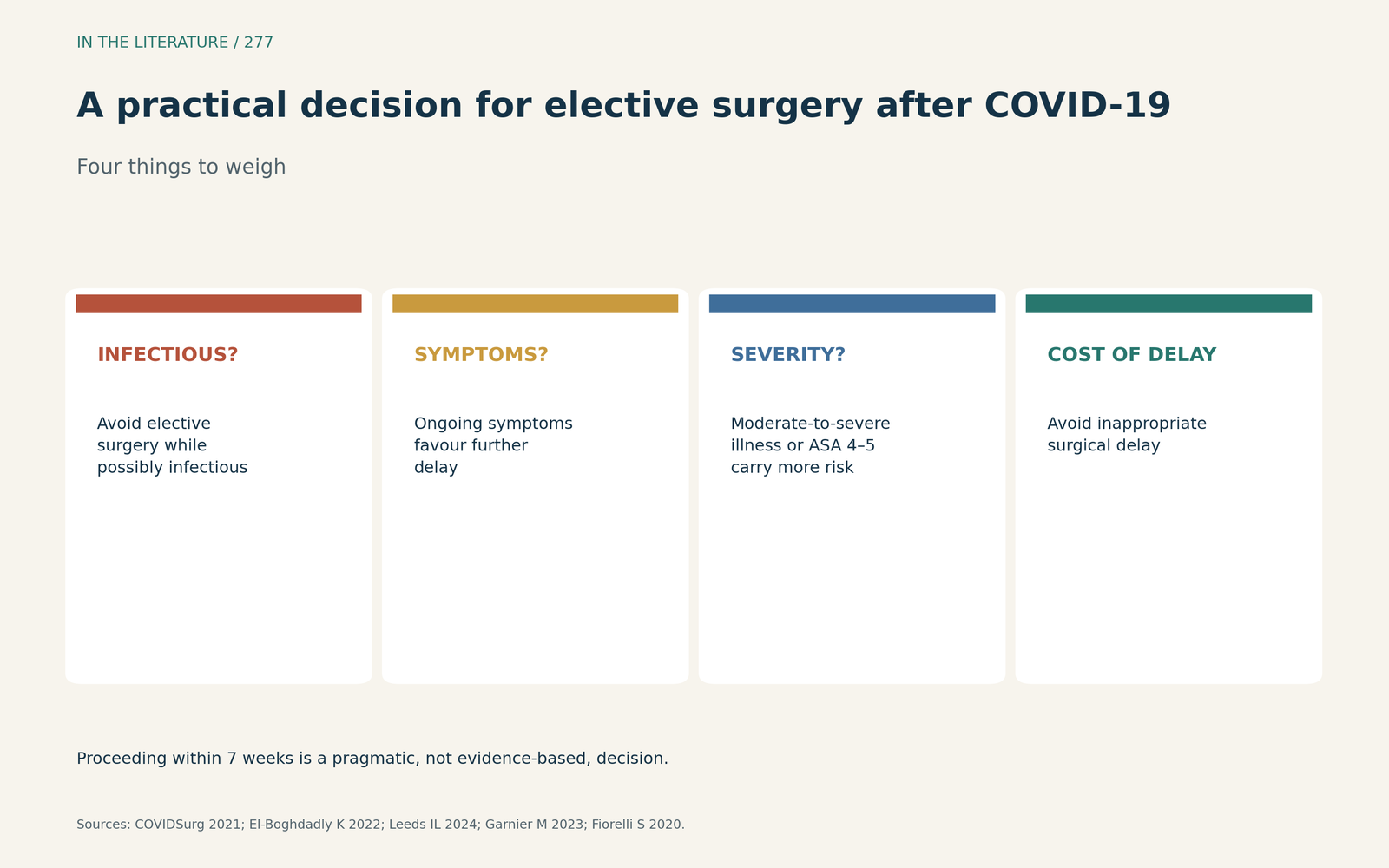
Figure 3. Weigh infectiousness, symptoms, severity and the cost of delay. Synthesized from COVIDSurg, El-Boghdadly et al., Leeds et al., DROMIS-22 and Fiorelli et al.[1], [2], [3], [4], [5] View larger.

Three takeaways
- Do not operate electively while a patient may be infectious or still has symptoms.[2], [4]
- The 7-week interval rests on pre-vaccine data; newer cohorts show excess risk mainly within 14 days and in sicker patients.[1], [3]
- Individualize: higher-risk or persistently symptomatic patients may need longer delay, but delay itself carries harm.[1], [5]
References
- COVIDSurg Collaborative; GlobalSurg Collaborative. Timing of surgery following SARS-CoV-2 infection: an international prospective cohort study. Anaesthesia. 2021;76(6):748–758. doi:10.1111/anae.15458
- El-Boghdadly K, Cook TM, Goodacre T, et al. Timing of elective surgery and risk assessment after SARS-CoV-2 infection: an update. Anaesthesia. 2022;77(5):580–587. doi:10.1111/anae.15699
- Leeds IL, Park LS, Akgün KM, et al. Postoperative outcomes associated with the timing of surgery after SARS-CoV-2 infection. Ann Surg. 2024;280(2):241–247. doi:10.1097/SLA.0000000000006227
- Garnier M, Constantin JM, Cinotti R, et al. Association of preoperative COVID-19 and postoperative respiratory morbidity during the Omicron epidemic wave: the DROMIS-22 multicentre prospective observational cohort study. eClinicalMedicine. 2023;58:101881. doi:10.1016/j.eclinm.2023.101881
- Fiorelli S, Menna C, Piccioni F, et al. The cutting edge of thoracic anesthesia during the coronavirus disease 2019 (COVID-19) outbreak. J Cardiothorac Vasc Anesth. 2020;34(12):3203–3210. doi:10.1053/j.jvca.2020.05.042