
ITL-6d2f0b078d50
Juan Li, MD · Updated November 18, 2026
Key points
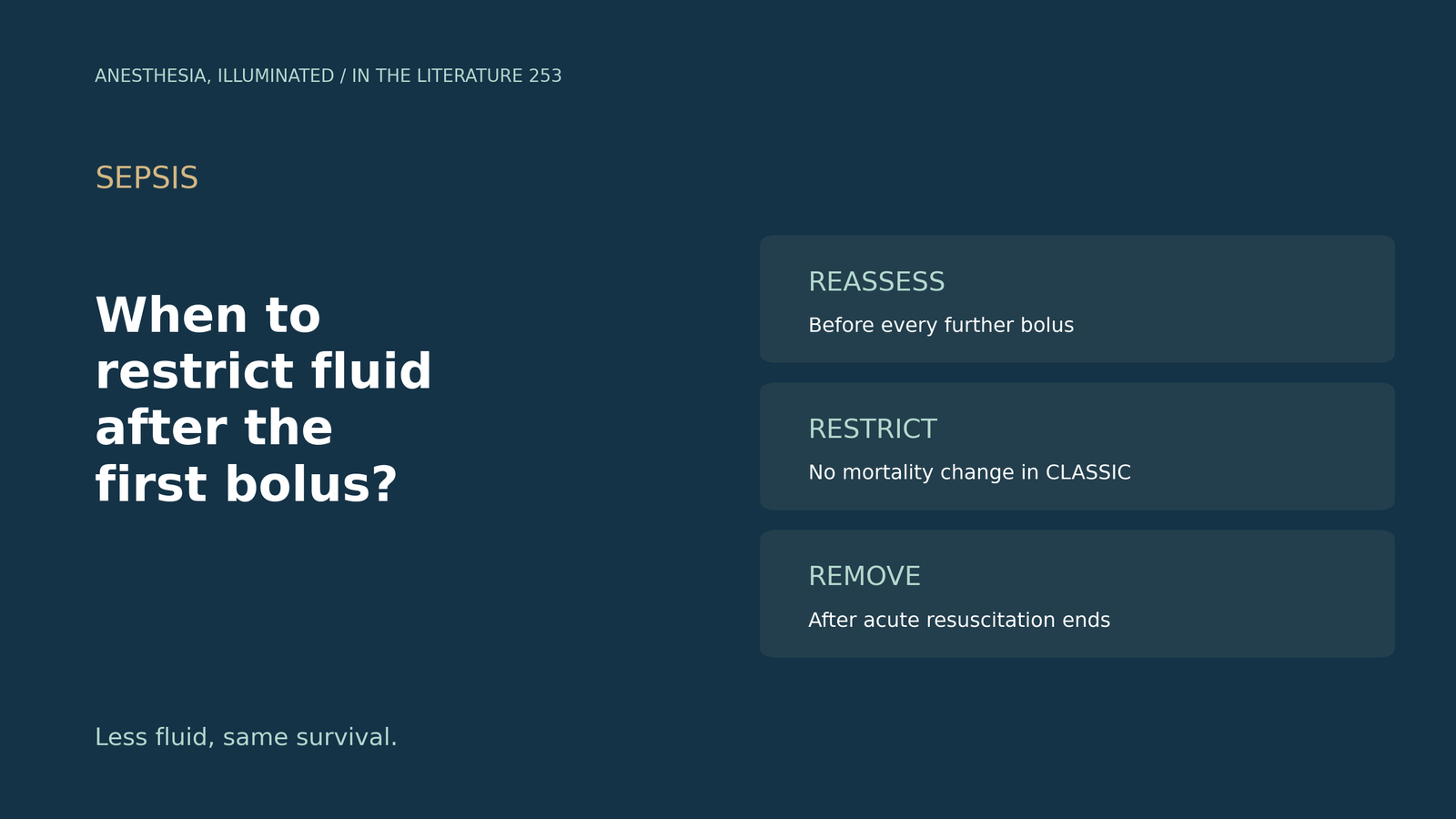
- Less fluid, same survival. In CLASSIC, restriction cut ICU fluid to a median 1798 mL versus 3811 mL without changing 90-day mortality (42.3% vs 42.1%).[1]
- The guideline leaves room for both. After 30 mL/kg with persistent hypoperfusion, the 2026 Surviving Sepsis guideline suggests either a liberal or a restrictive strategy.[2]
- Stop when responsiveness ends. Fluid should stop when fluid-responsiveness indices become negative.[3]
- Pooled trials agree. Five RCTs with 1972 patients showed no superiority for restriction.[4]
- Balance matters, but causation is unproven. A higher cumulative fluid balance was associated with higher mortality (OR 2.11).[5] Earlier de-escalation was associated with lower mortality in a cohort.[6]
A patient with septic shock has received the initial crystalloid bolus. Norepinephrine is running and perfusion is not yet normal. Should more fluid be given, or is this the time to restrict it?
Restriction after the first litres
CLASSIC (Meyhoff et al., N Engl J Med 2022) randomized 1554 ICU patients with septic shock, enrolled within 12 hours of shock onset, to restrictive or standard intravenous fluid. In the ICU, the restrictive group received a median 1798 mL versus 3811 mL. Restriction did not reduce 90-day deaths (42.3% vs 42.1%), and the confidence interval made a change of 5 percentage points or more unlikely.[1] This is not proof that the two strategies are equivalent. Under restriction, a 250 to 500 mL bolus was still allowed when severe hypoperfusion criteria were met; the protocol was violated in 162 restrictive-group patients (21.5%), patients and staff knew the assignment, and results may differ where standard care uses more fluid.[1]
A meta-analysis of five RCTs with 1972 patients (Duan et al., BMC Anesthesiol 2025) found that restrictive fluids did not show superiority over conventional protocols for clinical outcomes; only five trials were available.[4]
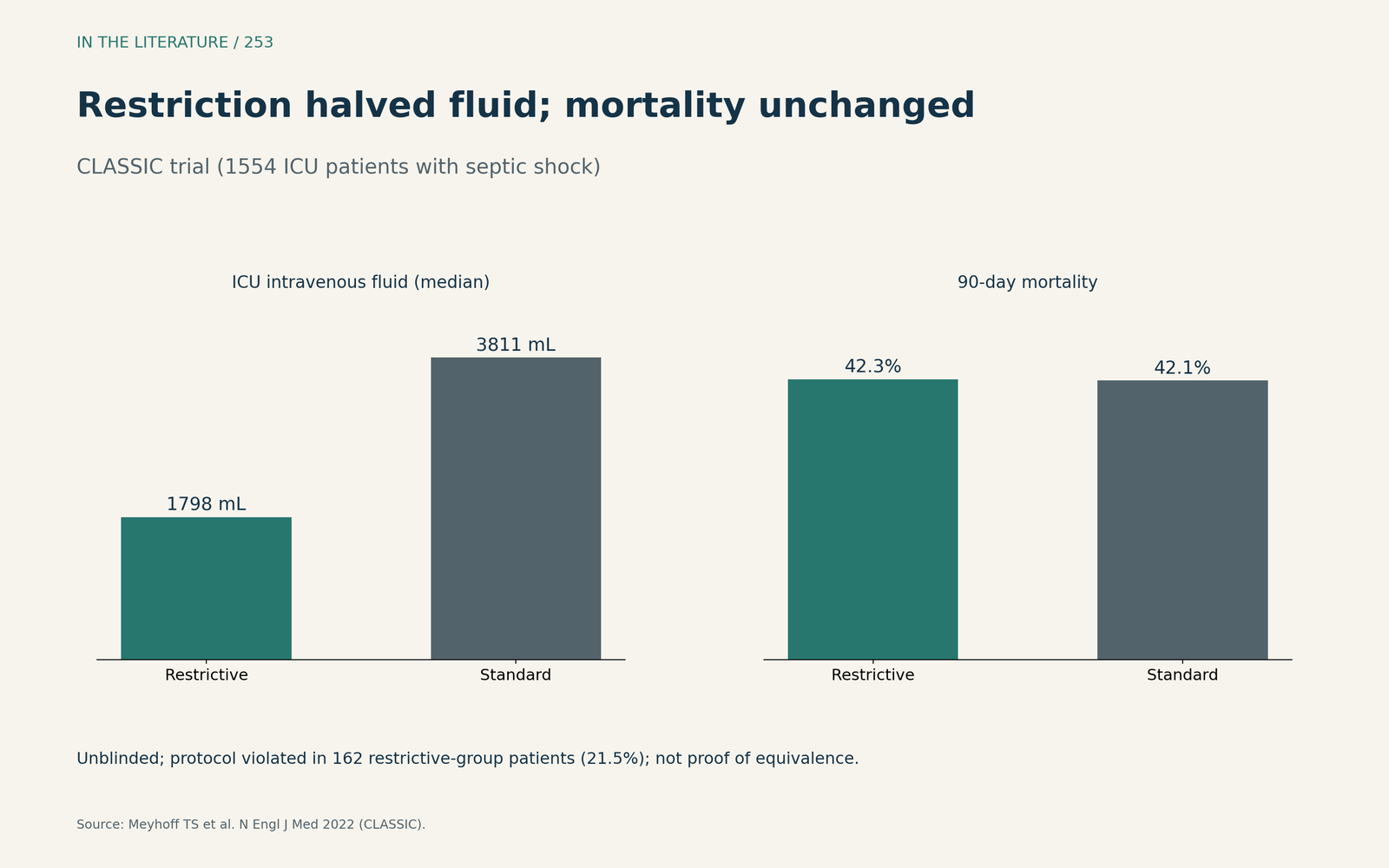
Figure 1. Less fluid, similar 90-day mortality. Data from CLASSIC.[1] View larger.

What the guideline says
The Surviving Sepsis Campaign 2026 (Prescott et al., Intensive Care Med 2026) suggests at least 30 mL/kg of crystalloid in the first 3 h for hypoperfusion (conditional, low certainty). After that, for persistent hypoperfusion, it suggests either a liberal or a restrictive strategy based on patient and health-system factors. Across 3,320 patients, restrictive versus liberal ongoing fluids probably made no mortality difference (RR 1.00, 0.91 to 1.10). Further fluid should be guided by careful assessment of volume status, perfusion and fluid responsiveness.[2] Malbrain et al. (Ann Intensive Care 2018) advise stopping fluid when fluid-responsiveness indices become negative.[3]
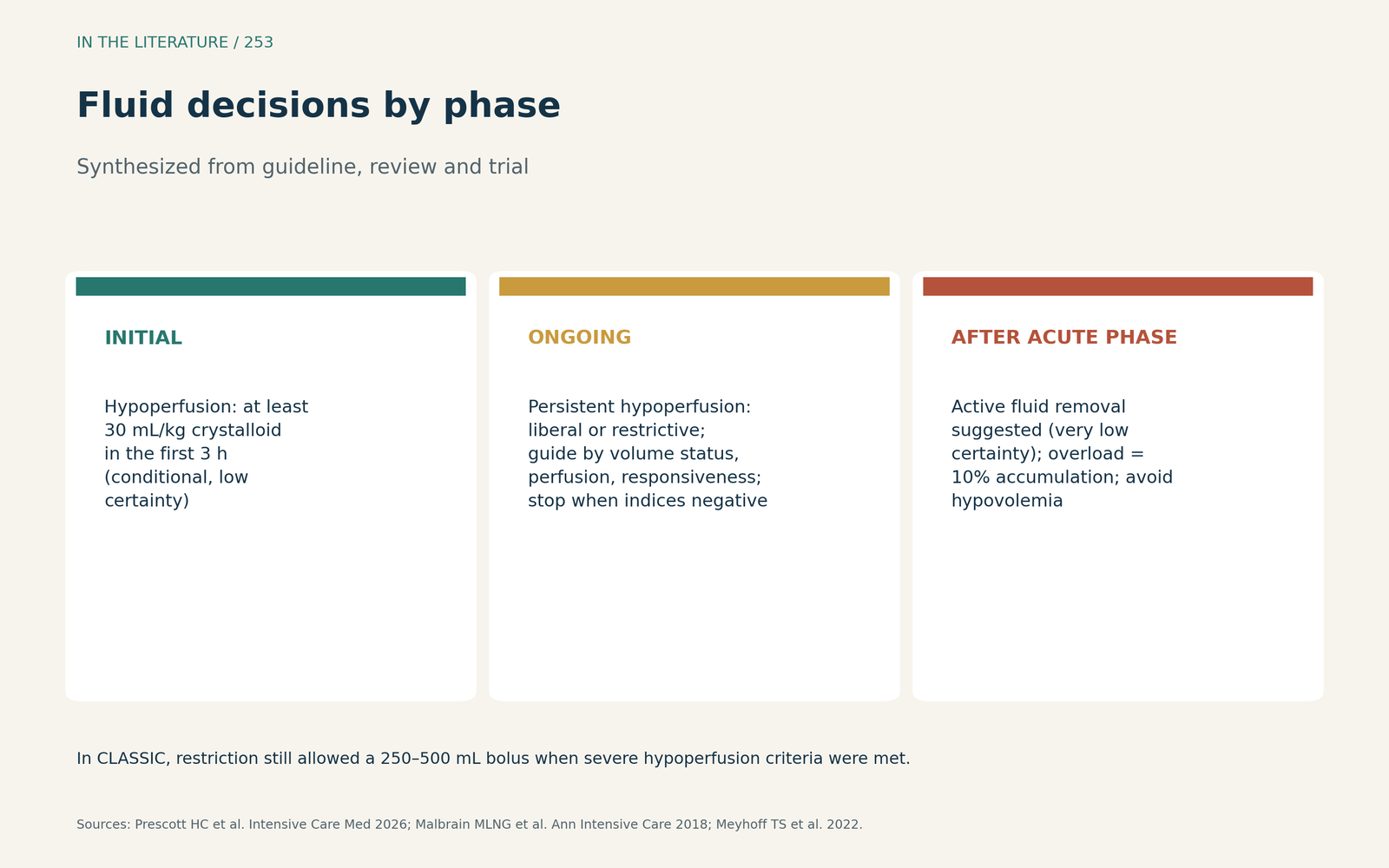
Figure 2. Each phase asks a different question. Synthesized from the Surviving Sepsis guideline, Malbrain et al. and CLASSIC.[2], [3], [1] View larger.

Fluid balance and de-escalation
Across 64,755 patients in observational studies (Fonda et al., BMC Anesthesiol 2026), a higher cumulative fluid balance was associated with higher mortality (OR 2.11, 1.65 to 2.69). These associations are vulnerable to confounding by illness severity and do not prove causation.[5] In a propensity-matched cohort (Zhuang et al., BMC Infect Dis 2026), de-escalation within 24 h of hemodynamic stability was associated with lower 28-day mortality (12.6% vs 18.0%); the design cannot show that early de-escalation caused this.[6] The guideline suggests active fluid removal after the acute resuscitation phase, with very low certainty.[2] Fluid overload is defined by 10% fluid accumulation, which is associated with worse outcomes, but removal that is too aggressive risks hypovolemia.[3]
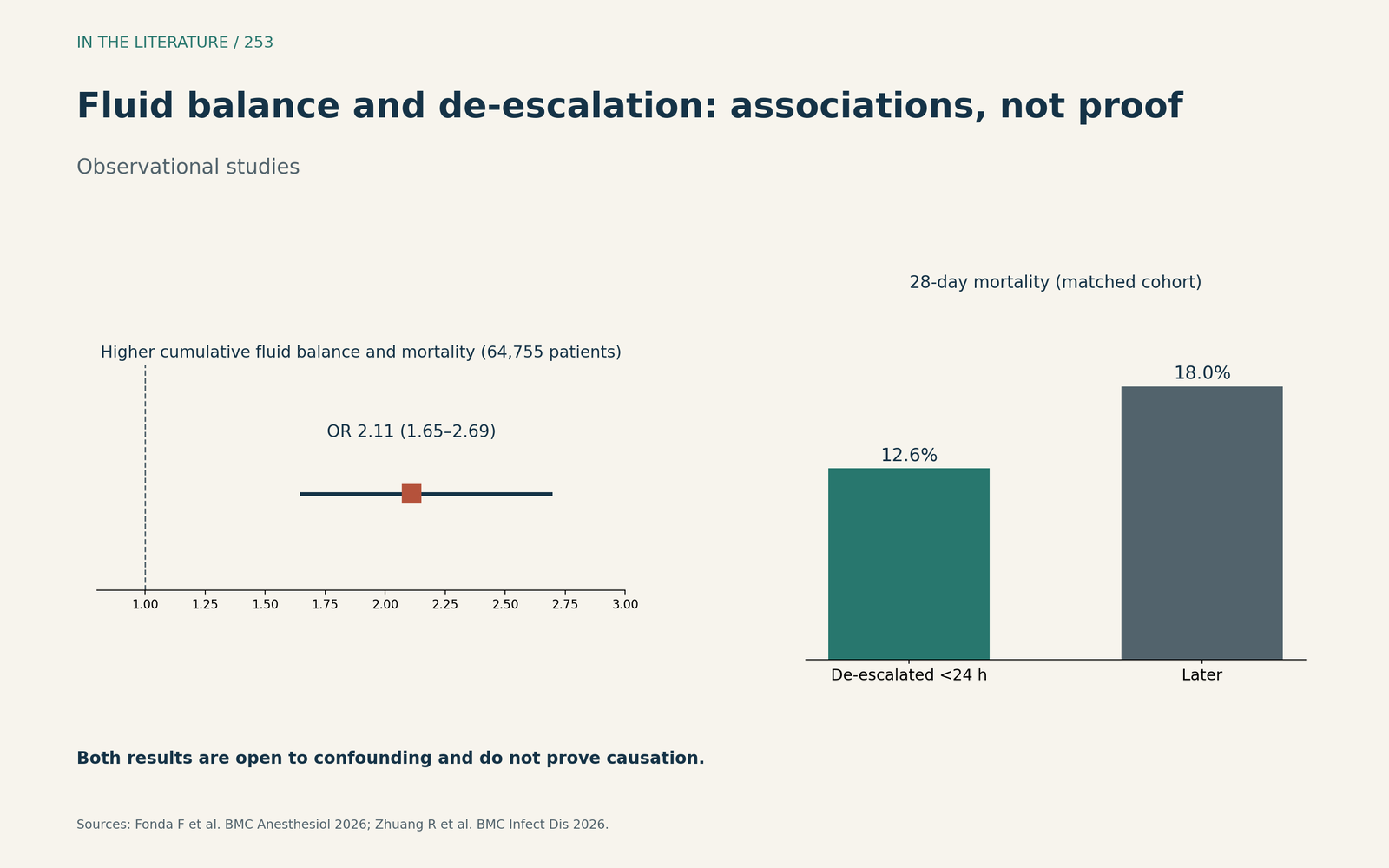
Figure 3. Observational signals favour avoiding accumulation. Data from Fonda et al. and Zhuang et al.[5], [6] View larger.

Three takeaways
- Give initial resuscitation, then reassess before each further bolus; restriction after that point did not change mortality in CLASSIC.[1], [2]
- Stop fluid when responsiveness indices turn negative, and guide any further fluid by perfusion and volume status.[2], [3]
- Once acute resuscitation ends, consider active fluid removal without overcorrecting; the supporting evidence is observational and of very low certainty.[2], [5], [6]
References
- Meyhoff TS, Hjortrup PB, Wetterslev J, et al. Restriction of intravenous fluid in ICU patients with septic shock. N Engl J Med. 2022;386(26):2459–2470. doi:10.1056/NEJMoa2202707
- Prescott HC, Antonelli M, Alhazzani W, et al. Surviving Sepsis Campaign: international guidelines for management of sepsis and septic shock 2026. Intensive Care Med. 2026;52:863–936. doi:10.1007/s00134-026-08361-1
- Malbrain MLNG, Van Regenmortel N, Saugel B, et al. Principles of fluid management and stewardship in septic shock: it is time to consider the four D’s and the four phases of fluid therapy. Ann Intensive Care. 2018;8(1):66. doi:10.1186/s13613-018-0402-x
- Duan Y, Yin Y, Yue J, et al. Is restriction of intravenous fluid beneficial for septic shock in ICU patients? A meta-analysis of randomized controlled trials. BMC Anesthesiol. 2025;25:374. doi:10.1186/s12871-025-03253-1
- Fonda F, Orso D, Comisso I, et al. Fluid balance and mortality in adult ICU patients with sepsis or septic shock: a systematic review and meta-analysis of observational studies. BMC Anesthesiol. 2026;26:16. doi:10.1186/s12871-025-03518-9
- Zhuang R, Tian R, Tan R, et al. Association of active fluid de-escalation timing with clinical outcomes in patients with septic shock: a multicenter cohort study. BMC Infect Dis. 2026;26:404. doi:10.1186/s12879-026-12554-w