ITL-6445b2fd129e
Juan Li, MD · Updated November 18, 2026
Key points
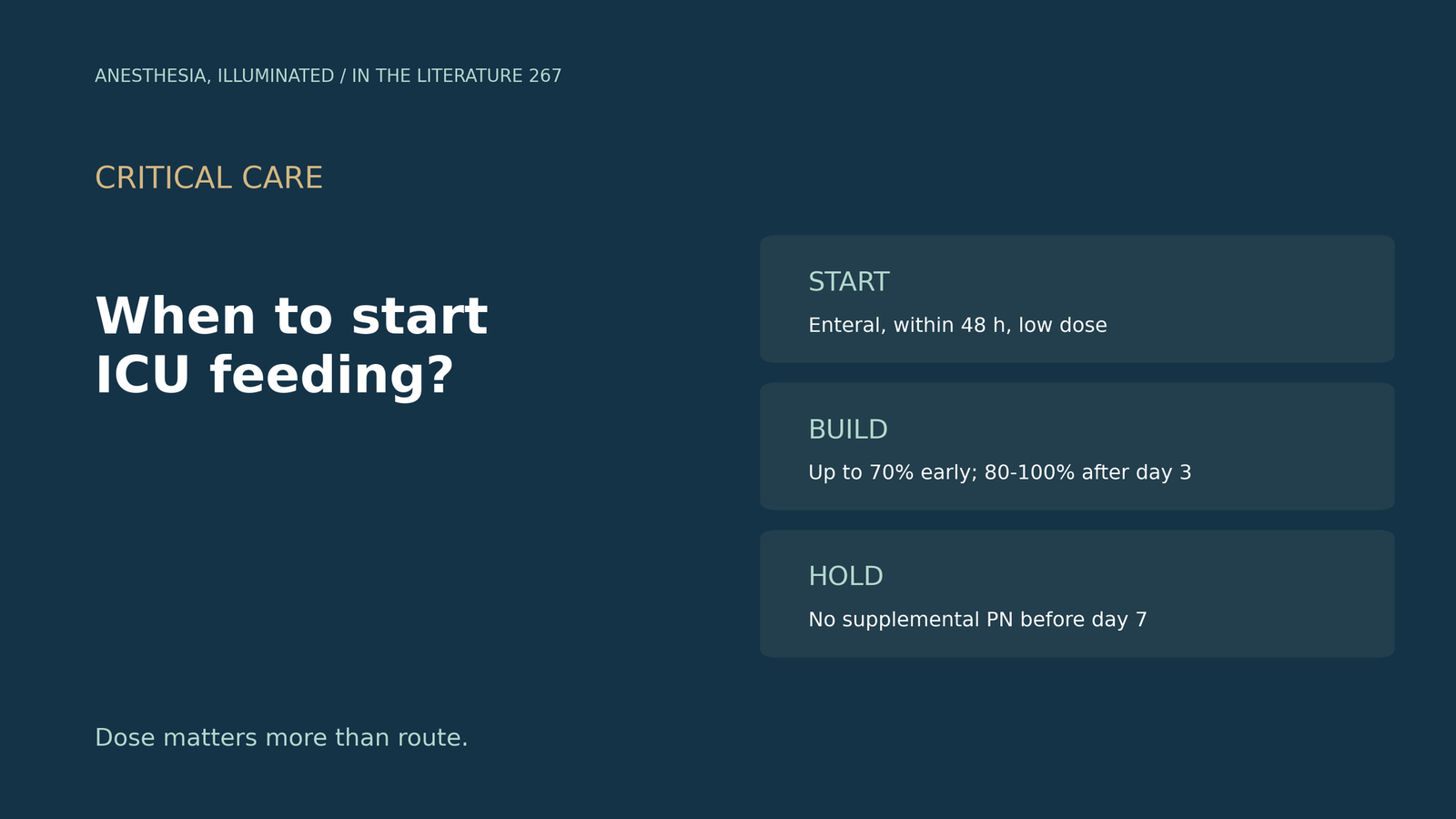
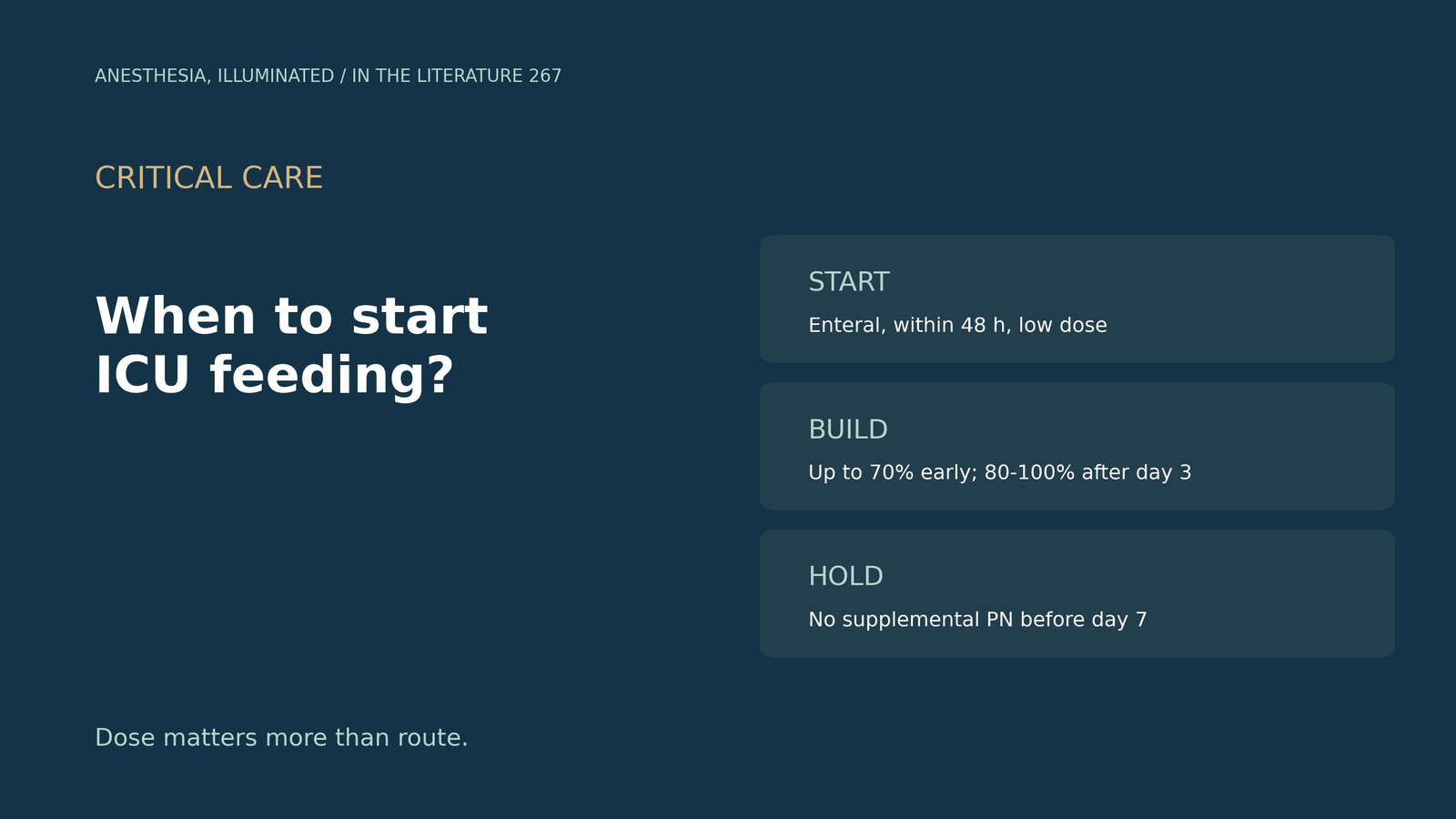
- Within 48 hours. ESPEN recommends early enteral nutrition within 48 hours for adults who cannot eat.[1]
- Low and slow at first. Start at 10–20 mL/h, and begin low-dose feeding as soon as shock is controlled.[2]
- No parenteral top-up in week one. ASPEN recommends not starting supplemental parenteral nutrition before day 7.[3]
- Earlier parenteral nutrition caused harm. In EPaNIC, delaying it to day 8 meant fewer ICU infections (22.8% vs 26.2%).[4]
- Dose matters more than route. Route made no mortality difference in two large trials, and lower early intake sped recovery.[5], [6], [7]
A ventilated patient with septic shock is stabilising on day 1 in the ICU. When should feeding start, how much, and by which route?
What the guidelines say
ESPEN (Singer et al., Clin Nutr 2019) recommends early enteral nutrition within 48 hours in critically ill adults who cannot eat, but early full enteral or parenteral nutrition should not be used, to avoid overfeeding. Hypocaloric nutrition, not exceeding 70% of energy expenditure, should be given in the early phase; after day 3, delivery can be increased to 80–100% of measured energy expenditure. If oral and enteral feeding are contraindicated, parenteral nutrition should start within three to seven days.[1] ESICM (Reintam Blaser et al., Intensive Care Med 2017) made 17 recommendations favouring early enteral nutrition and seven favouring delay, all weak: start at a slow rate of 10–20 mL/h with monitoring, and in uncontrolled shock delay feeding but start low-dose feeding as soon as shock is controlled.[2] ASPEN (Compher et al., JPEN 2022) recommends not starting supplemental parenteral nutrition before day 7 and suggests 12–25 kcal/kg per day in the first 7–10 days.[3]
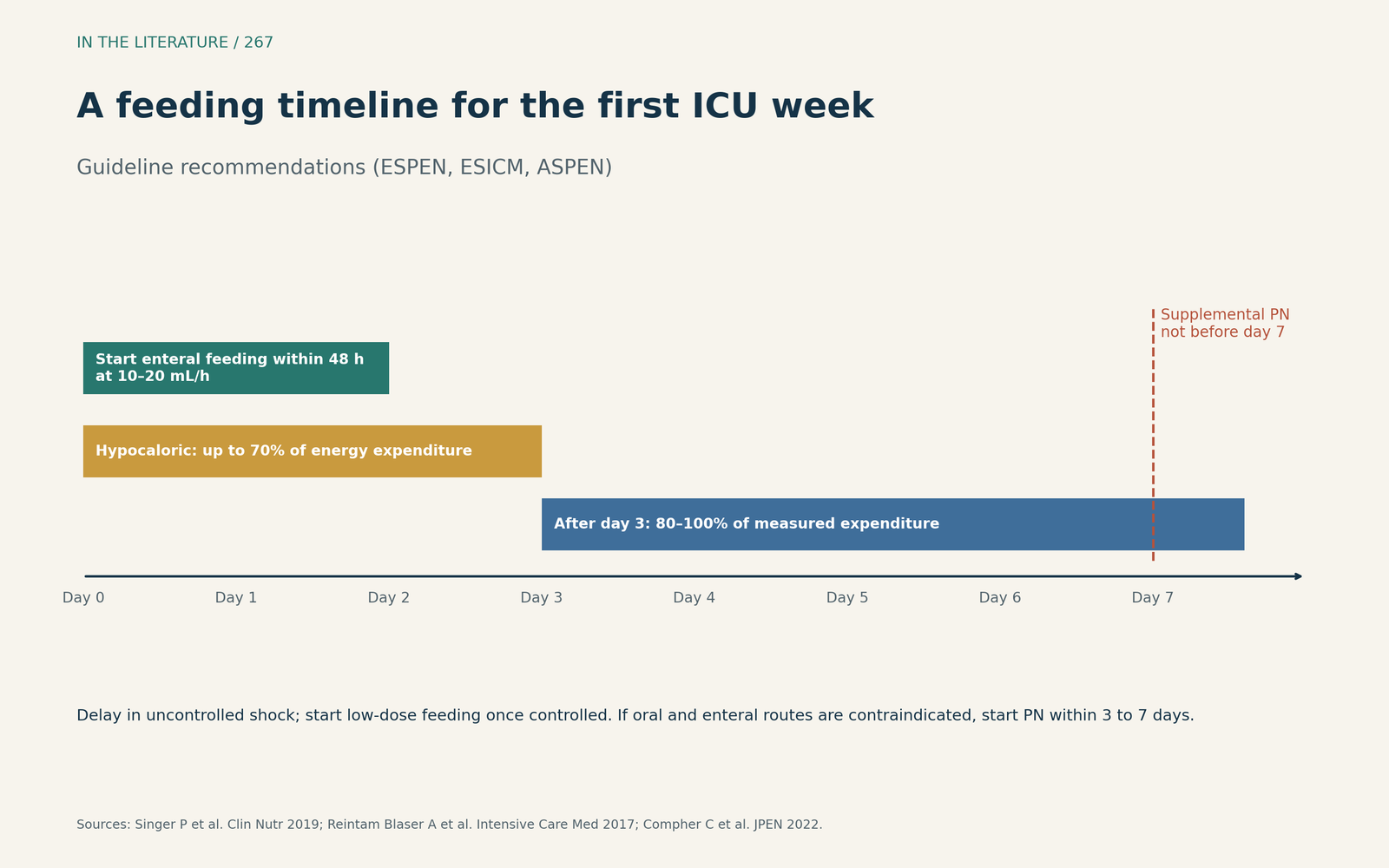
Figure 1. Start low, increase after day 3, and hold supplemental parenteral nutrition until day 7. Synthesized from ESPEN, ESICM and ASPEN.[1], [2], [3] View larger.

Trials of timing, route and dose
In EPaNIC (Casaer et al., N Engl J Med 2011), delaying supplemental parenteral nutrition to day 8 led to fewer ICU infections (22.8% vs 26.2%), faster recovery and a mean reduction in health care costs of €1,110.[4] CALORIES (Harvey et al., N Engl J Med 2014) randomized 2400 patients to early parenteral or enteral nutrition; 30-day mortality was 33.1% and 34.2%, not significantly different.[5] NUTRIREA-2 (Reignier et al., Lancet 2018) gave normocaloric enteral or parenteral nutrition (20–25 kcal/kg per day) within 24 h of intubation in shock; by day 28, 37% had died with enteral and 35% with parenteral nutrition, and early isocaloric enteral nutrition did not reduce mortality or secondary infections and caused more digestive complications.[6] NUTRIREA-3 (Reignier et al., Lancet Respir Med 2023), in 61 French ICUs, compared low and standard early calorie-protein intake in ventilated adults with shock: day-90 mortality did not differ, but low feeding was associated with faster recovery and fewer complications.[7]
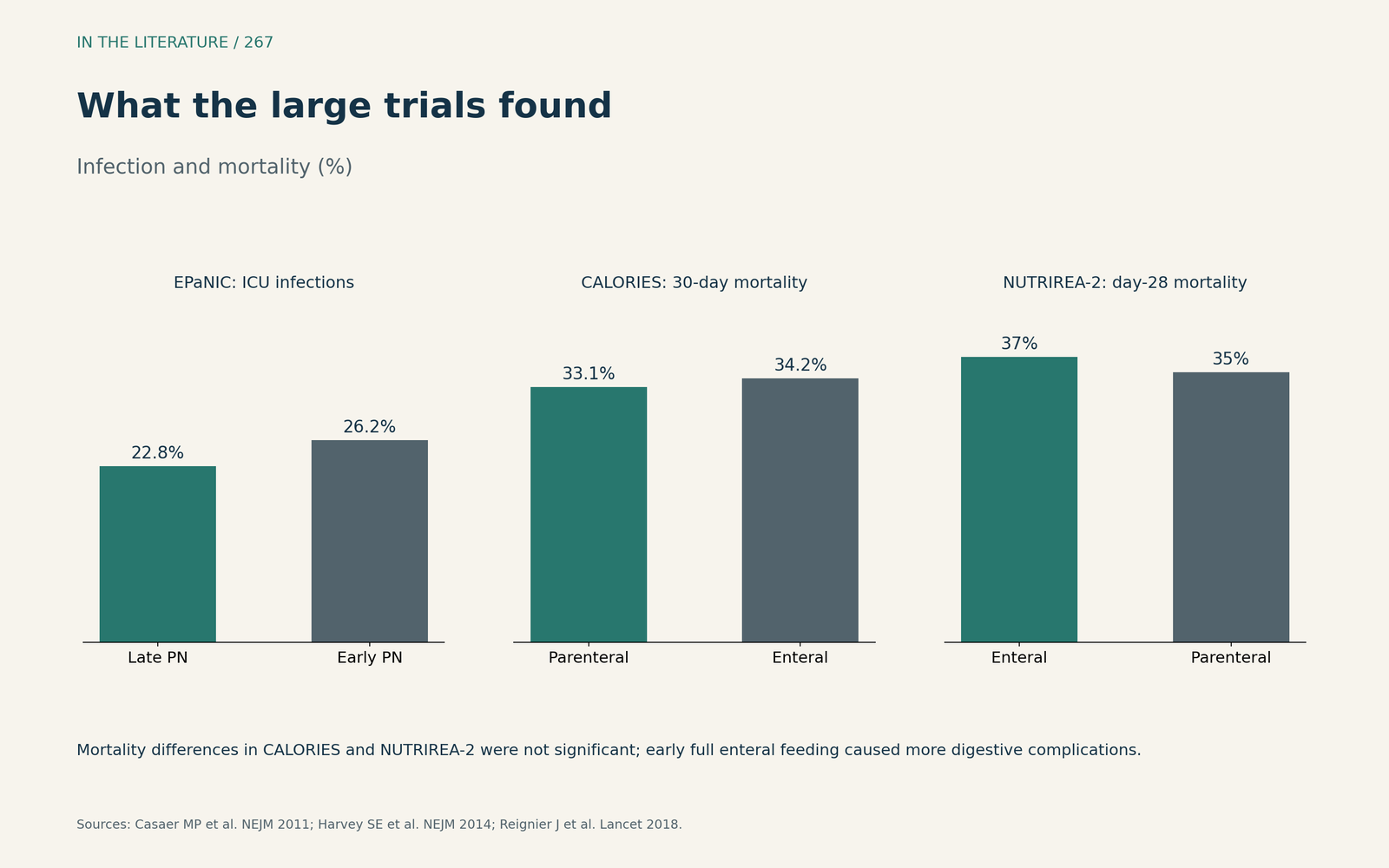
Figure 2. Early parenteral top-up raised infections; route did not change mortality. Data from EPaNIC, CALORIES and NUTRIREA-2.[4], [5], [6] View larger.

Pooled evidence on the start window
A network meta-analysis (Dai et al., Front Nutr 2026) of 15 RCTs with 903 patients compared five enteral nutrition start windows; no window significantly changed mortality, although starting at 24–48 h ranked highest (SUCRA 67.0).[8] In sepsis (Xu et al., Eur J Med Res 2025), ten RCTs with 582 patients found lower mortality with early enteral nutrition (OR 0.59, 95% CI 0.37–0.94), but the trials were small and mostly single-centre.[9]
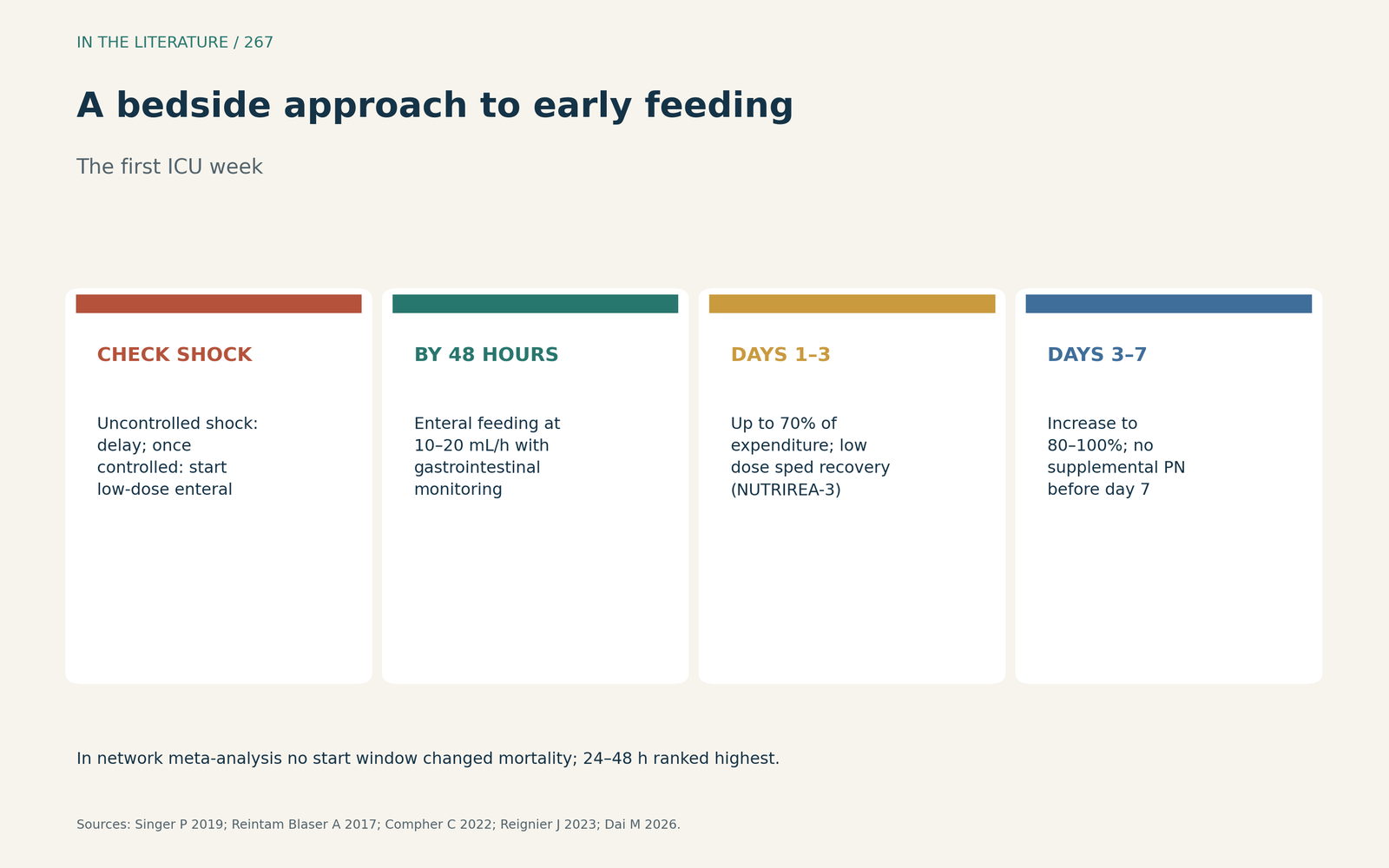
Figure 3. Practical steps for the first ICU week. Synthesized from ESPEN, ESICM, ASPEN, NUTRIREA-3 and Dai et al.[1], [2], [3], [7], [8] View larger.

Three takeaways
- Start low-dose enteral nutrition within 48 hours, once shock is controlled.[1], [2]
- Do not chase full targets early: give up to 70% of energy expenditure at first, increase after day 3, and avoid supplemental parenteral nutrition before day 7.[1], [3], [4]
- Route matters less than dose; pooled data favour starting within 24–48 h but show no clear mortality effect.[5], [7], [8]
References
- Singer P, Reintam Blaser A, Berger MM, et al. ESPEN guideline on clinical nutrition in the intensive care unit. Clin Nutr. 2019;38(1):48–79. doi:10.1016/j.clnu.2018.08.037
- Reintam Blaser A, Starkopf J, Alhazzani W, et al. Early enteral nutrition in critically ill patients: ESICM clinical practice guidelines. Intensive Care Med. 2017;43(3):380–398. doi:10.1007/s00134-016-4665-0
- Compher C, Bingham AL, McCall M, et al. Guidelines for the provision of nutrition support therapy in the adult critically ill patient: the American Society for Parenteral and Enteral Nutrition. JPEN J Parenter Enteral Nutr. 2022;46(1):12–41. doi:10.1002/jpen.2267
- Casaer MP, Mesotten D, Hermans G, et al. Early versus late parenteral nutrition in critically ill adults. N Engl J Med. 2011;365(6):506–517. doi:10.1056/NEJMoa1102662
- Harvey SE, Parrott F, Harrison DA, et al. Trial of the route of early nutritional support in critically ill adults. N Engl J Med. 2014;371(18):1673–1684. doi:10.1056/NEJMoa1409860
- Reignier J, Boisramé-Helms J, Brisard L, et al. Enteral versus parenteral early nutrition in ventilated adults with shock: a randomised, controlled, multicentre, open-label, parallel-group study (NUTRIREA-2). Lancet. 2018;391(10116):133–143. doi:10.1016/S0140-6736(17)32146-3
- Reignier J, Plantefeve G, Mira JP, et al. Low versus standard calorie and protein feeding in ventilated adults with shock: a randomised, controlled, multicentre, open-label, parallel-group trial (NUTRIREA-3). Lancet Respir Med. 2023;11(7):602–612. doi:10.1016/S2213-2600(23)00092-9
- Dai M, Yang HW, Zhou Y, et al. Optimal timing of enteral nutrition initiation in critically ill patients: a network meta-analysis. Front Nutr. 2026;13:1722626. doi:10.3389/fnut.2026.1722626
- Xu J, Zhang J, Yang L, et al. Influence of early enteral nutrition on mortality of adult patients with sepsis: a meta-analysis of randomized controlled trials. Eur J Med Res. 2025;30:1112. doi:10.1186/s40001-025-03340-6