ITL-0bd3c1859112
Juan Li, MD · Updated November 18, 2026
Key points
- Earlier is not better. In STARRT-AKI, 90-day death was 43.9% with accelerated and 43.7% with standard initiation.[1]
- Early starts add harm. Accelerated RRT raised adverse events and later RRT dependence.[1]
- Septic shock too. In IDEAL-ICU, 90-day mortality was 58% with early and 54% with delayed RRT.[2]
- Waiting spares many patients. In pooled trials, 42% of delayed-group patients never received RRT, and timing did not affect survival.[3]
- But do not wait indefinitely. In AKIKI 2, a more-delayed strategy had numerically higher mortality (55% vs 44%).[4]
A ventilated patient with septic shock has stage 3 AKI and low urine output, but potassium, pH and oxygenation are acceptable. Should dialysis start now, or is it safe to wait?
Accelerated versus standard initiation
STARRT-AKI (N Engl J Med 2020) randomized 2927 critically ill adults with AKI to accelerated or standard initiation. At 90 days, death occurred in 43.9% versus 43.7%; this does not show that the strategies are equivalent. With the standard strategy, only 61.8% ever received RRT. Among 90-day survivors, RRT dependence was 10.4% with accelerated versus 6.0% with standard initiation, and adverse events occurred in 23.0% versus 16.5%. Standard-arm triggers included potassium of 6.0 mmol/L or more and pH 7.20 or less.[1] In septic shock, IDEAL-ICU (Barbar et al., N Engl J Med 2018) found 90-day mortality of 58% with early and 54% with delayed RRT; 38% of the delayed group never received RRT, emergency criteria were met in 17%, and the authors warn against indefinite deferral.[2] In AKIKI (Gaudry et al., N Engl J Med 2016), among 620 patients, day-60 mortality was 48.5% with early versus 49.7% with delayed RRT; 49% of the delayed group never received RRT, and catheter-related bloodstream infection was more frequent with early RRT (10% vs 5%).[5] An individual patient data meta-analysis of 1879 patients (Gaudry et al., Lancet 2020) concluded that timing does not affect survival without urgent indications; 42% in the delayed groups never received RRT.[3]
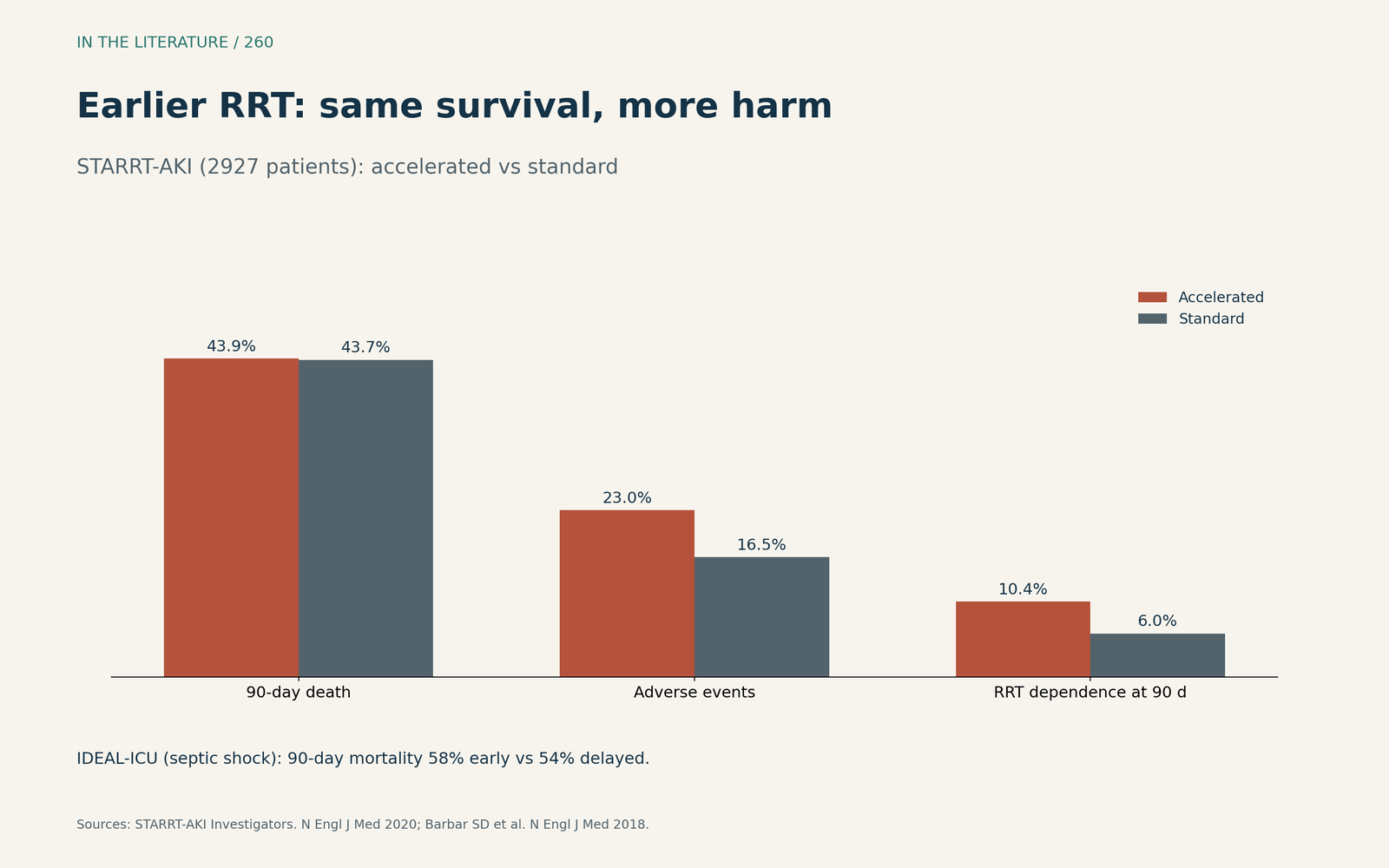
Figure 1. Accelerated initiation did not reduce mortality and increased adverse events and RRT dependence. Data from STARRT-AKI and IDEAL-ICU.[1], [2] View larger.

How long to wait
AKIKI 2 (Gaudry et al., Lancet 2021) randomized 278 patients once oliguria lasted more than 72 h or blood urea nitrogen exceeded 112 mg/dL. Sixty-day mortality was 44% with the delayed strategy versus 55% with the more-delayed strategy; the unadjusted difference was not significant, but how long RRT can be postponed without risk remains uncertain.[4] The KDIGO Controversies Conference (Ostermann et al., Kidney Int 2020) advises considering RRT when metabolic and fluid demands exceed kidney capacity, notes that biomarkers should not decide the start, and asks clinicians to weigh complication risk, prognosis, recovery potential and patient preferences.[6] A review (Gaudry et al., N Engl J Med 2022) concludes there is no need to start RRT in severe AKI without serious complications, provided close surveillance continues,[7] and a Lancet Seminar (Ostermann et al., Lancet 2025) notes that across the multicentre trials deferred initiation reduced RRT use by about 40%.[8]
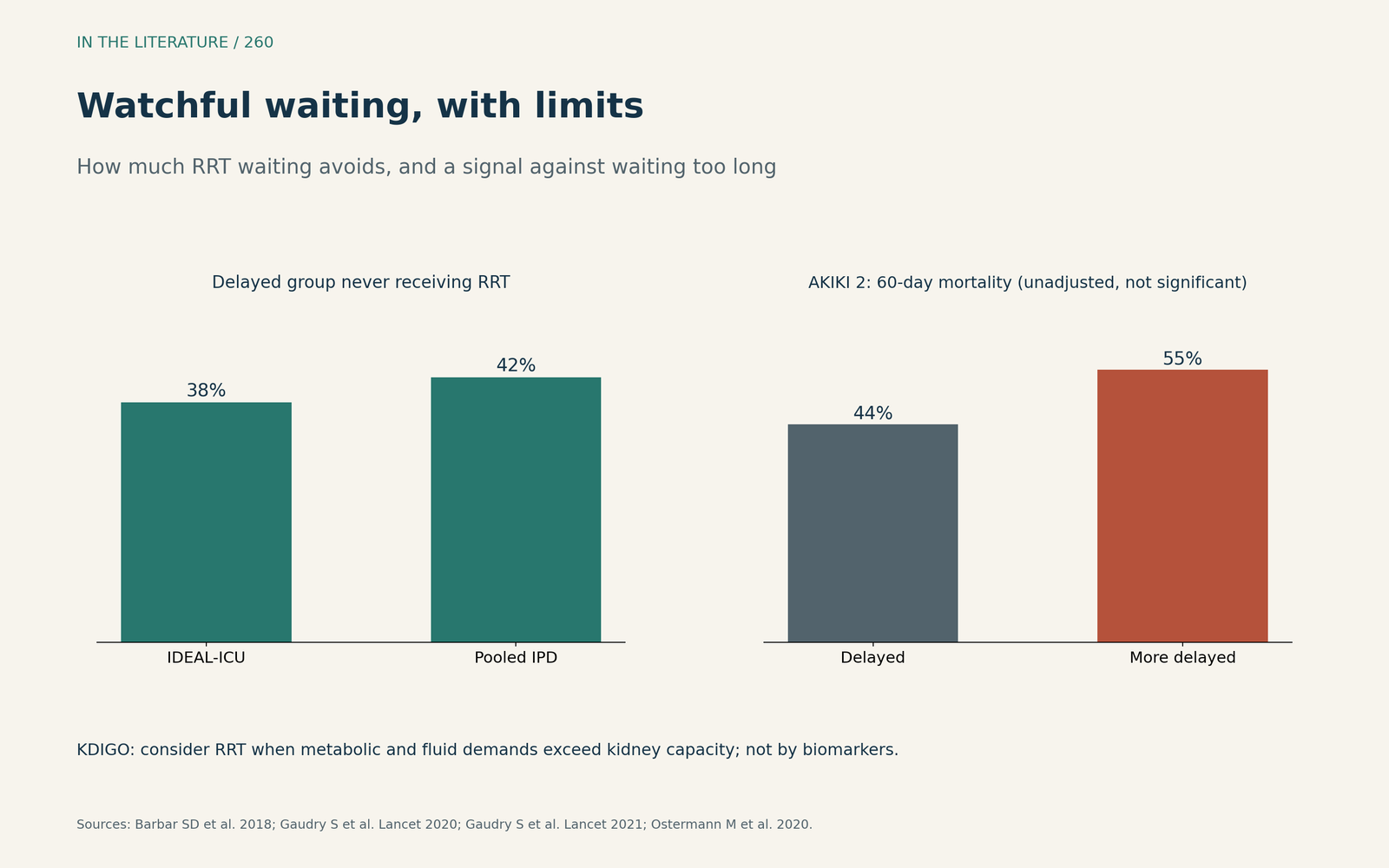
Figure 2. Waiting avoids RRT in many patients, but waiting too long may carry risk. Synthesized from Gaudry et al. 2020, AKIKI 2 and KDIGO.[3], [4], [6] View larger.

Recent observational and pooled data
Among 4,538 patients with stage 3 AKI and no urgent indication (Liu et al., Sci Rep 2026), 275 started CRRT within 24 h, which was associated with a 0.079 higher 28-day mortality risk; the authors conclude that stage 3 AKI alone should not trigger default CRRT.[9] In sepsis-associated AKI (Bin Sahaq et al., BMC Nephrol 2026), the bias-adjusted pooled RR for early RRT was 0.88 (0.75 to 1.04), and the authors judge that the totality of evidence supports a delayed strategy with close monitoring.[10]
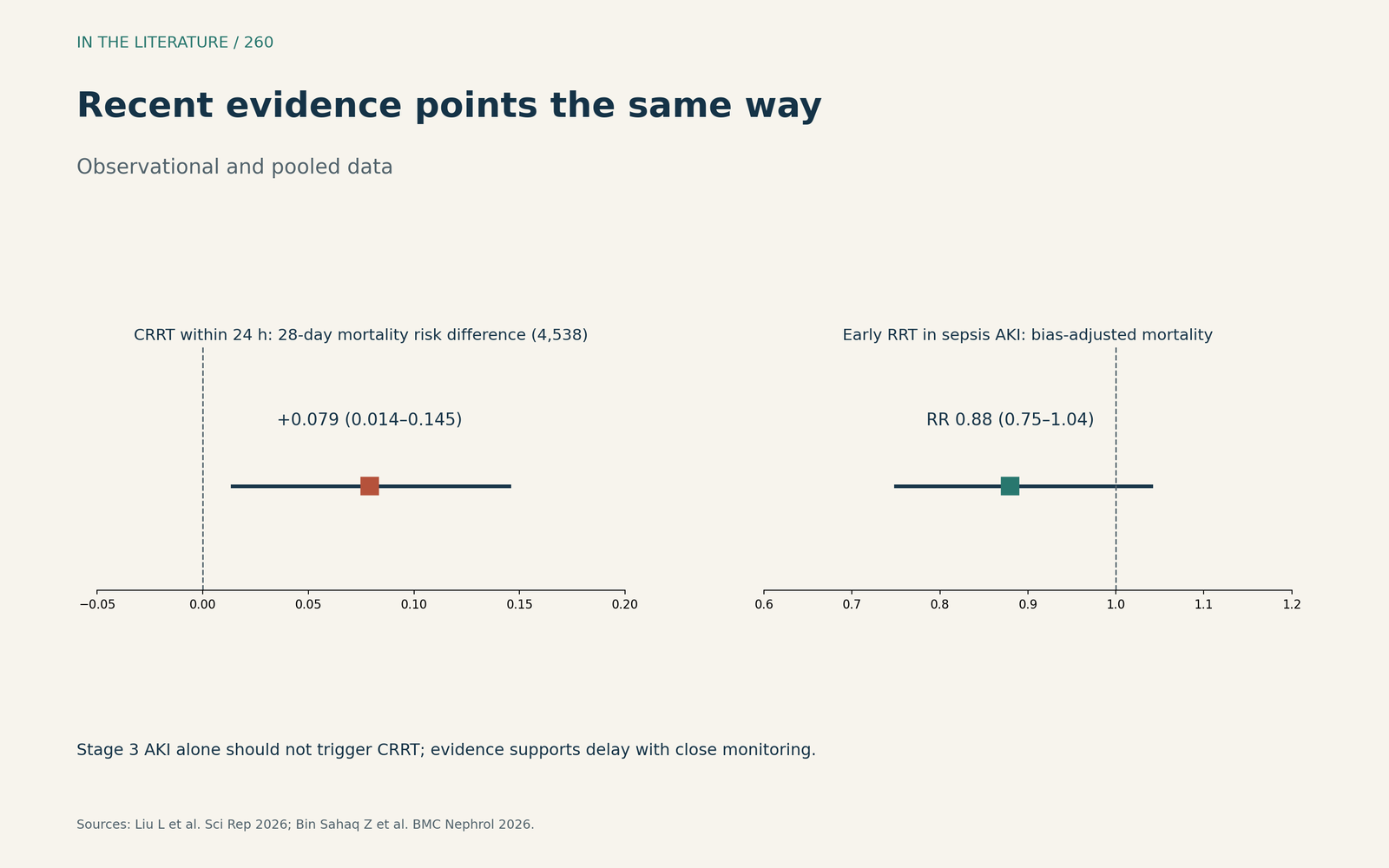
Figure 3. Newer data do not support routine early RRT. Data from Liu et al. and Bin Sahaq et al.[9], [10] View larger.

Three takeaways
- Without an urgent indication, do not start RRT just because AKI is severe; early starts add adverse events and dependence without survival benefit.[1], [3], [9]
- Watchful waiting spares many patients from RRT, but monitor closely and do not defer indefinitely.[2], [3], [4]
- Start when metabolic and fluid demands exceed kidney capacity, considering prognosis and patient preferences.[6]
References
- STARRT-AKI Investigators; Bagshaw SM, Wald R, Adhikari NKJ, et al. Timing of initiation of renal-replacement therapy in acute kidney injury. N Engl J Med. 2020;383(3):240–251. doi:10.1056/NEJMoa2000741
- Barbar SD, Clere-Jehl R, Bourredjem A, et al. Timing of renal-replacement therapy in patients with acute kidney injury and sepsis. N Engl J Med. 2018;379(15):1431–1442. doi:10.1056/NEJMoa1803213
- Gaudry S, Hajage D, Benichou N, et al. Delayed versus early initiation of renal replacement therapy for severe acute kidney injury: a systematic review and individual patient data meta-analysis of randomised clinical trials. Lancet. 2020;395(10235):1506–1515. doi:10.1016/S0140-6736(20)30531-6
- Gaudry S, Hajage D, Martin-Lefevre L, et al. Comparison of two delayed strategies for renal replacement therapy initiation for severe acute kidney injury (AKIKI 2): a multicentre, open-label, randomised, controlled trial. Lancet. 2021;397(10281):1293–1300. doi:10.1016/S0140-6736(21)00350-0
- Gaudry S, Hajage D, Schortgen F, et al. Initiation strategies for renal-replacement therapy in the intensive care unit. N Engl J Med. 2016;375(2):122–133. doi:10.1056/NEJMoa1603017
- Ostermann M, Bellomo R, Burdmann EA, et al. Controversies in acute kidney injury: conclusions from a Kidney Disease: Improving Global Outcomes (KDIGO) Conference. Kidney Int. 2020;98(2):294–309. doi:10.1016/j.kint.2020.04.020
- Gaudry S, Palevsky PM, Dreyfuss D. Extracorporeal kidney-replacement therapy for acute kidney injury. N Engl J Med. 2022;386(10):964–975. doi:10.1056/NEJMra2104090
- Ostermann M, Lumlertgul N, Jeong R, et al. Acute kidney injury. Lancet. 2025;405(10474):241–256. doi:10.1016/S0140-6736(24)02385-7
- Liu L, Yuan Y, Zhu M, et al. Initial continuous renal replacement therapy after stage 3 acute kidney injury without urgent dialysis indications in critically ill adults. Sci Rep. 2026;16:21988. doi:10.1038/s41598-026-53230-y
- Bin Sahaq Z, Alotaibi SMA, Ali MAM, et al. Timing of renal-replacement therapy in patients with acute kidney injury and sepsis: a systematic review and meta-analysis. BMC Nephrol. 2026;27:514. doi:10.1186/s12882-026-05132-4