ITL-714e7b4474a6
Juan Li, MD · Updated November 18, 2026
Key points
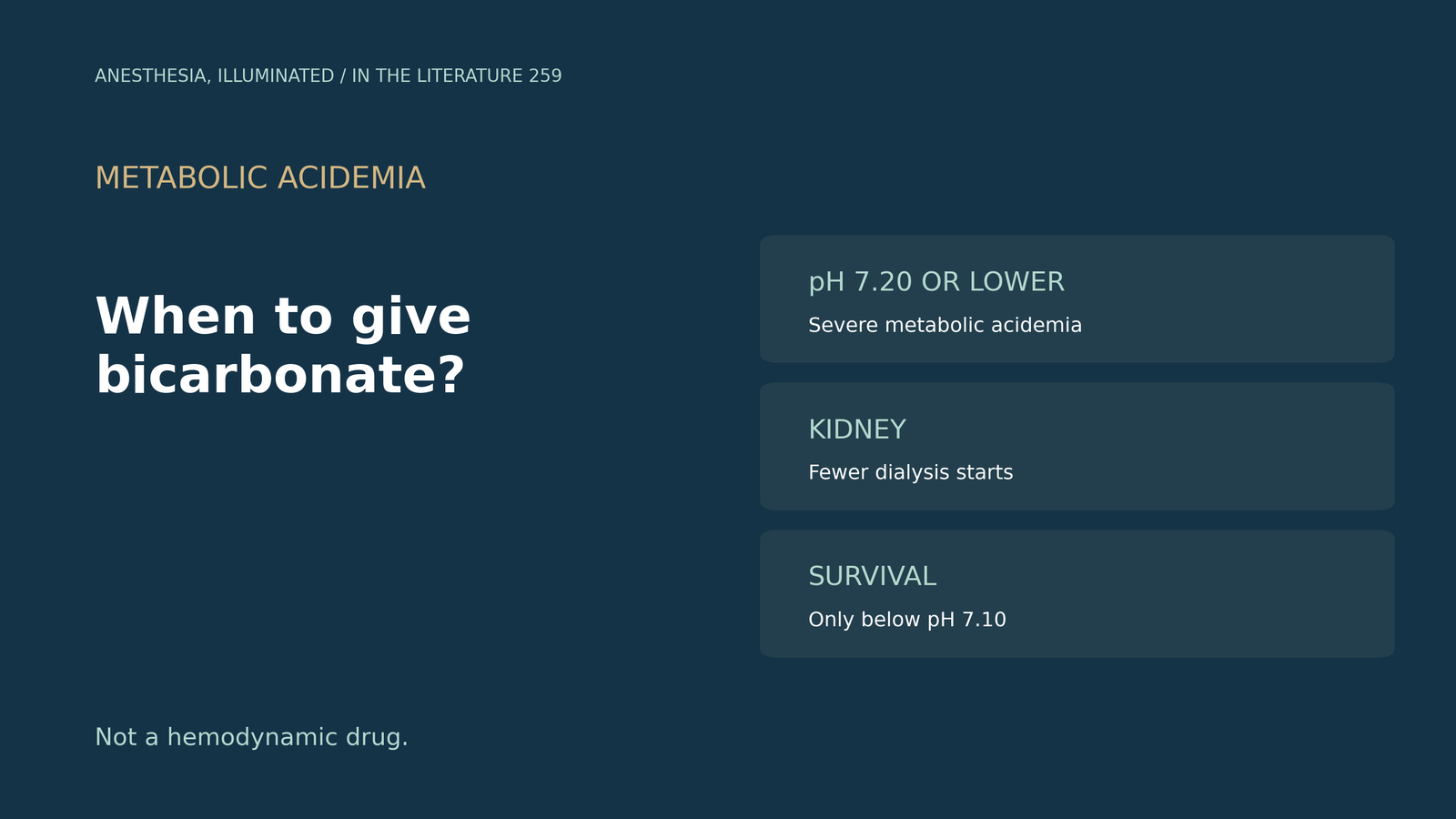
- Fewer dialysis starts, not fewer deaths overall. Pooled BICAR-ICU trials showed no significant 90-day mortality reduction (58.3% vs 60.6%), but renal replacement therapy fell from 50.7% to 34.8%.[1]
- The deepest acidemia may benefit most. Mortality fell only below pH 7.10 (RR 0.80).[1]
- Guideline: kidney injury, not hemodynamics. The Surviving Sepsis guideline suggests bicarbonate for septic shock with pH 7.2 or lower and AKI stage 2 or 3, but not to improve hemodynamics.[2]
- Observational data agree, with caveats. In 6157 ICU admissions, bicarbonate was associated with lower mortality, though confounding may remain.[3]
- Know the side effects. Bicarbonate lowers ionized calcium.[4] Even its advocates stress treating the cause.[5]
A patient with septic shock has severe metabolic acidemia and rising creatinine, and vasopressor needs are high. Should sodium bicarbonate be given, and for what goal?
What the randomized evidence shows
An individual patient data meta-analysis of BICAR-ICU and BICAR-ICU2 (Fosset et al., Crit Care 2026) included 1,016 adults with pH 7.20 or lower; bicarbonate was titrated to a pH of 7.30 or higher. Bicarbonate did not significantly reduce 90-day mortality (58.3% vs 60.6%; RR 0.96). Renal replacement therapy was started in 34.8% versus 50.7% (RR 0.69, 0.60 to 0.79), an absolute risk reduction of 16%, with 6.3 patients treated to avoid one start. Mortality fell only at pH below 7.10 (RR 0.80, 0.68 to 0.93), an effect modification judged credible. Serum sodium above 150 mmol/L occurred in 10% versus 4%, and the analysis included only two trials from one national health system.[1]
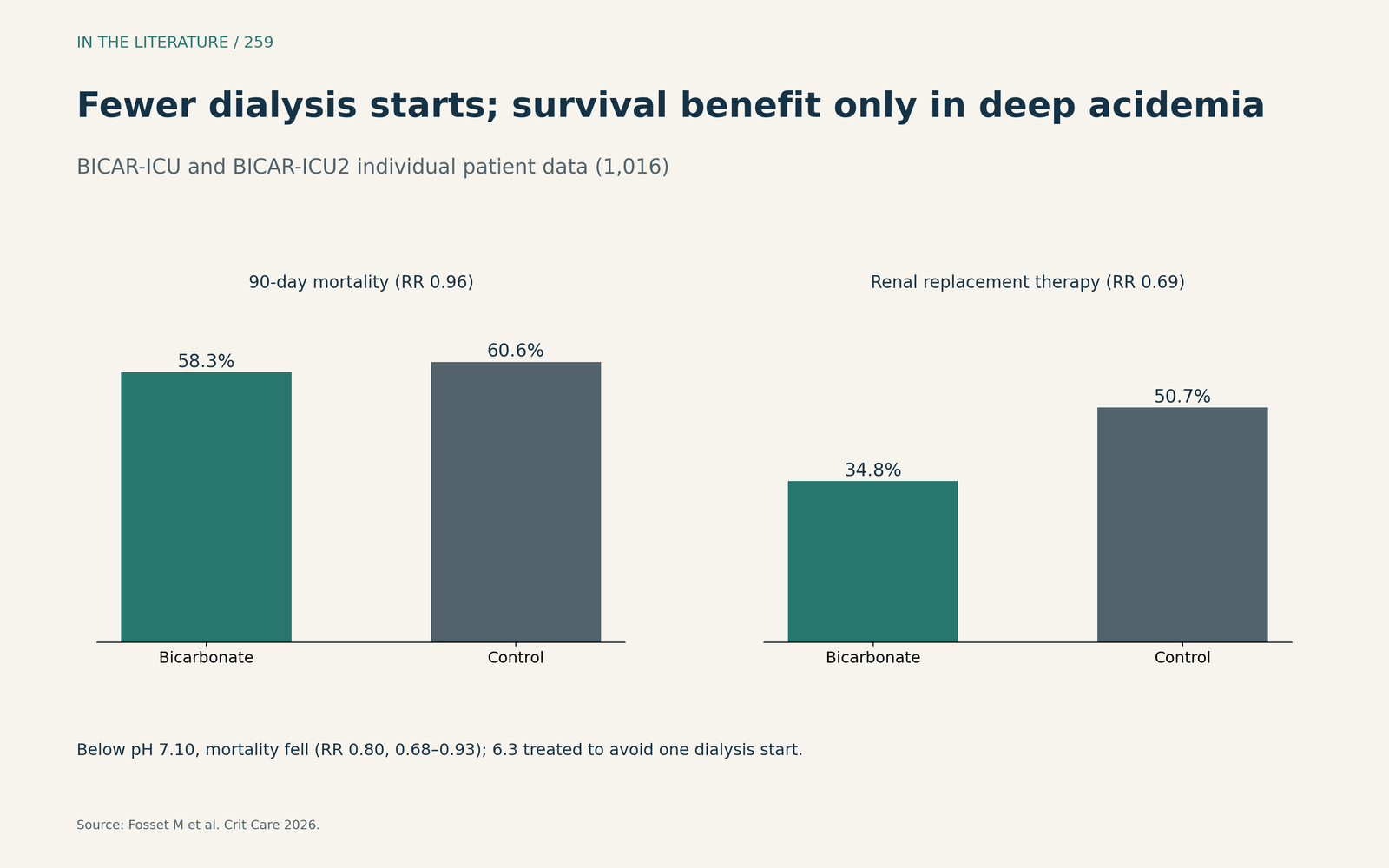
Figure 1. The clearest benefit is less renal replacement therapy. Data from Fosset et al.[1] View larger.

Guideline position and observational data
The Surviving Sepsis Campaign 2026 (Prescott et al., Intensive Care Med 2026) suggests against bicarbonate for hypoperfusion-induced lactic acidemia when the aim is to improve hemodynamics or reduce vasopressors (conditional, low certainty). For septic shock with pH 7.2 or lower and AKI stage 2 or 3, it suggests bicarbonate (conditional, very low certainty).[2] In a target trial emulation of 6157 ICU admissions (Blank et al., Intensive Care Med 2025), bicarbonate was associated with lower mortality (RR 0.86, 0.80 to 0.91), with greater effects in severe acidosis and in patients with AKI or vasoactive needs, but unresolved confounding may remain.[3]
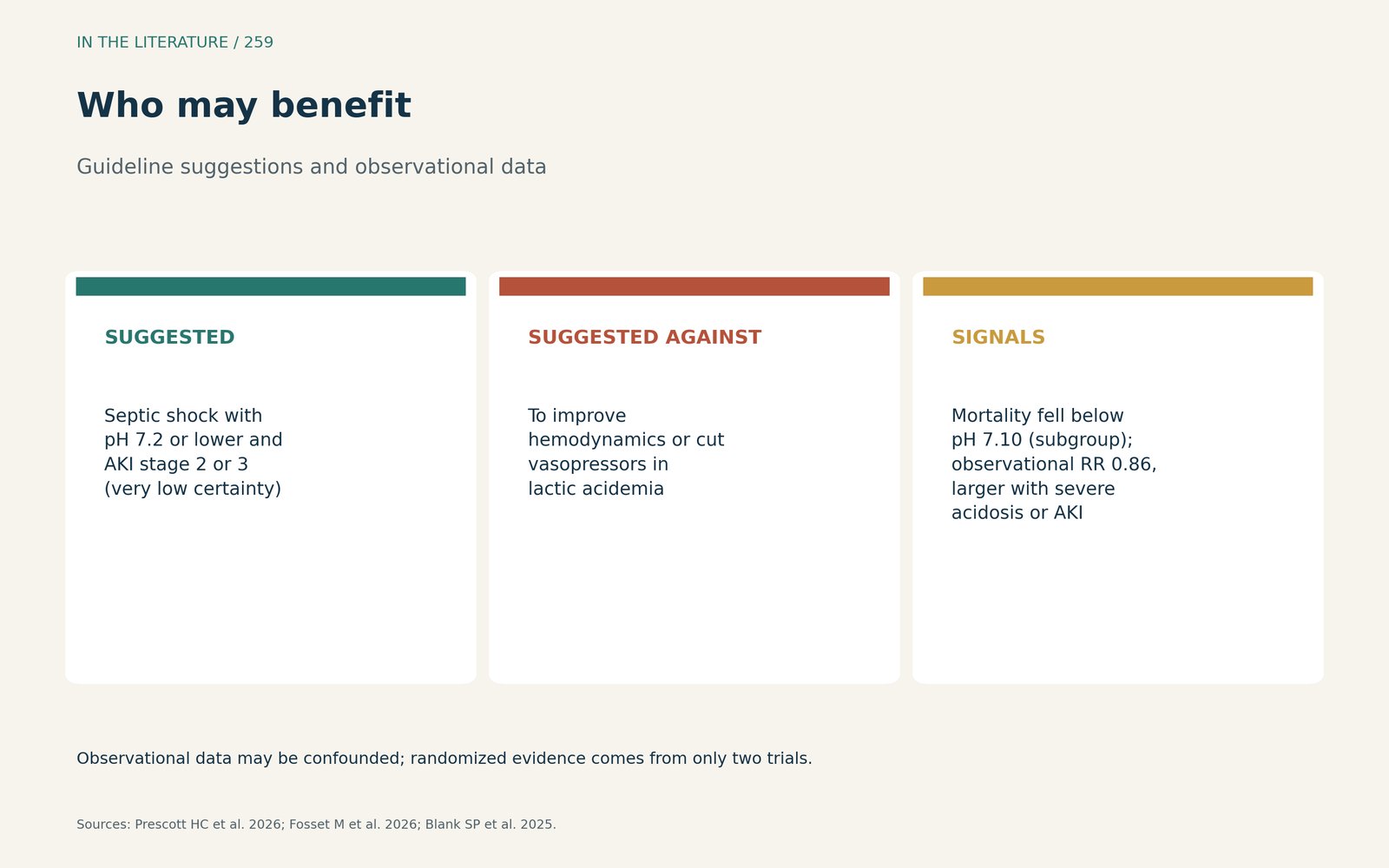
Figure 2. Severe acidemia with kidney injury is the clearest target. Synthesized from the Surviving Sepsis guideline, Fosset et al. and Blank et al.[2], [1], [3] View larger.

Practical cautions
A cardiac anesthesia pro-con debate frames the cautions. On the con side (Jia and Kumar, J Cardiothorac Vasc Anesth 2022), bicarbonate decreases ionized calcium, the 8.4% ampoule is around 2,000 mOsm/L, there is no robust evidence that it improves hemodynamics or outcomes in cardiac surgery, and the American Heart Association no longer recommends it in its advanced cardiac life support algorithm; management is primarily aimed at the underlying process.[4] Even the pro side (Smeltz and Arora) stresses that the underlying cause must be managed alongside bicarbonate.[5] A clinical focus review (Coppola et al., Anesthesiology 2021) notes that acute severe metabolic acidemia (pH below 7.20) occurs in about 6% of ICU patients with ICU mortality of 57%, that in some studies bicarbonate raised carbon dioxide without raising arterial pH, and that it should be treated as a drug with side effects.[6]
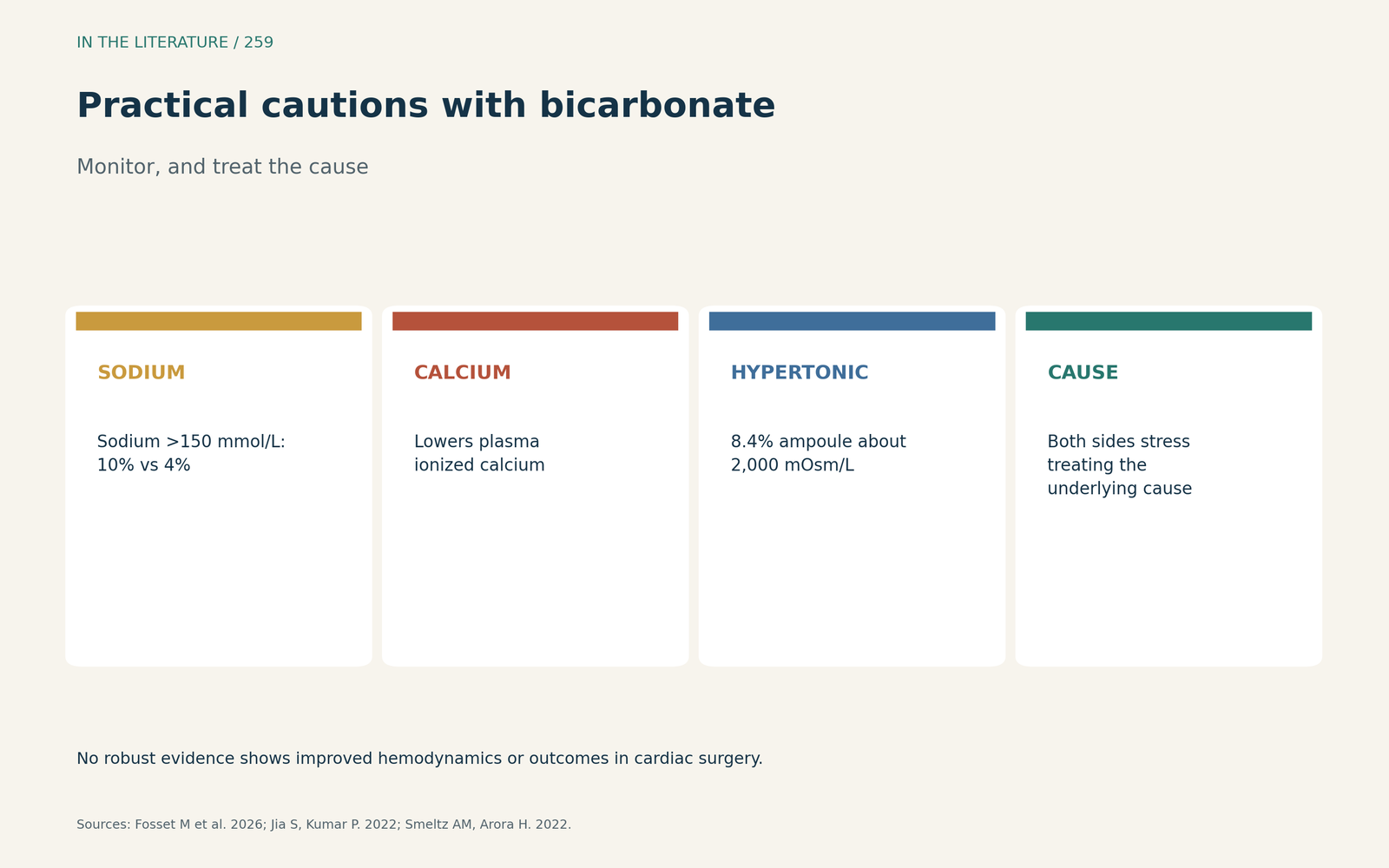
Figure 3. Monitor sodium and calcium, and treat the cause. Synthesized from Fosset et al., Jia and Kumar, and Smeltz and Arora.[1], [4], [5] View larger.

Three takeaways
- Consider bicarbonate for severe metabolic acidemia (pH 7.20 or lower), especially with acute kidney injury, to reduce the need for dialysis.[1], [2]
- Do not give it to improve hemodynamics in lactic acidemia; survival benefit is limited to deep acidemia below pH 7.10.[1], [2]
- Watch sodium and ionized calcium, and treat the underlying cause.[1], [4], [5]
References
- Fosset M, Pensier J, Jabaudon M, et al. Sodium bicarbonate therapy in severe metabolic acidemia: an individual patient data meta-analysis of the BICAR-ICU and BICAR-ICU2 trials. Crit Care. 2026;30:382. doi:10.1186/s13054-026-06206-3
- Prescott HC, Antonelli M, Alhazzani W, et al. Surviving Sepsis Campaign: international guidelines for management of sepsis and septic shock 2026. Intensive Care Med. 2026;52:863–936. doi:10.1007/s00134-026-08361-1
- Blank SP, Blank RM, Laupland KB, et al. Sodium bicarbonate administration for metabolic acidosis in the intensive care unit: a target trial emulation. Intensive Care Med. 2025;51(6):1078–1086. doi:10.1007/s00134-025-07979-x
- Jia S, Kumar P. Con: metabolic acidosis should not be corrected with sodium bicarbonate in cardiac surgical patients. J Cardiothorac Vasc Anesth. 2022;36(2):619–621. doi:10.1053/j.jvca.2021.10.021
- Smeltz AM, Arora H. Pro: metabolic acidosis should be corrected with sodium bicarbonate in cardiac surgical patients. J Cardiothorac Vasc Anesth. 2022;36(2):616–618. doi:10.1053/j.jvca.2021.10.023
- Coppola S, Caccioppola A, Froio S, et al. Sodium bicarbonate in different critically ill conditions: from physiology to clinical practice. Anesthesiology. 2021;134(5):774–783. doi:10.1097/ALN.0000000000003733