ITL-eee8b0a376b7
Juan Li, MD · Updated November 18, 2026
Key points
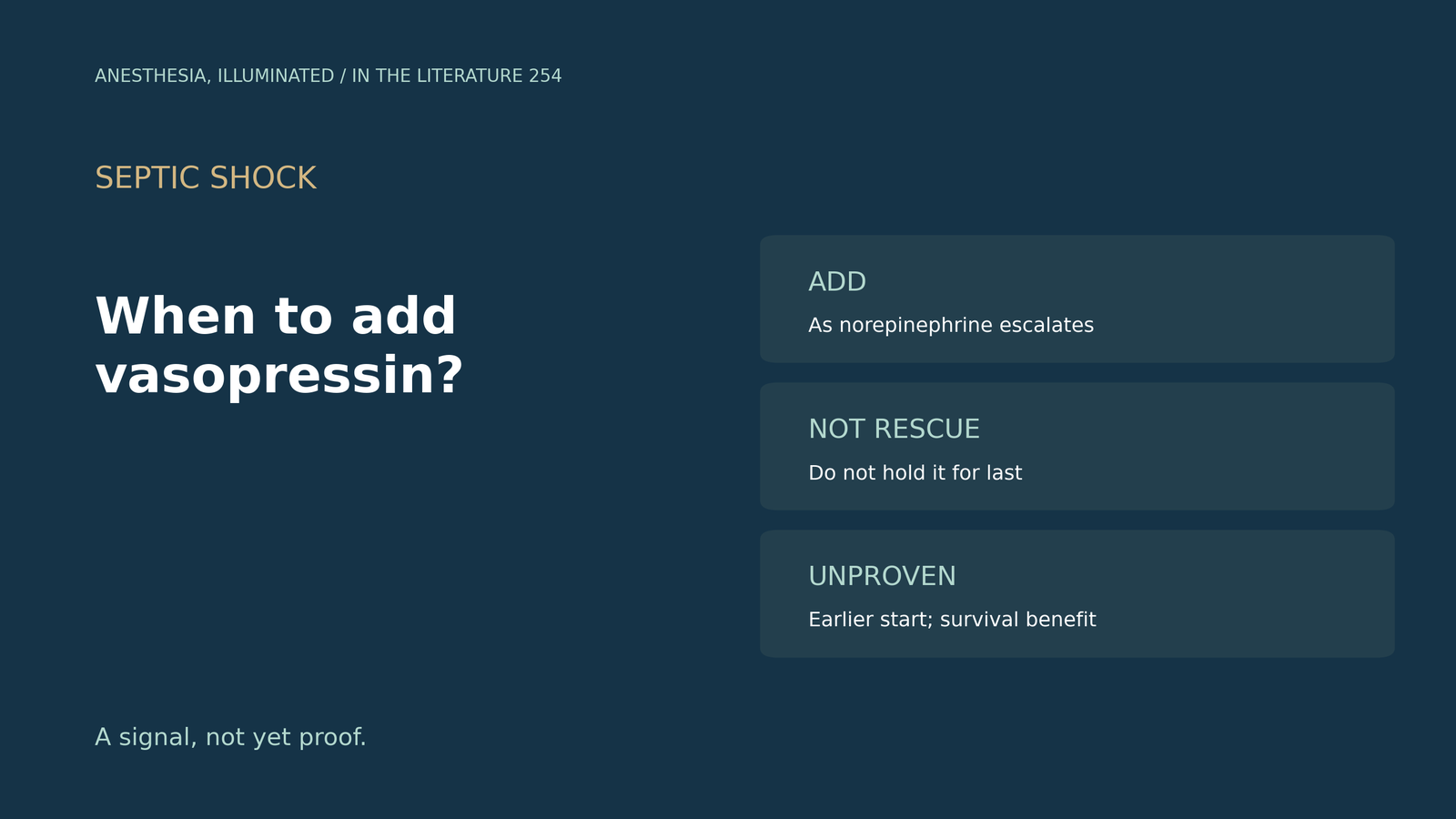
- Add, do not wait. For septic shock on escalating norepinephrine, the 2026 Surviving Sepsis guideline suggests adding vasopressin.[1]
- Mortality benefit is not proven. Pooled RCTs gave RR 0.89 (0.79 to 1.01), and to date vasopressin has shown no clear mortality benefit.[1], [2]
- Not a rescue drug. Reviews argue that vasopressin should no longer be considered a rescue vasopressor.[3]
- Earlier looks better, but is inconclusive. Early vasopressin was associated with lower short-term mortality (RR 0.84), but none of the studies had a low risk of bias.[4]
- Lower thresholds are investigational. Emerging data suggest starting at lower norepinephrine doses, an approach that is still investigational.[5] Randomized timing data are lacking.[6]
A patient with septic shock remains hypotensive after fluid resuscitation while the norepinephrine infusion keeps rising. Is it time to add vasopressin, and what should trigger it?
What the guideline and trials say
The Surviving Sepsis Campaign 2026 (Prescott et al., Intensive Care Med 2026) suggests adding vasopressin for adults with septic shock on escalating norepinephrine (conditional recommendation). Pooled RCTs suggested a probable mortality reduction (RR 0.89, 0.79 to 1.01; moderate certainty), but the confidence interval crosses 1. In VASST, 28-day mortality did not differ: 35.4% with vasopressin versus 39.3% with norepinephrine.[1]
A review (Lajoye et al., Crit Care 2025) notes that up to one-third of patients with septic shock may have vasopressin deficiency. The pivotal trials started at different points: the norepinephrine dose at inclusion was 0.16 μg/kg/min in VANISH versus 0.55 μg/kg/min in VASST, and time to vasopressin was 3.5 hours versus 12 hours. The authors suggest vasopressin as a second-line vasopressor at norepinephrine above 0.25–0.50 μg/kg/min, after excluding hypovolemia and cardiac dysfunction, and note that to date it has shown no beneficial effect on mortality.[2] In VANISH itself (Gordon et al., JAMA 2016), early vasopressin did not improve kidney failure-free days compared with norepinephrine, and 28-day mortality was 30.9% versus 27.5%, a non-significant difference.[7]
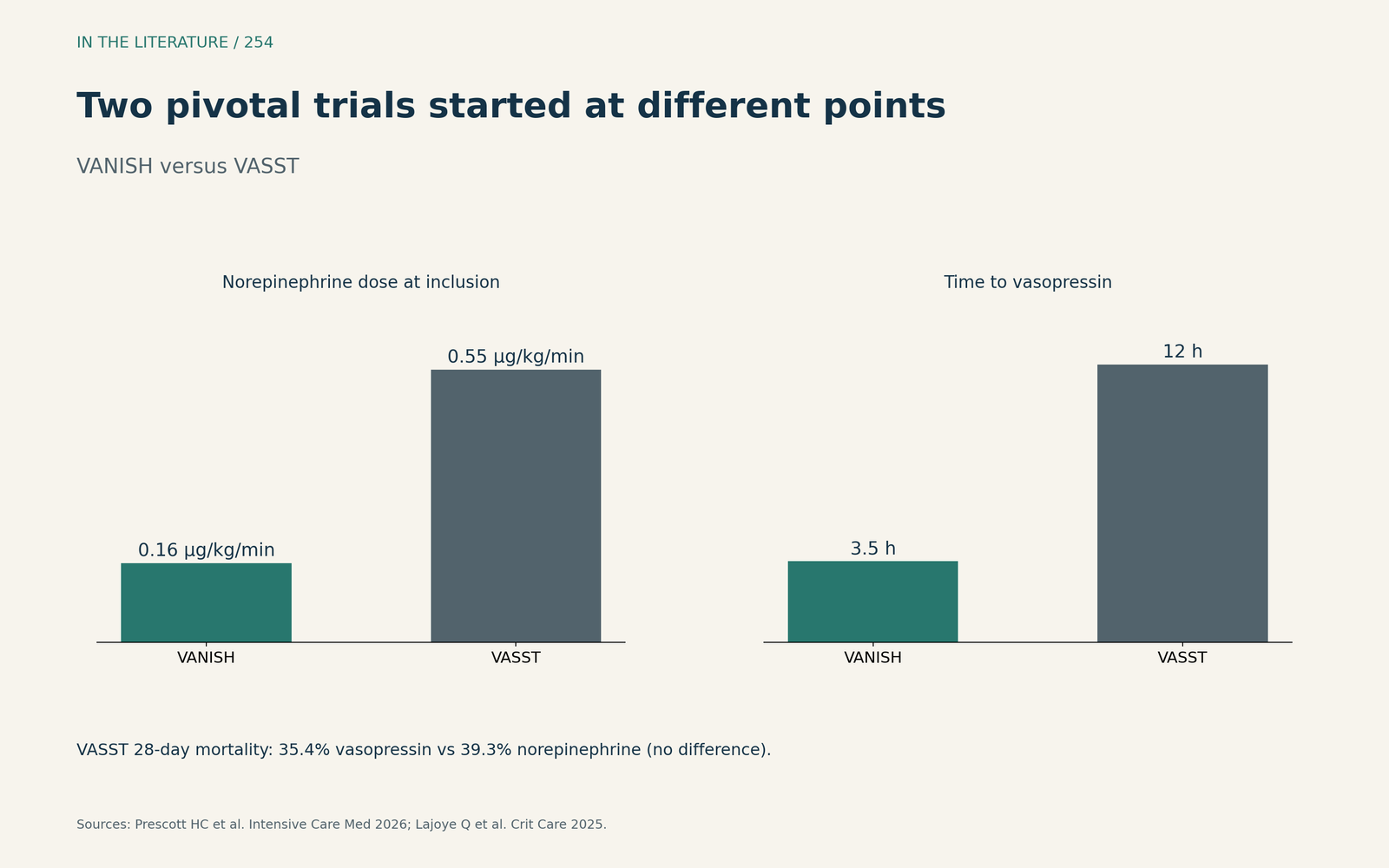
Figure 1. VANISH started earlier and at a lower norepinephrine dose than VASST. Data from Prescott et al. and Lajoye et al.[1], [2] View larger.

The case for starting earlier
Hamzaoui et al. (J Clin Med 2023) argue that vasopressin should no longer be considered a rescue vasopressor. In one cohort, each hour of delay raised the odds of the composite outcome; they advise caution when a hypodynamic shock state is suspected and consider a dose of 0.03 U/min reasonable.[3] Lajoye et al. suggest starting before acidemia occurs.[2] A meta-analysis of 3,993 patients (Bhattacharjee et al., Indian J Crit Care Med 2025) found early vasopressin associated with lower short-term mortality (RR 0.84, 0.71 to 0.99). However, none of the studies had a low risk of bias, and trial sequential analysis showed the required information size (about 4,426) was not reached, so the evidence is inconclusive.[4] A meta-analysis of 23 RCTs with 3088 patients (McIntyre et al., JAMA 2018) found that adding vasopressin to catecholamines was associated with less atrial fibrillation (RR 0.77, 0.67–0.88).[8]
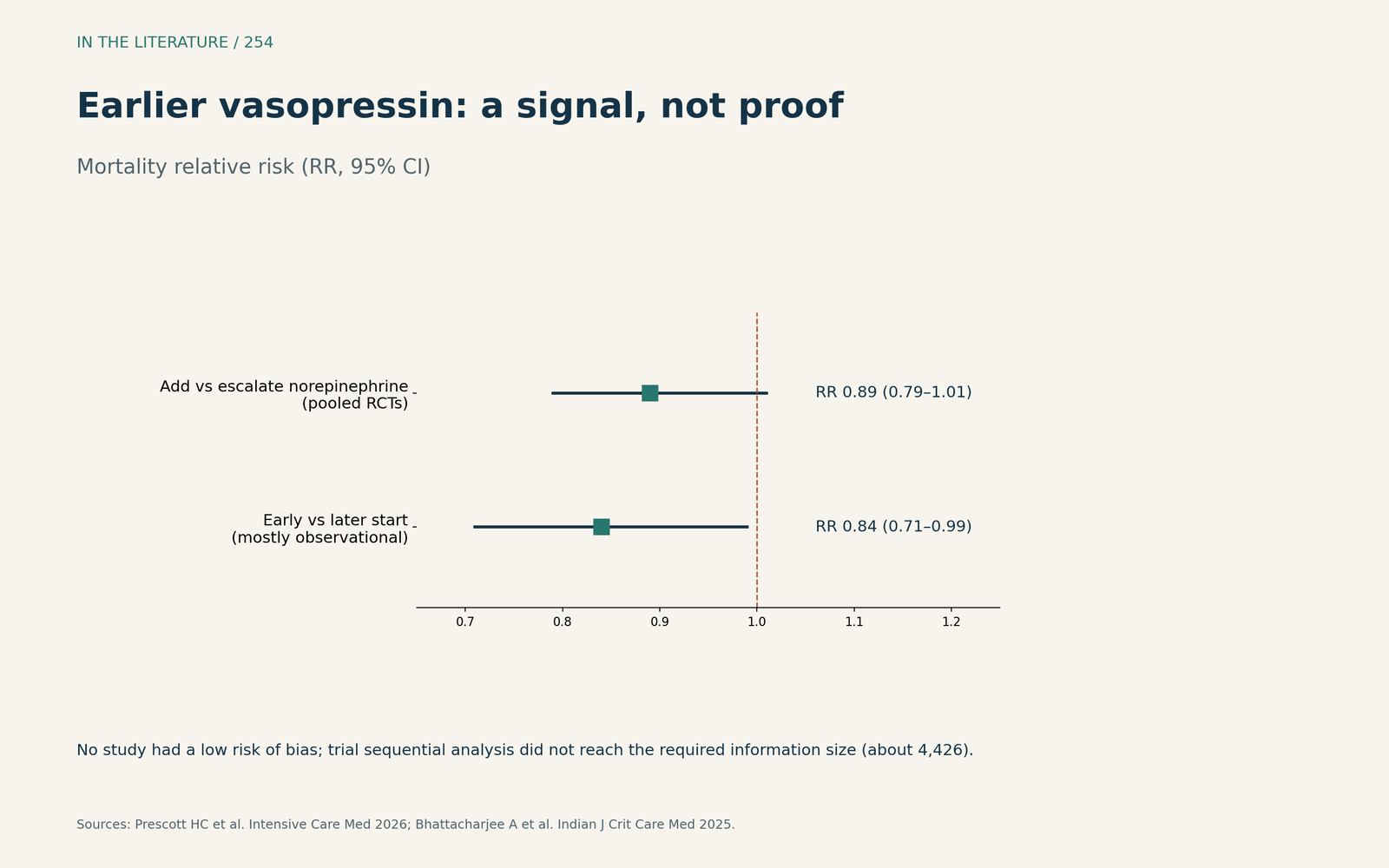
Figure 2. Point estimates favour adding or starting vasopressin earlier, but the evidence is uncertain. Data from Prescott et al. and Bhattacharjee et al.[1], [4] View larger.

Triggers and dose in practice
A 2026 review (Hiroto et al., Life 2026) reports that emerging data suggest vasopressin may be started at lower norepinephrine doses than currently recommended, but this remains investigational; most trials used a fixed dose of 0.03 U/min.[5] A machine-learning model suggested starting at a median norepinephrine dose of 0.20 μg/kg/min, and the guideline calls for research on timing.[1] That model is the OVISS rule (Kalimouttou et al., JAMA 2025): it would start vasopressin in more patients than clinicians did (87% vs 31%), and starting as the rule suggested was associated with lower hospital mortality (OR 0.81, 0.73–0.91), an observational finding that still needs randomized testing.[9] In a survey, norepinephrine dose alone was the most common trigger, and the lack of randomized data comparing timing strategies remains a key barrier (Muñoz and Cedeño, J Intensive Med 2026).[6]
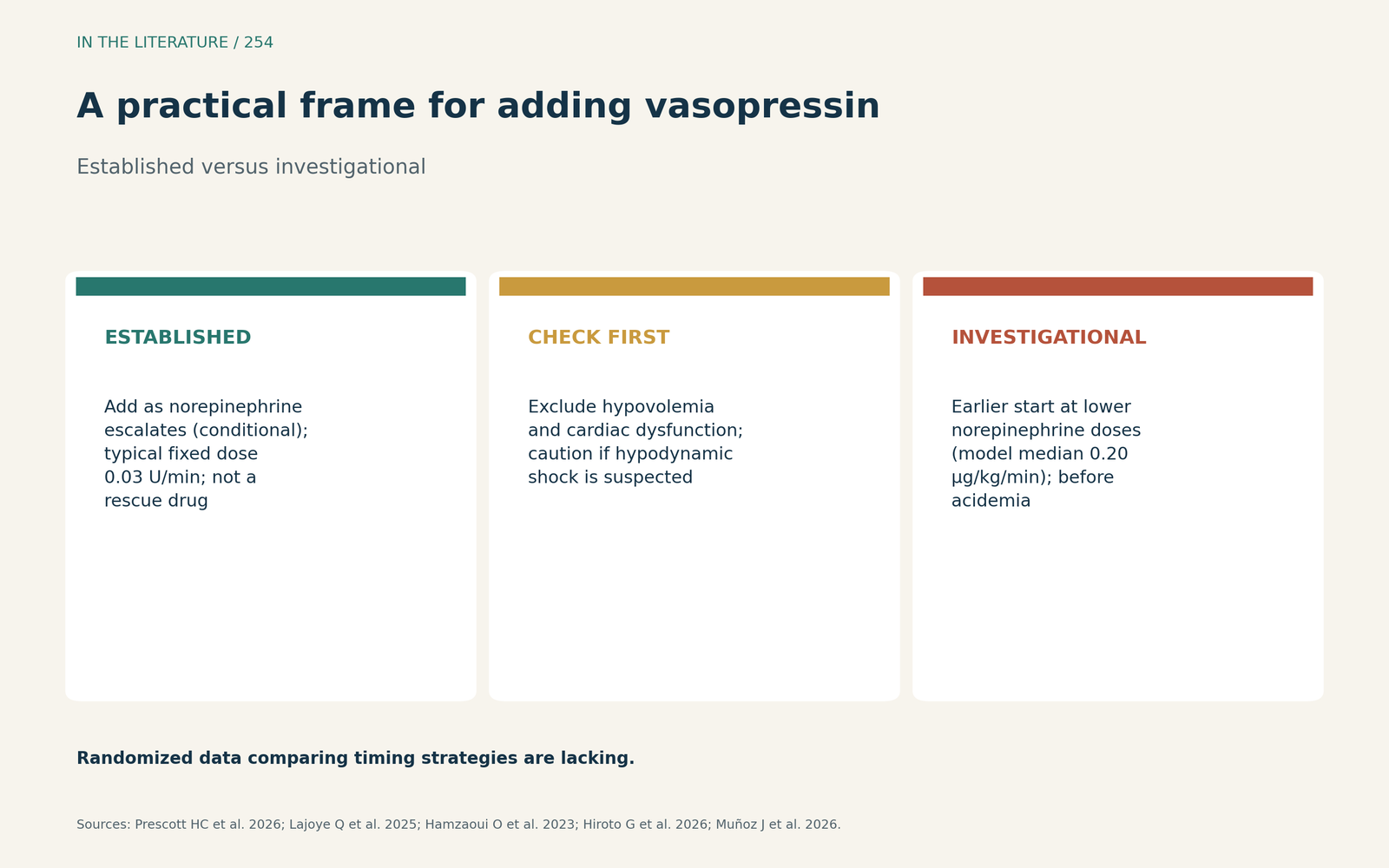
Figure 3. What is established and what is still investigational. Synthesized from Prescott et al., Lajoye et al., Hamzaoui et al. and Hiroto et al.[1], [2], [3], [5] View larger.

Three takeaways
- Add vasopressin as norepinephrine escalates rather than holding it as a late rescue.[1], [3]
- Do not expect a proven survival benefit: pooled and trial mortality differences are not significant.[1], [2]
- Earlier, lower-threshold starts are promising but investigational; check volume status and cardiac function first.[2], [4], [5]
References
- Prescott HC, Antonelli M, Alhazzani W, et al. Surviving Sepsis Campaign: international guidelines for management of sepsis and septic shock 2026. Intensive Care Med. 2026;52:863–936. doi:10.1007/s00134-026-08361-1
- Lajoye Q, Orieux A, Boyer A, et al. Vasopressin and its analogues in patients with septic shock: holy Grail or unfulfilled promise? Crit Care. 2025;29(1):333. doi:10.1186/s13054-025-05540-2
- Hamzaoui O, Goury A, Teboul JL. The eight unanswered and answered questions about the use of vasopressors in septic shock. J Clin Med. 2023;12(14):4589. doi:10.3390/jcm12144589
- Bhattacharjee A, Datta PK, Kumar V, et al. Timing of vasopressin initiation in patients with septic shock: an updated systematic review and meta-analysis with trial sequential analysis. Indian J Crit Care Med. 2025;29(10):839–850. doi:10.5005/jp-journals-10071-25054
- Hiroto G, Nishikimi M, Shime N. Optimizing timing and dose of starting norepinephrine and vasopressin in septic shock. Life (Basel). 2026;16(6):913. doi:10.3390/life16060913
- Muñoz J, Cedeño JA. When should we start vasopressin in septic shock? Revisiting an old question. J Intensive Med. 2026;6(1):22–24. doi:10.1016/j.jointm.2025.08.007
- Gordon AC, Mason AJ, Thirunavukkarasu N, et al. Effect of early vasopressin vs norepinephrine on kidney failure in patients with septic shock: the VANISH randomized clinical trial. JAMA. 2016;316(5):509–518. doi:10.1001/jama.2016.10485
- McIntyre WF, Um KJ, Alhazzani W, et al. Association of vasopressin plus catecholamine vasopressors vs catecholamines alone with atrial fibrillation in patients with distributive shock: a systematic review and meta-analysis. JAMA. 2018;319(18):1889–1900. doi:10.1001/jama.2018.4528
- Kalimouttou A, Kennedy JN, Feng J, et al. Optimal vasopressin initiation in septic shock: the OVISS reinforcement learning study. JAMA. 2025;333(19):1688–1698. doi:10.1001/jama.2025.3046