ITL-39b67f7465fe
Juan Li · In the Literature · Updated November 16, 2026
Watch the video
Key points
- An unsuitable femoral route should trigger reassessment of surgical valve replacement, as well as alternative-access TAVR.
- When alternative TAVR access is appropriate, current SCAI consensus favors an extrathoracic route; transcarotid or transcaval access is generally preferred over transaxillary access when anatomy permits.
- These preferences rest largely on observational comparisons. They do not establish a universal ranking or prove that transcarotid access is better than transcaval access.
- CT-defined anatomy and the team's ability to perform, close and rescue the selected access route are central to the choice.
- Intravascular lithotripsy may preserve transfemoral delivery in selected patients, but a technically achievable femoral route is not automatically the safest strategy.
First reconsider the treatment, then the access
The valve is suitable for TAVR, but the iliofemoral arteries are small, calcified or tortuous. The next decision is broader than choosing a different puncture site: is TAVR still the preferred treatment for this patient, and what would make its delivery acceptably safe?
The 2025 ESC/EACTS guideline emphasizes that the randomized evidence supporting TAVR largely concerns transfemoral procedures. When iliofemoral disease prevents that approach, SAVR remains preferred if surgery is suitable. Nontransfemoral TAVI should be considered when both surgery and transfemoral access are unsuitable—a Class IIa, level B recommendation. Thus, the access problem belongs in a renewed Heart Team discussion of operative risk, anatomy, expected recovery, lifetime management and the patient's preferences. [1]
For patients proceeding to alternative-access TAVR, the 2025 SCAI consensus favors extrathoracic routes over transapical or direct-aortic access. It generally favors transcarotid or transcaval over transaxillary access when anatomically feasible. This is a conditional recommendation informed by observational evidence and expert judgment; it is not an instruction to force either route through unsuitable anatomy. [2]
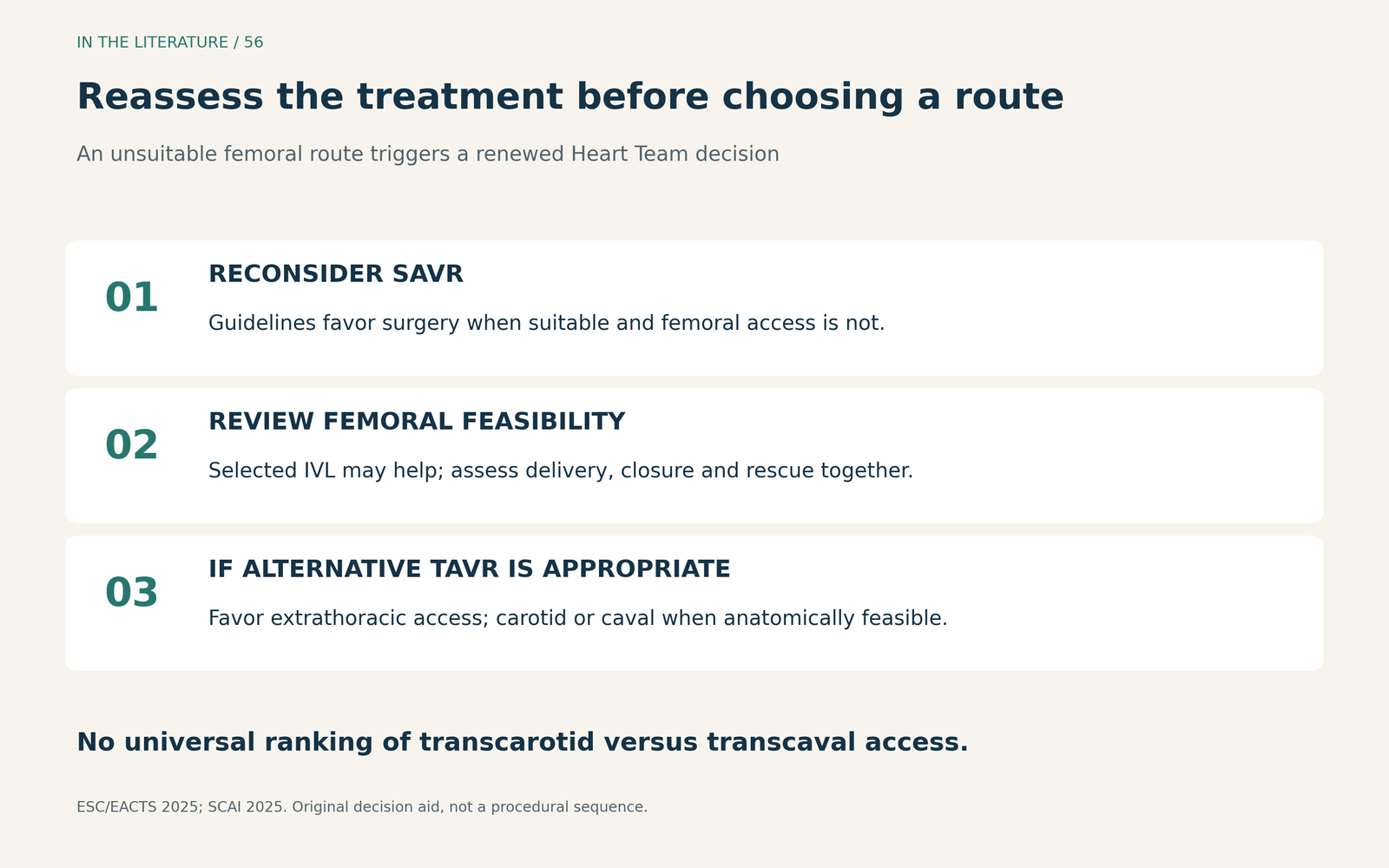
Figure 1. An original decision aid based on ESC/EACTS and SCAI guidance. The branches describe decisions for the Heart Team, not mandatory procedural steps. A feasible extrathoracic option is generally preferred to a transthoracic route; there is no universal ordering of transcarotid and transcaval access. [1, 2] View figure

What supports moving beyond transaxillary access?
Two direct comparisons help explain the current preference, but their endpoints must remain separate.
Allen and colleagues' TVT Registry analysis studied self-expanding Evolut valves. After propensity matching, there were 576 transcarotid and 1,142 transaxillary patients. At 30 days, Kaplan–Meier stroke estimates were 3.1% versus 5.9%, respectively; mortality estimates were 3.7% versus 4.3%, without a significant mortality difference. This supports an association between transcarotid access and less stroke in this population. It does not prove causation, establish mortality equivalence, or guarantee the same difference with another valve platform or local technique. [3]
Lederman and colleagues' comparison from experienced centers included 238 transcaval and 106 transaxillary patients. In-hospital stroke or TIA occurred in 6/238 versus 14/106 patients: 2.5% versus 13.2%. The adjusted odds ratio was 0.20 (95% CI, 0.06–0.72). These are in-hospital composite neurological events, not the same 30-day stroke endpoint used by Allen. The study was nonrandomized, and its experience requirement matters when considering implementation elsewhere. [4]
The two studies therefore support considering both transcarotid and transcaval access, but they do not compare those two routes with each other. SCAI does not designate one of them as the universal winner. [2]
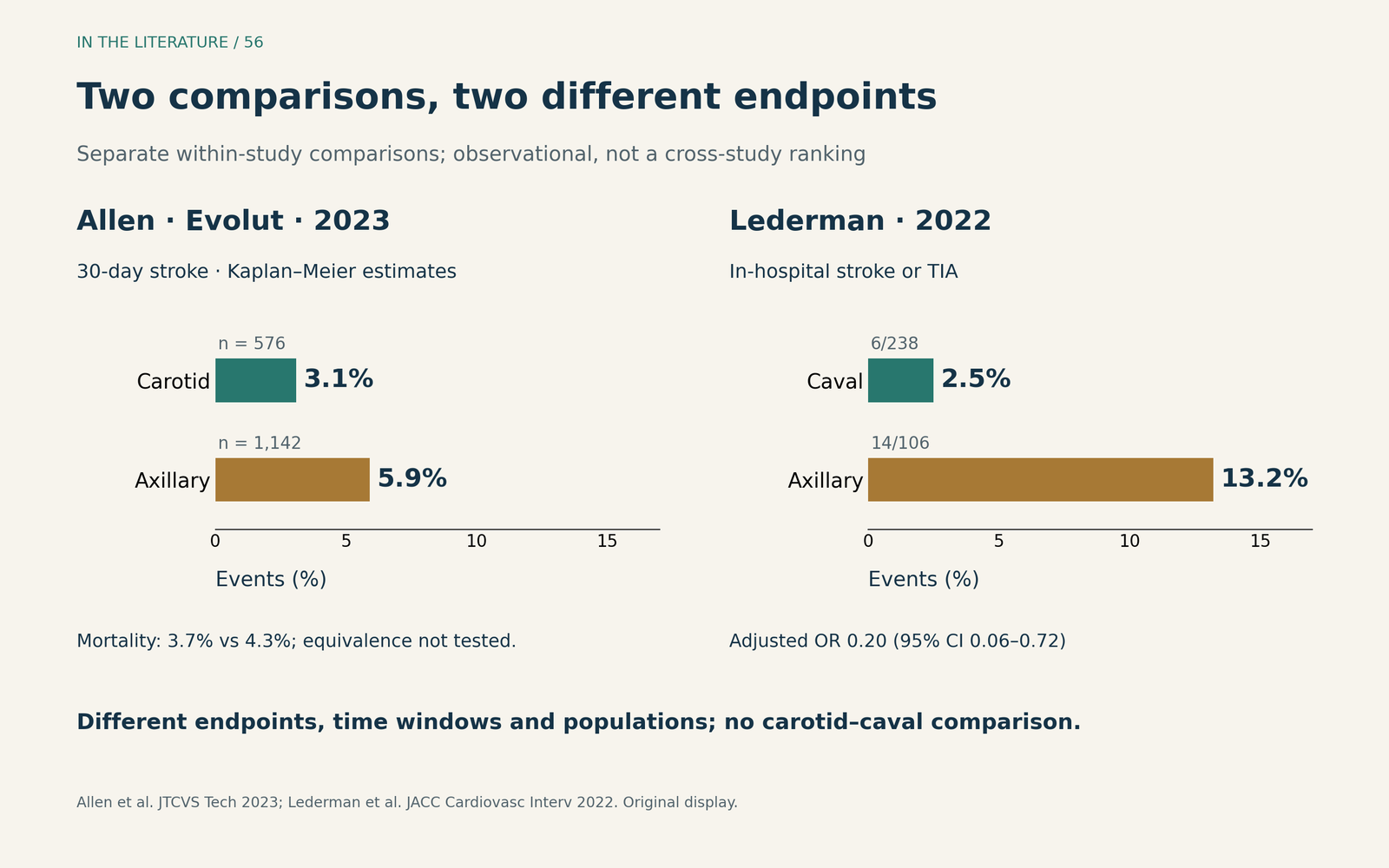
Figure 2. Original display of separate within-study comparisons. Allen's percentages are Kaplan–Meier estimates; Lederman's percentages accompany observed event counts. Different populations, valve selection, endpoints and time windows preclude comparing the two panels as a route ranking. The transcaval odds ratio is adjusted; the displayed event proportions are unadjusted. [3, 4] View figure

Choose a route the anatomy and the team can support
Access review should cover the entire delivery pathway, including lumen, calcium distribution, tortuosity and relevant vascular disease. A single diameter threshold cannot stand in for device-specific compatibility and the rest of the CT assessment. [2]
For transcarotid access, evaluate the access artery, tortuosity and carotid disease using the standard TAVR imaging assessment, with additional testing when clinically indicated. SCAI does not recommend routine extra imaging solely to demonstrate an intact circle of Willis. For transcaval access, CT must identify a suitable crossing target and support a plan for closure and bailout; severe pulmonary hypertension or right ventricular dysfunction may make residual shunting less tolerable. These are considerations for selection, not claims that either route is suitable for every patient. [2]
Transaxillary access remains an option when other routes are unsuitable or when its anatomy and the team's expertise favor it. Review the artery and its relationship to an ipsilateral internal thoracic coronary graft. A favorable published average cannot replace an individualized assessment, and the availability of one familiar technique should not exclude referral for another suitable route. Both SCAI and ESC/EACTS emphasize appropriate center expertise. [1, 2]
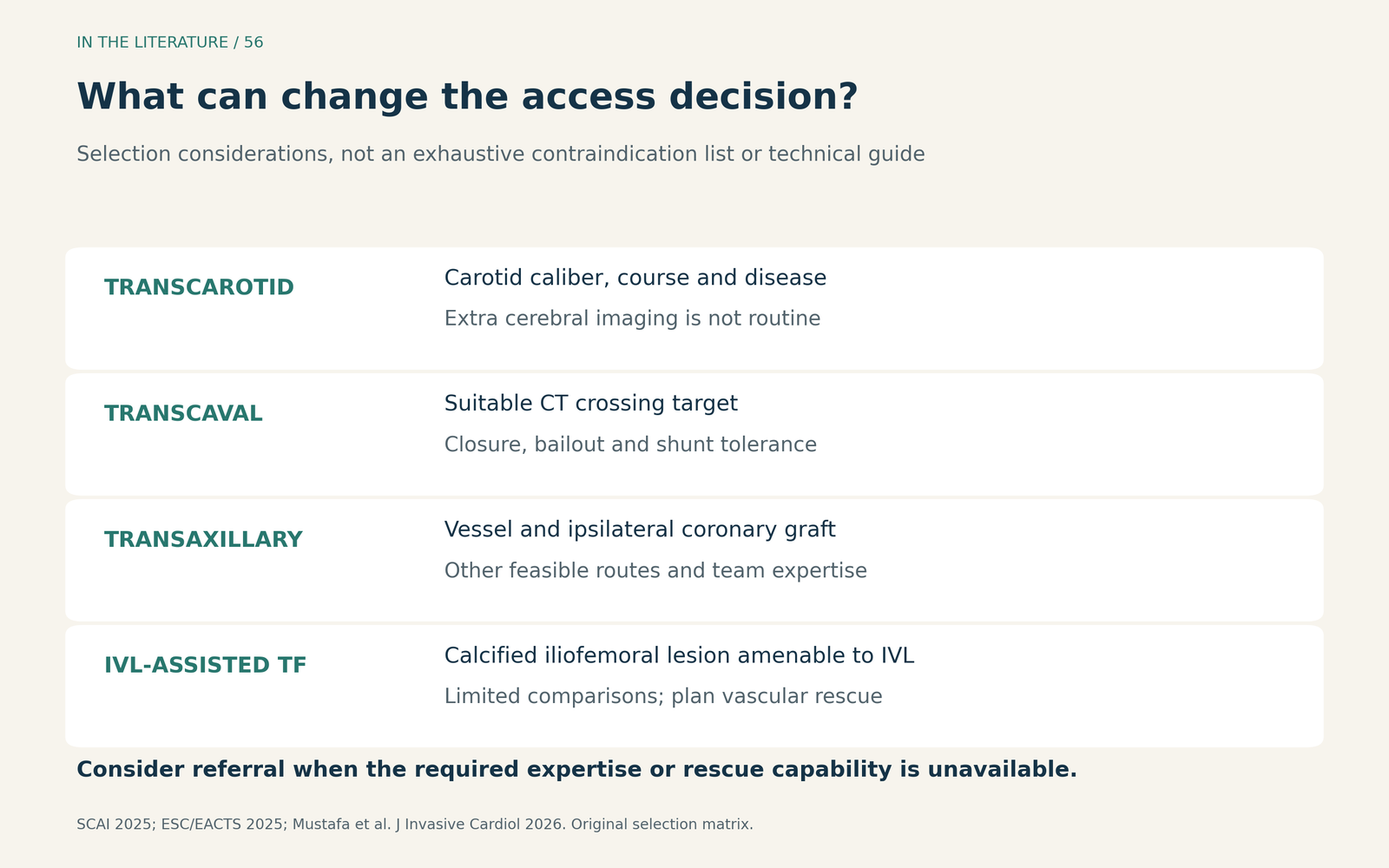
Figure 3. Original selection matrix, not a procedural checklist or a validated score. The issues shown identify what can change the decision; they are not exhaustive contraindications. Anesthesia and closure details require a separate patient-specific plan. [1, 2, 5] View figure

Can lithotripsy keep the procedure transfemoral?
Intravascular lithotripsy, or IVL, can modify selected calcified iliofemoral lesions and allow delivery that would otherwise be difficult. The question is whether the anticipated gain outweighs vascular injury and rescue risk—not whether a sheath can eventually be advanced.
In Mustafa and colleagues' 2026 retrospective study, 24 patients received IVL-facilitated transfemoral TAVR and 126 received alternative access. The discharge composite of death, stroke, or major/minor vascular complications occurred in 2/24 versus 17/126 patients: 8% versus 14% (P=.49). This small comparison established neither superiority nor equivalence. The alternative group mixed subclavian, carotid, axillary and transthoracic procedures and contained no transcaval cases; it does not settle IVL versus today's best anatomically suitable transcarotid or transcaval option. [5]
The 2025 NORTHOSTAVI registry adds a useful reminder about generalizability. Its 531 patients across 14 centers received several access strategies, but operators selected the route and five centers offered only one alternative technique. The small transcaval group was excluded from the adjusted route comparisons. Such evidence helps characterize real practice; it cannot establish which route would be best for a patient eligible for several alternatives. [6]
The practical implication is to discuss IVL as one potential solution to a specific anatomical obstacle, alongside other access routes and surgery. The planned route should include a credible rescue strategy and an honest explanation of the uncertainty—not a promise that retaining femoral access is inherently better. [1, 2, 5]
Three takeaways
- Reopen the treatment decision when femoral access fails. A patient suitable for surgery should not be moved automatically to alternative-access TAVR.
- Use transcarotid and transcaval access as conditional options, not a rigid ranking. Their observational advantages over transaxillary access must be interpreted within each study's population and endpoint.
- Match anatomy to expertise and rescue capability. This applies equally to a new alternative route and to IVL-assisted femoral delivery; referral may be the better plan when the necessary capability is unavailable locally.
References
- Praz F, Borger MA, Lanz J, et al. 2025 ESC/EACTS Guidelines for the management of valvular heart disease. Eur J Cardiothorac Surg. 2025;67(8):ezaf276. doi:10.1093/ejcts/ezaf276.
- Sherwood M, Allen KB, Dahle TG, et al. SCAI Expert Consensus Statement on Alternative Access for Transcatheter Aortic Valve Replacement. J Soc Cardiovasc Angiogr Interv. 2025;4(3 Part A):102514. doi:10.1016/j.jscai.2024.102514.
- Allen KB, Watson D, Vora AN, et al. Transcarotid versus transaxillary access for transcatheter aortic valve replacement with a self-expanding valve: A propensity-matched analysis. JTCVS Tech. 2023;21:45-55. doi:10.1016/j.xjtc.2023.07.019.
- Lederman RJ, Babaliaros VC, Lisko JC, et al. Transcaval Versus Transaxillary TAVR in Contemporary Practice: A Propensity-Weighted Analysis. JACC Cardiovasc Interv. 2022;15(9):965-975. doi:10.1016/j.jcin.2022.03.014.
- Mustafa A, Wang D, Dutton C, et al. Early outcomes of facilitated transfemoral versus alternative access for transcatheter aortic valve replacement in patients with peripheral arterial disease. J Invasive Cardiol. 2026;38(5). doi:10.25270/jic/25.00171.
- Kefer J, Kobari Y, Briki R, et al. The NORTh Europe HOStile access TAVI (NORTHOSTAVI) registry. Front Cardiovasc Med. 2025;12:1674218. doi:10.3389/fcvm.2025.1674218.