
ITL-f6287f4eb9af
Juan Li, MD · Updated November 18, 2026
Key points
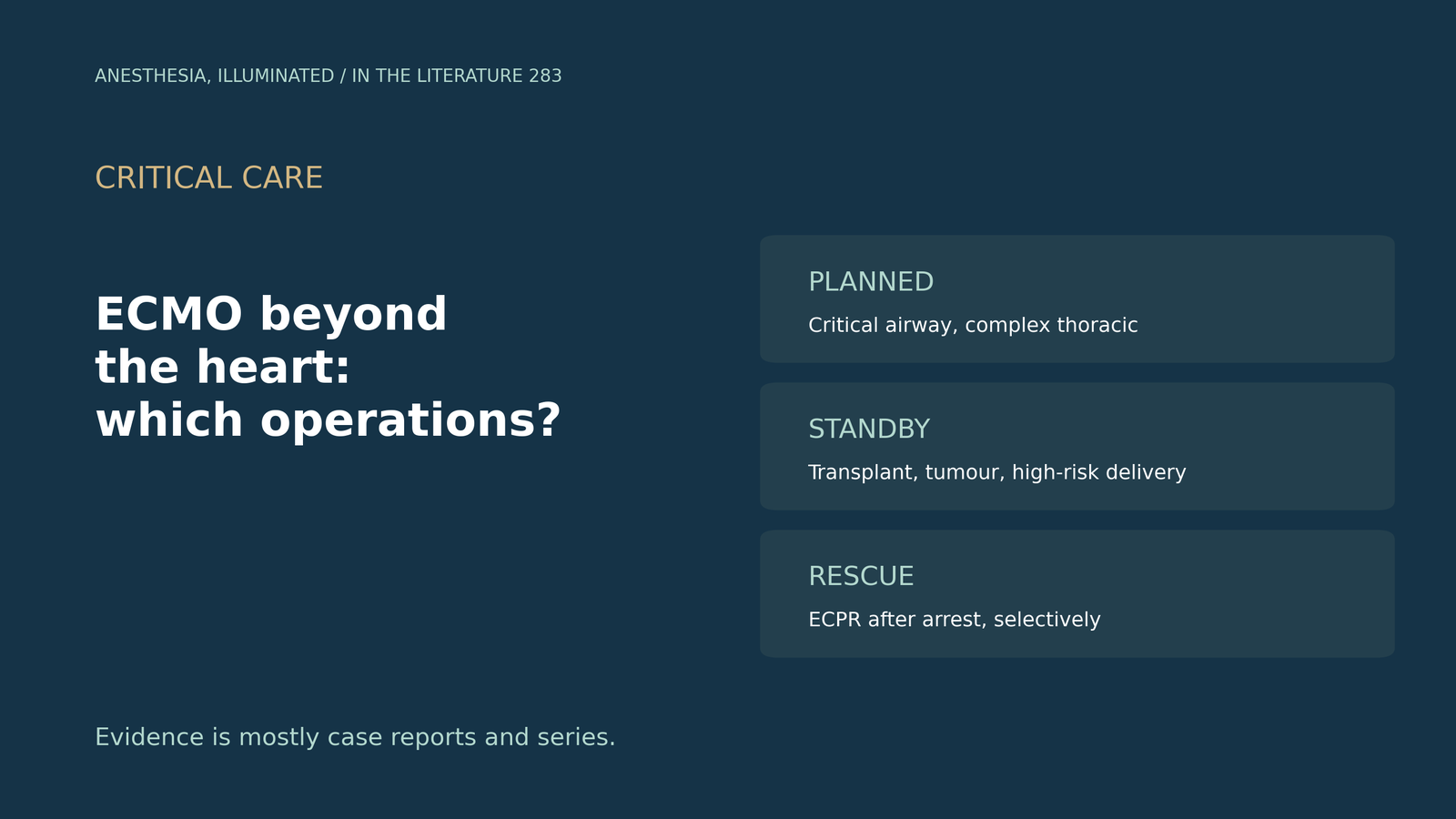
- Airway first. ECMO should be started before induction when complete airway obstruction is anticipated, though evidence is mostly case-based.[1]
- Thoracic surgery is the main planned use. ECMO supports complex airway resections and patients who cannot tolerate one-lung ventilation.[2]
- Many airway cases need none. Most tracheal obstructions can be managed without ECMO or bypass.[3]
- Cardiac support in thoracic surgery is rare. Only 28 such patients were found, mostly bail-out after bleeding.[4]
- Beyond the chest, and for rescue, use is selective. Liver transplant, IVC tumour and high-risk delivery have reported use; ECPR after perioperative arrest should be selective.[5], [6], [7], [8]
A patient with a tumour narrowing the distal trachea is scheduled for resection. Should ECMO be set up before the anaesthetic, kept on standby, or not used at all?
Airway and thoracic surgery
Most evidence for perioperative ECMO in noncardiac surgery comes from case reports and case series (Foong et al., J Cardiothorac Vasc Anesth 2021). ECMO cannulation before induction is recommended in patients with high-risk features, and ECMO should be started pre-emptively if complete airway obstruction is anticipated during anaesthesia. ECMO has become the preferred alternative to CPB for intraoperative support in lung transplantation.[1]
ECMO is now viable in complex airway resections and for functionally borderline operative candidates, and it can support patients undergoing thoracic resection who cannot tolerate single-lung ventilation (Campany et al., J Thorac Dis 2024). Femoral 5-Fr micropuncture catheters can be placed under ultrasound beforehand to allow rapid cannulation.[2] Still, most cases of tracheal obstruction can be managed without ECMO or CPB (Misra et al., J Cardiothorac Vasc Anesth 2021).[3]
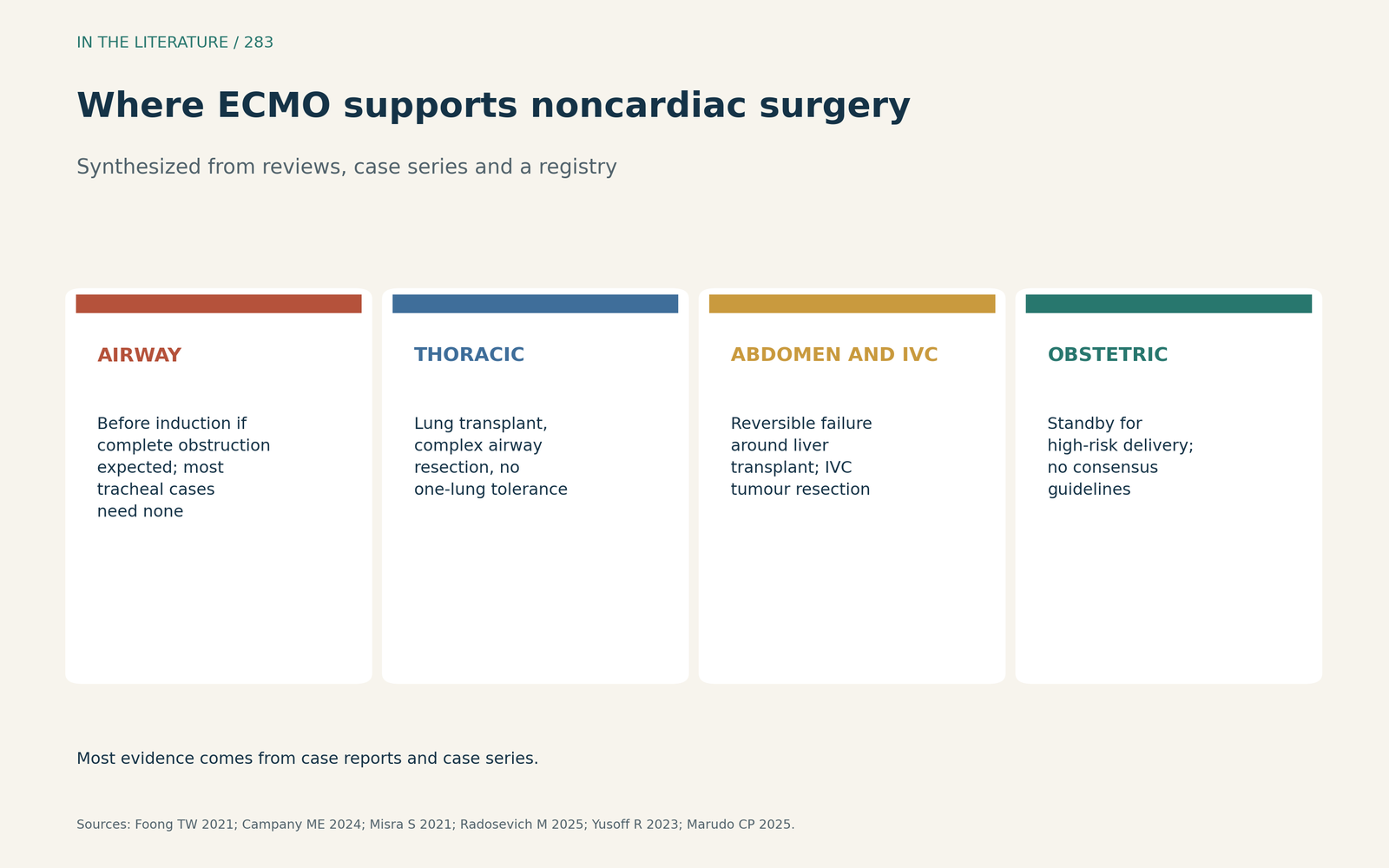
Figure 1. Planned use concentrates on the airway and chest; abdominal and obstetric use is selective. Synthesized from Foong et al., Campany et al., Misra et al., Radosevich et al., Yusoff et al. and Marudo et al.[1], [2], [3], [5], [6], [7] View larger.

When the threat is cardiac rather than respiratory, data are thin. A scoping review found only 28 patients who received temporary MCS for cardiac support in thoracic surgery (Agosta et al., Artif Organs 2025). Mortality in the pre-emptive group was half that of the bail-out group, but the difference was not statistically significant (RR 0.5; p = 0.55). The main reason for V-A ECMO was haemorrhagic shock during surgical dissection, and the authors describe the evidence as largely anecdotal.[4]
Abdominal, vascular and obstetric surgery
In pooled reports of ECMO around liver transplantation, survival to discharge was 45%, comparable to other ECMO indications, and early and aggressive ECMO is advised for reversible cardiopulmonary failure (Radosevich et al., J Cardiothorac Vasc Anesth 2025).[5]
In one centre, 20 patients underwent ECMO-assisted retroperitoneal sarcoma resection with IVC reconstruction (Yusoff et al., J Cardiothorac Vasc Anesth 2023). There was no in-hospital or 30-day mortality, and survival at 3 years was 84%; one major complication was a massive haemothorax caused by the return cannula.[6]
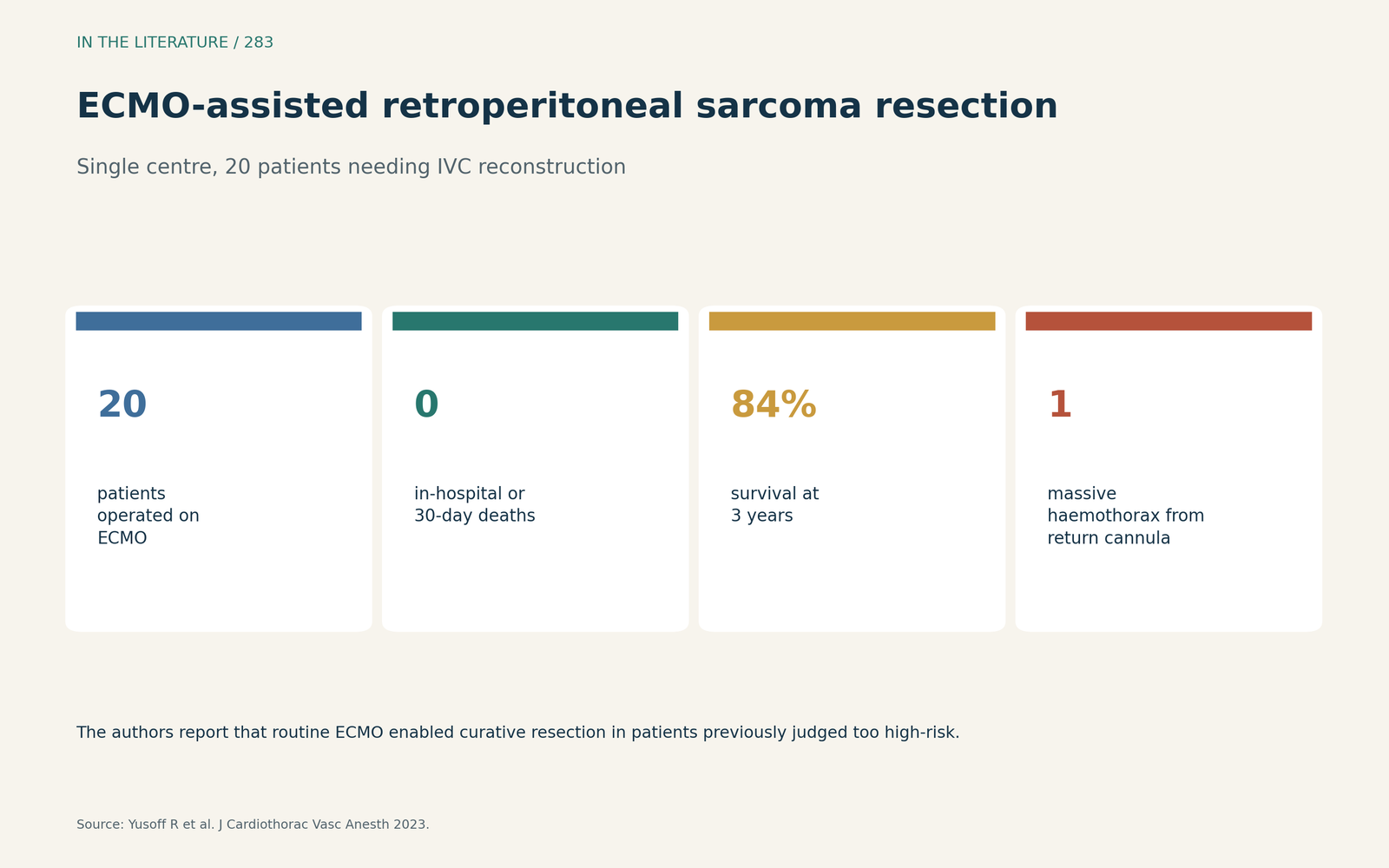
Figure 2. In a single-centre series, ECMO allowed IVC reconstruction without early deaths. Data from Yusoff et al.[6] View larger.

In obstetrics, the reviewed articles described 14,717 peripartum patients, of whom 1041 received ECMO, but only 10 of 54 articles discussed standby ECMO, and no consensus guidelines exist for peripartum standby ECMO (Marudo et al., J Cardiothorac Vasc Anesth 2025).[7]
Rescue after perioperative arrest
Among 518 perioperative cardiac arrests in noncardiac surgery in a Japanese ICU database, 44 (8.5%) received ECPR (Aoki et al., Anesthesiology Open 2026). ECPR was not significantly associated with in-hospital mortality (OR 0.85), and the authors prioritise early, high-quality conventional resuscitation and consider ECPR only when resources allow.[8]
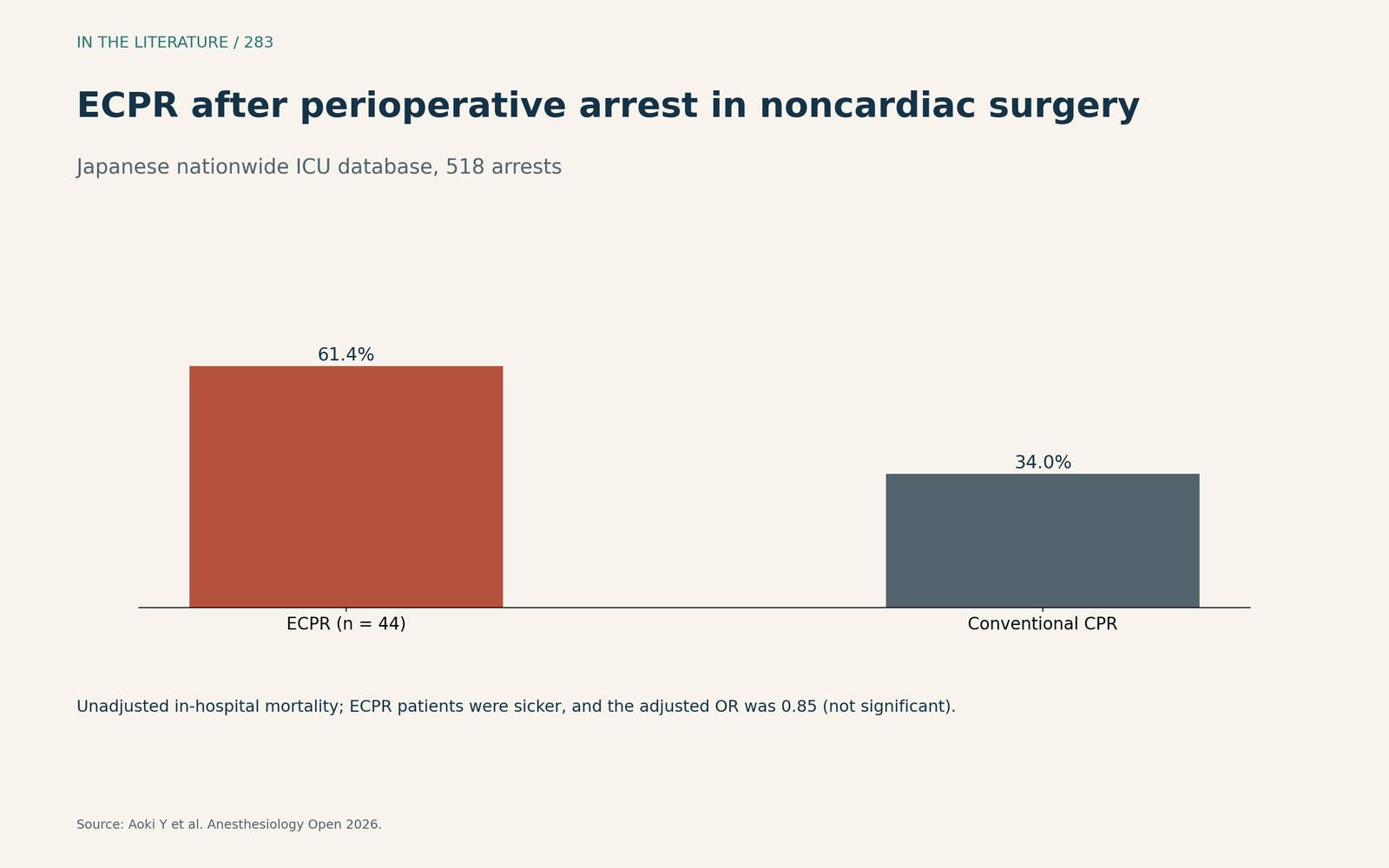
Figure 3. Unadjusted mortality was higher with ECPR in sicker patients; after adjustment there was no significant difference. Data from Aoki et al.[8] View larger.

Three takeaways
- Plan ECMO before induction when complete airway obstruction or intolerance of one-lung ventilation is expected; many airway cases need none.[1], [2], [3]
- Outside the chest, ECMO has supported liver transplantation, IVC tumour resection and high-risk delivery, usually as reported cases.[5], [6], [7]
- Rescue ECPR after perioperative arrest is rare; prioritise conventional resuscitation and use ECPR selectively.[4], [8]
References
- Foong TW, Ramanathan K, Chan KKM, MacLaren G. Extracorporeal membrane oxygenation during adult noncardiac surgery and perioperative emergencies: a narrative review. J Cardiothorac Vasc Anesth. 2021;35:281–297. doi:10.1053/j.jvca.2020.01.025
- Campany ME, Donato BB, Reck dos Santos P, et al. Extracorporeal membrane oxygenation for general thoracic surgery: case series and narrative review. J Thorac Dis. 2024;16(4):2637–2643. doi:10.21037/jtd-23-961
- Misra S, Behera BK, Preetam C, et al. Peripheral cardiopulmonary bypass in two patients with symptomatic tracheal masses: perioperative challenges. J Cardiothorac Vasc Anesth. 2021;35:1524–1533. doi:10.1053/j.jvca.2020.11.041
- Agosta VT, D'Andria Ursoleo J, Bottussi A, Bugo S, Monaco F. Perioperative mechanical circulatory support for cardiac assistance in thoracic surgery: a scoping review. Artif Organs. 2025;49(8):1249–1264. doi:10.1111/aor.14973
- Radosevich M, Anderson A, Teixeira M, et al. Practical considerations for extracorporeal membrane oxygenation use during orthotopic liver transplantation. J Cardiothorac Vasc Anesth. 2025;39:803–812. doi:10.1053/j.jvca.2024.11.032
- Yusoff R, Preuss J, Weightman W, et al. The use of extracorporeal circulation to facilitate the resection of a large retroperitoneal sarcoma with major vessel involvement: a single-center review of 20 cases. J Cardiothorac Vasc Anesth. 2023;37:1223–1229. doi:10.1053/j.jvca.2023.03.009
- Marudo CP, Kermanshah AI, Montes de Oca D, et al. Standby extracorporeal membrane oxygenation use in obstetric patients: a systematized review. J Cardiothorac Vasc Anesth. 2025;39:1844–1852. doi:10.1053/j.jvca.2025.03.037
- Aoki Y, Shiko Y, Kawasaki Y, et al. Extracorporeal cardiopulmonary resuscitation for perioperative cardiac arrest in noncardiac surgery: a nationwide cohort study in Japan. Anesthesiology Open. 2026;1(1):e0013. doi:10.1097/ao9.0000000000000013