ITL-9a3879f2d278
Juan Li, MD · Updated November 18, 2026
Key points
- Models are narrow. Animal sepsis models have limited and inconsistent translational value and rarely study chronic consequences.[1]
- Typical designs are far from the ICU. Studies used rodents, often male only, without fluids or antibiotics, and one approach would need intubation.[2], [3], [4], [5], [6]
- Patients are heterogeneous. Hyperinflammation and immunosuppression often coexist, and 74% develop lymphopenia; ARDS heterogeneity has sunk drug trials too.[7], [8]
- The track record is poor. Therapies effective in animals have nearly all failed in human trials.[7]
- Practical barriers remain. Clinicians ranked lack of protocols and evidence as the main obstacles.[9]
A promising anti-inflammatory compound halves mortality in septic mice, and a colleague asks whether it is ready for patients. What stands between the animal result and the ICU?
Why animal results fail to translate
Animal sepsis models face scrutiny for limited and inconsistent translational value: they represent only a narrow subset of causes, such as peritoneal sepsis from perforation, they are rarely used to study chronic consequences, and the authors expect no single model to deliver a transformative breakthrough (Zhu and Laudanski, J Transl Intern Med 2026).[1] Recent Anesthesiology studies show typical constraints. A mouse heart-rate study did not assess dose response, used only male mice and did not perform a power calculation for haemodynamic endpoints (Bedet et al., 2020).[2] A mouse vascular-leak study gave no fluid resuscitation or antibiotics and conducted no power calculation beforehand (Zhong et al., 2020).[3] A stromal-cell study was carried out in a rodent model, and its authors urge caution in extrapolating (Jerkic et al., 2020).[4] A sevoflurane sepsis study used only male mice, with no clinical data on the approach (Ngamsri et al., 2021),[5] and an accompanying editorial noted that therapeutic sevoflurane would require intubation and mechanical ventilation (Czopik et al., 2021).[6]
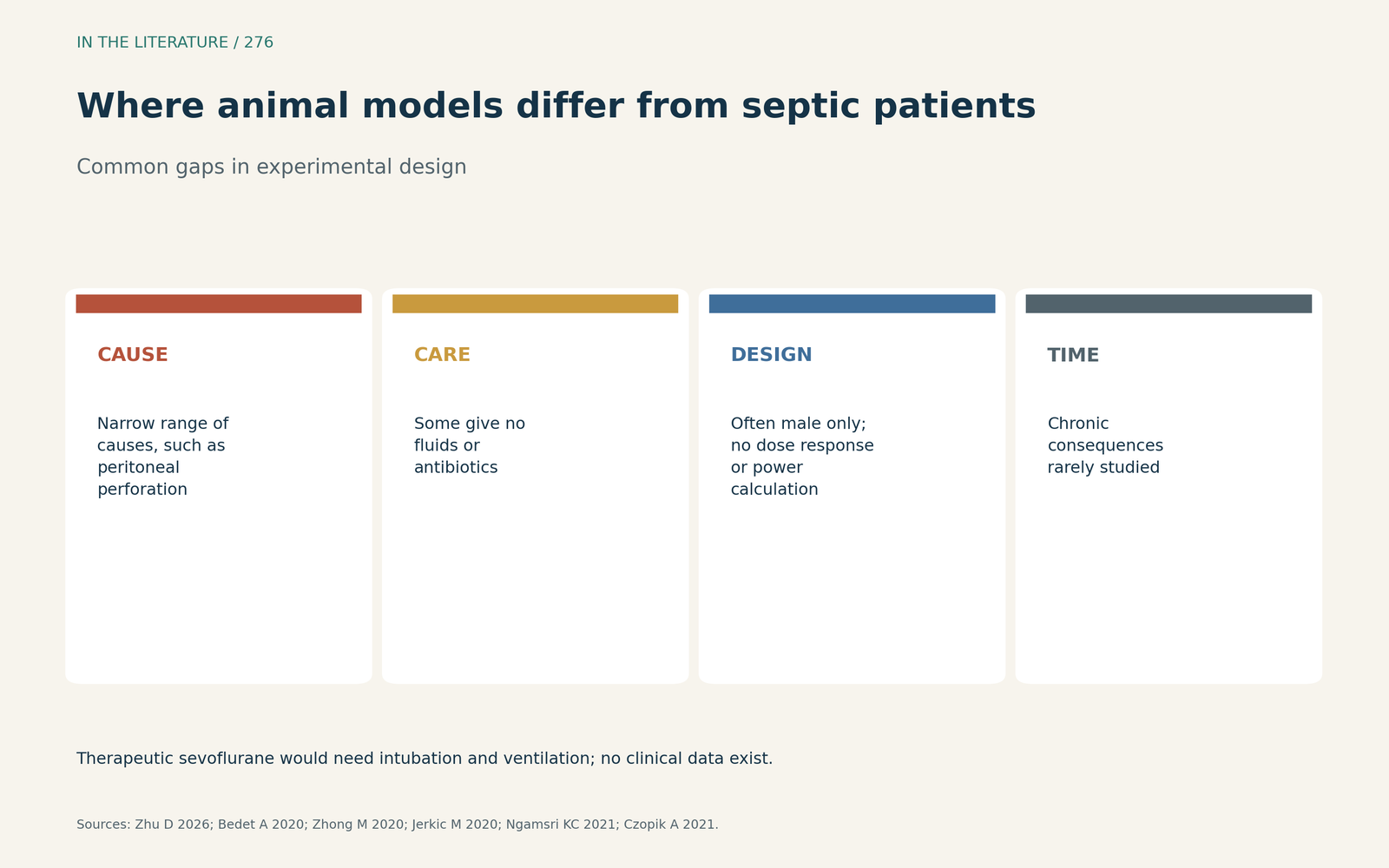
Figure 1. Typical gaps between experimental models and ICU patients. Synthesized from Zhu and Laudanski and five Anesthesiology studies.[1], [2], [3], [4], [5], [6] View larger.

Patients are heterogeneous and dynamic
About 30% of sepsis survivors die within the following year; 74% of septic patients develop lymphopenia; hyperinflammatory and immunosuppressive phases are not mutually exclusive and often coexist; therapies effective in animal studies have nearly all failed in human trials; and the lack of standardized, rapid bedside diagnostics impedes precise intervention (Huang et al., Pathogens 2026).[7] In ARDS, a frequent complication of sepsis, heterogeneity is one potential reason drug therapies have failed, and responsive phenotypes should be identified to avoid another failed pharmacotherapy (Hogan et al., Anesthesiology 2021).[8]
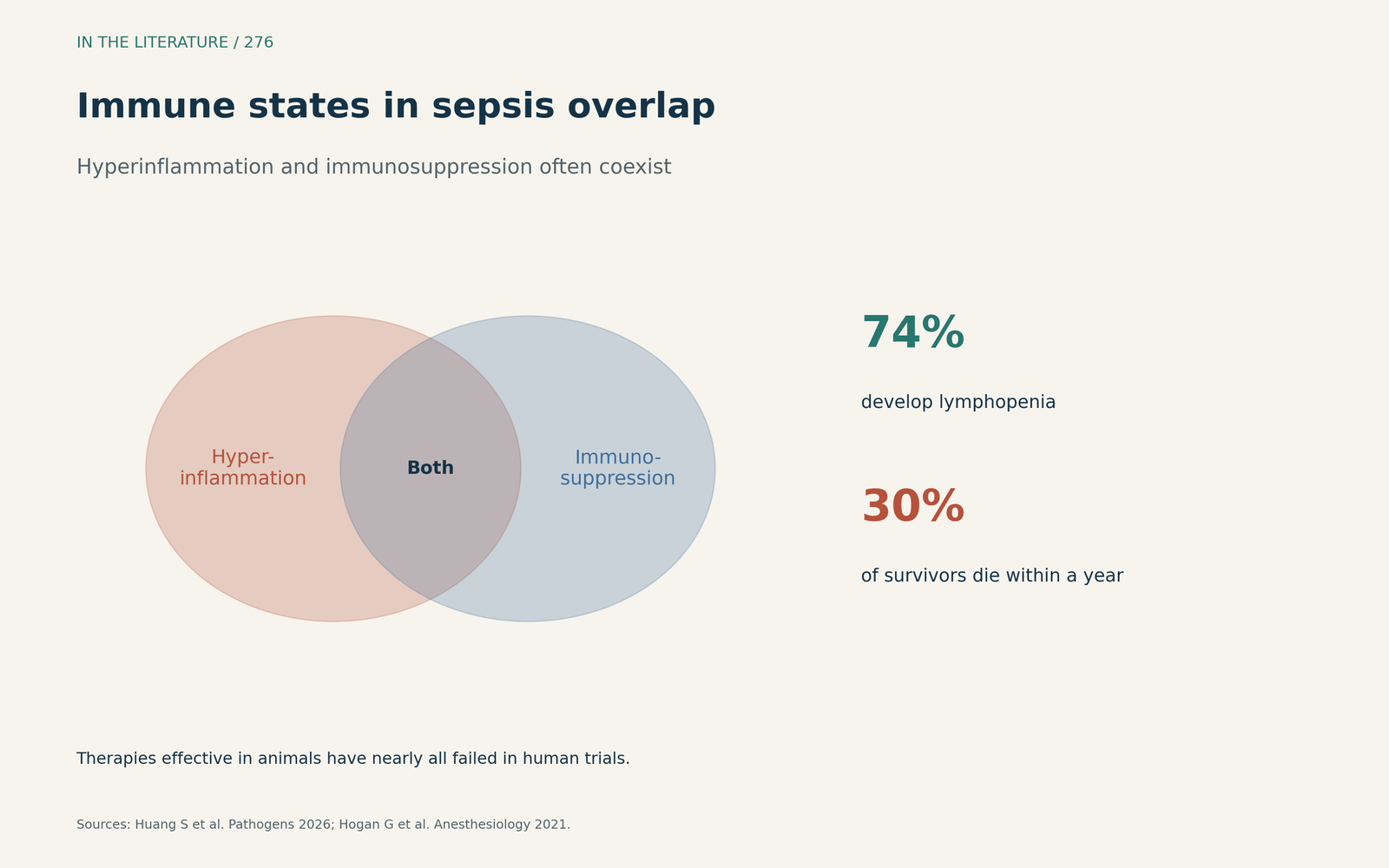
Figure 2. Inflammation and immunosuppression coexist, which blurs any single target. Data from Huang et al. and Hogan et al.[7], [8] View larger.

Barriers to precision immunotherapy
A survey of 174 professionals (Bos et al., Implement Sci Commun 2026) found that lack of protocols and insufficient scientific evidence were the most relevant barriers to personalized sepsis immunotherapy, with lack of timely biomarker results another important barrier.[9]
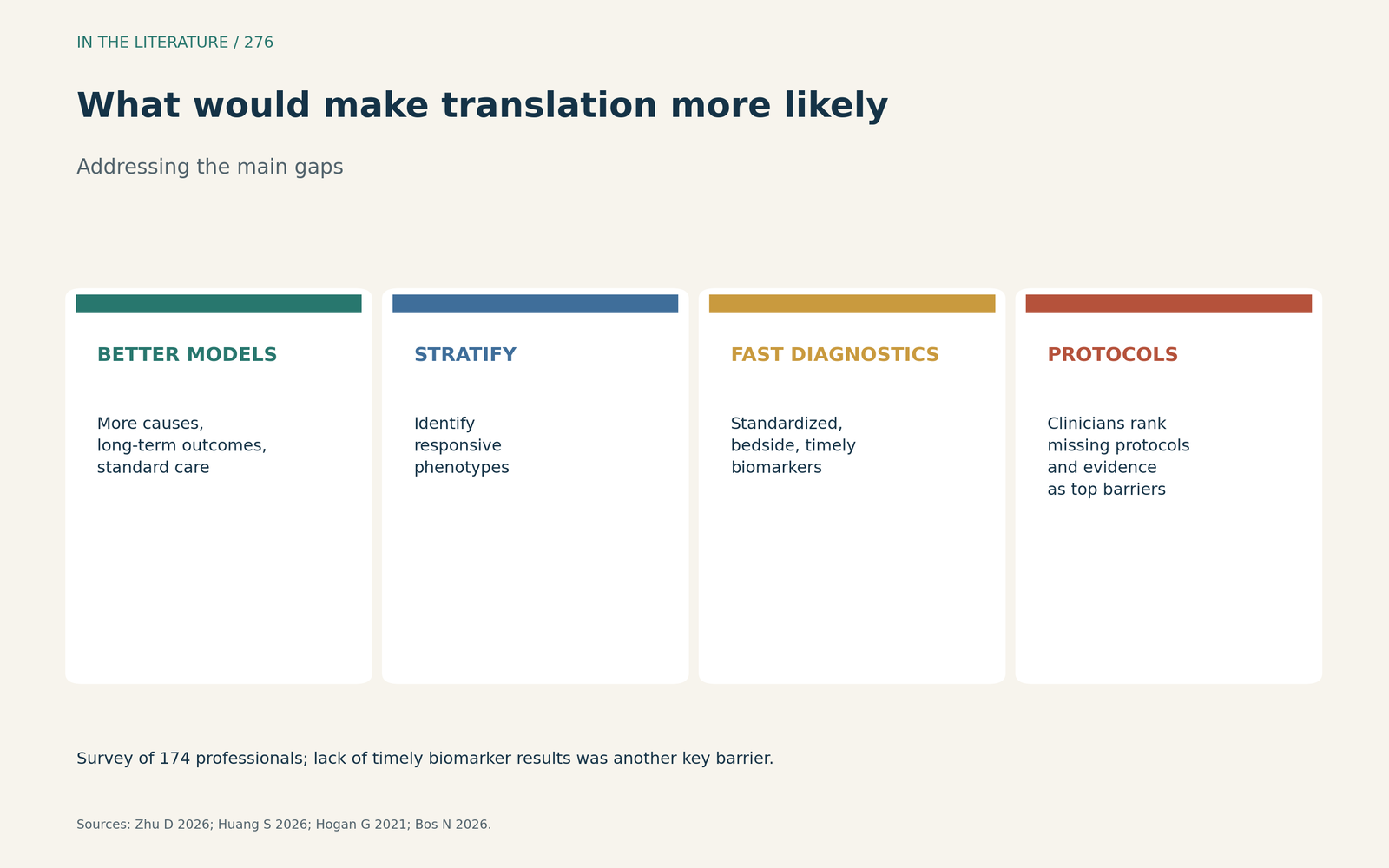
Figure 3. Steps that address the main gaps. Synthesized from Zhu and Laudanski, Huang et al., Hogan et al. and Bos et al.[1], [7], [8], [9] View larger.

Three takeaways
- Read animal sepsis results critically: check species, sex, timing, standard care and power.[1], [2], [3]
- Patient immune states are mixed and change over time, so one drug for all is unlikely to work.[7], [8]
- Precision immunotherapy needs fast biomarkers, protocols and trials before routine use.[7], [9]
References
- Zhu D, Laudanski K. Reframing sepsis research through translational integrative models. J Transl Intern Med. 2026;14(1):1–5. doi:10.1515/jtim-2026-0017
- Bedet A, Voiriot G, Ternacle J, et al. Heart rate control during experimental sepsis in mice: comparison of ivabradine and β-blockers. Anesthesiology. 2020;132(2):321–329. doi:10.1097/ALN.0000000000003045
- Zhong M, Wu W, Wang Y, et al. Inhibition of sphingosine kinase 1 attenuates sepsis-induced microvascular leakage via inhibiting macrophage NLRP3 inflammasome activation in mice. Anesthesiology. 2020;132(6):1503–1515. doi:10.1097/ALN.0000000000003192
- Jerkic M, Gagnon S, Rabani R, et al. Human umbilical cord mesenchymal stromal cells attenuate systemic sepsis in part by enhancing peritoneal macrophage bacterial killing via heme oxygenase-1 induction in rats. Anesthesiology. 2020;132(1):140–154. doi:10.1097/ALN.0000000000003018
- Ngamsri KC, Fabian F, Fuhr A, et al. Sevoflurane exerts protective effects in murine peritonitis-induced sepsis via hypoxia-inducible factor 1α/adenosine A2B receptor signaling. Anesthesiology. 2021;135(1):136–150. doi:10.1097/ALN.0000000000003788
- Czopik A, Yuan X, Evans SE, Eltzschig HK. Targeting the hypoxia-adenosine link for controlling excessive inflammation. Anesthesiology. 2021;135(1):15–17. doi:10.1097/ALN.0000000000003841
- Huang S, Huang S, Huang X, et al. Bench-to-bedside insights into the challenges of immunosuppression in sepsis. Pathogens. 2026;15(2):159. doi:10.3390/pathogens15020159
- Hogan G, Geoghegan P, Carroll TP, et al. α1-Antitrypsin: key player or bystander in acute respiratory distress syndrome? Anesthesiology. 2021;134(5):792–808. doi:10.1097/ALN.0000000000003727
- Bos N, Swillens JEM, Vandeberg L, et al. Prioritized barriers to implementation of personalized immunotherapy for sepsis patients. Implement Sci Commun. 2026;7:70. doi:10.1186/s43058-026-00891-5