ITL-7a15cce5c1f1
Juan Li, MD · Updated November 18, 2026
Watch the video
Key points
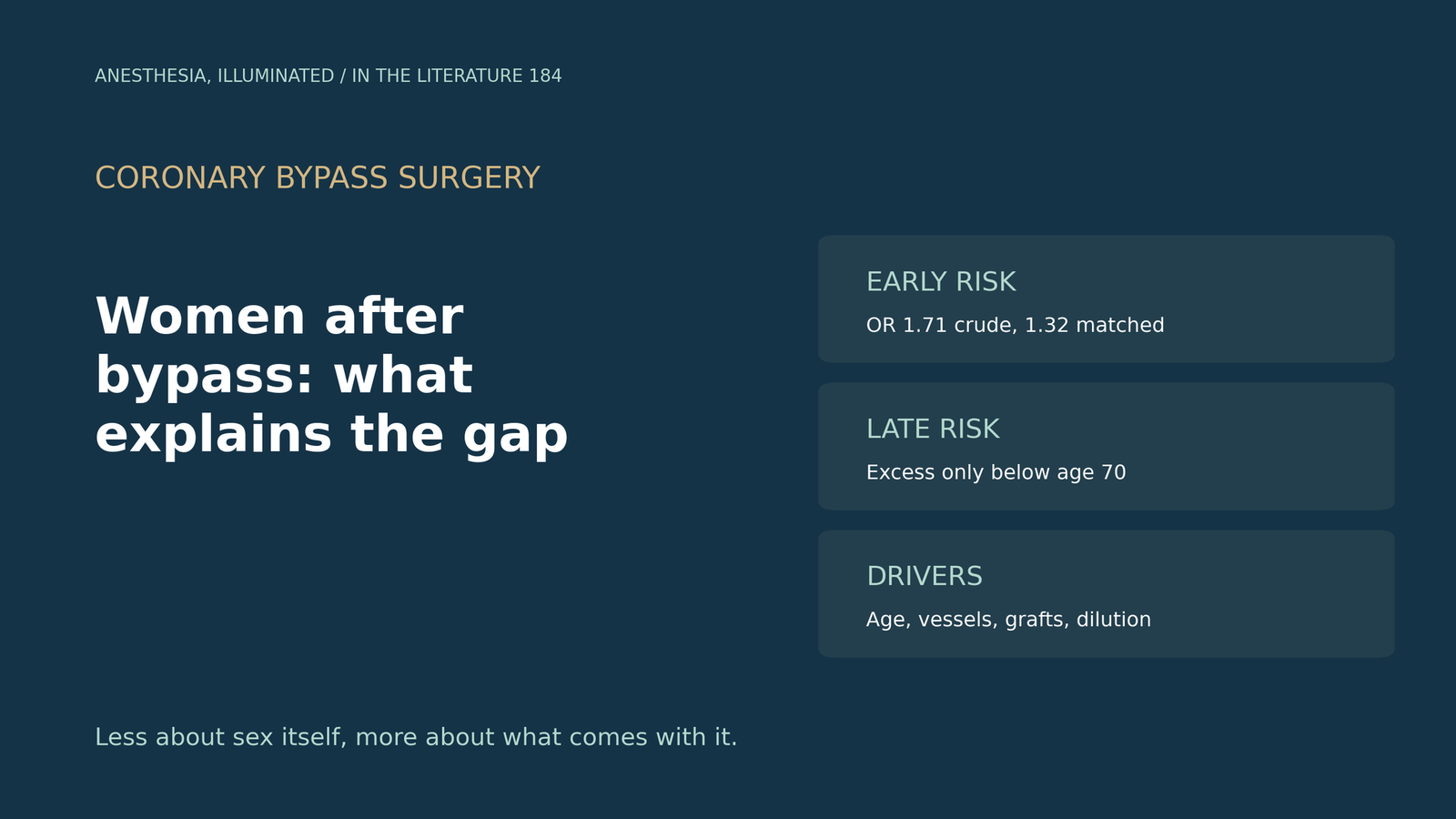
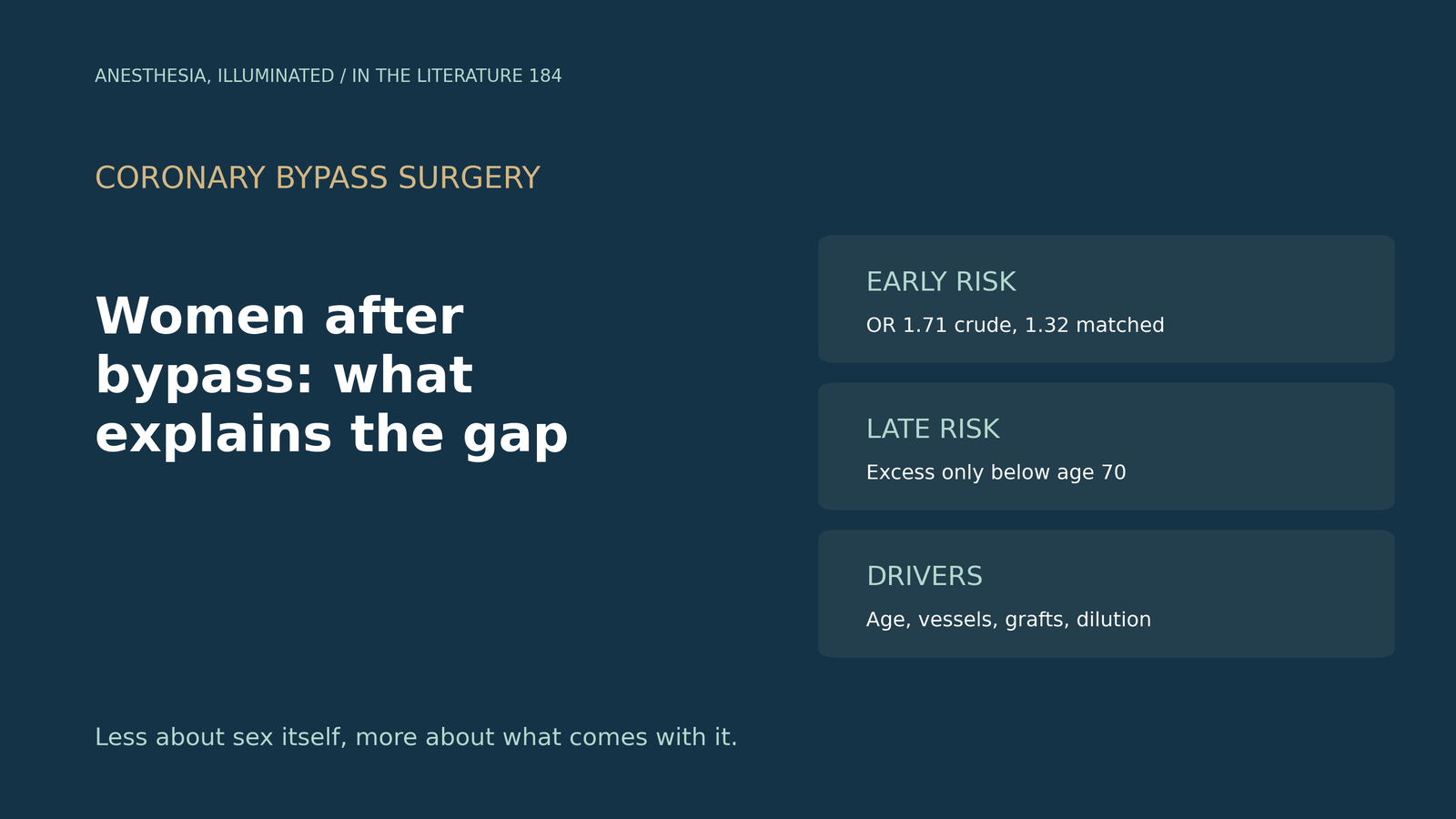
- The gap is real but smaller after adjustment. In 304,080 patients, female sex carried an adjusted in-hospital mortality OR of 1.32, and pooled data give OR 1.71 unadjusted versus 1.32 in matched studies.[1], [2]
- Late survival depends on age. Women had worse long-term survival only below age 70, and female sex was not an independent risk factor for late mortality.[3]
- Anatomy and grafting matter. Women have smaller coronary arteries, less complete revascularization and fewer arterial grafts (LITA to LAD aOR 0.79).[3], [4]
- Body size drives haemodilution and transfusion. Women received red cells far more often (45.4% vs 15.6%) under the same transfusion trigger as men.[5]
- Inflammation may mediate part of it. Systemic inflammatory response mediated 50.8% of the female effect on a composite outcome in one cohort.[6]
An older woman with diabetes and a small body size is scheduled for three-vessel bypass grafting, and her family asks whether being a woman makes the operation riskier. Is it her sex, or the factors that come with it?[1], [3]
How large is the gap?
Gupta and colleagues analysed 304,080 isolated bypass operations: in-hospital mortality was 2.65% in women, female sex carried an adjusted OR of 1.32, and women had higher 30-day (aOR 1.24) and 90-day (aOR 1.25) readmission. The authors suggest women may be referred later in their disease, but their dataset lacked key preoperative and intraoperative risk factors.[1] Dumitriu LaGrange and colleagues pooled 23 studies with 3,971,267 patients (29.3% women): the mortality OR for women was 1.71 unadjusted and 1.32 in propensity-matched studies. Women had higher stroke risk and lower odds of postoperative atrial fibrillation.[2] ter Woorst and colleagues found 30-day mortality of 2.8% in women versus 1.9% in men, but worse long-term survival only in women younger than 70, and female sex was not an independent risk factor for late mortality. They conclude that associated risk factors, especially age, rather than sex drive the difference.[3]
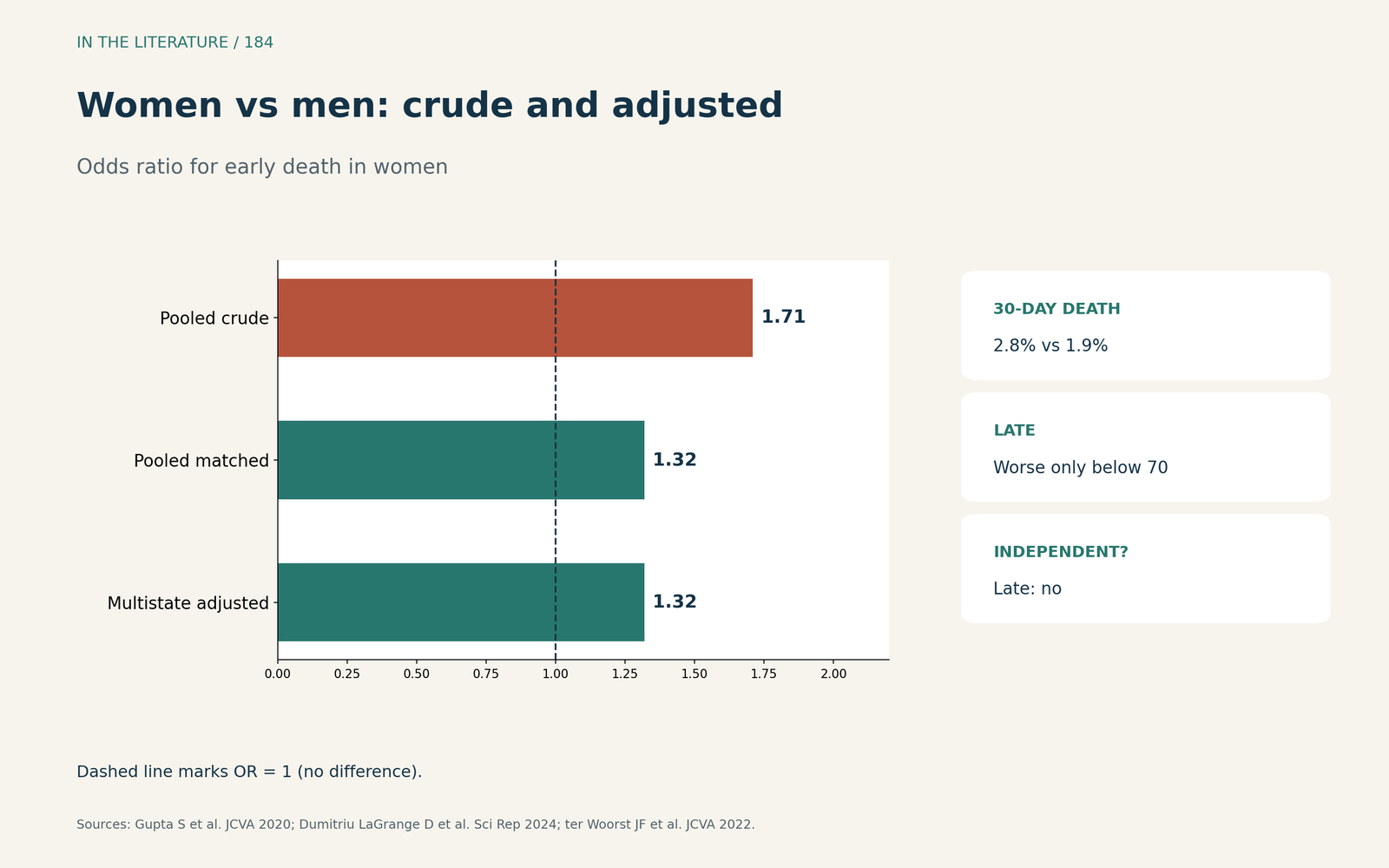
Figure 1. The gap shrinks with adjustment. Redrawn from Gupta et al., Dumitriu LaGrange et al. and ter Woorst et al.[1], [2], [3] View larger.

Anatomy and graft strategy
In ter Woorst's cohort, additional arterial grafts were used in 6.7% of women versus 11.6% of men.[3] Harik and colleagues' review cites a mid-LAD diameter of 2.04 mm in women versus 2.81 mm in men, lower odds of complete revascularization, and less use of LITA to LAD (aOR 0.79). The radial artery benefit appeared larger in women (HR 0.51) than in men (HR 0.84), and in one study female sex no longer predicted mortality after adjustment for body size (HR 1.04).[4]
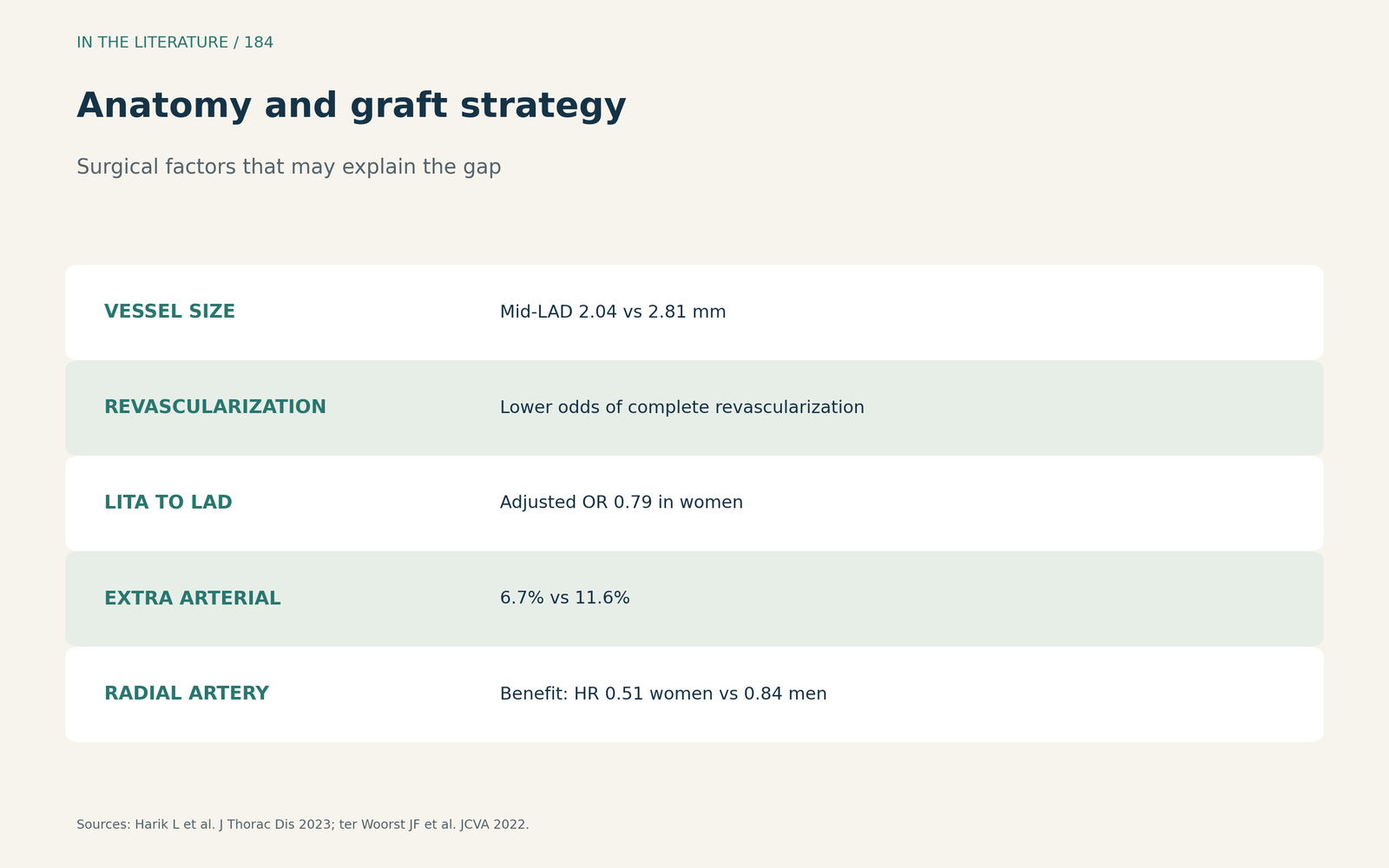
Figure 2. Smaller vessels, fewer arterial grafts. Synthesized from Harik et al. and ter Woorst et al.[4], [3] View larger.

Body size, transfusion and inflammation
In the Netherlands Heart Registration, red cell transfusion was 45.4% in women versus 15.6% in men. A low body surface area magnifies haemodilution from the bypass prime, yet women received the same transfusion trigger as men.[5] Squiccimarro and colleagues found that female sex was associated with systemic inflammatory response (OR 1.56), which mediated 50.8% of the female effect on a composite outcome; mortality did not differ.[6]
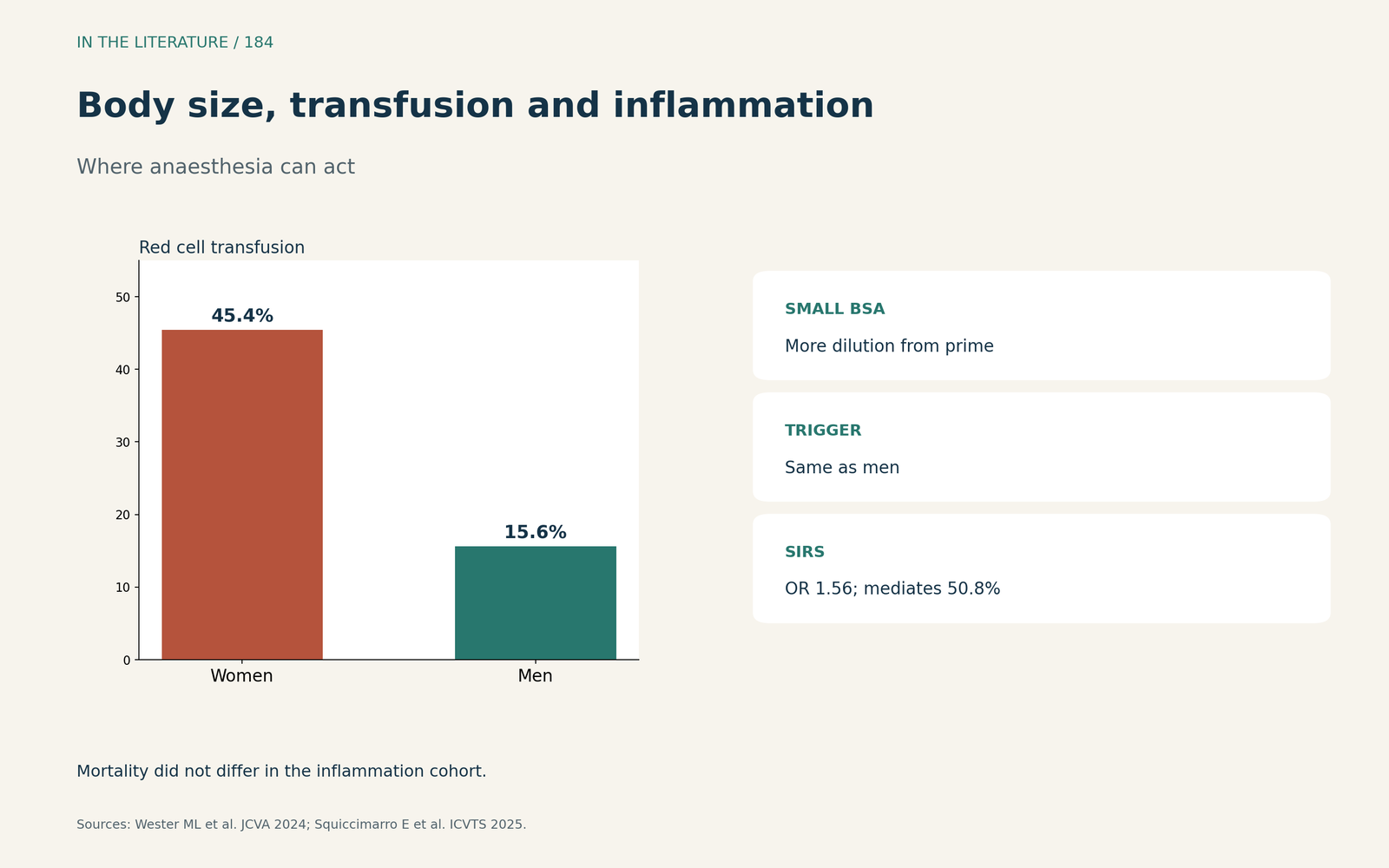
Figure 3. Smaller patients, more dilution. Synthesized from Wester et al. and Squiccimarro et al.[5], [6] View larger.

Three takeaways
- Sex itself is not the whole story. Adjustment for age and comorbidity shrinks the gap, and late excess is limited to younger women.[2], [3]
- Surgical choices matter. Women receive fewer arterial grafts and less complete revascularization.[4]
- Anaesthesia can act on haemodilution. Small body size, the prime and transfusion are modifiable targets.[5], [6]
References
- Gupta S, Lui B, Ma X, et al. Sex differences in outcomes after coronary artery bypass grafting. J Cardiothorac Vasc Anesth. 2020;34(12):3259–3266. doi:10.1053/j.jvca.2020.04.030
- Dumitriu LaGrange D, Tessitore E, Reymond P, Mach F, Huber C. A systematic review and meta-analysis of differences between men and women in short-term outcomes following coronary artery bypass graft surgery. Sci Rep. 2024;14(1):20682. doi:10.1038/s41598-024-71414-2
- ter Woorst JF, Olsthoorn JR, Houterman S, et al. Sex difference in long-term survival after coronary artery bypass grafting is age-dependent. J Cardiothorac Vasc Anesth. 2022;36(5):1288–1295. doi:10.1053/j.jvca.2021.08.104
- Harik L, Perezgrovas-Olaria R, Soletti G Jr, et al. Sex differences in coronary artery bypass graft surgery outcomes: a narrative review. J Thorac Dis. 2023;15(9):5041–5054. doi:10.21037/jtd-23-294
- Wester ML, Sampon F, Olsthoorn JR, et al. Gender is independently associated with red blood cell and platelet transfusion in patients undergoing coronary artery bypass grafting: data from the Netherlands Heart Registration. J Cardiothorac Vasc Anesth. 2024;38(4):924–930. doi:10.1053/j.jvca.2023.12.033
- Squiccimarro E, Lorusso R, Margari V, et al. Sex-related differences in systemic inflammatory response and outcomes after cardiac surgery and cardiopulmonary bypass. Interdiscip Cardiovasc Thorac Surg. 2025;40(3):ivaf066. doi:10.1093/icvts/ivaf066