In January 1909 H. Sahli of Bern reported Pantopon, an injectable opium preparation that kept the mixture of alkaloids instead of isolating one; in 1911 the AMA's Council on Pharmacy and Chemistry rejected it, objecting that its name hid the nature of its ingredients.
Reading Library · Anesthesia Epochs · 中文版
Watch the education video (for clinicians)
1909: Sahli's Pantopon — Purified, but Still a Mixture · Anesthesia Epochs Education Series

In January 1909, H. Sahli of Bern published a report on Pantopon in Therapeutische Monatshefte. He wanted an easily soluble preparation, suitable for subcutaneous injection, that would represent the action of opium as a whole. His starting question was clinical: for some purposes, might the combined action of opium’s alkaloids be worth preserving? That was a proposition to investigate, not the conclusion of a completed comparison.[1, pp. 1–2]
Sahli recognized that contemporary therapeutics favoured well-defined, single chemical substances. His project moved in another direction: remove unwanted material while retaining the combination of alkaloids.[1, pp. 1–3] Following its history therefore requires attention both to what the preparation contained and to what its name led physicians to expect.
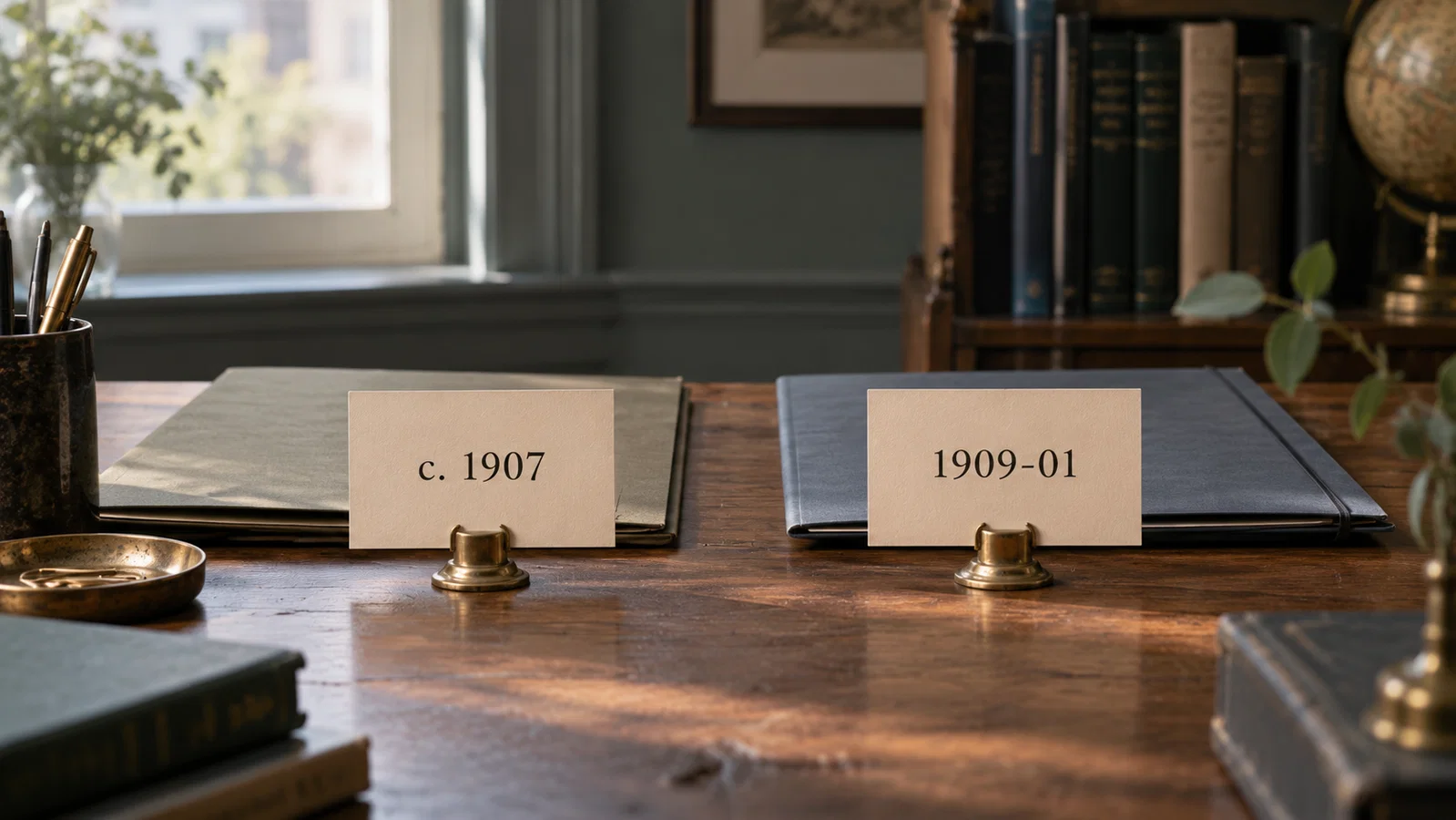
A proposal around 1907, a report in January 1909
On the second page, Sahli wrote that he had approached Schärges at Hoffmann-La Roche in Basel about two years earlier. The Australian Society of Anaesthetists’ anaesthesia history timeline gives 1907 for Pantopon, saying it was “first prepared and suggested for use as an analgesic agent” that year by Sahli and Schärges and marketed by Hoffmann-La Roche from 1909. Sahli’s “about two years” fits that date, but it does not establish that the preparation was finished, marketed or first administered in 1907.[1, p. 2; 5, p. 34]
The date used here is January 1909, printed in the journal’s own heading. Roche’s 2016 historical account also places the introduction of Pantopon in 1909. That later account is a manufacturer’s retrospective history, not independent evidence of comparative clinical benefit.[1, p. 1; 3, pp. 8, 40]
Changing the preparation while retaining the mixture
Sahli described limitations of aqueous opium extracts and opium tincture. Extraction could leave some constituents behind while carrying unwanted material into the product; alcohol, irritation and precipitation created additional obstacles to the form of administration he envisaged. These were specific problems of pharmaceutical preparation.[1, p. 2]
An initial preparation using tartrates was clear at first but subsequently became cloudy. A preparation using hydrochlorides followed and received the name Pantopon.[1, pp. 4–5] The changes concerned solubility, stability and formulation. Removing unwanted material did not turn several alkaloids into a new single molecule. Nor could a clearer solution, by its appearance alone, establish better clinical results.
Sahli’s own reservations matter here. On page 5 he left substantial advantages over morphine to further experience and wider use to determine. He expressly declined to propose replacing morphine generally. Questions about changes during prolonged storage also remained open at the article’s end.[1, pp. 5–6] Retaining those qualifications lets us read a developing investigation rather than a declaration that the clinical problem had been solved.
In 1911, the name became an issue
The American Medical Association’s Council on Pharmacy and Chemistry rejected Pantopon for inclusion in New and Nonofficial Remedies. Its reprinted report focused on naming rules: a designation should not conceal the nature of a potent, toxic or habit-forming ingredient from physicians.[2, p. 17]
The accompanying comment emphasized that Pantopon was a mixture of known substances, not a newly defined single chemical, and treated assertions of superiority critically.[2, p. 18] This was a professional organization’s decision about admission to its reference work and about drug nomenclature. It was not a government prohibition or evidence of worldwide withdrawal.
The naming question provides a concrete connection with the existing Paracelsus laudanum article. Sigerist’s textual study showed why particular uses of laudanum cannot automatically be read as the later opium tincture. Sahli, by contrast, explicitly identified opium and its alkaloids as his subject.[4, pp. 531, 540; 1, pp. 1–2] Comparing these passages helps identify the substances behind their names. It does not establish an unchanged formula or a direct line of transmission between them.
The 1909 report suggests a useful order of reading: identify the material, then distinguish an improvement in formulation from a clinical claim still awaiting evidence. The subsequent naming dispute adds another layer. The words on a bottle influence how its contents are understood.
Material and image limits: Sahli’s complete six-page article was read, not the surrounding 732-page volume. The 1911 evidence is the AMA’s reprinted report and comment; the original JAMA issue was not independently collated. Roche supplies a manufacturer’s retrospective account. Sigerist supports a specific textual comparison, without direct collation of the Huser or Sudhoff volumes. No equivalence is assumed between the 1909 preparation and every later papaveretum or Omnopon formulation. All four images are AI editorial illustrations: an anonymous historical scene and three modern reading aids, not authenticated people, packaging or laboratory records. Preparation instructions, doses and administration methods are outside this account.
Sources and reading limits
[1] Sahli H. Über Pantopon, ein die Gesamtalkaloide des Opiums in leicht löslicher und auch zu subkutaner Injektion geeigneter Form enthaltendes Opiumpräparat. Therapeutische Monatshefte. 1909;23:1–6. Original journal scan. The volume title, contents and complete article on pp. 1–6 were read. Only the conclusion of Sahli’s article on page 6 is included; the following article is separate.
[2] AMA Council on Pharmacy and Chemistry. Pantopon Rejected. Annual Reprint of the Reports … Published in the Journal During 1911. pp. 17–18. Organizational reprint · Library copy. Title, preface and both pages read. The item identifies JAMA, 29 April 1911, p. 1278 as its original publication. The preface acknowledges abridgment of some reports; this is not a claim of word-for-word collation with that issue.
[3] Bieri AL / Roche Historical Archive. Traditionally Ahead of Our Time. 2016. Roche publication. Printed pp. 8 and 40, PDF pp. 12 and 62, read for the introduction year and the nature of the source.
[4] Sigerist HE. Laudanum in the Works of Paracelsus. Bulletin of the History of Medicine. 1941;9:530–544. Public scan. All 15 pages were previously read for this site's Paracelsus article; pp. 531 and 540 were read for this comparison. The early texts it cites were not independently collated.
[5] Australian Society of Anaesthetists, History of Anaesthesia Library, Museum and Archives Committee (HALMA). Timeline of Some Significant Events in the Evolution/History of Anaesthesia. 2024. ASA PDF. Only the 1907 entry on PDF p. 34 was read. It is a secondary compilation and gives no source for the date.
Continue exploring
Related reading connects shared questions and contexts; it does not by itself establish historical influence.
Anesthesia Epochs · The Source Room · About & Editorial Method
Updated October 30, 2026. Sources and reading limits are stated above. Illustrations are labelled as original source images or AI-made. Historical accounts are educational; they are not current treatment instructions.