Anesthesia Epochs
About this film
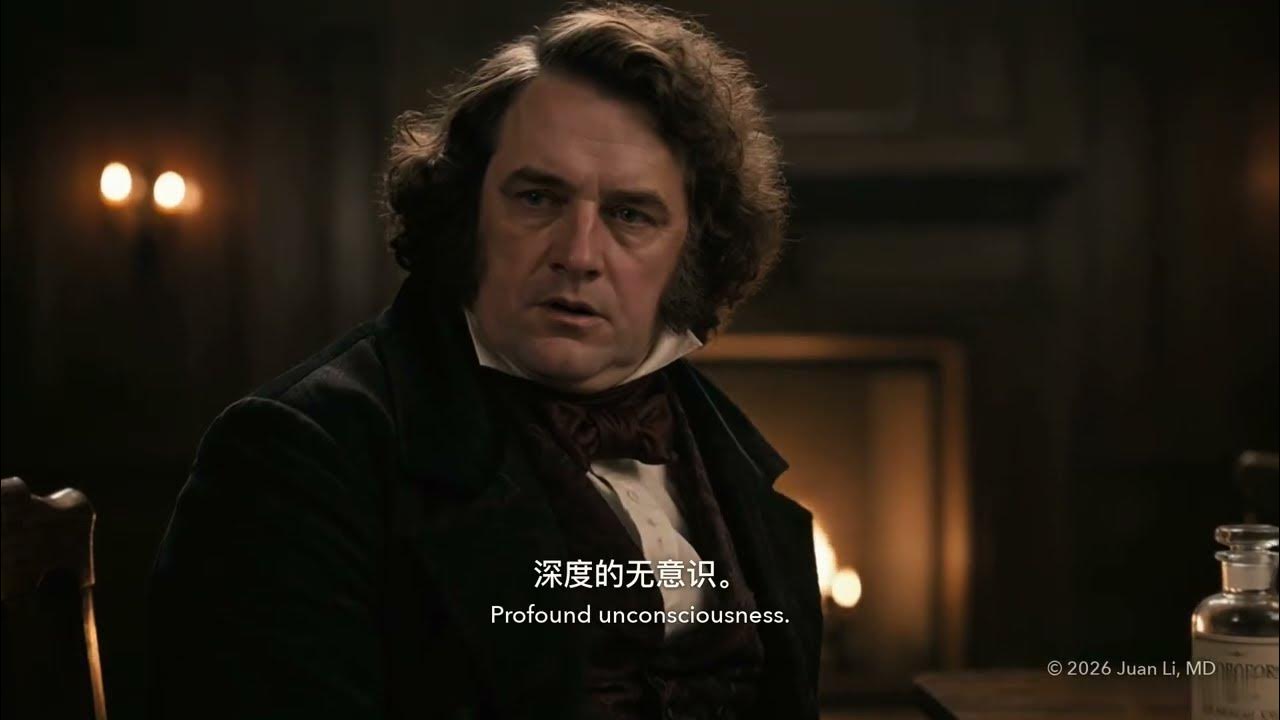
Edinburgh, November 1847. James Young Simpson reported early observations of chloroform in surgery and childbirth, after already working with ether. This film follows the promise of another means of relieving surgical pain and the limits of those early observations. Discovery, public reporting, and subsequent recognition of risk were distinct steps. The surviving reports support a consequential development in anesthesia, while resisting a simple story of instant acceptance or uniform opposition.
Read the companion essay · 1847: Chloroform, from Self-Experiment to a Public Report
Scientific takeaway
An encouraging early observation is the beginning of evaluating an anesthetic, rather than a complete account of its safety.
Sources
- Simpson JY. Notice of a new anaesthetic agent, as a substitute for sulphuric ether in surgery and midwifery. Edinburgh: Sutherland and Knox; 1847. View the 1847 Notice title page (proof copy)
- Simpson JY. Account of a new anaesthetic agent, as a substitute for sulphuric ether in surgery and midwifery. Edinburgh: Sutherland and Knox; 1847. Read the cited edition
- Snow J. On chloroform and other anaesthetics: their action and administration. Richardson BW, editor. London: John Churchill; 1858. Read the cited edition
Notes on reconstruction
Historical scenes are reconstructed; they do not establish undocumented conversations or a single, uniform public response to chloroform.
Read beyond the film
1847: Chloroform, from Self-Experiment to a Public Report
Explore the longer account, original references, reading limitations and connected stories.