In November 1847 Simpson's pamphlet put forward chloroform as a substitute for ether, with experience that grew from about thirty to about fifty people before it was printed.
Reading Library · Anesthesia Epochs · 中文版
Watch the companion film
1847: Chloroform · Watch on YouTube
A date on a title page can make a discovery look more settled than it was. James Young Simpson's 1847 pamphlet says that his account of chloroform was communicated to Edinburgh's Medico-Chirurgical Society on 10 November. Turn to its last page, however, and another date appears: 15 November.[1]
The document was growing along with the experience it described. That small distinction offers a useful way into this episode: follow the report before reconstructing the famous dinner party.
1. Not a new chemical, nor the first arrival of anesthesia in childbirth
Simpson presented chloroform as a possible substitute for ether. He was not claiming to have synthesized an unknown substance. His opening pages also recalled ether experience earlier that year and previous writing on inhalation in obstetric cases.[1, pp.5–8] Anesthesia did not enter the birthing room for the first time in November.
Nor did he describe the search as a solitary achievement. His account acknowledged conversations with people more knowledgeable about chemistry, David Waldie's suggestion, and assistance in preparing and supplying the substance.[1, pp.5–8] Self-experiment belonged to that search, but it should not be mistaken for a dependable safety test.
The familiar drawing-room story invites precise choreography: three men, their chairs, the moment each collapsed. The 1847 pamphlet read here does not establish that complete scene. Its clinical observations deserve attention without those additions.
2. Thirty-odd people, then about fifty
The main account referred to more than thirty recipients. The closing addition raised Simpson's experience to about fifty individuals and carried the later date of 15 November.[1, clinical account and p.23] Those fifty cannot all be assigned to the meeting five days earlier.
The reports were enthusiastic. They described relief during childbirth and surgical procedures, while the closing statement asserted that no bad result had occurred.[1, pp.9–23] These were observations and judgments from an early advocate, not a demonstration that the drug was safe in every setting.
The distinction is not an exercise in diminishing Simpson's achievement. A report becomes more useful when we can see what it observed, how far the experience extended, and where confidence exceeded what a small, recent series could establish.
3. A religious defense is evidence of a defense
Simpson also wrote a pamphlet answering religious objections to anesthetic use. In the opening of the 1848 edition consulted here, he reported having heard such objections and began addressing the relationship between medical intervention and scriptural arguments.[2, pp.3–5]
That establishes a written response. By itself, it does not establish the size or unity of a religious opposition, and it does not prove that Simpson invented a controversy for publicity. Neither “science defeated the Church” nor its mirror image, “the doctor fabricated his enemies,” should be substituted for evidence.
His clinical writing also recorded women's responses to relief in labor.[1] Those accounts help explain what he wanted colleagues to take seriously. They do not show that a modern universal right had already been secured, or that one later royal patient would settle every dispute.
4. A beginning that remained unfinished
The durable action here was the conversion of experiments and early clinical experience into a report that other people could read and assess. Its acknowledgments, accumulating cases and confident conclusions are all part of that record.
Our narrative therefore follows the document into continuing practice and debate. When John Snow attended Queen Victoria in 1853, relief and uncertainty would still coexist. The royal episode was not a retrospective guarantee that every claim made in 1847 had been correct.
Sources and reading limits
[1] Simpson JY. Account of a New Anaesthetic Agent, as a Substitute for Sulphuric Ether in Surgery and Midwifery. Edinburgh: Sutherland and Knox; 1847. Internet Archive. Read: the whole pamphlet. Communication to the society and the later addition are distinct dates.
[2] Simpson JY. Answer to the Religious Objections Advanced Against the Employment of Anaesthetic Agents in Midwifery and Surgery. Second thousand. Edinburgh; 1848. Wellcome Collection. Read: the title and printed pp. 3–5. Not covered: the rest of the pamphlet, and public opinion more widely.
The date given here is November 1847, not an exact day of first use.
Visual interpretations
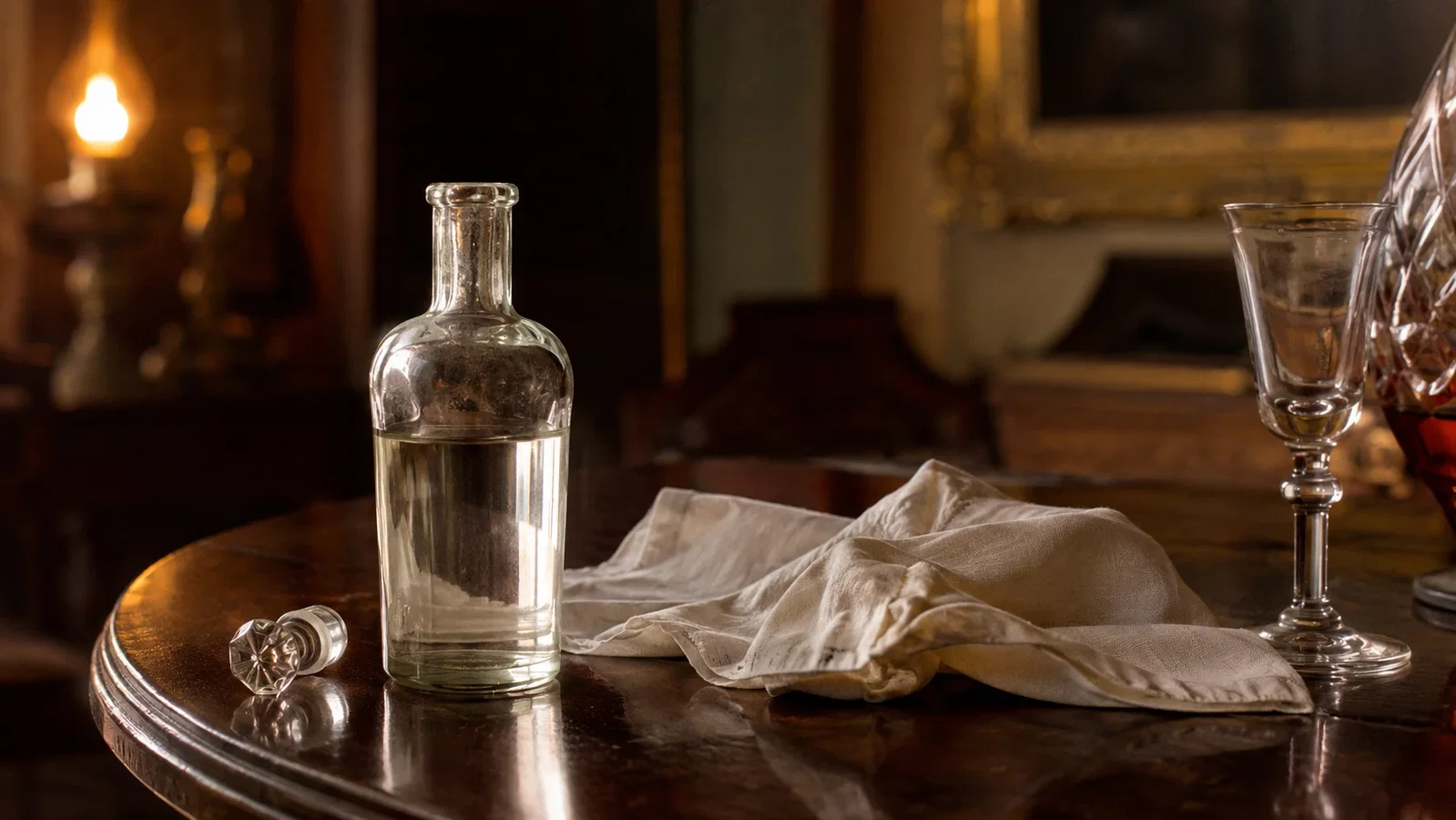
These illustrations explore the setting and ideas. Depicted people, actions, instruments and documents are reconstructions, not evidence of their exact historical appearance.

Continue exploring
Related reading connects shared questions and contexts; it does not by itself establish historical influence.
- 1847: Simpson Separates Labour Pain from Uterine Action
- 1853: The Queen's Chloroform, Relief Without an End to Debate
- 1846: The Ether Dome, a Breakthrough Without a Perfect Moment
- 1846: Holmes Gives an Old Word a New Task
- 1891: Rupa Bai in the Record of Chloroform Anesthesia
Anesthesia Epochs · The Source Room · About & Editorial Method
Revised September 7, 2026. Sources and reading limits are stated above. Illustrations are labelled as original source images or AI-made. Historical accounts are educational; they are not current treatment instructions.