
ITL-d89927b321ba
Watch the video

Figure 1. A reassuring finding before extubation does not replace observation afterward. Conceptual illustration, not a depiction of the published case.
Key points
- Leak and movement are different questions. A cuff leak is not a test of recurrent laryngeal nerve integrity.
- An appreciable leak does not exclude later obstruction. Pooled sensitivity for postextubation airway obstruction was 62% in critical care studies.
- Describe the result rather than saying “positive.” “Leak present” and “leak absent or insufficient” avoid conflicting terminology.
- Resolve the clinical concern that remains. Suspected vocal fold dysfunction calls for a plan to assess movement and maintain or restore the airway.
- New stridor overrides earlier reassurance. Reassess promptly; worsening ventilation or oxygenation requires airway rescue, not repeated reassurance from the old test. [1, 2]
No. Air escaping around a deflated tracheal-tube cuff provides information about the space around the tube under the conditions of that test. It does not demonstrate that both vocal folds will abduct adequately after the tube is removed. After thyroid surgery, a reassuring cuff leak therefore cannot settle a separate concern about recurrent laryngeal nerve function. [1, 2]
What the cuff-leak evidence actually measures
Kuriyama and colleagues' meta-analysis included 28 studies and 4,493 extubations in adult critical care settings. For postextubation airway obstruction, pooled sensitivity was 0.62 (95% CI 0.49–0.73) and specificity 0.87 (95% CI 0.82–0.90). There was substantial heterogeneity, and only three studies were at low risk of bias across all assessed domains. These estimates do not establish the test's accuracy for bilateral vocal fold dysfunction after elective thyroid surgery. [1]
In that analysis, an absent or insufficient leak counted as a positive test for obstruction risk. Other clinical reports use “positive cuff leak” to mean that air escaped. The safest handover states what happened, including the method and measured volume when available. [1, 2]
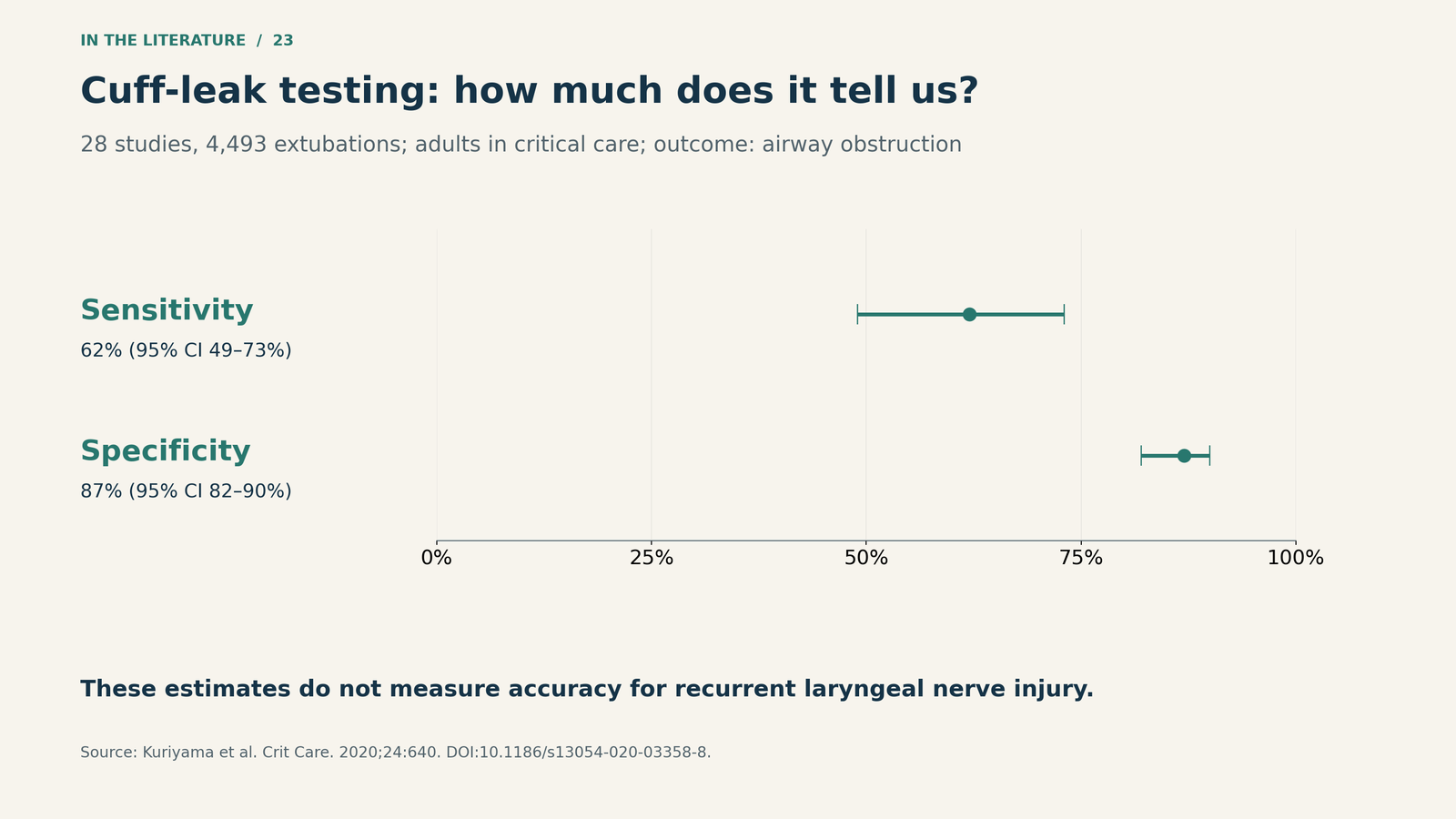
Figure 2. Cuff-leak performance for airway obstruction in critical care patients. Values describe diagnostic performance, not the probability that an individual patient will develop obstruction. They are not estimates for detecting recurrent laryngeal nerve injury. [1] Enlarge figure.

Tube size relative to the larynx, respiratory mechanics, flow and coughing can affect the result. The meta-analysis did not establish a single optimal cutoff. An insufficient leak should prompt reassessment and risk reduction, while an appreciable leak still leaves room for false reassurance. Neither result directly demonstrates vocal fold movement. [1]
A case that shows why postoperative reassessment matters
Sanapala and colleagues reported a patient who initially recovered after subtotal thyroidectomy with a reassuring leak assessment and apparently normal vocal fold movement on inspection. Approximately an hour later, inspiratory stridor, respiratory distress and desaturation developed. Reintubation was required; subsequent flexible laryngoscopy confirmed bilateral recurrent laryngeal nerve paresis, and a temporary tracheostomy was performed. [2]
This is one case, not a frequency estimate or a diagnostic-accuracy study. It supports a practical point: an earlier reassuring examination cannot certify the later airway. [2]
Use edema evidence for the edema question
For critically ill adults in the ATS/ACCP liberation guideline's setting of mechanical ventilation exceeding 24 hours, cuff-leak testing is suggested when extubation criteria are met but stridor risk is high. If the leak is absent or insufficient and the patient is otherwise ready, the guideline suggests systemic corticosteroids at least four hours before extubation. These are conditional recommendations, with very low certainty for selective testing and moderate certainty for steroids after a failed test. [3]
That recommendation addresses edema-related extubation risk. It is not evidence that corticosteroids restore an injured nerve or that waiting four hours makes an uncertain postoperative glottic airway safe. The edema question and the vocal fold movement question still need separate answers. [1–3]
Make the remaining risk explicit before removing the tube
The PUMA authors' current extubation companion asks clinicians to consider the difficulty of reintubation, the risk of hypoxemia during rescue, and whether deferring extubation could meaningfully improve patient, team or situational factors. It also requires an intended approach and a rescue approach before the checklist begins. [4]
Applied to suspected postoperative vocal fold dysfunction, that means discussing the unresolved concern with the surgical/ENT team, arranging an appropriate assessment of movement, and choosing a setting with the personnel and equipment needed if the airway deteriorates. This is an application of the planning framework, not a validated thyroidectomy scoring system. A cuff leak cannot substitute for that discussion. [2, 4]
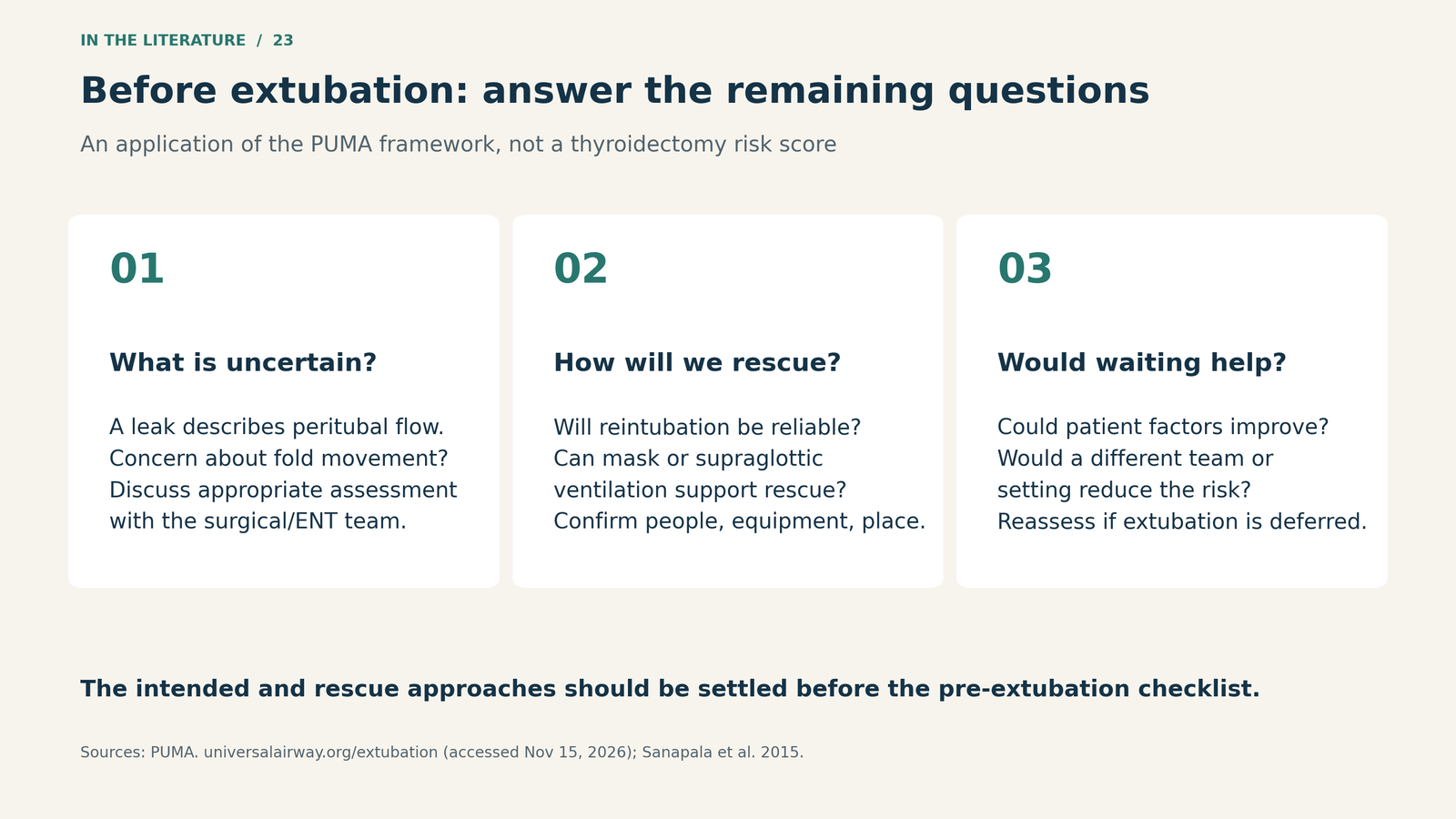
Figure 3. A focused planning aid, applying the PUMA framework to concern about vocal fold dysfunction. It does not reproduce the full PUMA algorithm or prescribe one technique for every patient. [2, 4] Enlarge figure.

If stridor develops, follow the airway now
Stridor is a sign of obstruction, not a diagnosis of edema. After neck surgery, consider vocal fold dysfunction and other causes, including a neck hematoma. Assess work of breathing, air movement and oxygenation while calling for appropriate help. If the patient is sufficiently stable, flexible laryngoscopy can clarify vocal fold movement; investigation must not delay rescue when ventilation or oxygenation is failing. [2]
For respiratory failure caused by postextubation laryngeal edema, the literature emphasizes prompt reintubation. An extended trial of noninvasive ventilation or waiting for medication to work should not postpone the necessary definitive airway. This warning concerns obstructive deterioration; it is not a blanket rejection of noninvasive support for other postextubation problems. [5]
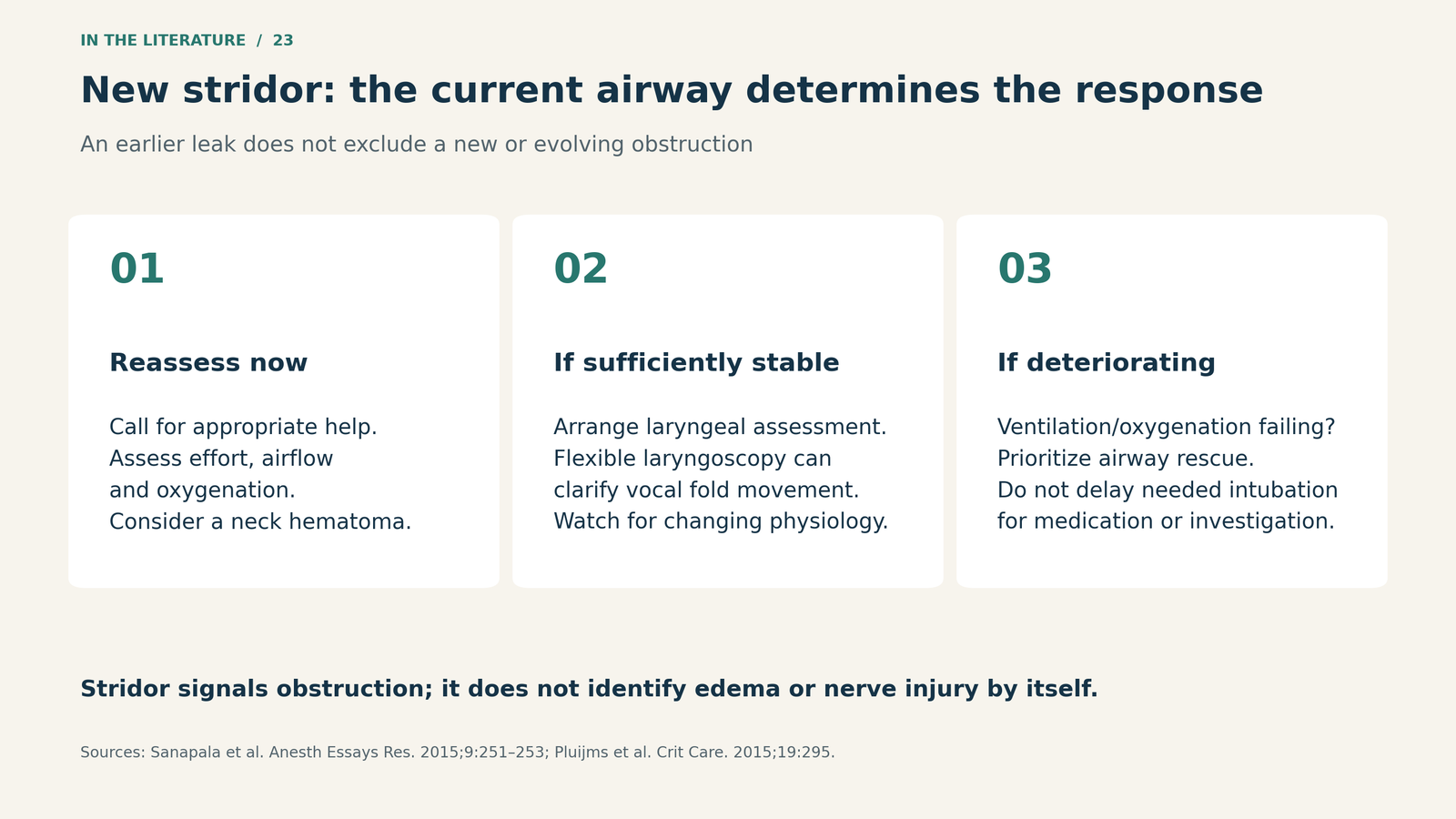
Figure 4. Current airway function governs the response. A previous leak does not rule out a new or evolving obstruction. [2, 5] Enlarge figure.

Three takeaways
- A leak demonstrates air passage under test conditions—not normal vocal fold movement.
- Match the assessment to the concern. Edema risk, nerve-related movement and feasibility of rescue are separate parts of extubation planning.
- Treat new stridor as new information. Reassess the present airway and do not let an earlier reassuring test delay rescue. [1–5]
References
- Kuriyama A, Jackson JL, Kamei J. Performance of the cuff leak test in adults in predicting post-extubation airway complications: a systematic review and meta-analysis. Crit Care. 2020;24:640. doi:10.1186/s13054-020-03358-8.
- Sanapala A, Nagaraju M, Rao LN, Nalluri K. Management of bilateral recurrent laryngeal nerve paresis after thyroidectomy. Anesth Essays Res. 2015;9(2):251–253. doi:10.4103/0259-1162.152419.
- Girard TD, Alhazzani W, Kress JP, Ouellette DR, Schmidt GA, Truwit JD, et al. An official American Thoracic Society/American College of Chest Physicians clinical practice guideline: liberation from mechanical ventilation in critically ill adults. Rehabilitation protocols, ventilator liberation protocols, and cuff leak tests. Am J Respir Crit Care Med. 2017;195(1):120–133. doi:10.1164/rccm.201610-2075ST.
- Project for Universal Management of Airways. Extubation: instructions for using the extubation algorithm and checklist [Internet]. [cited 2026 Nov 15]. Author companion to the PUMA extubation guideline.
- Pluijms WA, van Mook WNKA, Wittekamp BHJ, Bergmans DCJJ. Postextubation laryngeal edema and stridor resulting in respiratory failure in critically ill adult patients: updated review. Crit Care. 2015;19:295. doi:10.1186/s13054-015-1018-2.