ITL-80aab0ec6faf
Juan Li, MD · Updated November 18, 2026
Key points
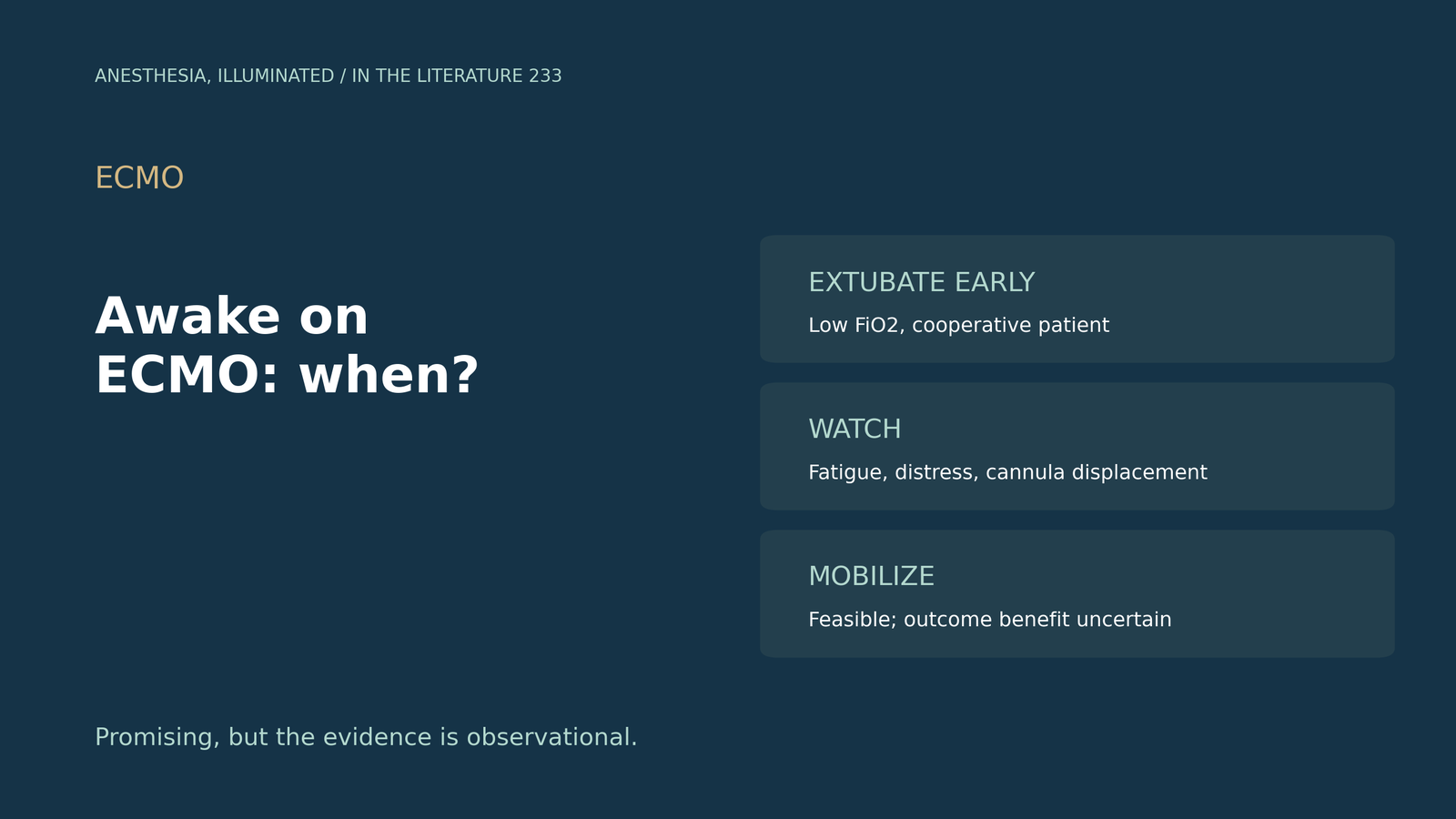
- Early, not late. Extubation should be done early, before complications prevent its feasibility; FiO2 below 60% is a goal before considering it.[1]
- Cooperation matters. Extubation required the patient to be cooperative enough not to risk cannula dislodgement.[2]
- Failure matters. In a prospective cohort, 21% were extubated during ECMO and 20% of those failed; mortality after failed awake ECMO is 54%.[2], [3]
- Mobilization is feasible, but the effect of high-intensity rehabilitation on outcomes and safety is uncertain.[3], [4]
- Do not delay intubation if the patient shows respiratory fatigue or distress.[1]
A patient on venovenous ECMO is on modest sweep and FiO2, follows commands and is calm on light sedation. Is it time to extubate, and how soon can rehabilitation start?[1], [3]
When to extubate
Cuttone et al. (J Cardiothorac Vasc Anesth 2025) advise that extubation should be done early, with a goal of decreasing FiO2 to below 60% before considering it.[1] Guarracino et al. (J Cardiothorac Vasc Anesth 2025) list suggested criteria including PaO2 above 80 mmHg with FiO2 below 0.5 and PEEP below 6 cmH2O.[3] In the prospective cohort of Roncon-Albuquerque et al. (Ann Intensive Care 2023), criteria included pH above 7.35 with minute ventilation below 10 L/min on pressure support; 21% of patients were extubated during ECMO and 20% of those failed.[2] In a lung-transplant bridge program (Kim et al., Respir Res 2021), extubation was attempted within 24 to 48 h after ECMO initiation.[5]
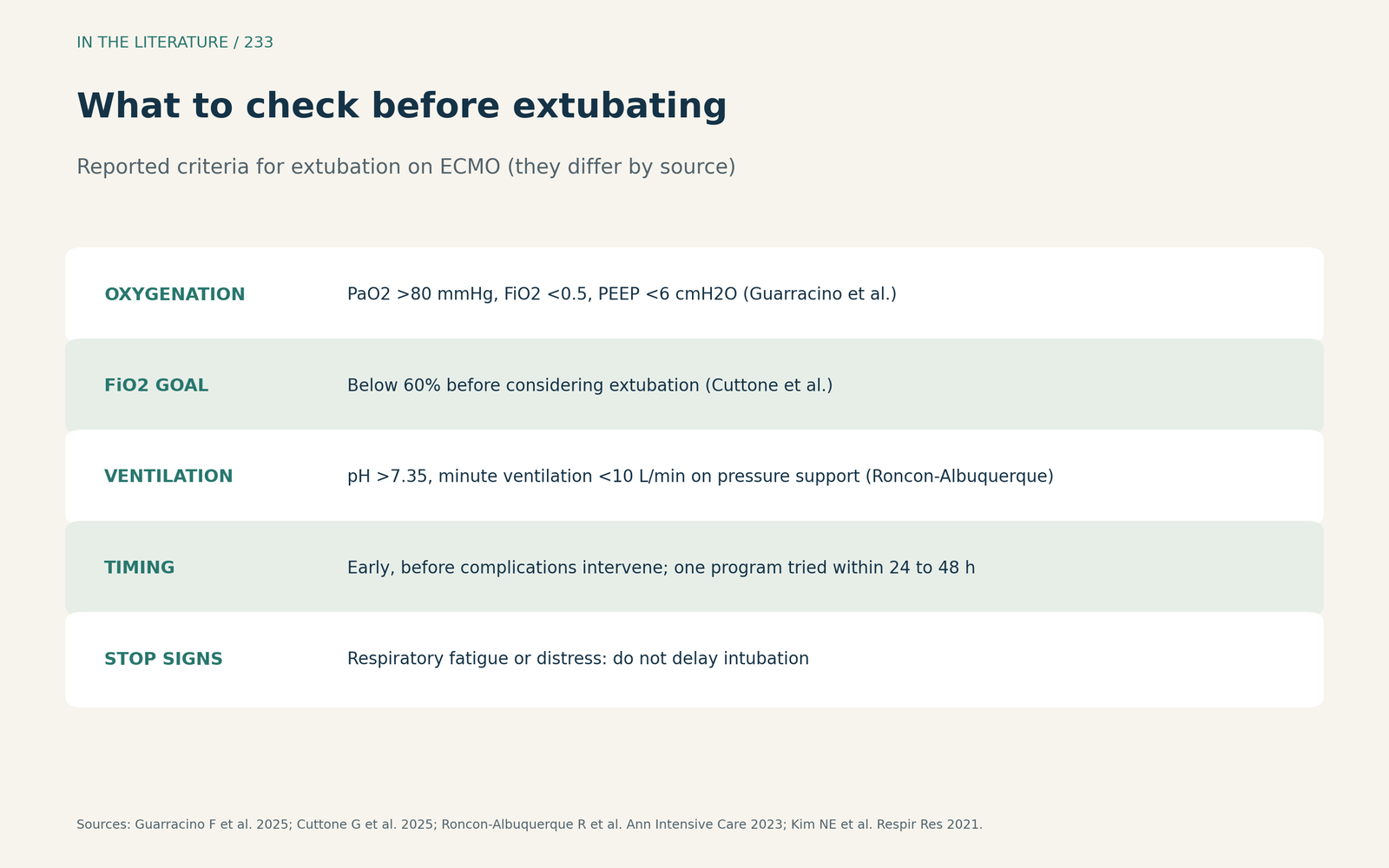
Figure 1. Extubation criteria reported in reviews and a prospective cohort. Redrawn from Guarracino et al., Cuttone et al. and Roncon-Albuquerque et al.[3], [1], [2] View larger.

What to tolerate and what to fear
SpO2 as low as 85% to 88% can be tolerated provided SvO2 is above 65%, lactate below 2 mmol/L and oxygen delivery above 300 mL/min/m2.[1] Intubation should not be delayed if the patient shows respiratory fatigue or distress.[1] A major risk of awake ECMO is cannula displacement or self-removal, and mortality for patients who fail awake ECMO is 54%.[3] Patient self-inflicted lung injury remains a theoretical risk; in a small COVID series (Paternoster et al., J Cardiothorac Vasc Anesth 2022), the awake strategy failed in 1 patient (14.3%).[6]
Who seems to benefit
In bridging to lung transplantation, awake ECLS was protective for survival (Benazzo et al., J Thorac Cardiovasc Surg 2019),[7] and awake patients had higher gait ability after transplant (92% vs 59%).[5] These are observational comparisons, not randomized trials.[7], [5]
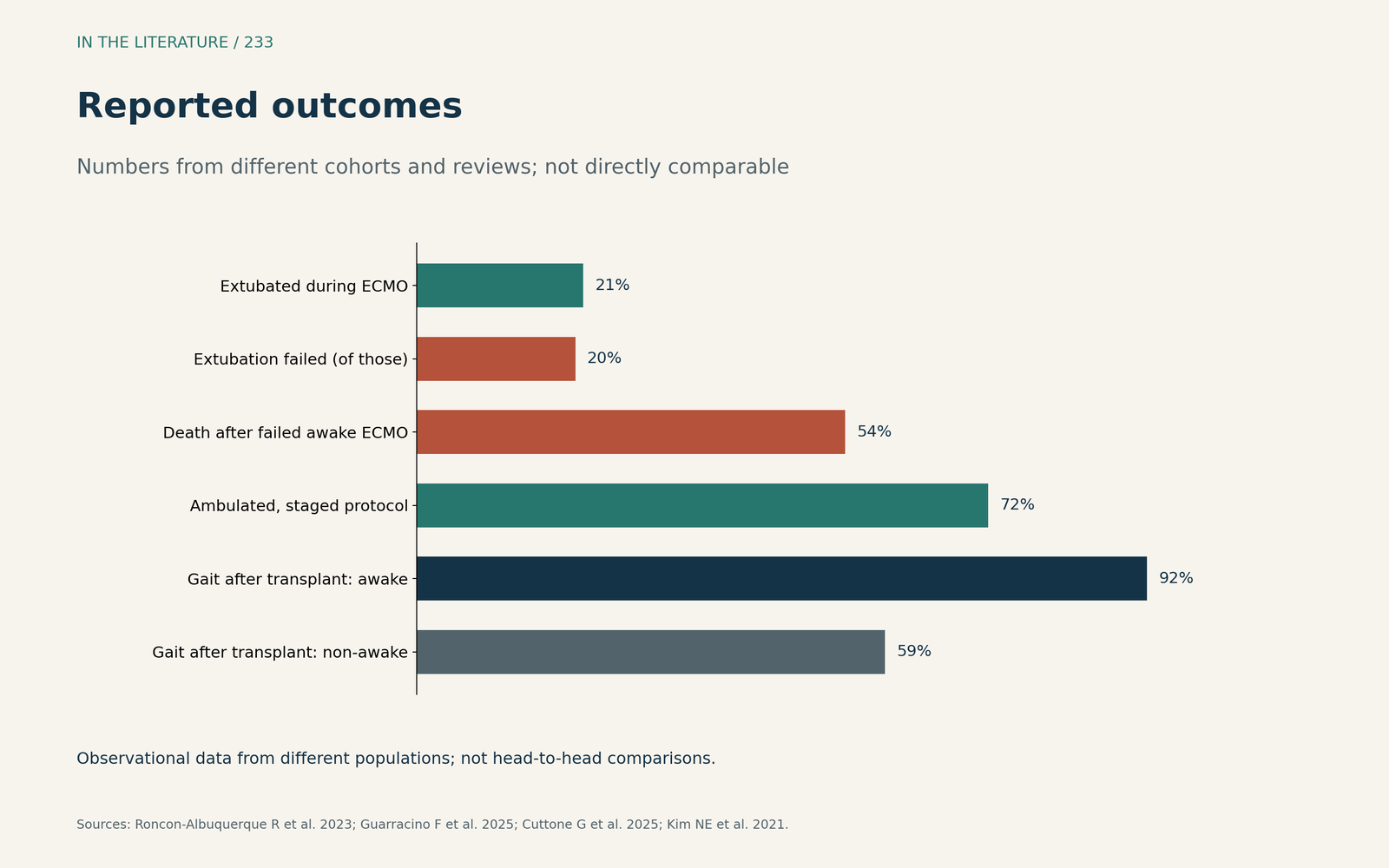
Figure 2. Selected results from cohorts and reviews; not head-to-head trials. Data from Roncon-Albuquerque et al., Guarracino et al., Kim et al. and Paternoster et al.[2], [3], [5], [6] View larger.

Mobilization
Dual-lumen cannulas allow an extubated patient to proceed to mobilization and ambulation, and a staged protocol achieved ambulation in 72% with no major mobility-related complications.[1] Pilot randomized studies showed active rehabilitation during ECMO is feasible.[3] Rivera et al. (Crit Care Explor 2024) reviewed 17 studies with 996 patients: the effect of high-intensity active rehabilitation on patient-important outcomes and safety is uncertain, and with no widely adopted guidelines, practice varies.[4] Cheng et al. (Front Med 2026) found no significant difference in adverse events between early and delayed rehabilitation, with substantial heterogeneity (I2 73% to 95%).[8]
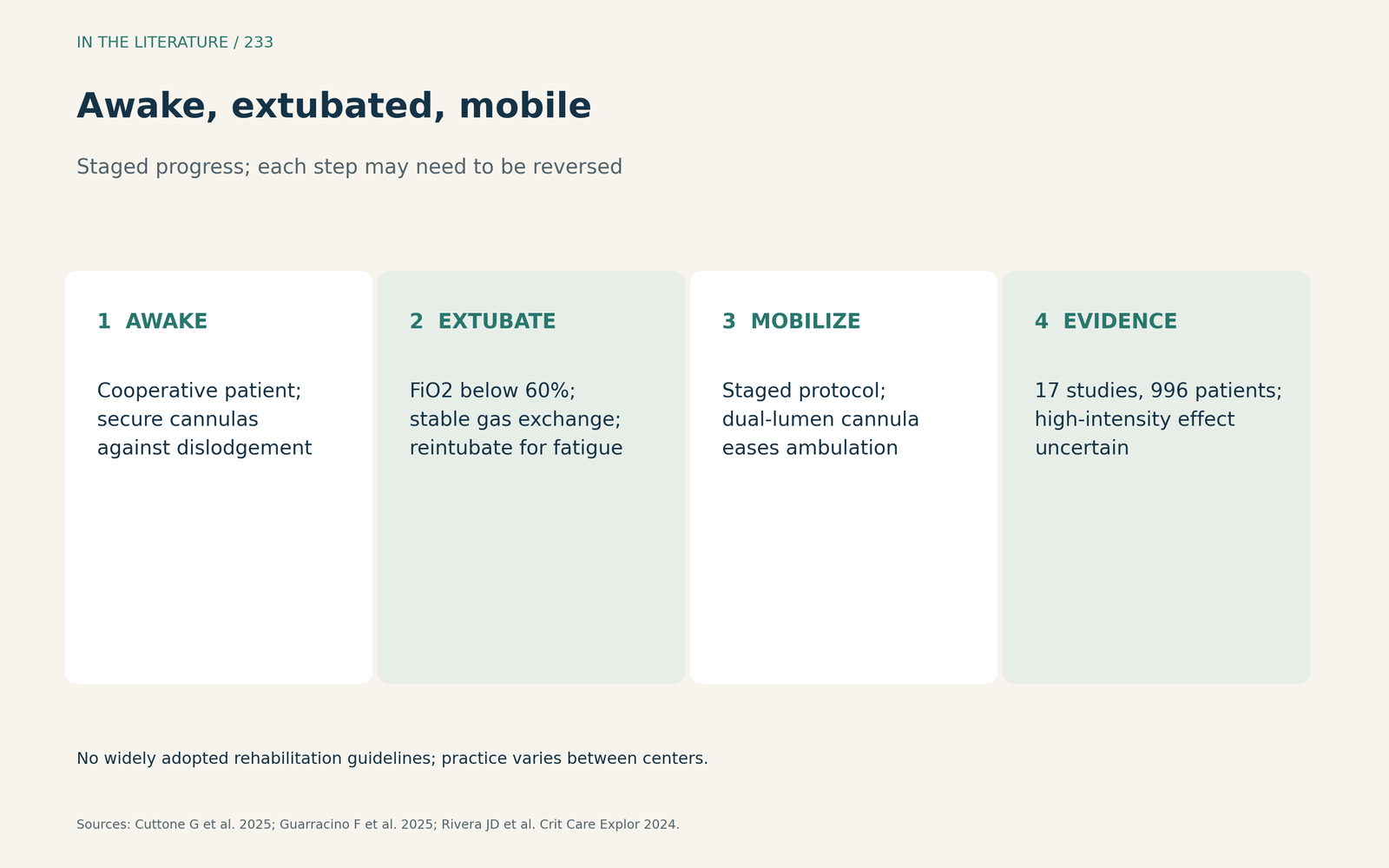
Figure 3. Awake, extubated, mobile: a staged path. Synthesized from Cuttone et al., Guarracino et al. and Rivera et al.[1], [3], [4] View larger.

Three takeaways
- Consider extubation early once FiO2 is low and the patient is cooperative; do not delay reintubation for fatigue or distress.[1], [2]
- Secure the cannulas; displacement is a major risk and failed awake ECMO carries high mortality.[3]
- Mobilize when feasible, but the outcome benefit of high-intensity rehabilitation is not established.[4], [8]
References
- Cuttone G, La Via L, Misseri G, et al. Extracorporeal membrane oxygenation in the awake or extubated patient. J Cardiothorac Vasc Anesth. 2025;39(10):2818–2826. doi:10.1053/j.jvca.2025.05.021
- Roncon-Albuquerque R, Gaião S, Vasques-Nóvoa F, et al. Standardized approach for extubation during extracorporeal membrane oxygenation in severe acute respiratory distress syndrome: a prospective observational study. Ann Intensive Care. 2023;13(1):86. doi:10.1186/s13613-023-01185-y
- Guarracino F, Baldassarri R, Brizzi G, et al. Awake venovenous extracorporeal membrane oxygenation in the intensive care unit: challenges and emerging concepts. J Cardiothorac Vasc Anesth. 2025;39(4):1004–1014. doi:10.1053/j.jvca.2024.12.045
- Rivera JD, Fox ES, Fernando SM, et al. Physical rehabilitation and mobilization in patients receiving extracorporeal life support: a systematic review. Crit Care Explor. 2024;6(6):e1095. doi:10.1097/CCE.0000000000001095
- Kim NE, Woo A, Kim SY, et al. Long- and short-term clinical impact of awake extracorporeal membrane oxygenation as bridging therapy for lung transplantation. Respir Res. 2021;22(1):306. doi:10.1186/s12931-021-01905-7
- Paternoster G, Bertini P, Belletti A, et al. Venovenous extracorporeal membrane oxygenation in awake non-intubated patients with COVID-19 ARDS at high risk for barotrauma. J Cardiothorac Vasc Anesth. 2022;36(8):2975–2982. doi:10.1053/j.jvca.2022.03.011
- Benazzo A, Schwarz S, Frommlet F, et al. Twenty-year experience with extracorporeal life support as bridge to lung transplantation. J Thorac Cardiovasc Surg. 2019;157(6):2515–2525.e10. doi:10.1016/j.jtcvs.2019.02.048
- Cheng Z, Du L, Zheng S, et al. A systematic review and meta-analysis of the timing of rehabilitation training intervention for recipients of extracorporeal membrane oxygenation. Front Med (Lausanne). 2026;13:1919668. doi:10.3389/fmed.2026.1919668