
ITL-80aab0ec6faf
Juan Li, MD · 更新于2026年11月18日
核心要点
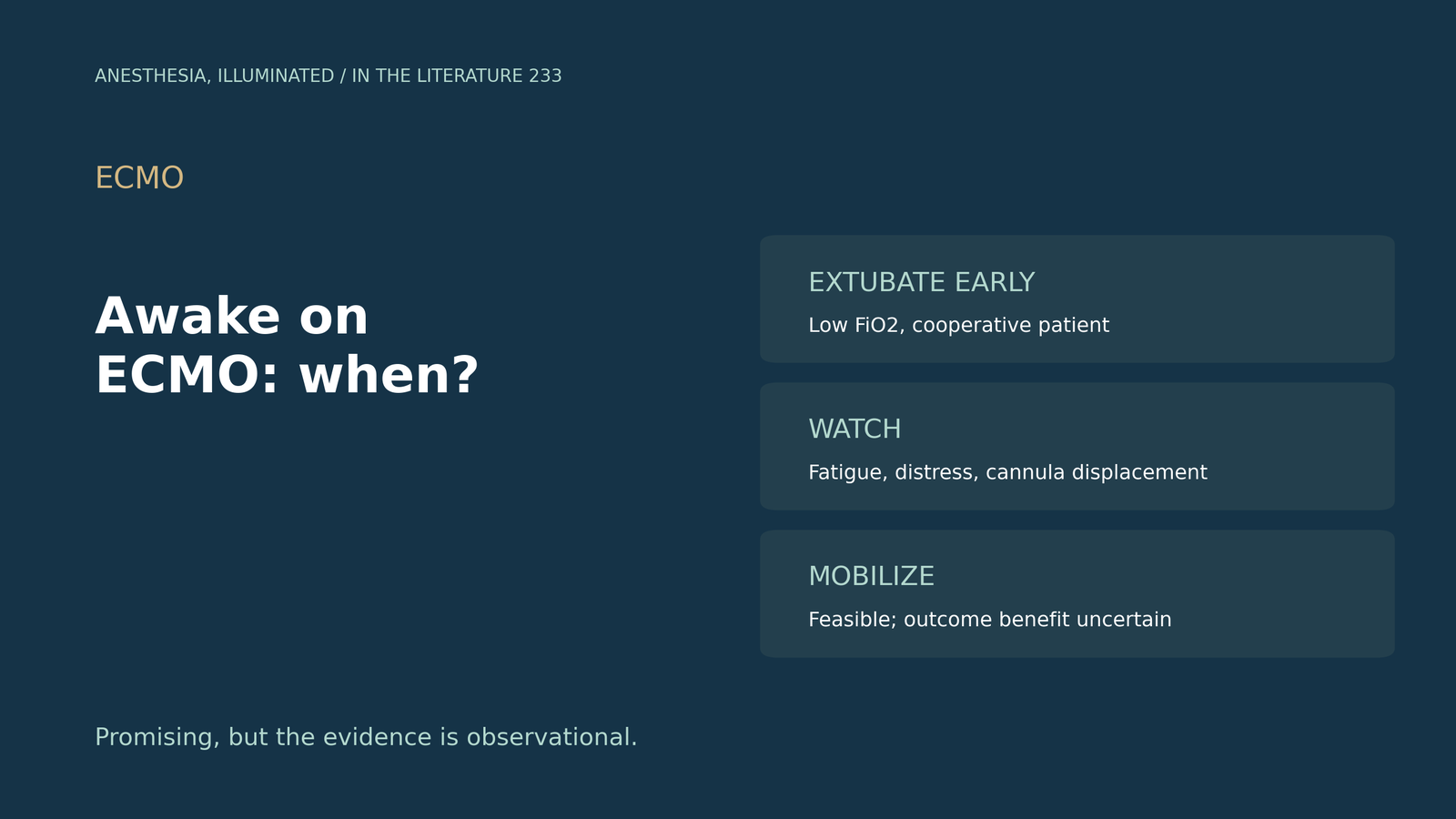
- 宜早不宜迟。拔管应尽早进行,在并发症使其不可行之前;考虑拔管前的目标是FiO2降至60%以下。[1]
- 配合很重要。拔管要求患者足够配合,不致有插管脱出的风险。[2]
- 失败代价高。在一项前瞻性队列中,21%的患者在ECMO期间拔管,其中20%拔管失败;清醒ECMO失败患者的死亡率为54%。[2], [3]
- 早期活动可行,但高强度康复对结局和安全性的影响尚不确定。[3], [4]
- 若患者出现呼吸疲劳或窘迫,不应延迟插管。[1]
一位静脉-静脉ECMO患者气流量和FiO2都不高,能遵嘱,轻度镇静下安静。现在可以拔管吗?康复能多早开始?[1], [3]
何时拔管
Cuttone等(J Cardiothorac Vasc Anesth 2025)建议尽早拔管,考虑拔管前的目标是将FiO2降至60%以下。[1] Guarracino等(J Cardiothorac Vasc Anesth 2025)列出的参考标准包括:PaO2高于80 mmHg、FiO2低于0.5、PEEP低于6 cmH2O。[3] 在Roncon-Albuquerque等(Ann Intensive Care 2023)的前瞻性队列中,标准包括压力支持下pH高于7.35且分钟通气量低于10 L/min;21%的患者在ECMO期间拔管,其中20%失败。[2] 在一个肺移植桥接项目中(Kim等,Respir Res 2021),在ECMO启动后24–48小时内尝试拔管。[5]
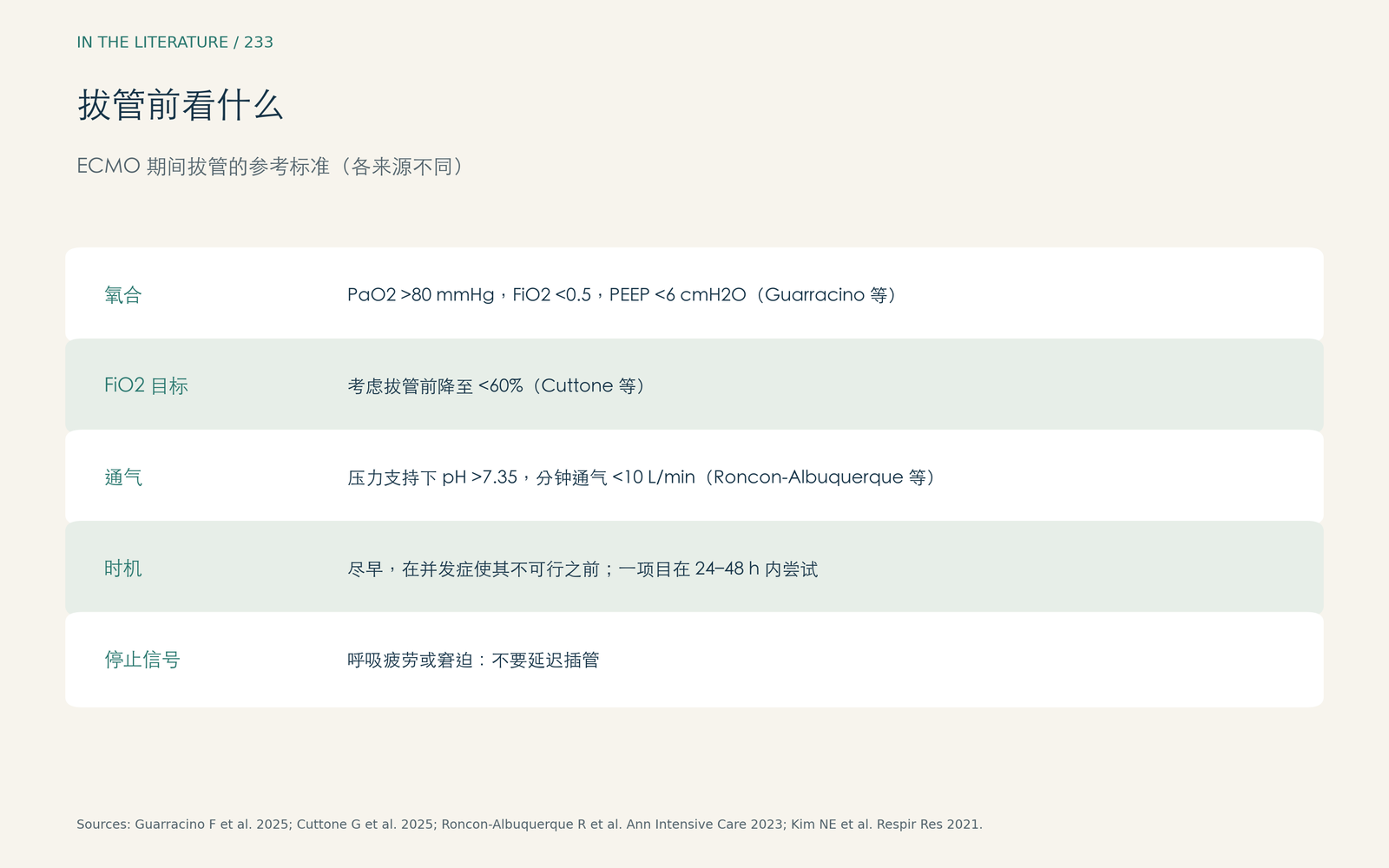
图1. 综述与前瞻性队列报告的拔管标准。据Guarracino等、Cuttone等与Roncon-Albuquerque等重绘。[3], [1], [2] 查看大图。

可以容忍什么,需要警惕什么
在SvO2高于65%、乳酸低于2 mmol/L、氧输送高于300 mL/min/m2的前提下,SpO2低至85%–88%可以接受。[1] 若患者出现呼吸疲劳或窘迫,不应延迟插管。[1] 清醒ECMO的主要风险是插管移位或被患者自行拔出,清醒ECMO失败患者的死亡率为54%。[3] 患者自身所致肺损伤仍是理论上的风险;在一个小型COVID病例系列中(Paternoster等,J Cardiothorac Vasc Anesth 2022),清醒策略在1例患者中失败(14.3%)。[6]
谁可能获益
在肺移植桥接中,清醒ECLS对生存具有保护作用(Benazzo等,J Thorac Cardiovasc Surg 2019),[7] 清醒患者移植后行走能力更高(92%对59%)。[5] 这些都是观察性比较,而非随机试验。[7], [5]
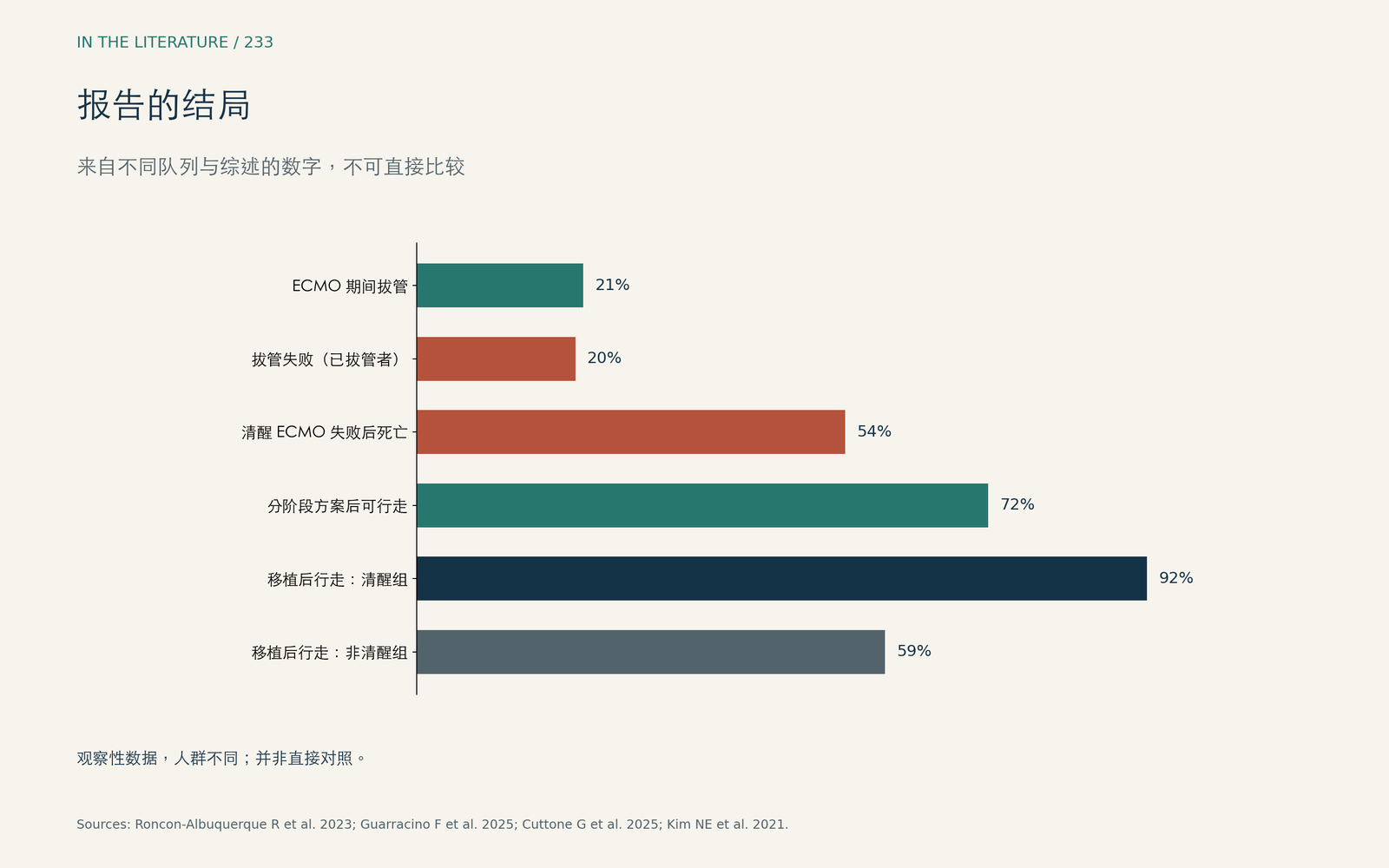
图2. 来自队列和综述的部分结果,并非直接对照试验。数据来自Roncon-Albuquerque等、Guarracino等、Kim等与Paternoster等。[2], [3], [5], [6] 查看大图。

早期活动
双腔插管使拔管后的患者可以进行活动和行走,一项分阶段方案使72%的患者实现行走,且无与活动相关的严重并发症。[1] 小型随机试点研究显示,ECMO期间主动康复是可行的。[3] Rivera等(Crit Care Explor 2024)纳入17项研究、996例患者:高强度主动康复对患者重要结局和安全性的影响尚不确定,且缺乏广泛采用的指南,各中心做法不一。[4] Cheng等(Front Med 2026)发现早期与延迟康复的不良事件发生率差异无统计学意义,但异质性很大(I2 73%–95%)。[8]
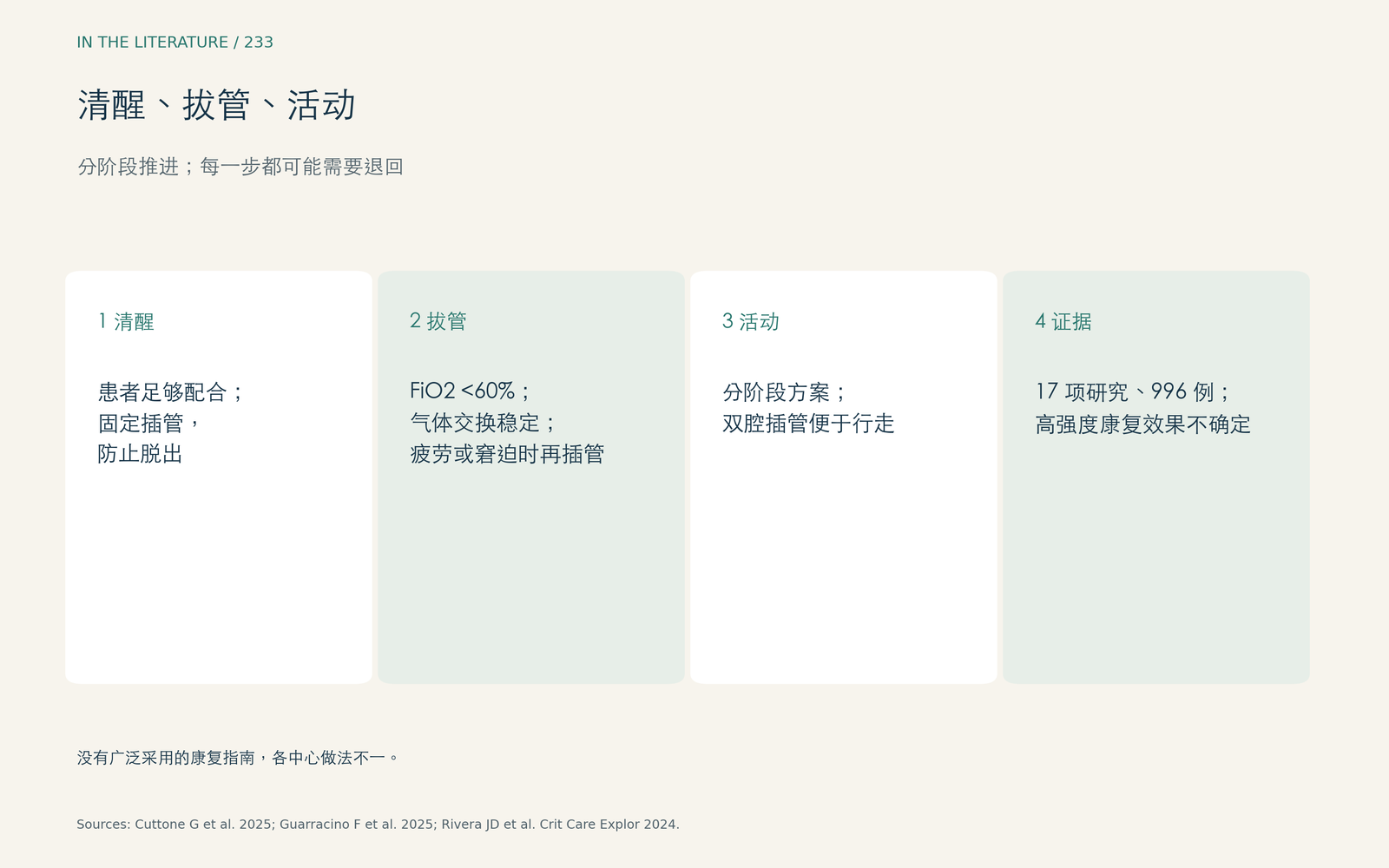
图3. 清醒、拔管、活动:分阶段推进。综合自Cuttone等、Guarracino等与Rivera等。[1], [3], [4] 查看大图。

临床带走的三点
- FiO2已较低、患者能配合时尽早考虑拔管;出现疲劳或窘迫时不要延迟再插管。[1], [2]
- 固定好插管;插管移位是主要风险,清醒ECMO失败的死亡率很高。[3]
- 条件允许时进行活动,但高强度康复的结局获益尚未确立。[4], [8]
参考文献
- Cuttone G, La Via L, Misseri G, et al. Extracorporeal membrane oxygenation in the awake or extubated patient. J Cardiothorac Vasc Anesth. 2025;39(10):2818–2826. doi:10.1053/j.jvca.2025.05.021
- Roncon-Albuquerque R, Gaião S, Vasques-Nóvoa F, et al. Standardized approach for extubation during extracorporeal membrane oxygenation in severe acute respiratory distress syndrome: a prospective observational study. Ann Intensive Care. 2023;13(1):86. doi:10.1186/s13613-023-01185-y
- Guarracino F, Baldassarri R, Brizzi G, et al. Awake venovenous extracorporeal membrane oxygenation in the intensive care unit: challenges and emerging concepts. J Cardiothorac Vasc Anesth. 2025;39(4):1004–1014. doi:10.1053/j.jvca.2024.12.045
- Rivera JD, Fox ES, Fernando SM, et al. Physical rehabilitation and mobilization in patients receiving extracorporeal life support: a systematic review. Crit Care Explor. 2024;6(6):e1095. doi:10.1097/CCE.0000000000001095
- Kim NE, Woo A, Kim SY, et al. Long- and short-term clinical impact of awake extracorporeal membrane oxygenation as bridging therapy for lung transplantation. Respir Res. 2021;22(1):306. doi:10.1186/s12931-021-01905-7
- Paternoster G, Bertini P, Belletti A, et al. Venovenous extracorporeal membrane oxygenation in awake non-intubated patients with COVID-19 ARDS at high risk for barotrauma. J Cardiothorac Vasc Anesth. 2022;36(8):2975–2982. doi:10.1053/j.jvca.2022.03.011
- Benazzo A, Schwarz S, Frommlet F, et al. Twenty-year experience with extracorporeal life support as bridge to lung transplantation. J Thorac Cardiovasc Surg. 2019;157(6):2515–2525.e10. doi:10.1016/j.jtcvs.2019.02.048
- Cheng Z, Du L, Zheng S, et al. A systematic review and meta-analysis of the timing of rehabilitation training intervention for recipients of extracorporeal membrane oxygenation. Front Med (Lausanne). 2026;13:1919668. doi:10.3389/fmed.2026.1919668