
ITL-c8c064369e1d
Juan Li, MD · Updated November 18, 2026
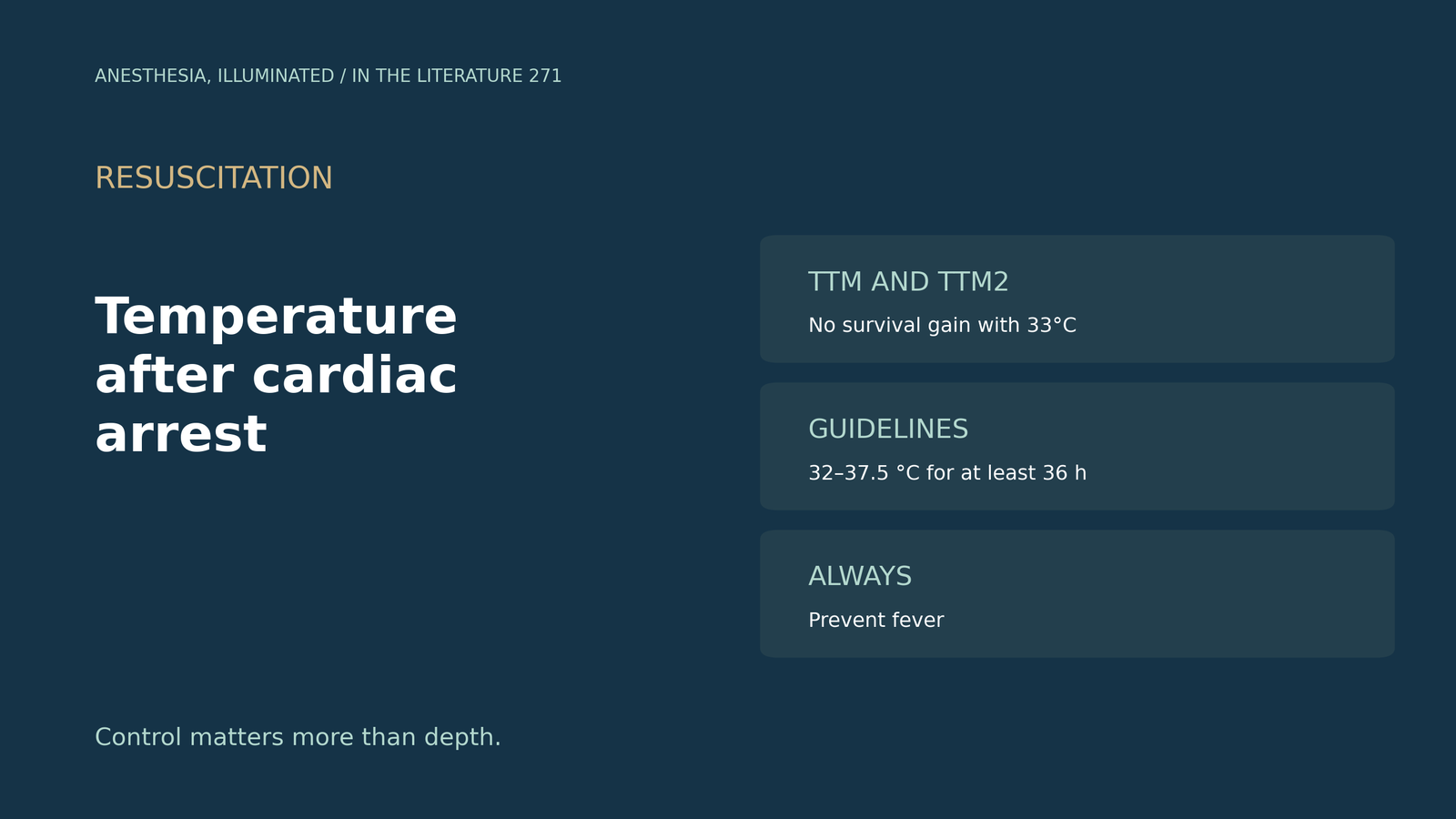
Key points
- 33°C did not beat 36°C. In TTM, 50% died with 33°C and 48% with 36°C.[1]
- Nor normothermia. In TTM2, 6-month mortality was 50% with hypothermia and 48% with normothermia.[2]
- A fragile exception. After nonshockable arrest, HYPERION favoured 33°C (10.2% vs 5.7% good outcome), with a fragility index of 1.[3]
- Colder and longer did not help. Neither 31°C nor 72 hours of fever prevention improved outcomes.[4], [5]
- Guidelines focus on control, not depth. Pooled benefit of hypothermia is low certainty, and the AHA advises 32–37.5 °C for at least 36 hours.[6], [7], [8]
A patient is comatose after return of circulation following an out-of-hospital ventricular fibrillation arrest. Should the ICU cool to 33°C, hold 36°C, or simply prevent fever?
What the target trials found
In TTM (Nielsen et al., N Engl J Med 2013), 50% of patients died with a 33°C target and 48% with 36°C; a 33°C target did not confer a benefit.[1] In TTM2 (Dankiewicz et al., N Engl J Med 2021), 6-month mortality was 50% with hypothermia and 48% with normothermia, in which the aim was to keep temperature at 37.5°C or less.[2] After nonshockable arrest, HYPERION (Lascarrou et al., N Engl J Med 2019) found good neurologic outcome at 90 days in 10.2% with 33°C and 5.7% with normothermia, but the result had a fragility index of 1.[3] In CAPITAL CHILL (Le May et al., JAMA 2021), the primary outcome occurred in 48.4% at 31°C and 45.4% at 34°C, and the authors suggest there may not be a single optimal target for all patients.[4] In BOX (Hassager et al., N Engl J Med 2023), fever prevention for 36 or 72 hours gave similar outcomes (32.3% vs 33.6%).[5]
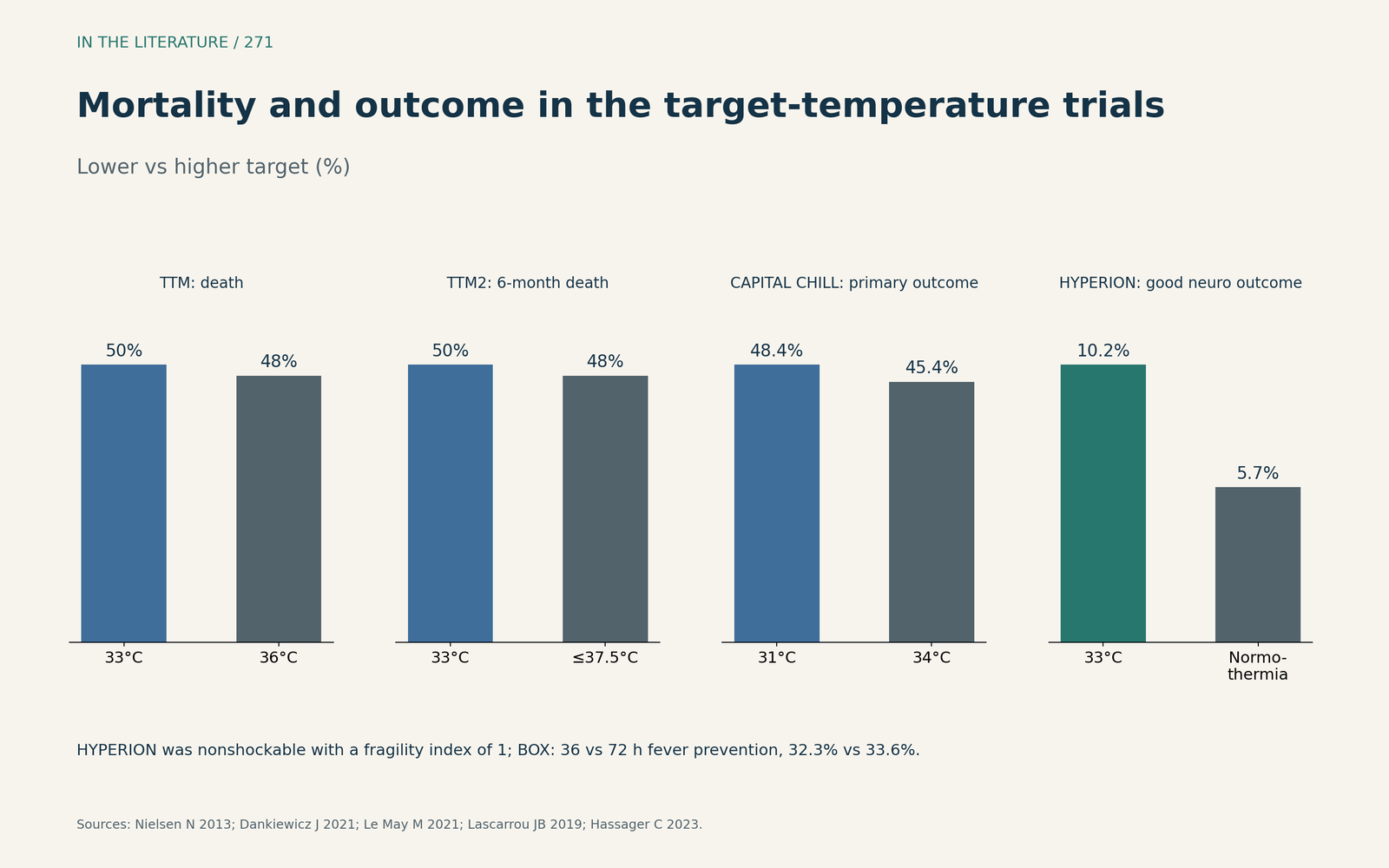
Figure 1. Lower targets did not improve survival in the large trials. Data from TTM, TTM2, HYPERION, CAPITAL CHILL and BOX.[1], [2], [3], [4], [5] View larger.

Pooled evidence and guidelines
The Cochrane review (Arrich et al., Cochrane Database Syst Rev 2023) included 12 studies with 3956 participants; versus fever prevention or no cooling, hypothermia was associated with better neurologic outcome (RR 1.60, 95% CI 1.15–2.23) with low certainty, and the ideal target remains unclear.[6] ERC-ESICM (Sandroni et al., Intensive Care Med 2022) found insufficient evidence to recommend for or against temperature control at 32–36 °C, noted that 32–34 °C did not improve survival in pooled trials and that fever prevention probably requires fewer resources with fewer side effects, and recommended against prehospital cooling with rapid infusion of large volumes of cold fluids.[7] The AHA (Hirsch et al., Circulation 2025) recommends a deliberate, protocolized strategy of temperature control for all unresponsive adults, maintaining 32 °C to 37.5 °C for at least 36 hours and avoiding rewarming faster than 0.5 °C per hour, while stating that it is unclear whether hypothermia or normothermia is better.[8]
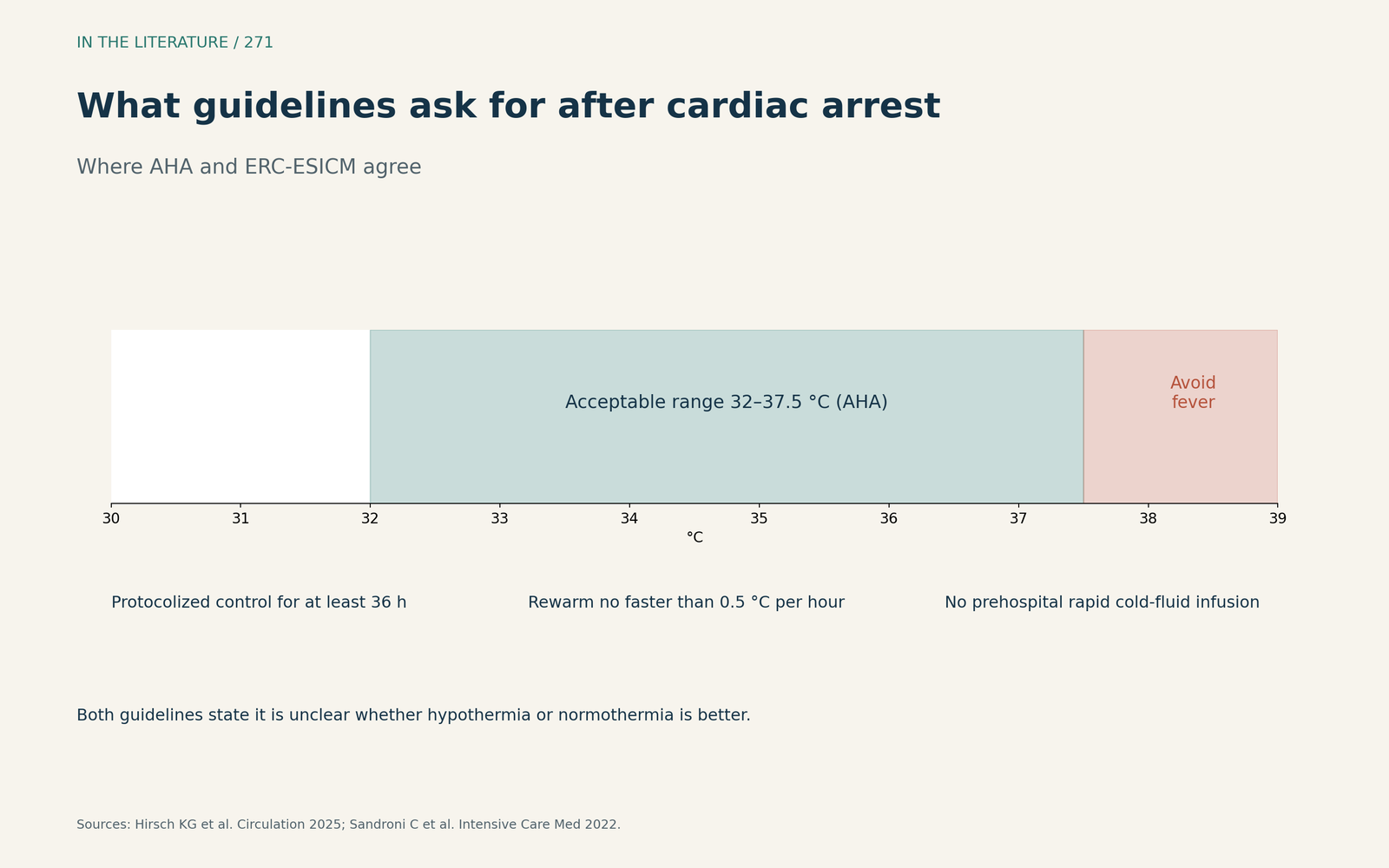
Figure 2. Guidelines converge on controlled temperature and fever prevention. Synthesized from ERC-ESICM and AHA.[7], [8] View larger.

The counter-argument
A EUSEM-ESAIC statement (Behringer et al., Eur J Emerg Med 2024) argues that 32 to 34 °C is associated with improved outcomes compared with normothermia, notes that bystander resuscitation rates of 73 to 82% in recent trials exceed usual practice, and calls for randomized studies to identify patients who benefit most from hypothermia.[9]
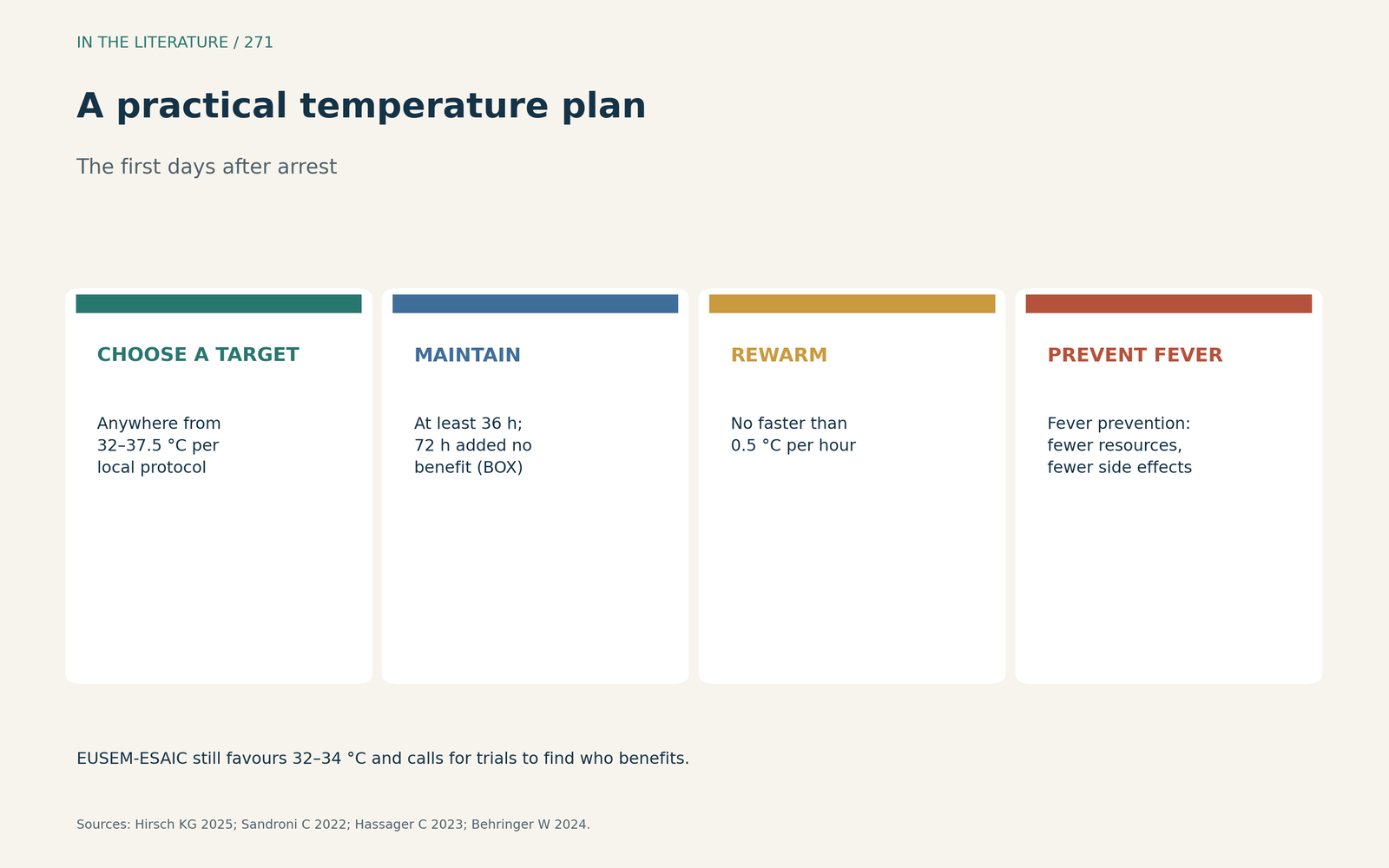
Figure 3. A practical plan for the first days after arrest. Synthesized from AHA, ERC-ESICM, BOX and the EUSEM-ESAIC statement.[8], [7], [5], [9] View larger.

Three takeaways
- Use a protocol to control temperature in every comatose survivor, and above all prevent fever.[7], [8]
- A target anywhere from 32 to 37.5 °C is acceptable; large trials show no survival advantage for 33°C or 31°C.[1], [2], [4]
- Hypothermia for selected groups, such as nonshockable arrest, remains a hypothesis rather than a proven benefit.[3], [9]
References
- Nielsen N, Wetterslev J, Cronberg T, et al. Targeted temperature management at 33°C versus 36°C after cardiac arrest. N Engl J Med. 2013;369(23):2197–2206. doi:10.1056/NEJMoa1310519
- Dankiewicz J, Cronberg T, Lilja G, et al. Hypothermia versus normothermia after out-of-hospital cardiac arrest. N Engl J Med. 2021;384(24):2283–2294. doi:10.1056/NEJMoa2100591
- Lascarrou JB, Merdji H, Le Gouge A, et al. Targeted temperature management for cardiac arrest with nonshockable rhythm. N Engl J Med. 2019;381(24):2327–2337. doi:10.1056/NEJMoa1906661
- Le May M, Osborne C, Russo J, et al. Effect of moderate vs mild therapeutic hypothermia on mortality and neurologic outcomes in comatose survivors of out-of-hospital cardiac arrest: the CAPITAL CHILL randomized clinical trial. JAMA. 2021;326(15):1494–1503. doi:10.1001/jama.2021.15703
- Hassager C, Schmidt H, Møller JE, et al. Duration of device-based fever prevention after cardiac arrest. N Engl J Med. 2023;388(10):888–897. doi:10.1056/NEJMoa2212528
- Arrich J, Schütz N, Oppenauer J, et al. Hypothermia for neuroprotection in adults after cardiac arrest. Cochrane Database Syst Rev. 2023;5(5):CD004128. doi:10.1002/14651858.CD004128.pub5
- Sandroni C, Nolan JP, Andersen LW, et al. ERC-ESICM guidelines on temperature control after cardiac arrest in adults. Intensive Care Med. 2022;48(3):261–269. doi:10.1007/s00134-022-06620-5
- Hirsch KG, Amorim E, Coppler PJ, et al. Part 11: post-cardiac arrest care: 2025 American Heart Association guidelines for cardiopulmonary resuscitation and emergency cardiovascular care. Circulation. 2025;152(16 Suppl 2):S673–S718. doi:10.1161/CIR.0000000000001375
- Behringer W, Böttiger BW, Biasucci DG, et al. Temperature control after successful resuscitation from cardiac arrest in adults: a joint statement from the European Society for Emergency Medicine and the European Society of Anaesthesiology and Intensive Care. Eur J Emerg Med. 2024;31(2):86–89. doi:10.1097/MEJ.0000000000001106