ITL-891446159ebb
Juan Li, MD · Updated November 18, 2026
Key points
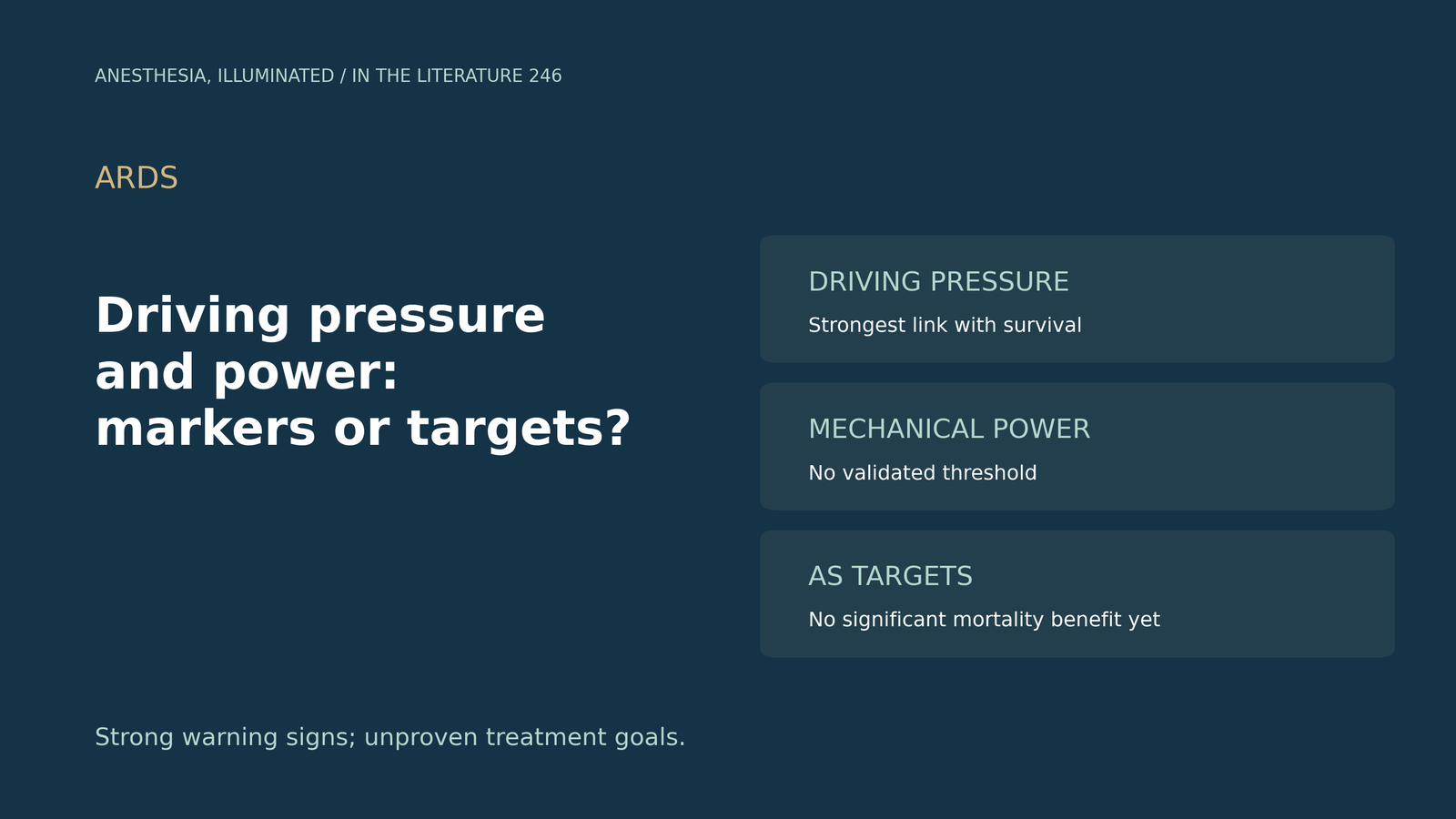
- The strongest signal. In 3562 patients from nine trials, driving pressure was the ventilation variable most strongly associated with survival.[1]
- Even when "protective". Higher driving pressure was linked to mortality even with protective plateau pressure and tidal volume (RR 1.36).[1]
- Power has no cutoff. A universally accepted mechanical power threshold remains undefined, and no single limit can yet be recommended.[2]
- Targeting has not helped. Limiting driving pressure gave 35.7% vs 39.0% mortality, not significantly different.[3]
- Marker, maybe not cause. Both may indicate severity rather than directly cause injury.[4]
A patient with ARDS is ventilated at 6 mL/kg with a plateau pressure of 28 cmH2O and PEEP 10, so the driving pressure is 18 cmH2O. Is that a number to fix, or a warning about the lung?[1], [2]
Why driving pressure matters
Driving pressure is plateau pressure minus total PEEP.[2] Amato et al. (N Engl J Med 2015) analysed 3562 patients from nine trials: driving pressure was most strongly associated with survival, higher values were linked to mortality even with protective plateau pressure and tidal volume (RR 1.36), and tidal volume itself was not a significant mediator.[1] The aerated ARDS lung is not stiff but small, and the authors called for trials linking ventilator changes to driving pressure.[1] Marini et al. (Am J Respir Crit Care Med 2020) add that, to cause damage, a pressure must be paired with a volume change, and that no clinical study has directly shown lung injury to be the causal link to outcome.[5] In practice, it is often not measured: in LUNG SAFE (Bellani et al., JAMA 2016), plateau pressure was recorded in only 40.1% of patients with ARDS, and 40% died in hospital.[6] A clinical focus review (Meier et al., Anesthesiology 2020) advises interpreting driving pressure at the bedside rather than in isolation.[7]
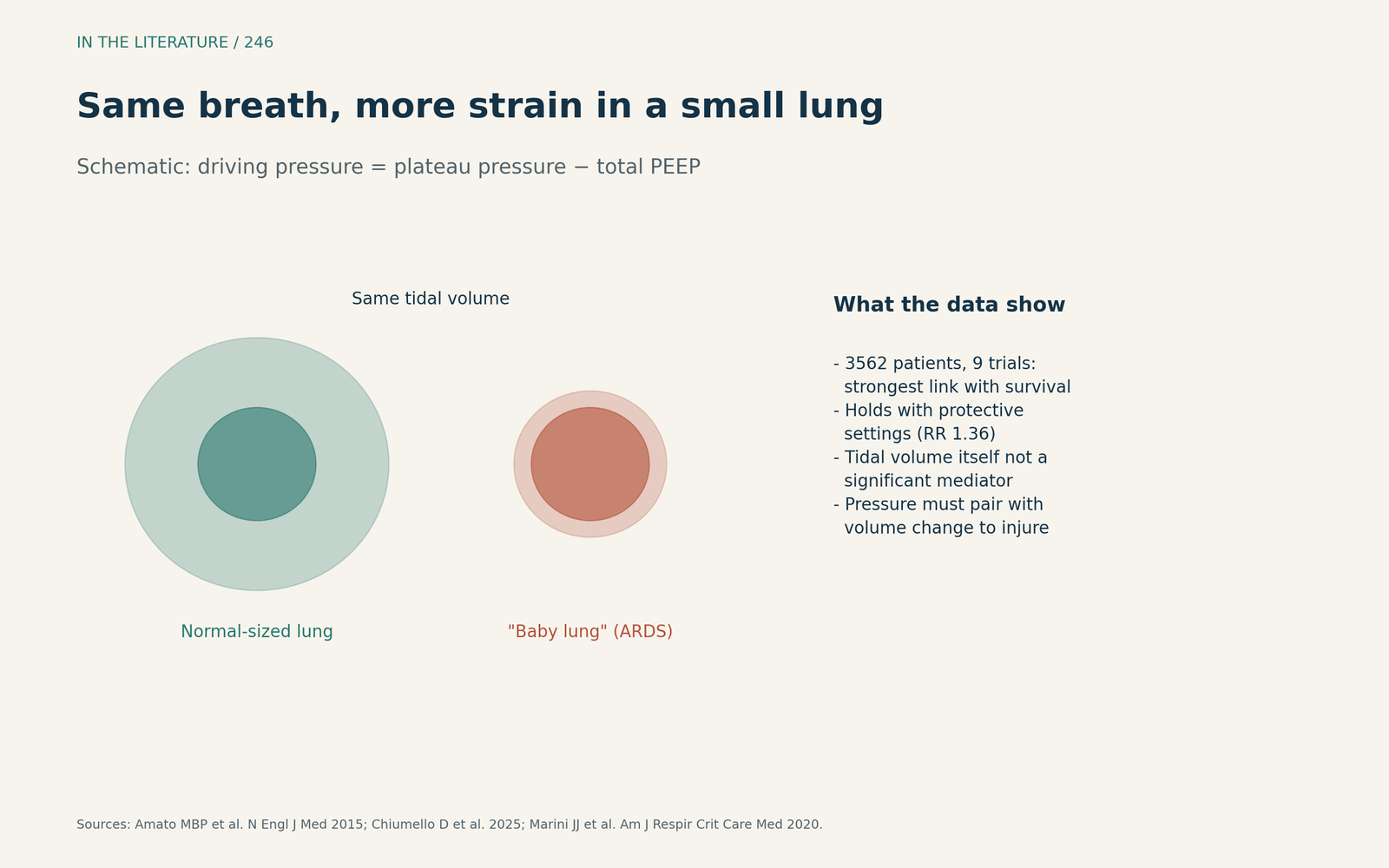
Figure 1. The same breath strains a small lung more (schematic). Concept from Amato et al., Chiumello et al. and Marini et al.[1], [2], [5] View larger.

Mechanical power
Chiumello et al. (Ann Intensive Care 2025) note that mechanical power above 12 J/min after 24 h was associated with higher 90-day mortality in one study, but a universal threshold remains undefined and no single limit can yet be recommended; their mechanics-guided algorithm has not been validated in randomized trials.[2] In a meta-analysis of 34 observational studies (Sato et al., Crit Care Med 2026), mechanical power was higher in non-survivors (mean difference 1.91 J/min) and values above 17 J/min were associated with greater mortality, but the adjusted hazard ratio was 1.03, not significant, and the threshold should not be applied to individual bedside decisions.[8] An editorial (Gama de Abreu and Sessler, Anesthesiology 2022) notes it remains unknown whether mechanical power is a marker or a cause of lung injury.[9] In pigs, different strategies at the same mechanical power produced similar lung injury (Vassalli et al., Anesthesiology 2020),[10] and during general anesthesia each 5 J/min more power was associated with postoperative respiratory failure (OR 1.31; Santer et al., Anesthesiology 2022).[11]
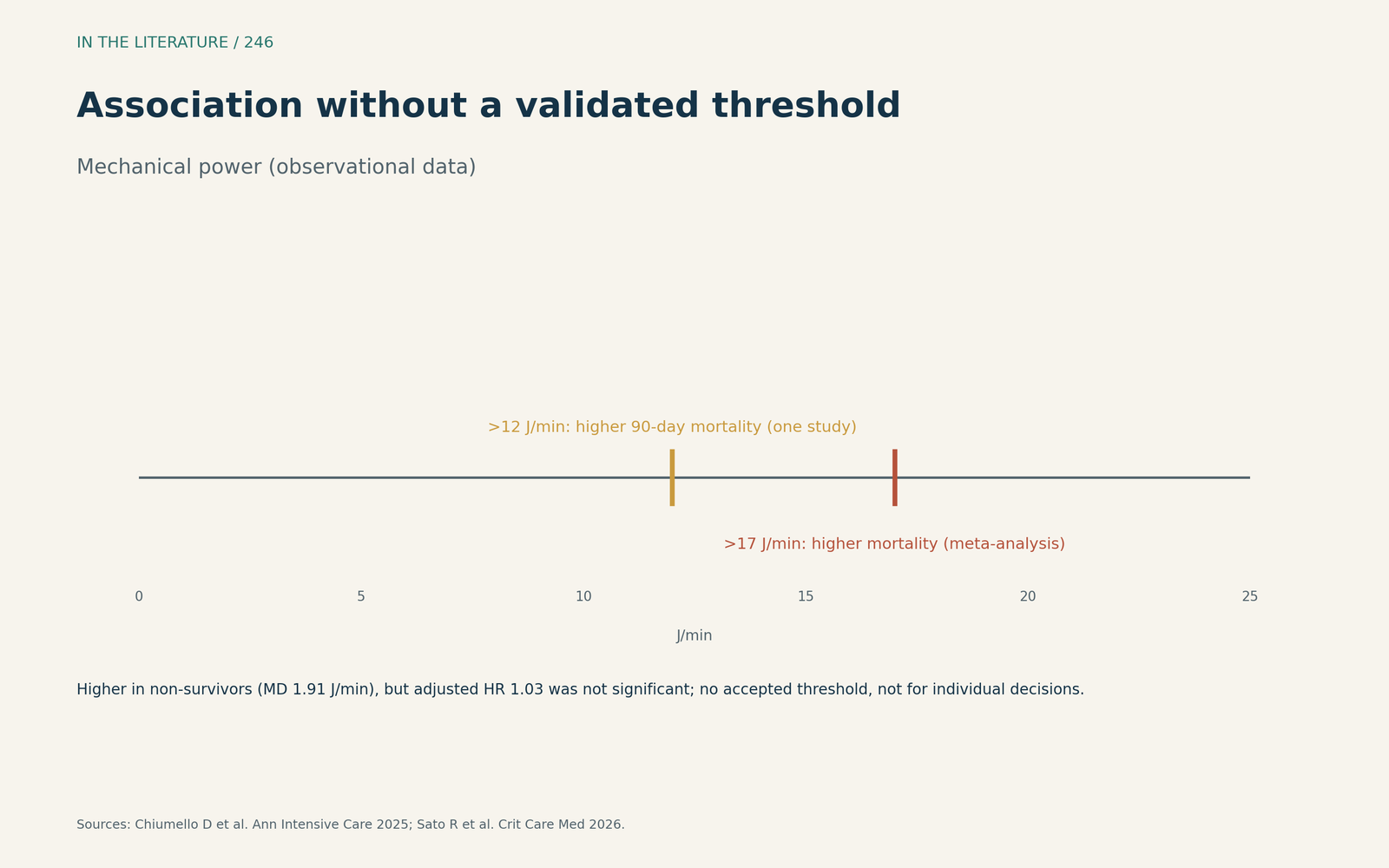
Figure 2. Reported thresholds differ; none is validated. Data from Chiumello et al. and Sato et al.[2], [8] View larger.

Can we target them?
In a meta-analysis of four driving-pressure-limiting trials with 431 patients (Agrafiotis et al., Crit Care 2026), mortality was 35.7% vs 39.0%, not significantly different; the largest trial, STAMINA, stopped before half its intended sample, and driving pressure may not be truly modifiable because it reflects increased elastance.[3] In surgical patients, driving-pressure-guided high PEEP did not reduce respiratory failure or death (IMPROVE-2, Futier et al., Intensive Care Med 2025; RR 1.27).[12] Nieman et al. (J Clin Med 2026) argue that both measures are indicators of severity rather than direct causes of injury, and that a high driving pressure is not the injury mechanism itself.[4]
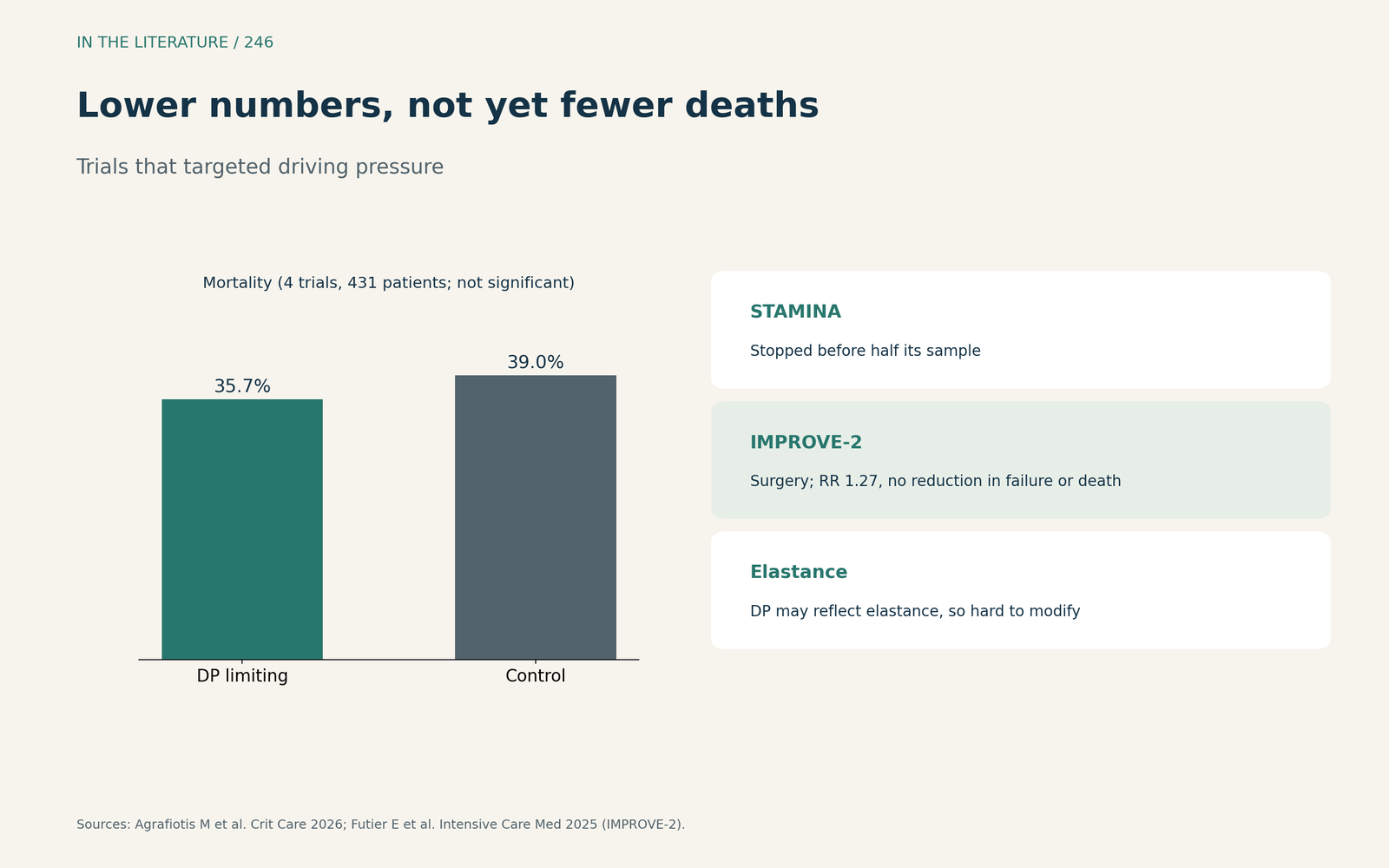
Figure 3. Lower numbers have not yet meant fewer deaths. Data from Agrafiotis et al. and the IMPROVE-2 trial.[3], [12] View larger.

Three takeaways
- Calculate driving pressure every day; a high value flags a small, stressed lung and a sicker patient.[1], [2]
- Use mechanical power as context, not as a cutoff; no threshold is validated.[2], [8]
- Do not expect a driving-pressure target alone to save lives; trials so far show no significant mortality benefit.[3], [12]
References
- Amato MBP, Meade MO, Slutsky AS, et al. Driving pressure and survival in the acute respiratory distress syndrome. N Engl J Med. 2015;372(8):747–755. doi:10.1056/NEJMsa1410639
- Chiumello D, Coppola S, Silva PL, et al. Bedside ventilatory settings guided by respiratory mechanics in acute respiratory distress syndrome. Ann Intensive Care. 2025;15(1):189. doi:10.1186/s13613-025-01606-0
- Agrafiotis M, Georgopoulos M, Akoumianaki E, Siempos II. Effect of driving pressure-limiting strategies on outcomes of patients with ARDS: a meta-analysis of randomized controlled trials. Crit Care. 2026;30(1):175. doi:10.1186/s13054-026-05876-3
- Nieman GF, Araos J, Satalin J, et al. Mechanical power and driving pressure: mechanisms of lung injury, markers of pathophysiology, or therapeutic targets? J Clin Med. 2026;15(1):79. doi:10.3390/jcm15010079
- Marini JJ, Rocco PRM, Gattinoni L. Static and dynamic contributors to ventilator-induced lung injury in clinical practice. Pressure, energy, and power. Am J Respir Crit Care Med. 2020;201(7):767–774. doi:10.1164/rccm.201908-1545CI
- Bellani G, Laffey JG, Pham T, et al. Epidemiology, patterns of care, and mortality for patients with acute respiratory distress syndrome in intensive care units in 50 countries. JAMA. 2016;315(8):788–800. doi:10.1001/jama.2016.0291
- Meier A, Sell RE, Malhotra A. Driving pressure for ventilation of patients with acute respiratory distress syndrome. Anesthesiology. 2020;132(6):1569–1576. doi:10.1097/ALN.0000000000003195
- Sato R, Kondo S, Ali A, et al. The association between mechanical power and mortality in critically ill patients receiving invasive mechanical ventilation: a systematic review and meta-analysis. Crit Care Med. 2026;54(7):1742–1754. doi:10.1097/CCM.0000000000007146
- Gama de Abreu M, Sessler DI. Mechanical power: correlate or cause of ventilator-induced lung injury? Anesthesiology. 2022;137(1):6–8. doi:10.1097/ALN.0000000000004240
- Vassalli F, Pasticci I, Romitti F, et al. Does iso-mechanical power lead to iso-lung damage? An experimental study in a porcine model. Anesthesiology. 2020;132(5):1126–1137. doi:10.1097/ALN.0000000000003189
- Santer P, Wachtendorf LJ, Suleiman A, et al. Mechanical power during general anesthesia and postoperative respiratory failure: a multicenter retrospective cohort study. Anesthesiology. 2022;137(1):41–54. doi:10.1097/ALN.0000000000004256
- Futier E, De Jong A, Cirenei C, et al. Personalized driving pressure-guided positive end-expiratory pressure in patients at risk of postoperative respiratory failure (IMPROVE-2): a multicenter, pragmatic, randomized clinical trial. Intensive Care Med. 2025;51(10):1797–1808. doi:10.1007/s00134-025-08082-x