
ITL-891446159ebb
Juan Li, MD · 更新于2026年11月18日
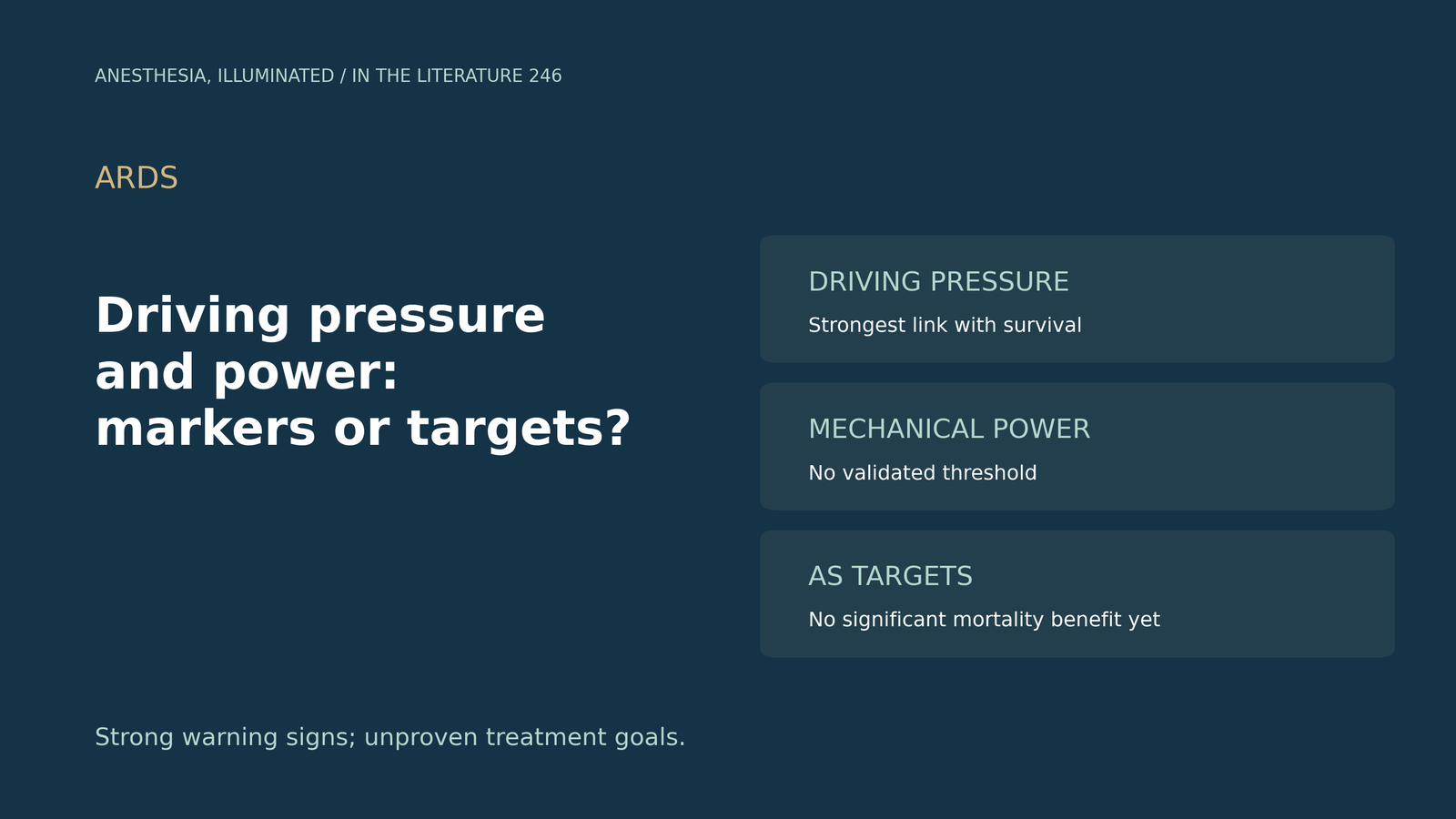
核心要点
- 最强的信号。在来自9项试验的3562例患者中,驱动压是与生存关联最强的通气变量。[1]
- 即使在“保护性”通气下。即使平台压和潮气量处于保护性范围,较高驱动压仍与死亡相关(RR 1.36)。[1]
- 机械功没有界值。尚无公认的机械功阈值,也无法推荐单一上限。[2]
- 以其为目标尚未见效。限制驱动压组死亡率35.7%对39.0%,差异无统计学意义。[3]
- 可能是标志而非原因。两者可能反映病情严重程度,而非直接造成损伤。[4]
一位ARDS患者按6 mL/kg通气,平台压28 cmH2O,PEEP 10,驱动压为18 cmH2O。这是需要纠正的数字,还是肺的警示?[1], [2]
为什么驱动压重要
驱动压等于平台压减去总PEEP。[2] Amato等(N Engl J Med 2015)分析了9项试验的3562例患者:驱动压与生存关联最强;即使平台压和潮气量处于保护性范围,较高驱动压仍与死亡相关(RR 1.36);潮气量本身并不是显著的中介因素。[1] ARDS中充气的肺并不“僵硬”,而是“变小”了;作者呼吁开展将呼吸机调整与驱动压挂钩的试验。[1] Marini等(Am J Respir Crit Care Med 2020)补充,压力必须伴随容积变化才会造成损伤,而且尚无临床研究直接证明肺损伤本身是影响结局的因果环节。[5] 在实践中它常常没有被测量:LUNG SAFE(Bellani等,JAMA 2016)中,只有40.1%的ARDS患者测量了平台压,院内死亡率为40%。[6] 一篇临床聚焦综述(Meier等,Anesthesiology 2020)建议在床旁结合具体情况解读驱动压,而不是孤立使用。[7]
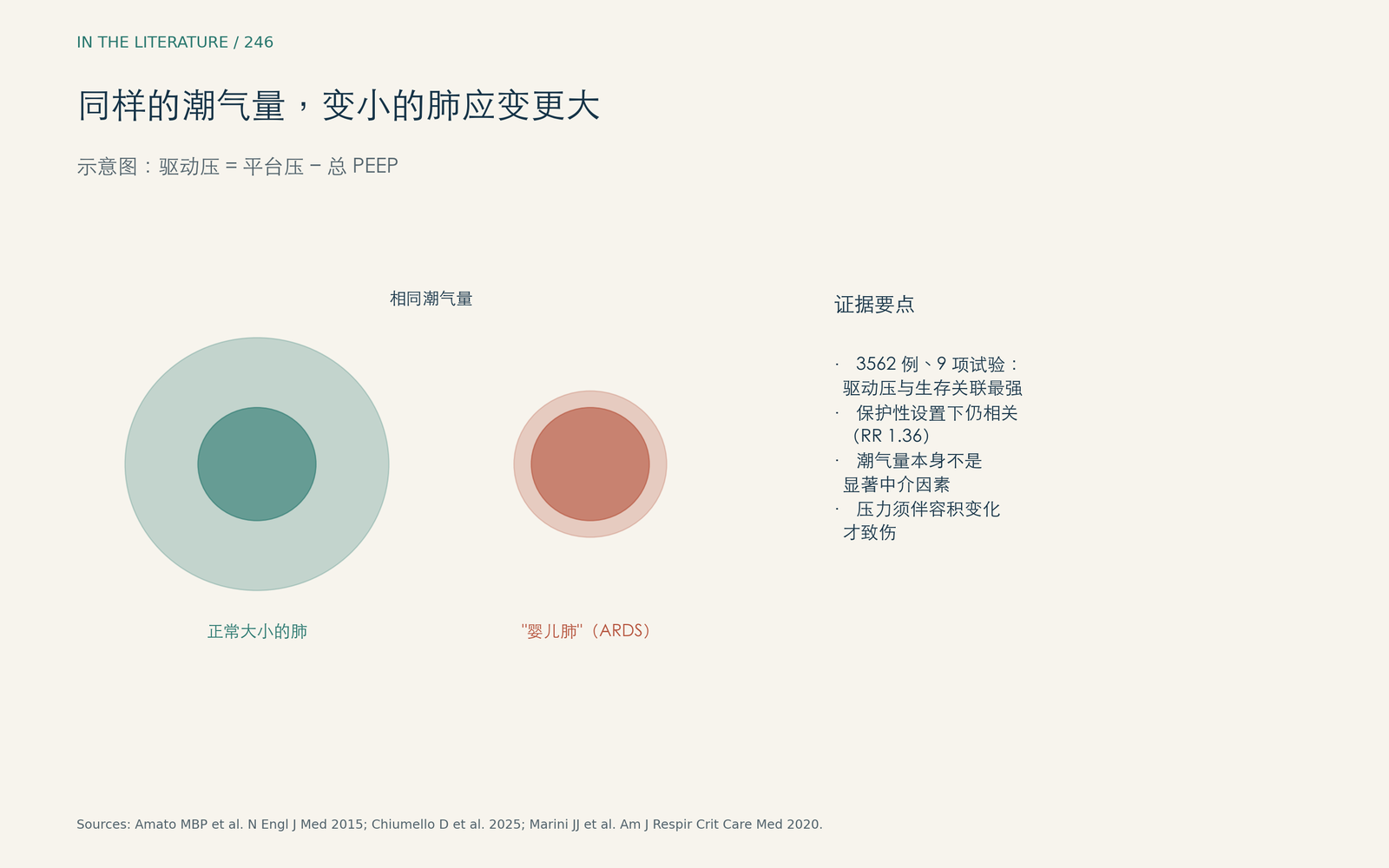
图1. 同样的潮气量会让变小的肺承受更大应变(示意)。概念来自Amato等、Chiumello等与Marini等。[1], [2], [5] 查看大图。

机械功
Chiumello等(Ann Intensive Care 2025)指出,一项研究中24小时后机械功超过12 J/min与90天死亡率升高相关,但公认阈值仍未确定,也无法推荐单一上限;他们基于呼吸力学的流程尚未经随机试验验证。[2] 在一项纳入34项观察性研究的荟萃分析中(Sato等,Crit Care Med 2026),死亡者机械功更高(均数差1.91 J/min),超过17 J/min与较高死亡率相关,但校正后风险比为1.03,无统计学意义,且该阈值不应用于个体床旁决策。[8] 一篇述评(Gama de Abreu与Sessler,Anesthesiology 2022)指出,机械功究竟是肺损伤的标志还是原因仍不清楚。[9] 在猪模型中,相同机械功下不同的通气策略造成相似的肺损伤(Vassalli等,Anesthesiology 2020);[10] 全身麻醉期间机械功每增加5 J/min,与术后呼吸衰竭相关(OR 1.31;Santer等,Anesthesiology 2022)。[11]
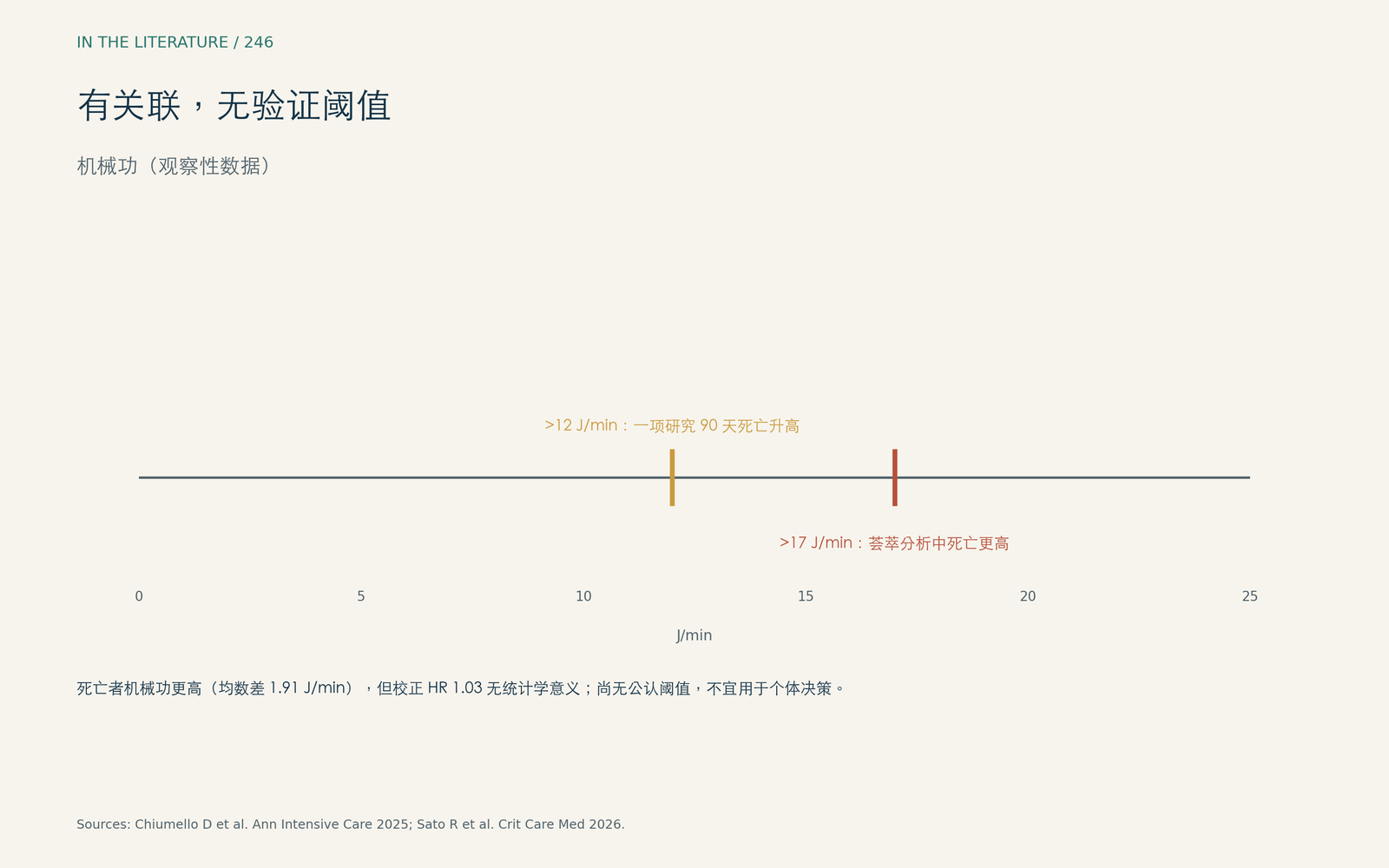
图2. 报告的阈值各不相同,均未经验证。数据来自Chiumello等与Sato等。[2], [8] 查看大图。

能否以它们为目标?
在一项纳入4项驱动压限制试验、431例患者的荟萃分析中(Agrafiotis等,Crit Care 2026),死亡率为35.7%对39.0%,差异无统计学意义;最大的STAMINA试验在未达计划样本量一半时即终止;驱动压可能并非真正可调,因为它反映的是弹性升高。[3] 在手术患者中,驱动压指导的高PEEP并未减少呼吸衰竭或死亡(IMPROVE-2,Futier等,Intensive Care Med 2025;RR 1.27)。[12] Nieman等(J Clin Med 2026)认为,两者都是病情严重程度的指标,而非直接的损伤原因,高驱动压本身并不是损伤机制。[4]
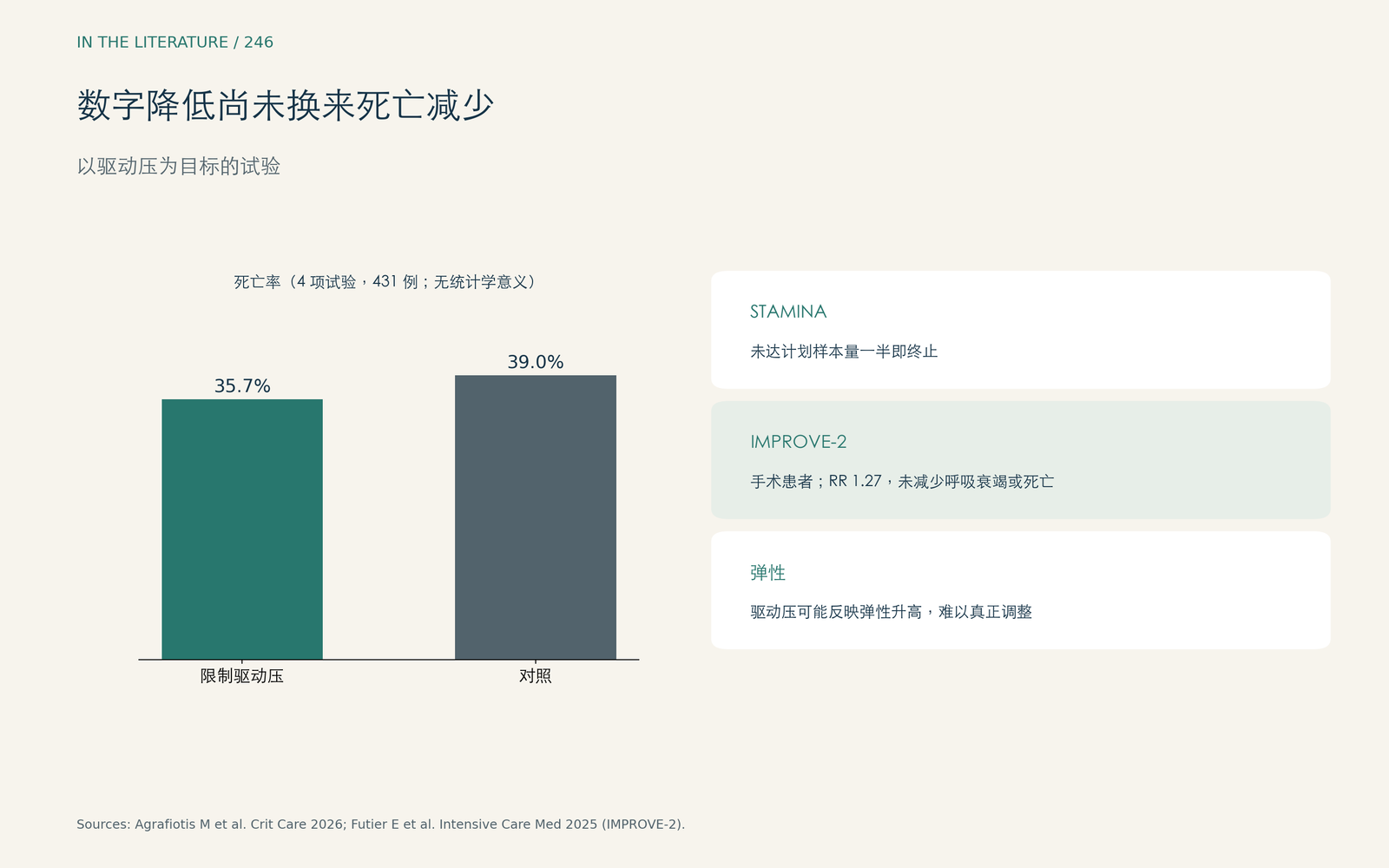
图3. 数字降低尚未换来死亡减少。数据来自Agrafiotis等与IMPROVE-2试验。[3], [12] 查看大图。

临床带走的三点
- 每天计算驱动压;高值提示肺小而受压,病情更重。[1], [2]
- 把机械功当作背景信息,而非界值;目前没有经过验证的阈值。[2], [8]
- 不要指望单靠驱动压目标挽救生命;现有试验未显示显著的死亡获益。[3], [12]
参考文献
- Amato MBP, Meade MO, Slutsky AS, et al. Driving pressure and survival in the acute respiratory distress syndrome. N Engl J Med. 2015;372(8):747–755. doi:10.1056/NEJMsa1410639
- Chiumello D, Coppola S, Silva PL, et al. Bedside ventilatory settings guided by respiratory mechanics in acute respiratory distress syndrome. Ann Intensive Care. 2025;15(1):189. doi:10.1186/s13613-025-01606-0
- Agrafiotis M, Georgopoulos M, Akoumianaki E, Siempos II. Effect of driving pressure-limiting strategies on outcomes of patients with ARDS: a meta-analysis of randomized controlled trials. Crit Care. 2026;30(1):175. doi:10.1186/s13054-026-05876-3
- Nieman GF, Araos J, Satalin J, et al. Mechanical power and driving pressure: mechanisms of lung injury, markers of pathophysiology, or therapeutic targets? J Clin Med. 2026;15(1):79. doi:10.3390/jcm15010079
- Marini JJ, Rocco PRM, Gattinoni L. Static and dynamic contributors to ventilator-induced lung injury in clinical practice. Pressure, energy, and power. Am J Respir Crit Care Med. 2020;201(7):767–774. doi:10.1164/rccm.201908-1545CI
- Bellani G, Laffey JG, Pham T, et al. Epidemiology, patterns of care, and mortality for patients with acute respiratory distress syndrome in intensive care units in 50 countries. JAMA. 2016;315(8):788–800. doi:10.1001/jama.2016.0291
- Meier A, Sell RE, Malhotra A. Driving pressure for ventilation of patients with acute respiratory distress syndrome. Anesthesiology. 2020;132(6):1569–1576. doi:10.1097/ALN.0000000000003195
- Sato R, Kondo S, Ali A, et al. The association between mechanical power and mortality in critically ill patients receiving invasive mechanical ventilation: a systematic review and meta-analysis. Crit Care Med. 2026;54(7):1742–1754. doi:10.1097/CCM.0000000000007146
- Gama de Abreu M, Sessler DI. Mechanical power: correlate or cause of ventilator-induced lung injury? Anesthesiology. 2022;137(1):6–8. doi:10.1097/ALN.0000000000004240
- Vassalli F, Pasticci I, Romitti F, et al. Does iso-mechanical power lead to iso-lung damage? An experimental study in a porcine model. Anesthesiology. 2020;132(5):1126–1137. doi:10.1097/ALN.0000000000003189
- Santer P, Wachtendorf LJ, Suleiman A, et al. Mechanical power during general anesthesia and postoperative respiratory failure: a multicenter retrospective cohort study. Anesthesiology. 2022;137(1):41–54. doi:10.1097/ALN.0000000000004256
- Futier E, De Jong A, Cirenei C, et al. Personalized driving pressure-guided positive end-expiratory pressure in patients at risk of postoperative respiratory failure (IMPROVE-2): a multicenter, pragmatic, randomized clinical trial. Intensive Care Med. 2025;51(10):1797–1808. doi:10.1007/s00134-025-08082-x